Family scenario
Alarm Clocks for Kids: A Clear Morning Rule Comes First
For a child, the clock often teaches when to get up before it becomes a tool for waking independently.
The decision first
Is the goal waking a child or teaching when morning starts?
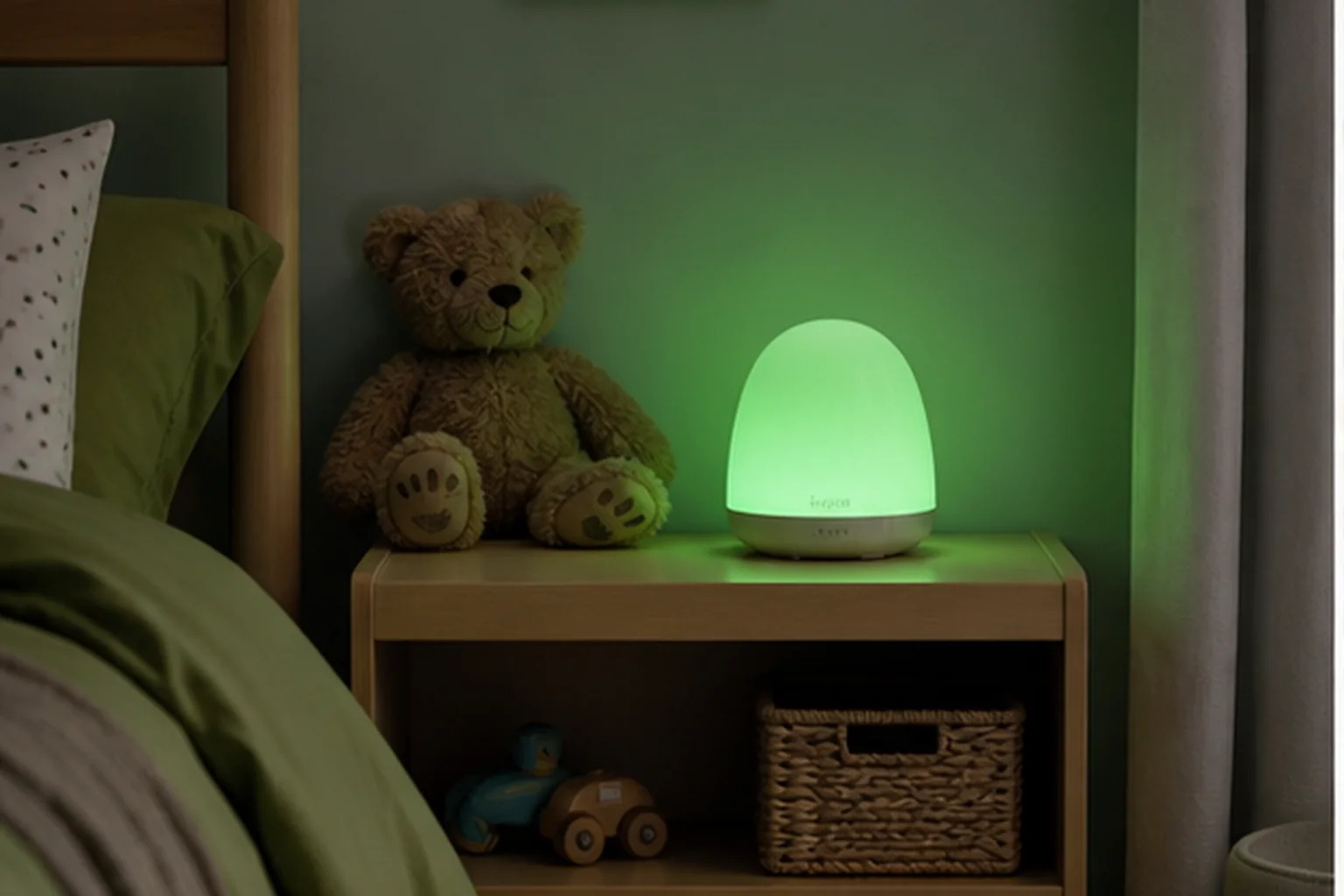
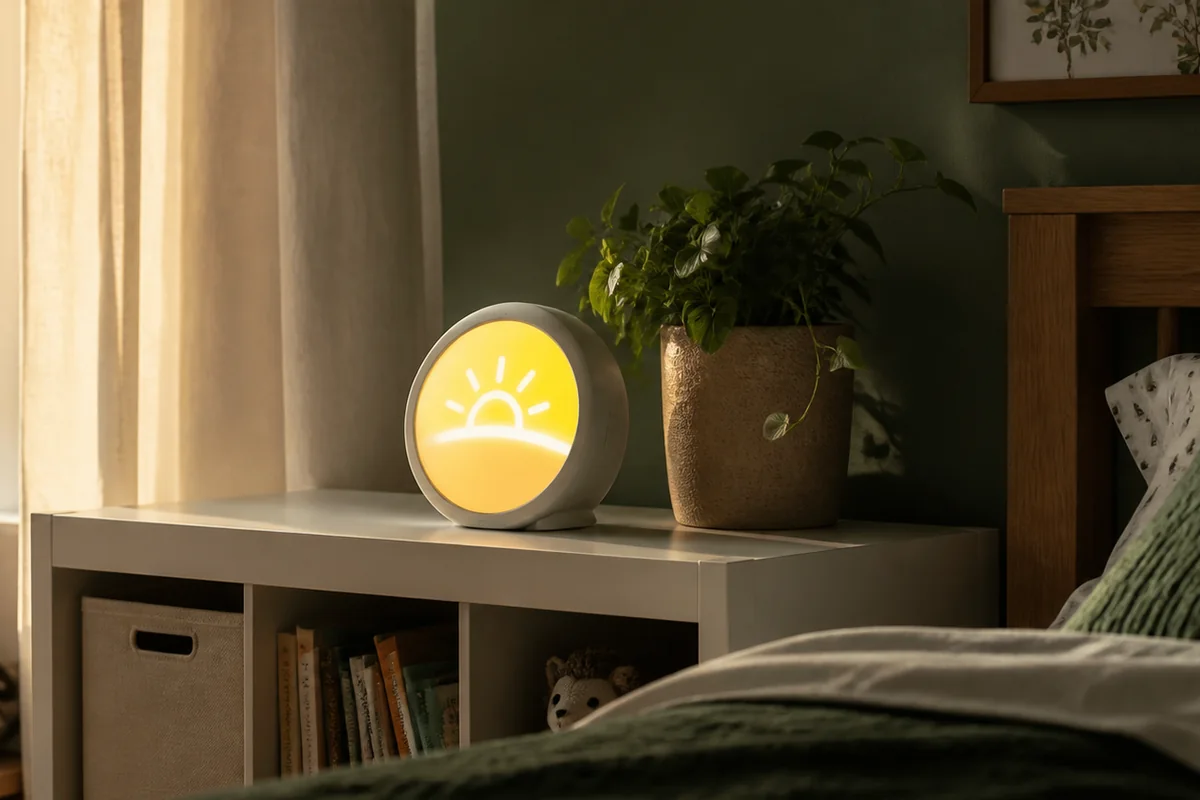
Start with a visual rule the child can understand: one color or symbol means stay in bed, another means morning. Parents still need direct schedule controls and a reliable lock. Check cords, adapters, button-cell access, brightness, and volume for the child’s room.
Nonnegotiable checks
The criteria that can change the answer
Age-appropriate cue
A color or icon may be clearer than reading a digital time.
Parent controls
Schedule changes and lock behavior should be predictable.
Night light
The darkest setting matters more than the brightest color.
Physical safety
Inspect cords, adapters, battery doors, small parts, and placement.
What changes in practice
Compare the trade-offs, not the feature count
| Route | Decision value |
|---|---|
| Okay-to-wake light | Clear visual rule, with a learning period. |
| Sound alarm | Useful for older children, with room-wide impact. |
| App setup | Convenient for parents, with account and connection dependencies. |
| On-device controls | Direct and portable, but easier for a child to change. |
Define the child-facing job
Waking for school and learning when morning starts are not the same task
A conventional alarm tells a sleeper to wake at a time. An okay-to-wake or sleep-training clock tells a younger child whether the household considers it morning, often through a color, face, sun, or stars. The child may already be awake. The device supports a repeated rule rather than forcing longer sleep. Confusing the two jobs leads to product lists that mix toddler cues, night lights, sound machines, and loud school alarms without a decision boundary.
Choose the task the child can understand now.
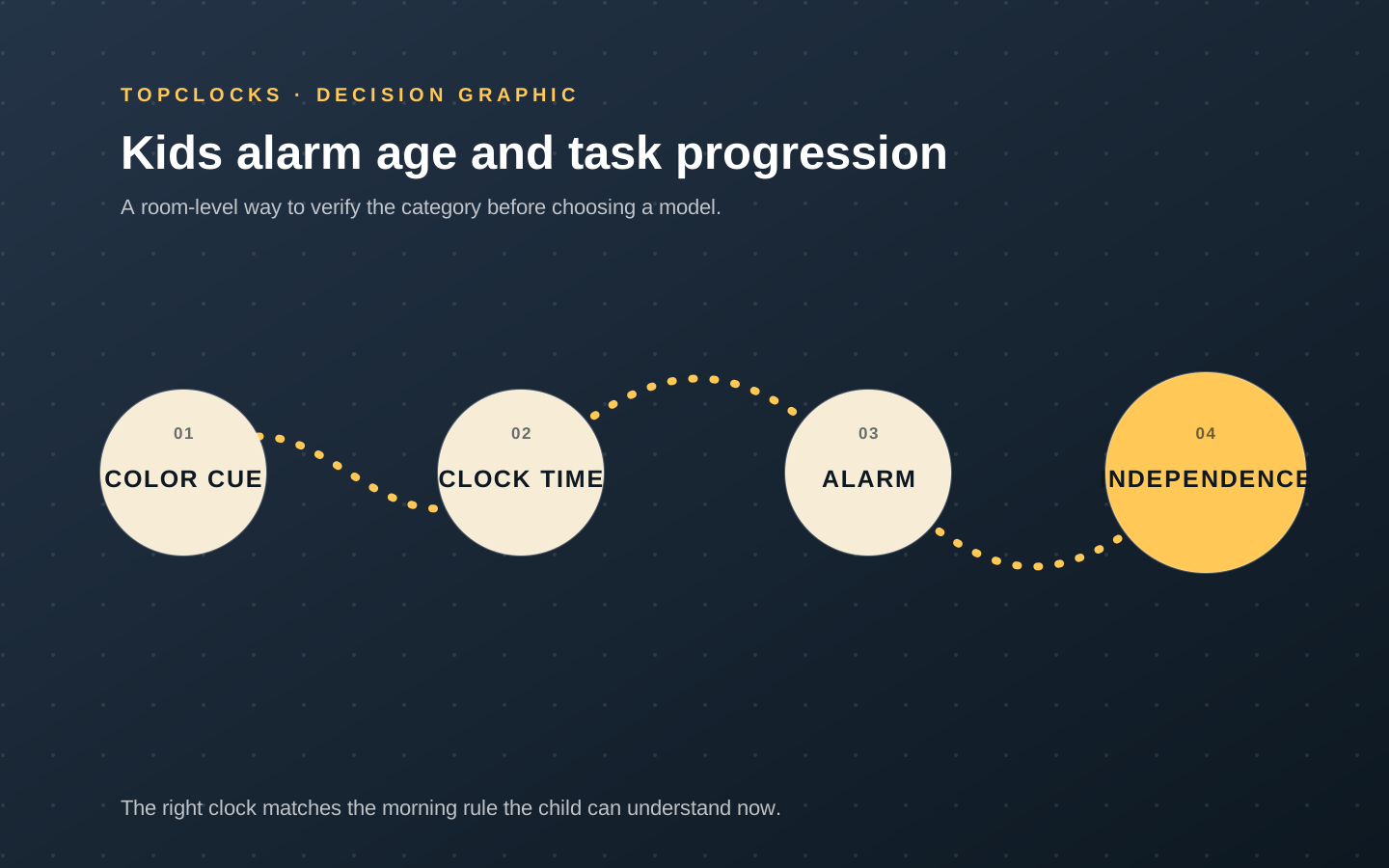
A younger child may follow one stable visual cue: stay in the room before the green light, then begin the morning routine after it changes. An older child who reads time may need a visible clock and a gentle alarm. A school-age heavy sleeper may need an adjustable audible or tactile route rather than a toddler sleep trainer. Age labels from manufacturers are starting context, not proof of developmental fit.
The household must reinforce the meaning consistently. Changing colors, schedules, or exceptions too often can make the cue negotiable. A clock cannot solve an unrealistic bedtime, schedule, or early-waking concern by itself. It should make the rule clearer and easier to repeat. Keep the child-facing interface simpler than the caregiver setup.
- Write the morning rule in one sentence the child can repeat.
- Choose one primary color, symbol, or sound meaning and keep it stable.
- Separate nap, bedtime, okay-to-wake, and school-alarm jobs rather than enabling every routine at once.
- Review the setup as the child learns to read time and manage alarms independently.
Design for child and caregiver
Simple cues, protected controls, and a safe physical setup matter together
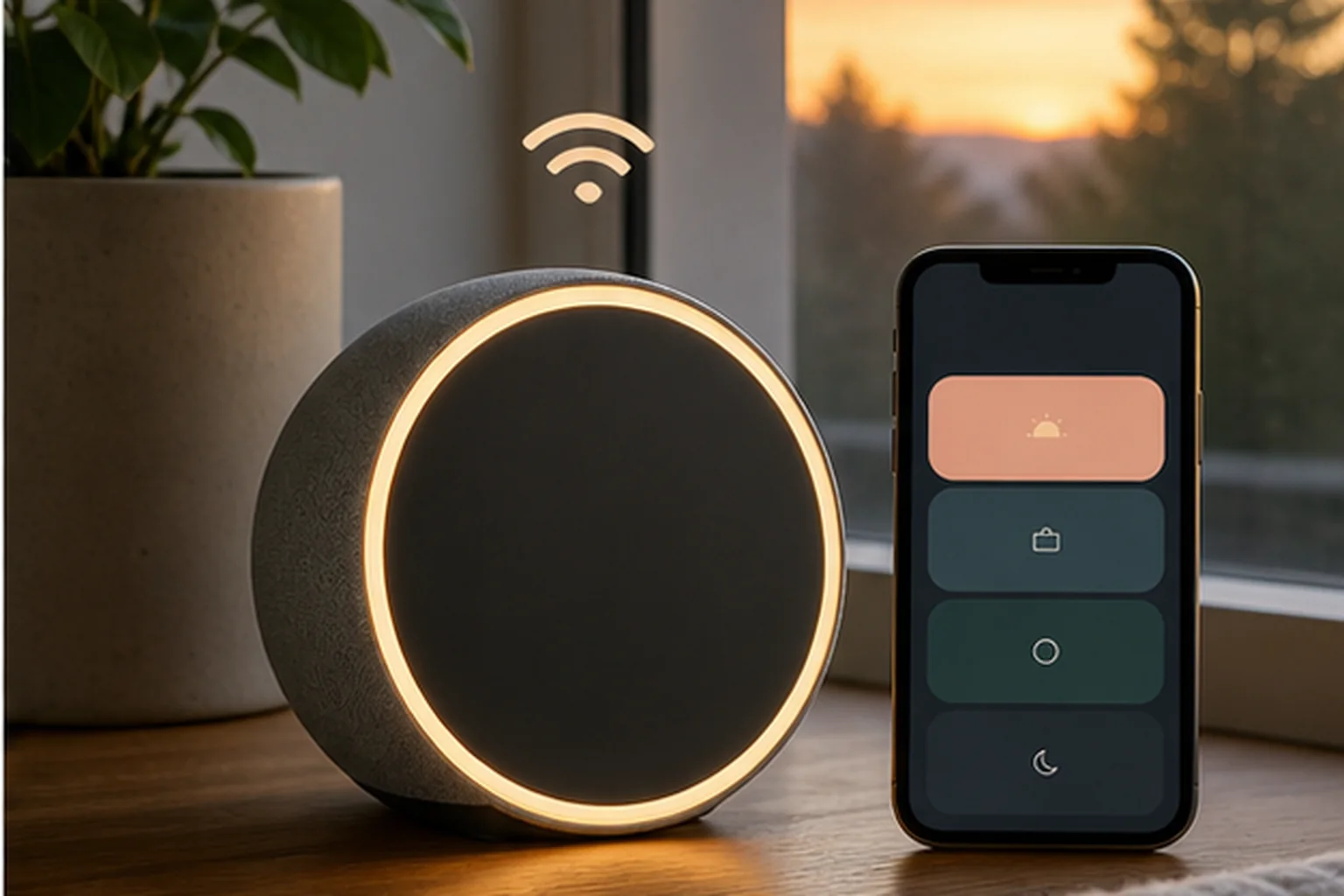
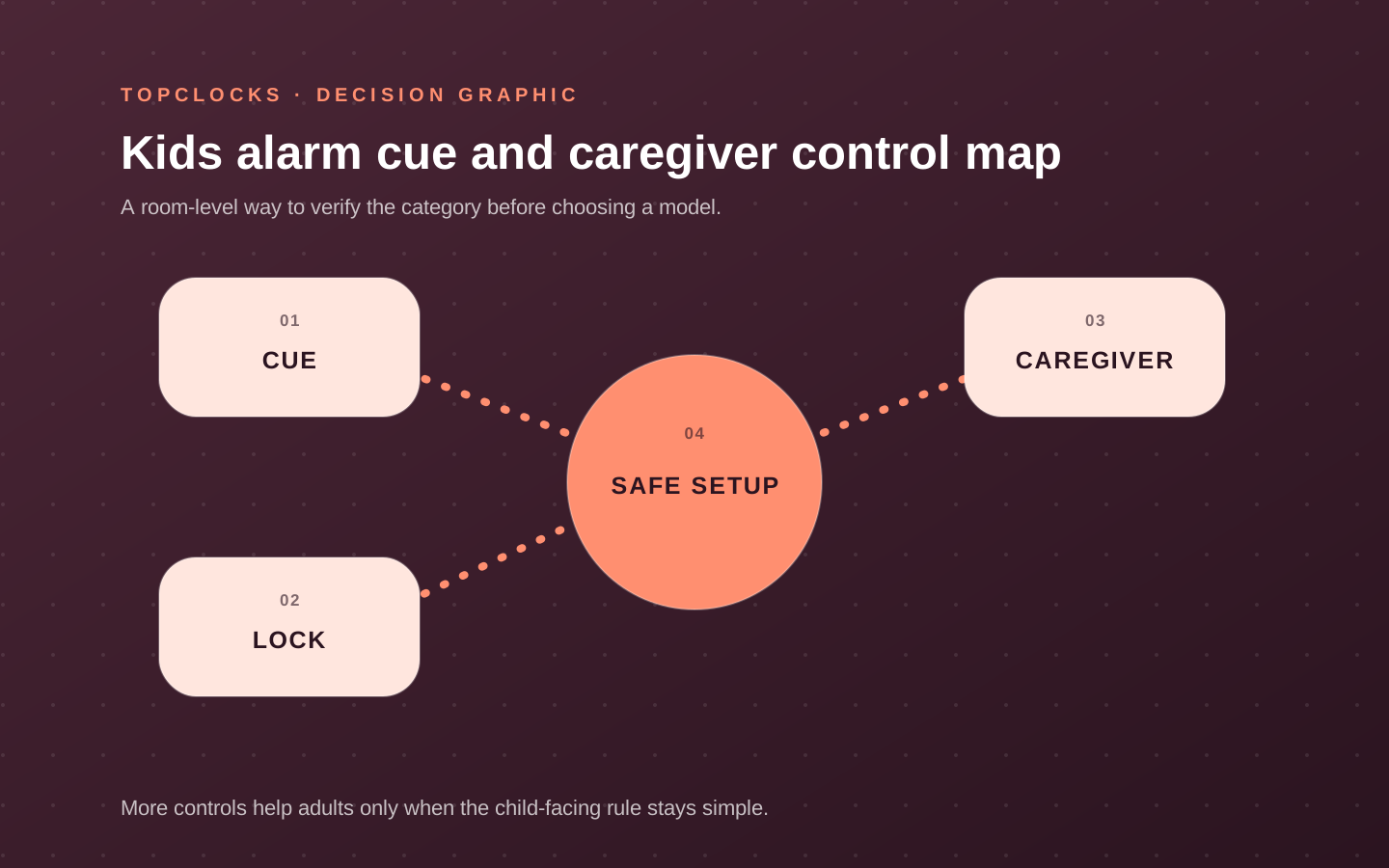
The child should be able to read the cue without changing the schedule accidentally. A control lock, app-based caregiver setup, or less accessible rear buttons can help, while each adds its own trade-off. App control is useful when adults change routines remotely and adds account, Wi-Fi, compatibility, and household-access questions. On-device control is independent of a phone and may be easier for a child to explore. Test whether the active routine remains visible to the adult.
Place mains cables according to manufacturer guidance and the child’s room needs. Keep adapters and cords from creating access or trip problems. Inspect battery compartments and use any required fastener. The clock should be stable on its surface and not invite climbing to reach it. Follow product-specific age and safety instructions instead of treating a decorative children’s design as proof of suitability.
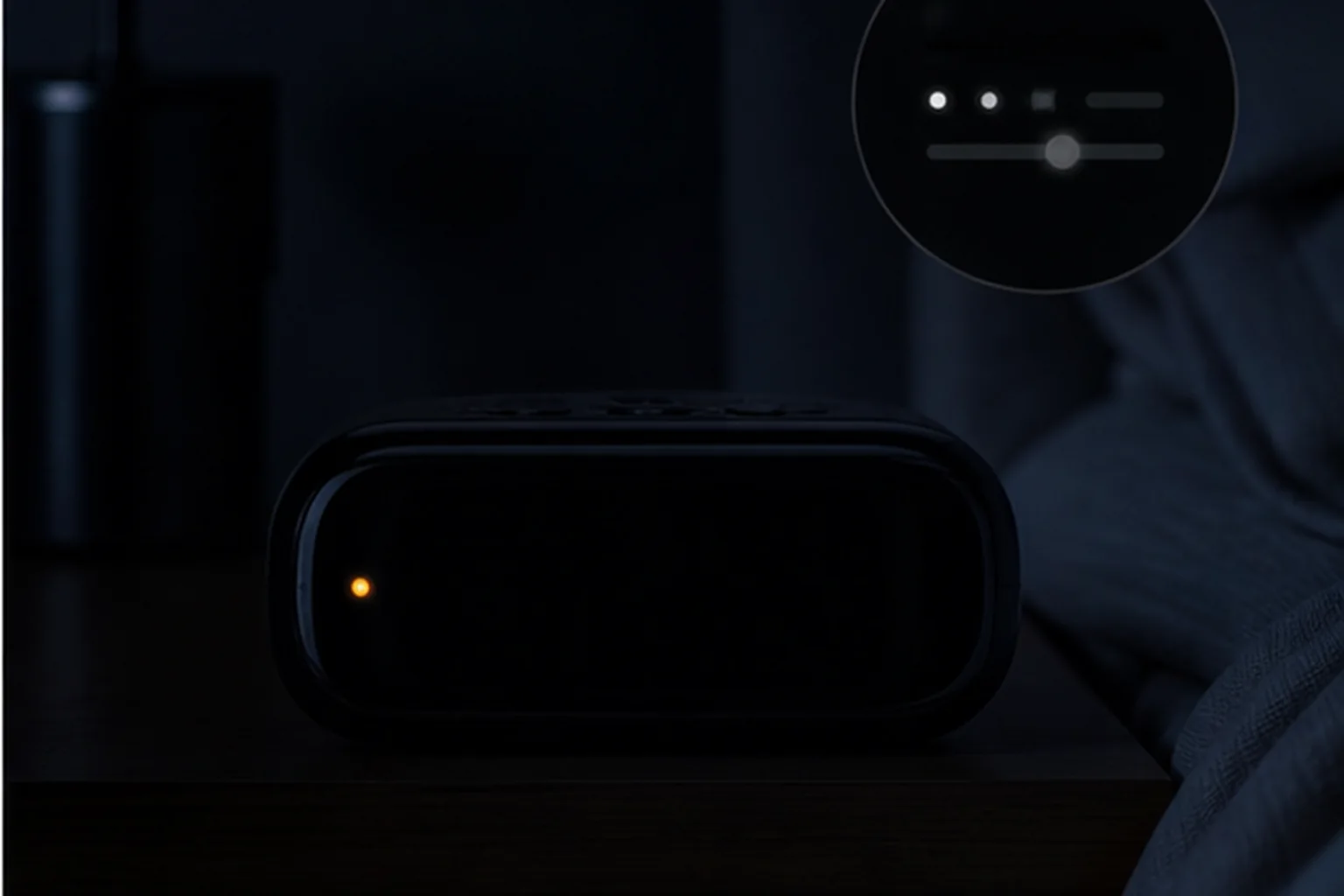
Night brightness needs a real-room check. A night light can be part of the routine and can remain too bright. Look for independent brightness or off states for the clock face, cue light, buttons, and status indicators. If the child needs darkness, confirm that the morning cue can begin from an off state without disabling the routine.
- Test whether a child can alter time, volume, brightness, or routine unintentionally.
- Secure cables and battery access according to the current manual and room arrangement.
- Use the darkest comfortable overnight setting and check every remaining indicator.
- Make sure caregivers can verify the next cue without waking the child or opening a bright interface.
Avoid unused complexity
Grow-with-child value comes from a clear next job, not the longest feature list
A family device can move from sound machine and night light to okay-to-wake cue, then to a scheduled alarm.
That progression has value when the household expects to use the next stage and the controls remain manageable. A simpler color clock can remain the better purchase when one rule solves the current problem and no app or content library is wanted. Future flexibility should be concrete, not an excuse to buy every option.
Review schedules for weekdays, weekends, naps, school cancellations, travel, and seasonal time changes. Separate routines clearly so an old nap setting does not create an unexpected cue. If adults change the time remotely, confirm which device and account controls it. If the child begins managing the clock, simplify the active routines and teach alarm on/off state.
Retire features that no longer serve a job. Unused sound programs, colored scenes, and overlapping alarms create ambiguity. The transition to an independent school alarm may require a different signal, clearer display, louder or more adjustable tone, or physical controls. A toddler clock does not need to remain the only device indefinitely to prove value.
- Identify the current job and one foreseeable next job.
- Check whether the product supports both without making the current cue confusing.
- Clean up obsolete routines after schedule or age changes.
- Move to a conventional alarm route when waking, not morning permission, becomes primary.
Compare three family roles
Shortlist a configurable routine, a clear color cue, and a simple sleep/wake display
Hatch Rest+ 2nd Gen represents a configurable family routine with sound, light, app control, and changing schedules. LittleHippo MELLA represents a visible color and facial-expression rule with on-device functions. Tommee Tippee Groclock represents a simpler sleep-to-wake display with nap and wake scheduling. These models should be compared by the child-facing job, caregiver workflow, brightness, power, and controls—not by declaring the product with the most content the winner.
Verify the exact current official product information: recommended use context, power, included cable or adapter, app and account requirements, schedule types, lock, alarm sound, night-light behavior, display states, and physical controls. Use the direct review for model-specific detail when available. Do not make medical, developmental, or guaranteed sleep claims from product marketing.
Introduce the cue on a low-stakes day, explain it in one sentence, and rehearse what happens before and after the change. Keep the overnight state comfortable, observe whether the child understands rather than merely notices the light, and verify the next schedule after any remote edit. Reassess after travel, time changes, or a change in the family routine.
- Reject a device whose cue is too complex for the current rule.
- Reject a setup whose cables, battery access, placement, or brightness do not fit the room.
- Reject app dependence when the household will not maintain it.
- Prefer the model that lets adults repeat one clear rule consistently.
An okay-to-wake clock is a communication tool. Its success depends on a comprehensible cue and a stable household response, not on the number of lights and sounds in the product.
Verify in the room
Define the morning rule the child must understand
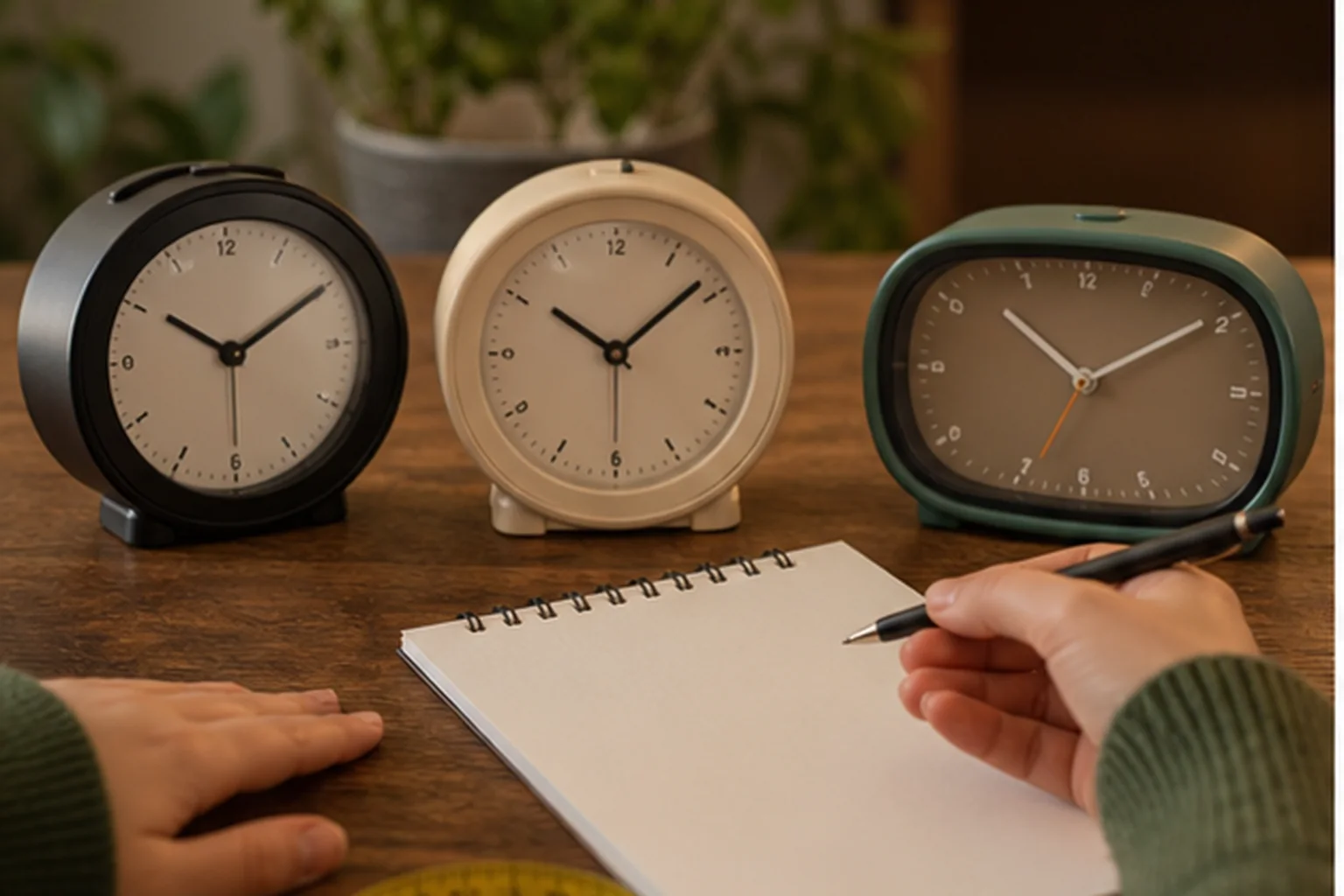
A child may need to wake for school, stay in bed until a set time, recognize when morning begins, or practise setting an alarm independently. Those are separate jobs, even when one clock offers all of them. Treat this as a selection experiment for alarm clocks for kids, not a claim that one model will work for every sleeper. The objective is to expose a mismatch while the clock can still be returned, moved, or reconfigured.
Set up the device in the child’s real room with the normal light level, sleep distance, caregiver access, cable route, and any button lock. Explain one cue without relying on the product name. Keep the first run deliberately ordinary. Extreme settings can hide a placement problem, and a special one-night routine does not show whether the setup is maintainable on workdays, school days, weekends, and schedule changes.
A kids clock fails when colors or icons change meaning, controls invite accidental schedule changes, the cue is too stimulating, or the physical setup does not suit the child’s room. Write the likely failure before running the test. That note prevents a bright display, attractive sound library, charging pad, or app from receiving credit for a wake path it cannot protect.
Record the rule explained, the cue shown, the child’s response, caregiver setup time, accidental button access, and whether the schedule remains clear after a routine change. A simple dated log is enough. Avoid converting one successful morning into a universal result; repeat the check after changing bedding, furniture, power, software, room, or schedule because the signal path may have changed.
- Wake or okay-to-wake job: write the observed state, not a yes-or-no impression. Add the condition that produced it and the next check if the result was unclear.
- One stable cue: write the observed state, not a yes-or-no impression. Add the condition that produced it and the next check if the result was unclear.
- Caregiver controls: write the observed state, not a yes-or-no impression. Add the condition that produced it and the next check if the result was unclear.
- Button lock: write the observed state, not a yes-or-no impression. Add the condition that produced it and the next check if the result was unclear.
- Cable and battery safety: write the observed state, not a yes-or-no impression. Add the condition that produced it and the next check if the result was unclear.
- Routine change test: write the observed state, not a yes-or-no impression. Add the condition that produced it and the next check if the result was unclear.
A kids clock passes when the child-facing rule stays simple and the adult-facing controls remain predictable and appropriately secured. Reject a feature-rich model when its extra states make the morning rule harder to explain or verify. If the result is mixed, do not average it into a score. Preserve the unresolved condition and compare only models that give you a direct way to verify it.
When reading product pages for alarm clocks for kids, translate each promising label back into an observable state. “Reliable” should identify the cue that survives the expected power and dependency conditions. “Easy to use” should identify who sets the alarm, in what light, and how the active state is confirmed. “Best” should disappear unless the scenario and disqualifiers are stated beside it.
Close the hidden gaps
Questions that settle a choice about alarm clocks for kids
For alarm clocks for kids, these questions close the gaps left by retailer filters and broad “best alarm” lists. Each answer is a boundary for the shortlist, not a promise about an untested model.
What should be tested before buying alarm clocks for kids?
Set up the device in the child’s real room with the normal light level, sleep distance, caregiver access, cable route, and any button lock. Explain one cue without relying on the product name. Use the exact device revision and current manual when a control, accessory, app, or backup behavior affects the result.
Which failure should be ruled out first?
A kids clock fails when colors or icons change meaning, controls invite accidental schedule changes, the cue is too stimulating, or the physical setup does not suit the child’s room. Test that failure first, while the consequences are low, instead of increasing every setting at once.
How many checks make the result dependable?
Within this review of alarm clocks for kids, one successful check confirms that the setup can work; it does not show that it is robust. Repeat it on ordinary mornings and after any change that affects the signal, power, placement, schedule, or stop action. High-consequence mornings deserve an independently tested backup.
Can specifications settle the choice?
Specifications and manuals can narrow the shortlist for alarm clocks for kids by establishing intended controls, compatibility, power requirements, and operating states. They cannot establish what one sleeper will hear, see, or feel through a particular room and bed. Keep documented facts and room observations separate.
When should a candidate for alarm clocks for kids leave the shortlist?
Reject a feature-rich model when its extra states make the morning rule harder to explain or verify. A disqualifier should remove the model before price, design, reviews, or optional content are compared.
What does a passing result look like?
A kids clock passes when the child-facing rule stays simple and the adult-facing controls remain predictable and appropriately secured. The result should be visible in the log and repeatable without a special workaround that the household is unlikely to maintain.
Finish the decision about alarm clocks for kids by writing one sentence: “This setup should wake this person, in this room, through this signal, under these power conditions, and it will be checked this way.” If any blank remains, the page has identified the next research task rather than pretending the purchase is settled.
Before relying on it
Run the complete alarm path
A product page can confirm features. Only a real setup check confirms that the selected signal, placement, controls, and power path work together in the room.
- Teach one cue at a time.
- Use the child lock if available.
- Inspect the battery compartment.
- Set the light at the darkest comfortable level.
Role-based product shortlist
Models worth comparing for this decision
These are desk-researched candidates, not a claim that one clock wins for everyone. Each card explains the scenario it fits, the limitation to verify, and the primary source used for the factual details.
Compare for a family routine that can grow with the child
Hatch Rest+ 2nd Gen
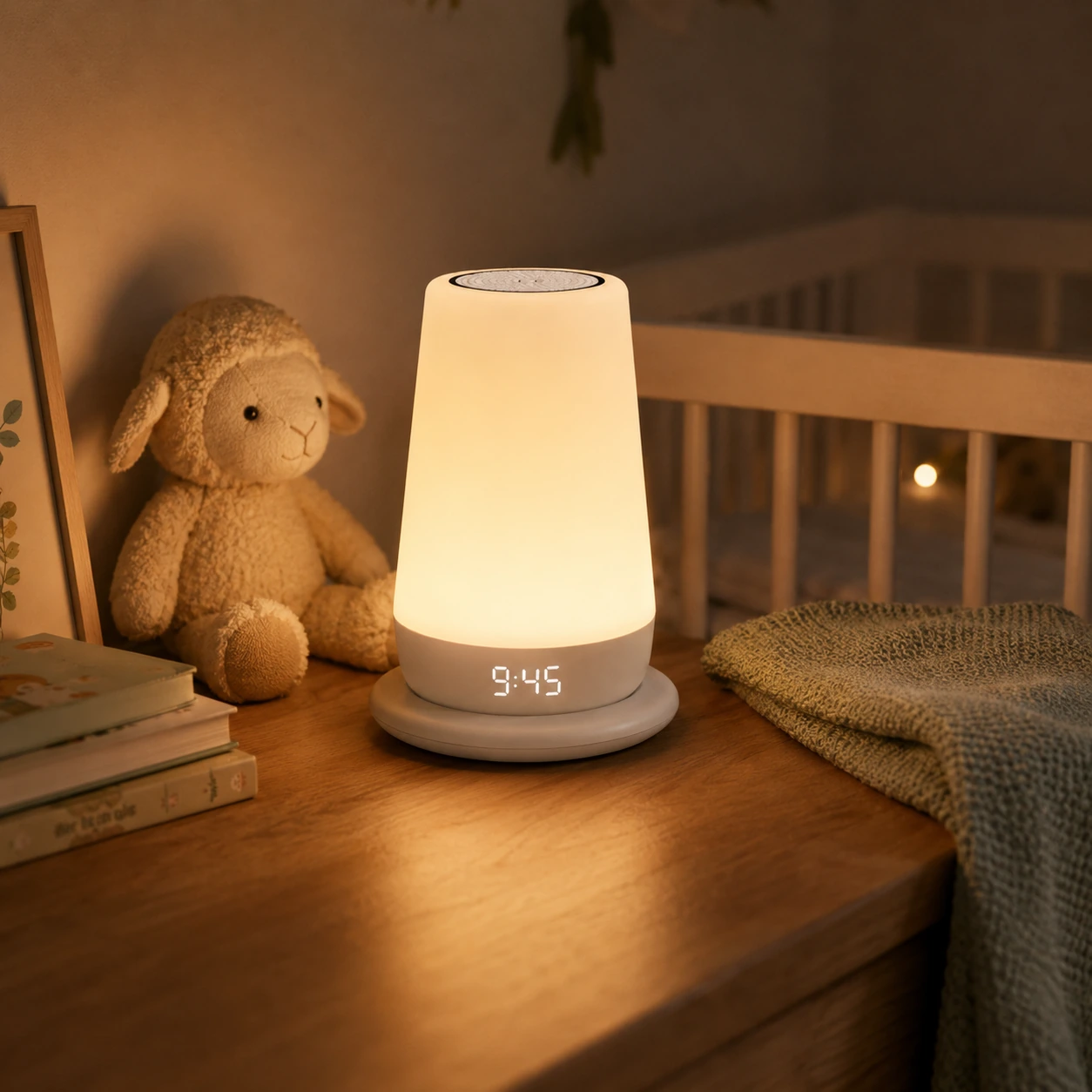
Rest+ suits a household that wants one device to handle sleep sounds, night light, and changing time-to-rise schedules.
Rest+ 2nd Gen combines a sound machine, color light, time-to-rise routines, app-led scheduling, and an internal battery with a charging base. It gives caregivers more flexibility than a single-color training clock.
Compare for clear sleep and wake color cues
ANALOI OK-to-Wake Kids Alarm Clock
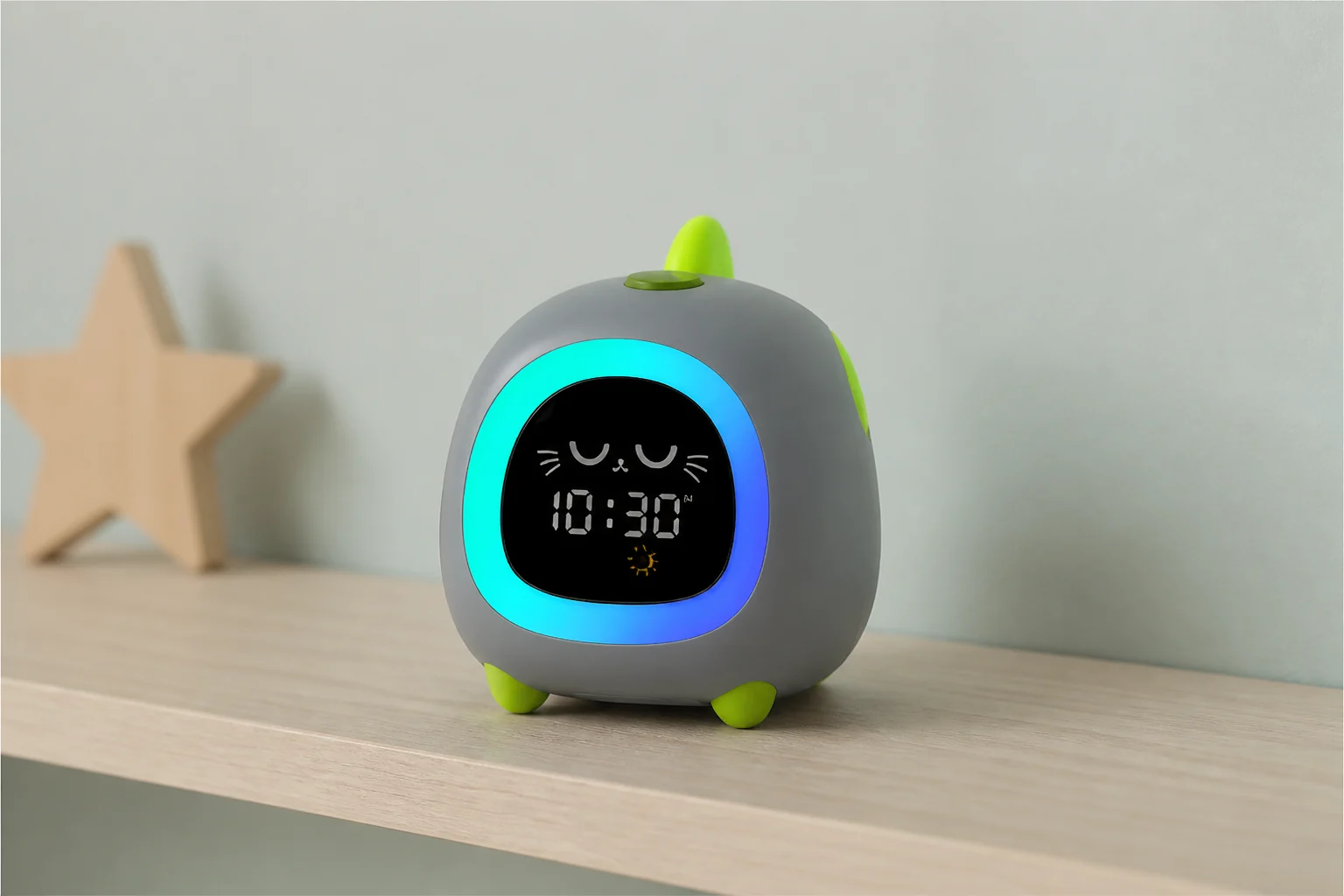
ANALOI gives the family a direct blue-sleep and green-wake rule with facial cues, provided adults teach and reinforce the same meaning consistently.
ANALOI uses a blue closed-eye cue for sleep time and a green open-eye cue for wake time. It adds dual alarms, three display and light levels, sounds, and an auto-off timer without making clock-reading a prerequisite.
Compare for a color-based morning rule
LittleHippo MELLA
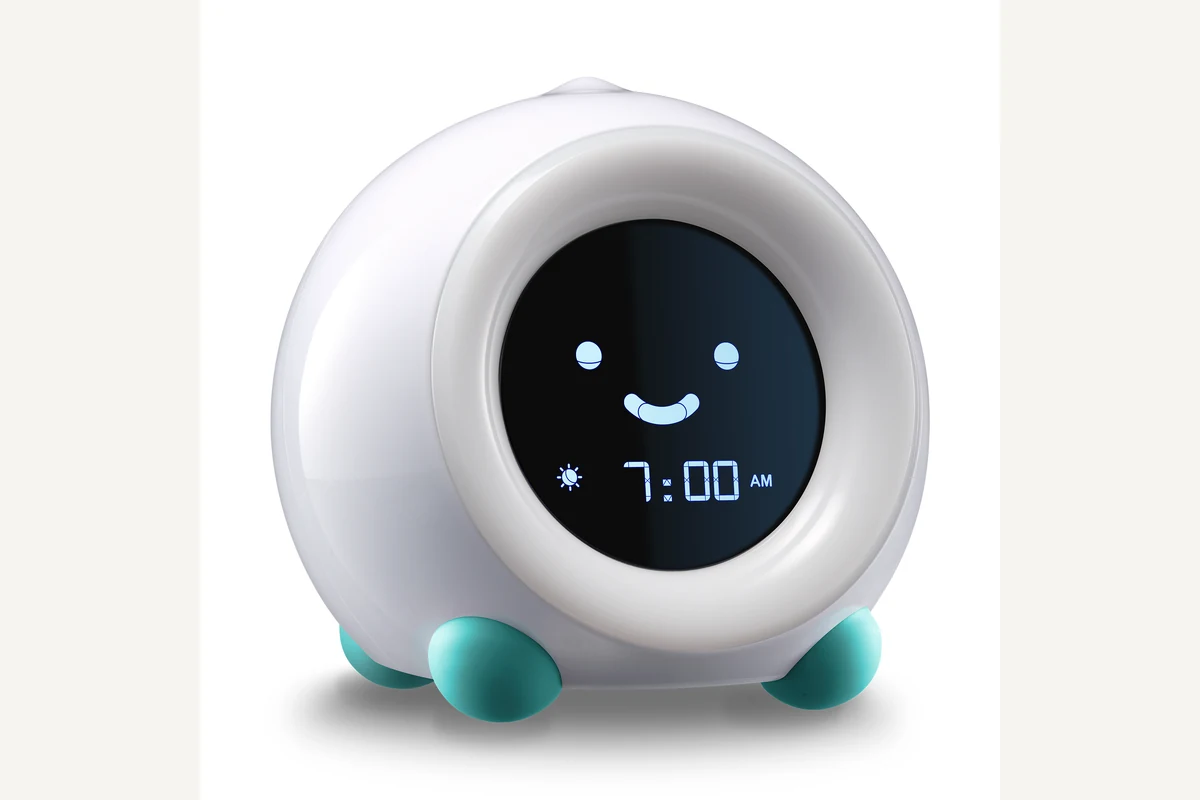
MELLA makes the morning rule visible through both color and facial expression, which can be easier to teach than clock time.
MELLA combines a ready-to-rise color cue and facial expression with an alarm, nap timer, night light, and sleep-sound playback. The maker places the sleep-trainer function from about age two, when color rules are easier to understand.
Compare for a simple sleep and wake display
Tommee Tippee Groclock
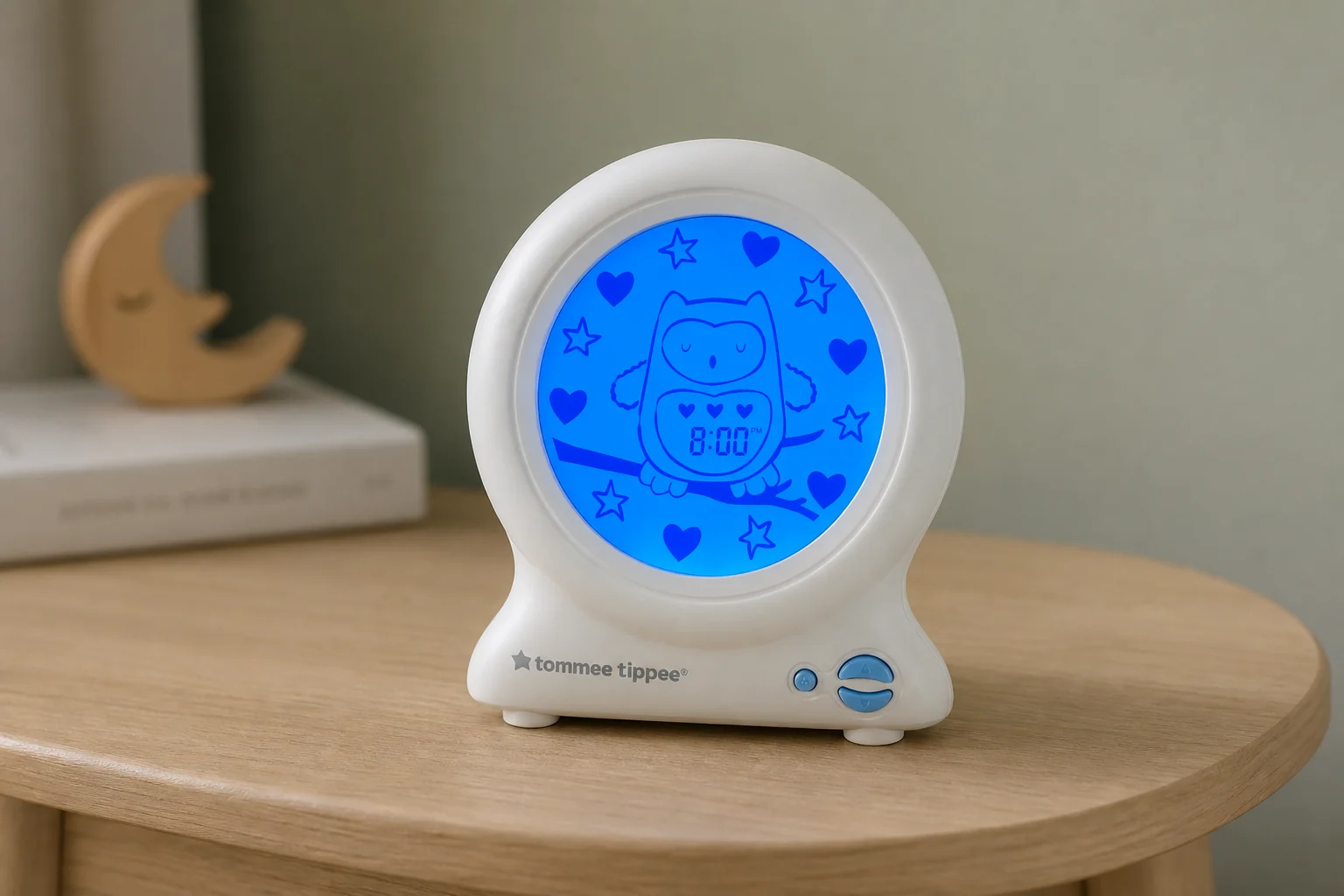
Groclock is the simpler sun-and-stars style route when the main need is distinguishing sleep time from morning.
Groclock shows a visual sleep-to-wake progression, supports separate sleep, nap, and wake times, and offers an optional digital clock face and audible alarm.
Evidence trail