Decision comparisons
Alarm Clock Comparisons Built Around the Real Trade-Off
A comparison is useful only when the recommendation changes at a clear boundary. These pages show that boundary and the check that confirms it.
The decision first
Which unresolved trade-off is blocking the decision?
Choose a comparison that matches the unresolved trade-off. Light versus sound is about when and how the cue reaches the sleeper. Loud versus vibration is about room-wide intensity versus a local physical signal. Wired versus wireless bed shakers is about cable certainty versus battery and connection maintenance. Phone versus clock is about convenience versus separation and dedicated controls.
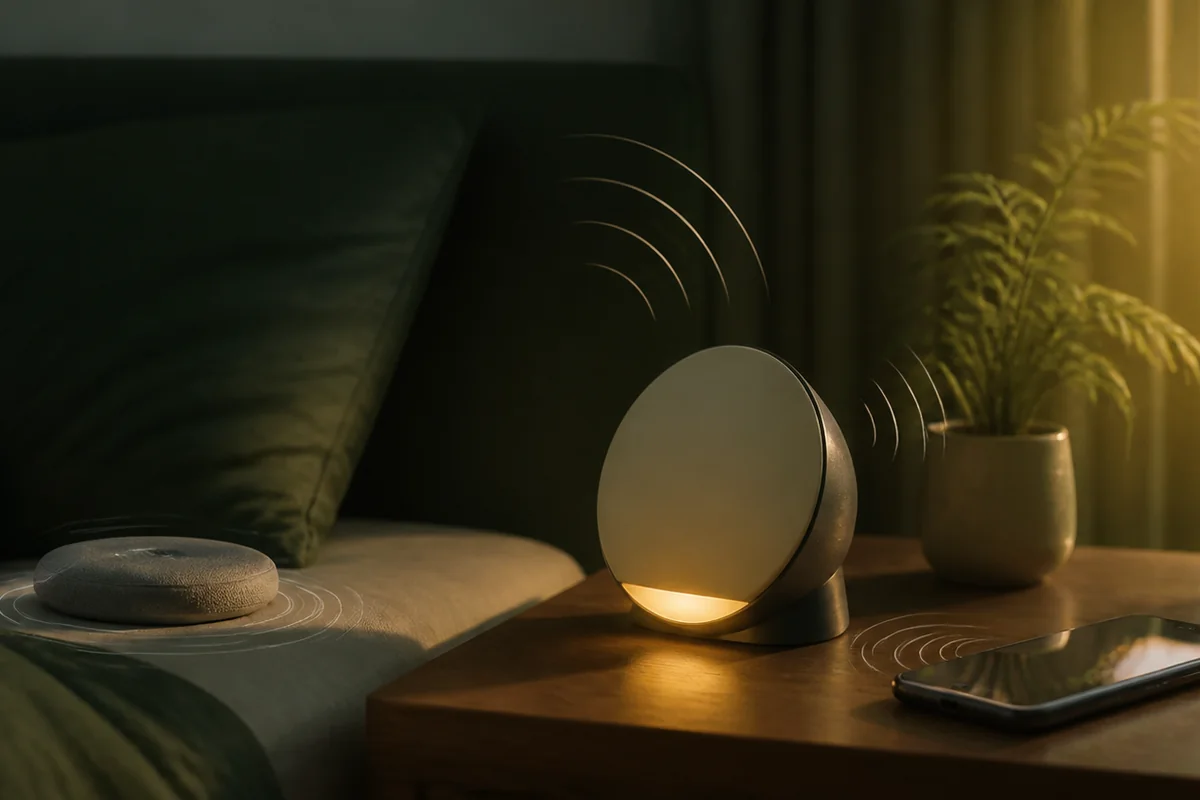
Choose the unresolved trade-off
Open the comparison that matches your decision
Each route isolates one choice, shows the failure boundary on both sides, and points to the next category or product check.
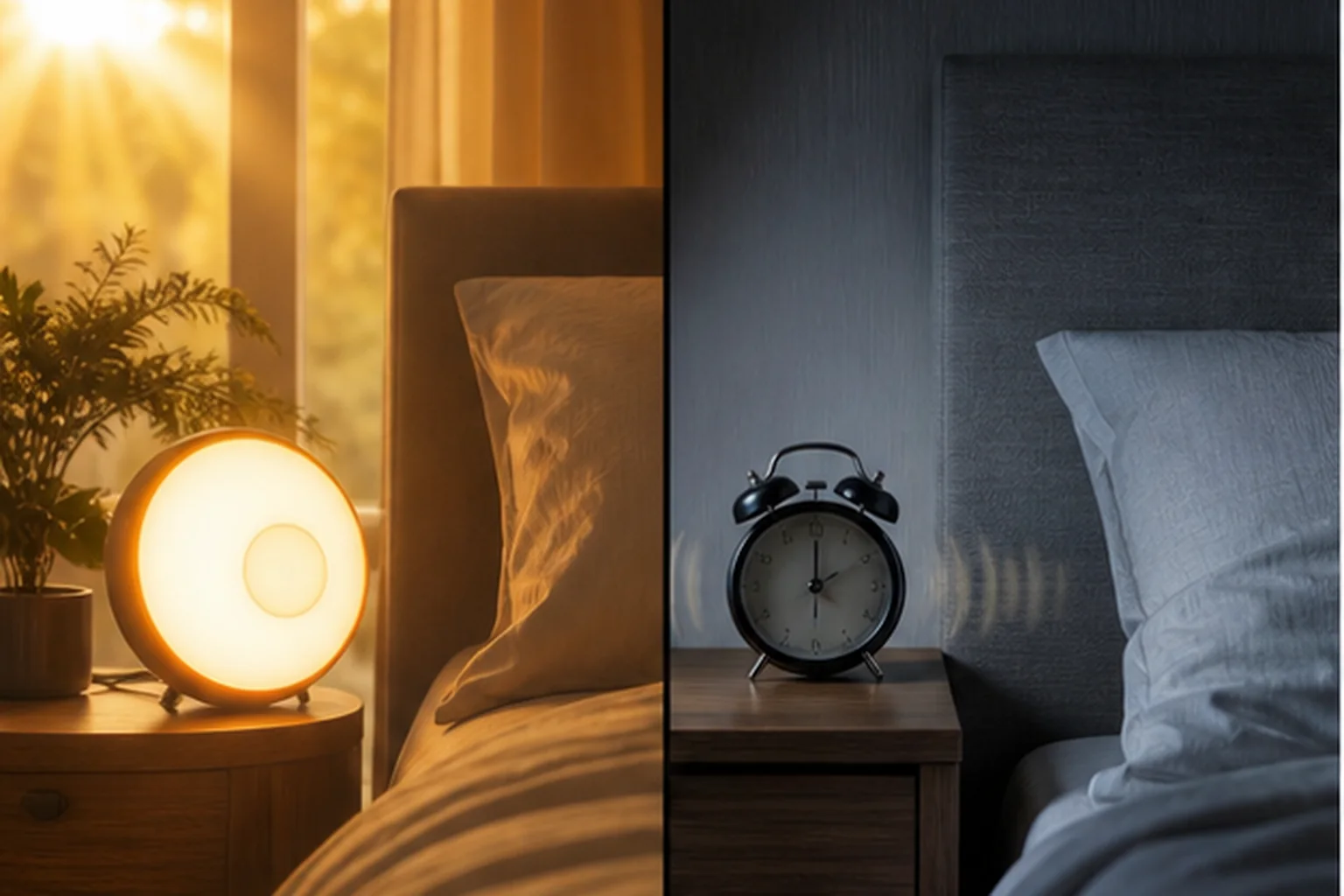
Sunrise vs sound
Room light before a tone versus an immediate audible cue.
Open comparison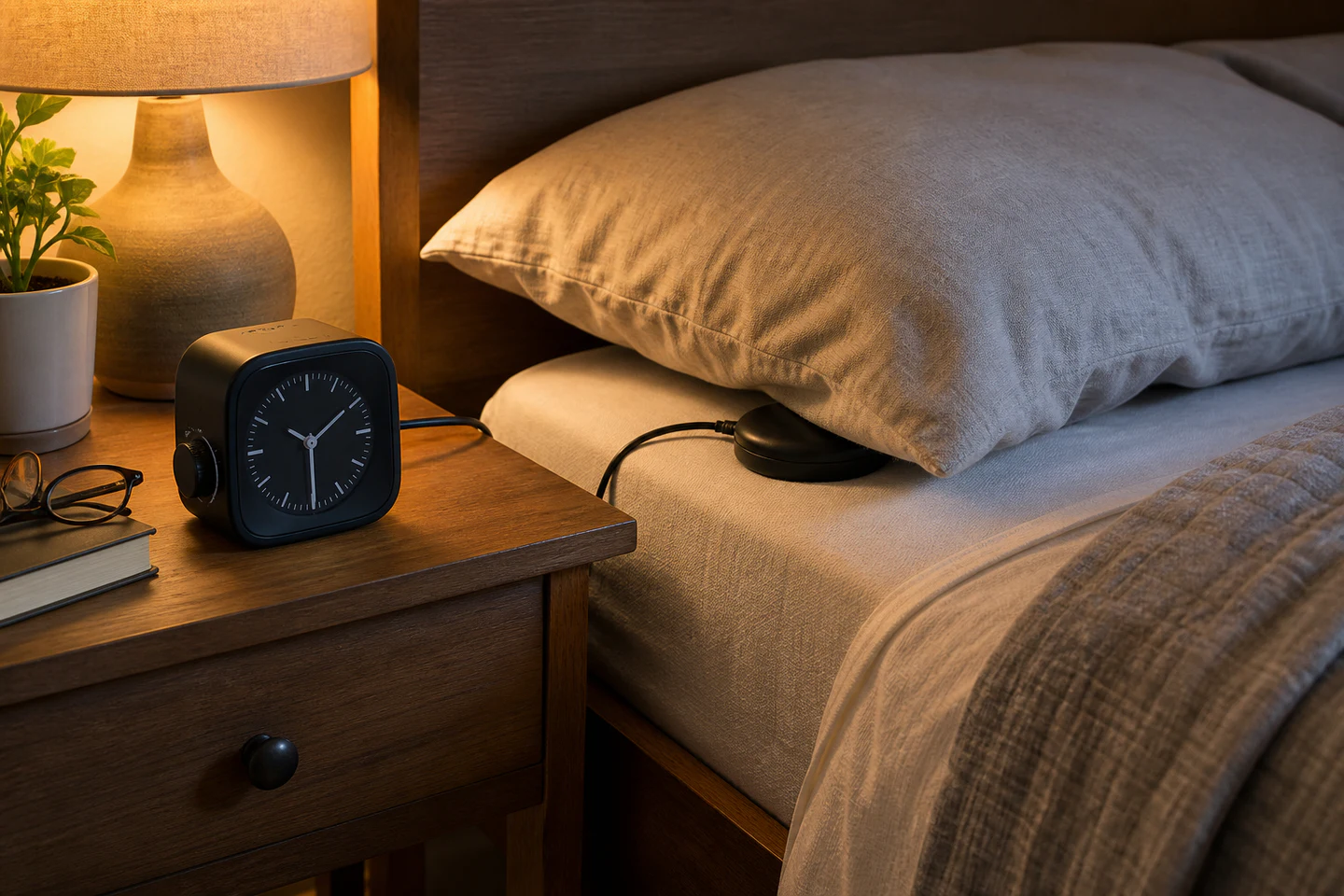
Loud alarm vs bed shaker
Room-wide sound versus local vibration.
Open comparison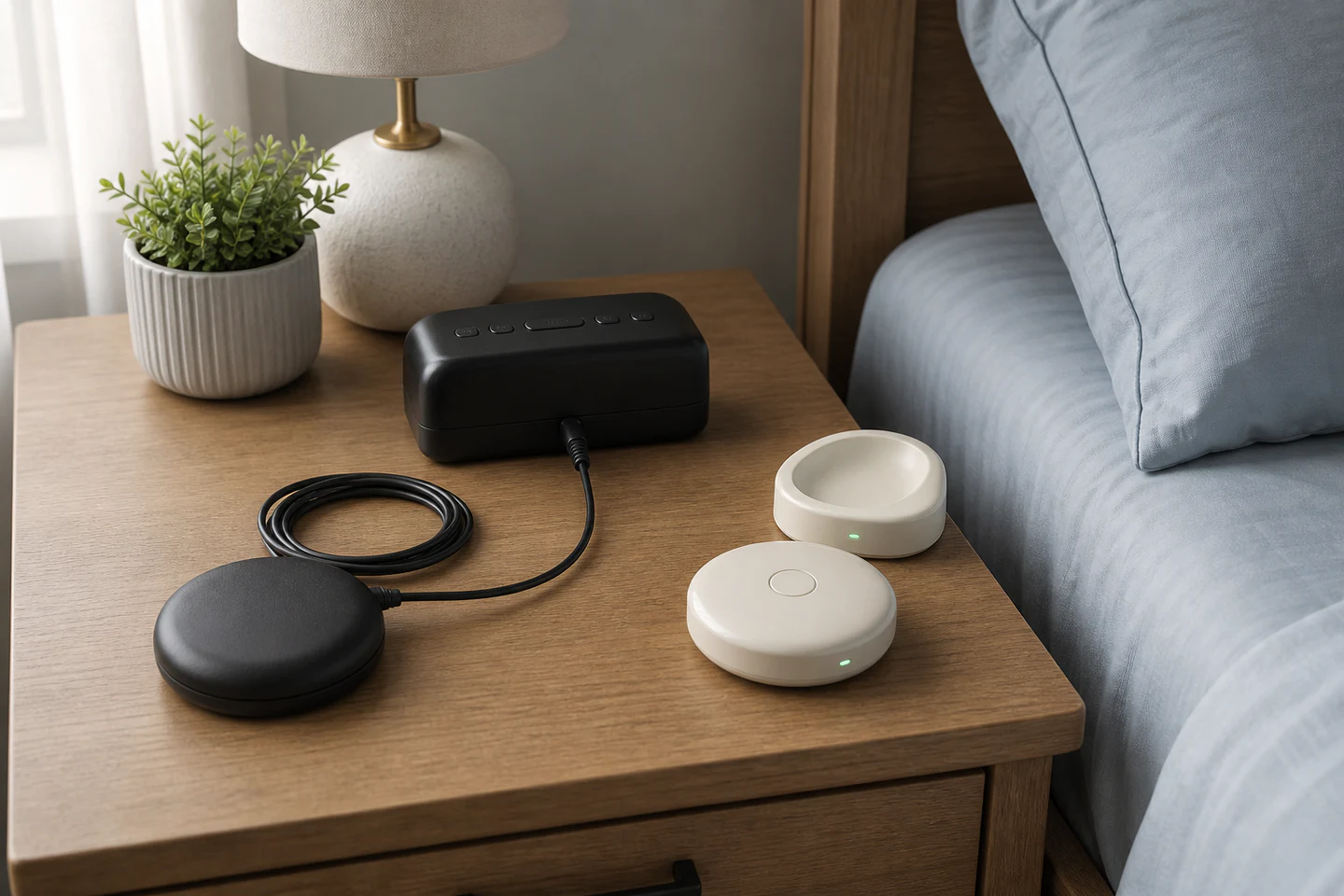
Wired vs wireless bed shaker
A fixed cable path versus a rechargeable movable shaker.
Open comparison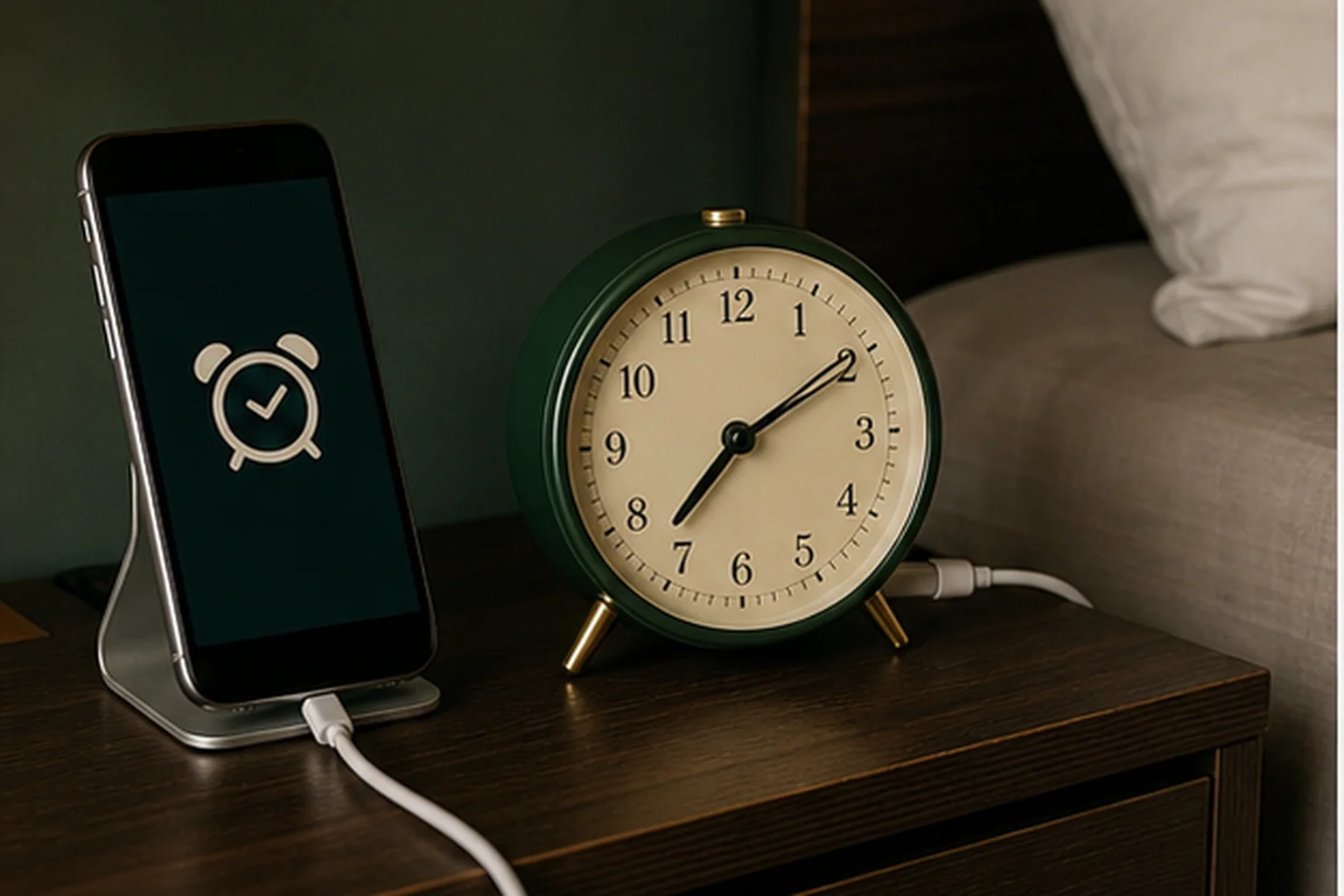
Phone vs alarm clock
Flexible software versus a dedicated bedside device.
Open comparison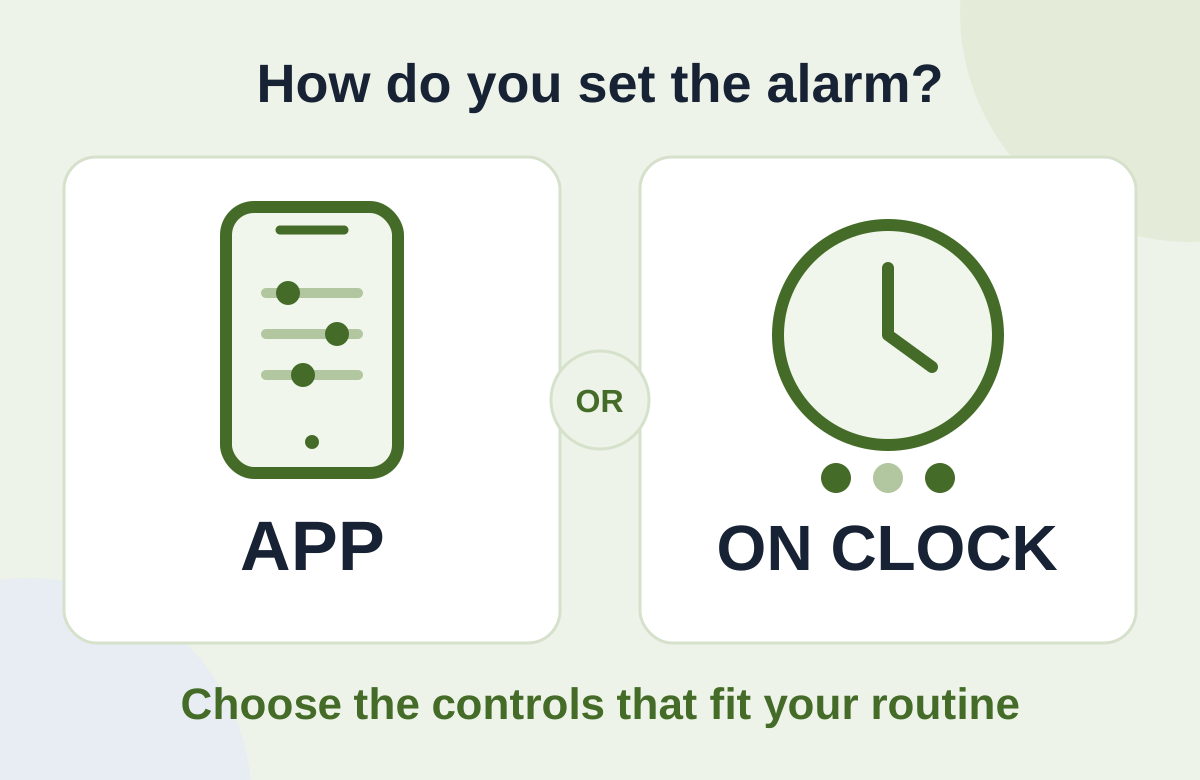
Hatch Restore 3 vs Philips HF3520/60
Choose between app-based weekday routines and settings on the clock itself.
Open comparison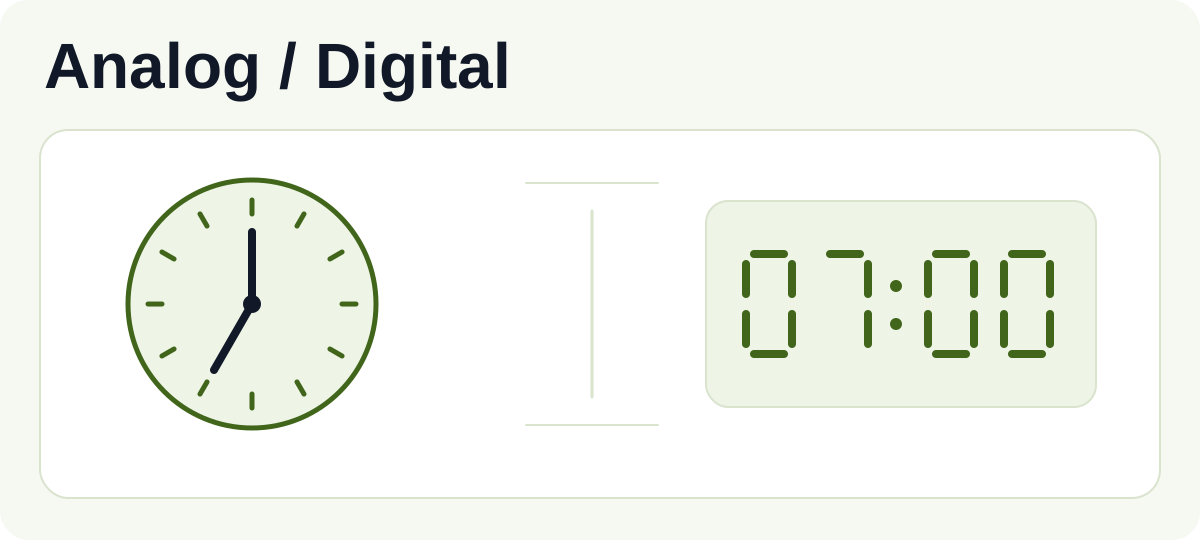
Analog vs Digital Alarm Clocks
Compare hands and digits by alarm setting, night visibility and power behavior, with four documented model examples.
Open comparison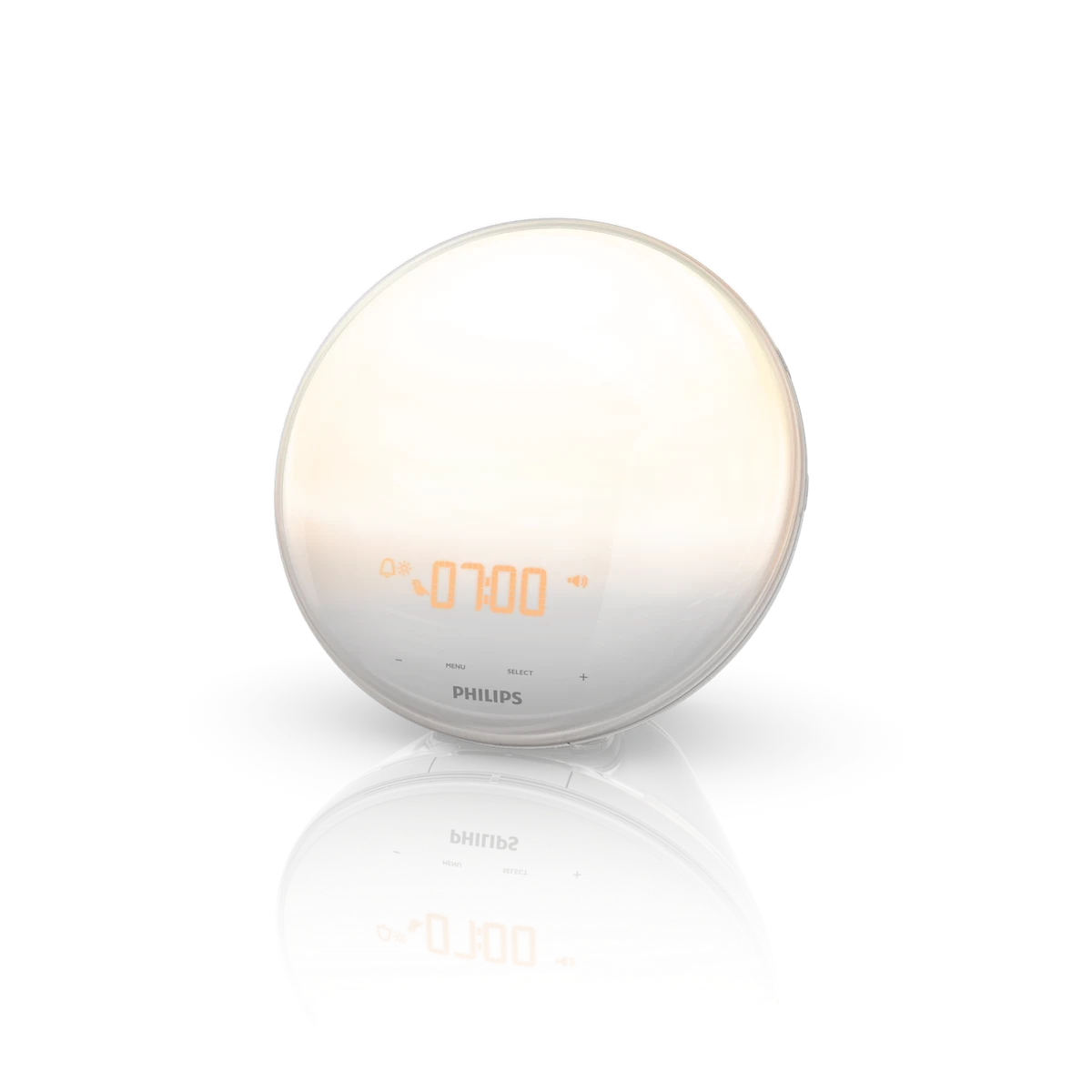
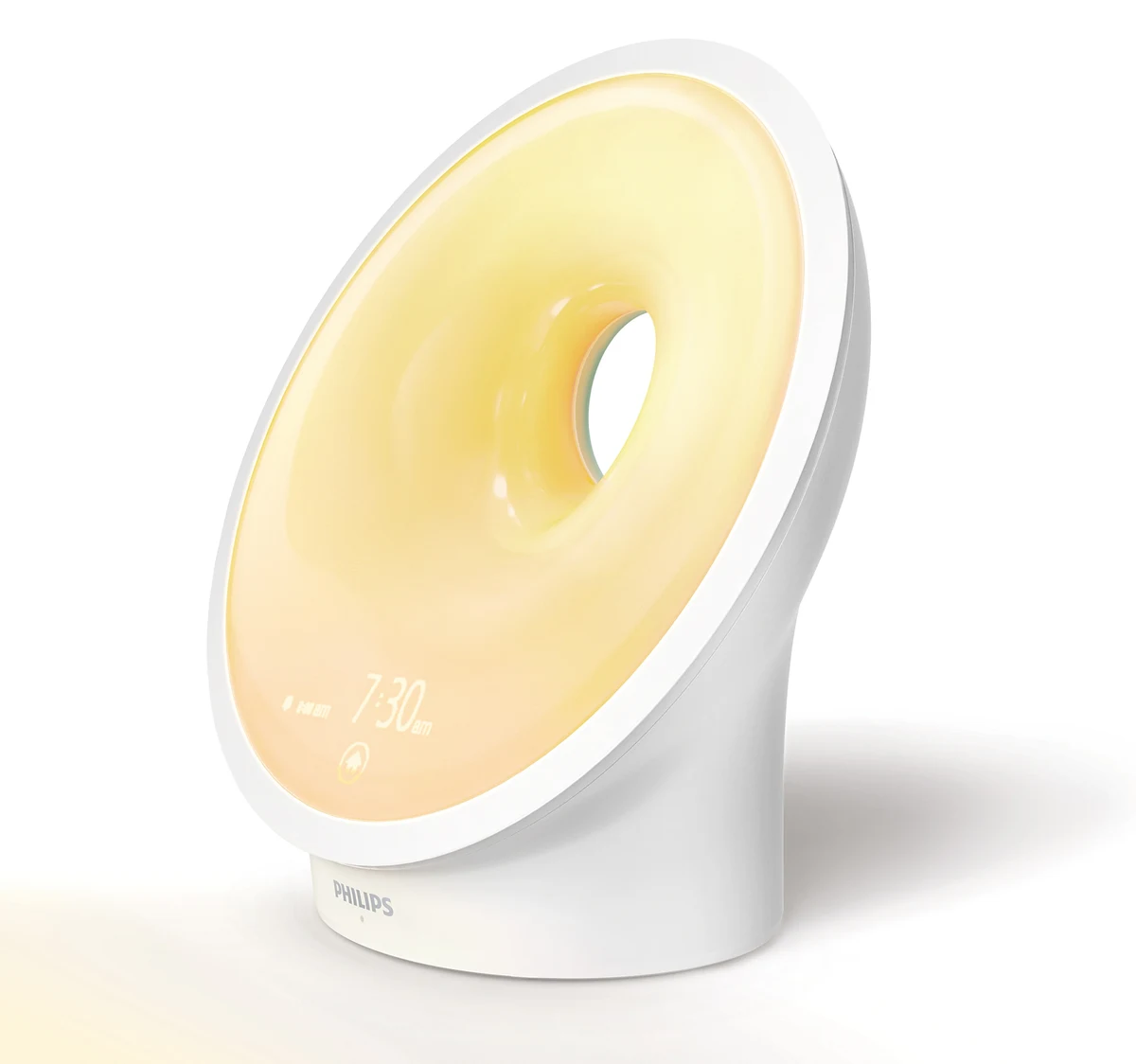
Philips HF3520/60 vs HF3650/60
Decide whether the wider sunrise range, evening tools, charging, display-off, and backup beep justify the higher model.
Open comparison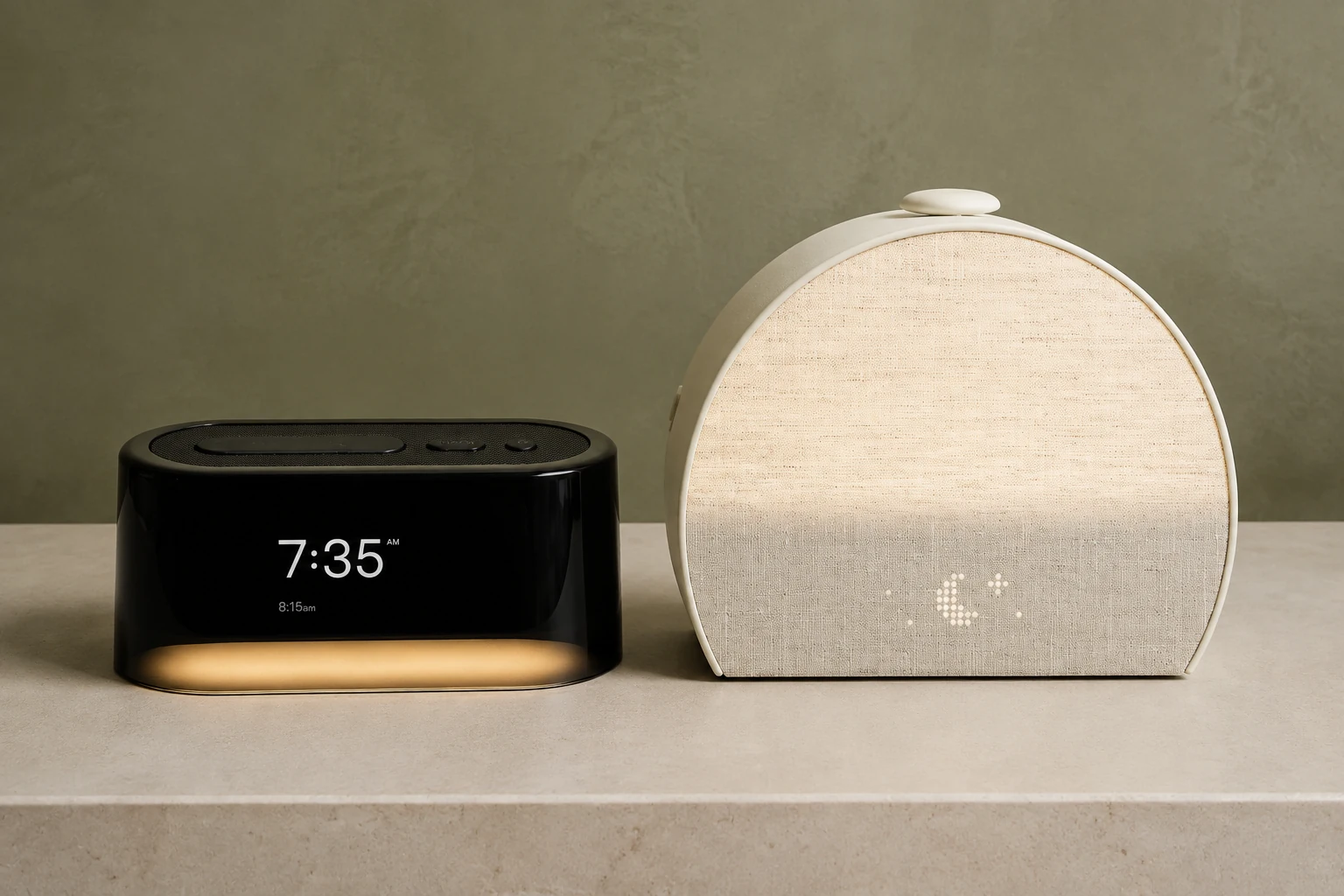
Hatch Restore 3 vs Loftie Clock
Compare Hatch's sunrise with Loftie's two-phase sound alarm, then check controls, subscriptions, offline use, and power backup.
Open comparisonNonnegotiable checks
The criteria that can change the answer
Primary difference
Name the one distinction that can change the answer.
Best-fit scenario
State who benefits and under which condition.
Failure mode
Show what can go wrong with either route.
Verification
Give the reader a manual, placement, or routine check.
Compare one real difference
A useful comparison begins where the recommendation can reverse
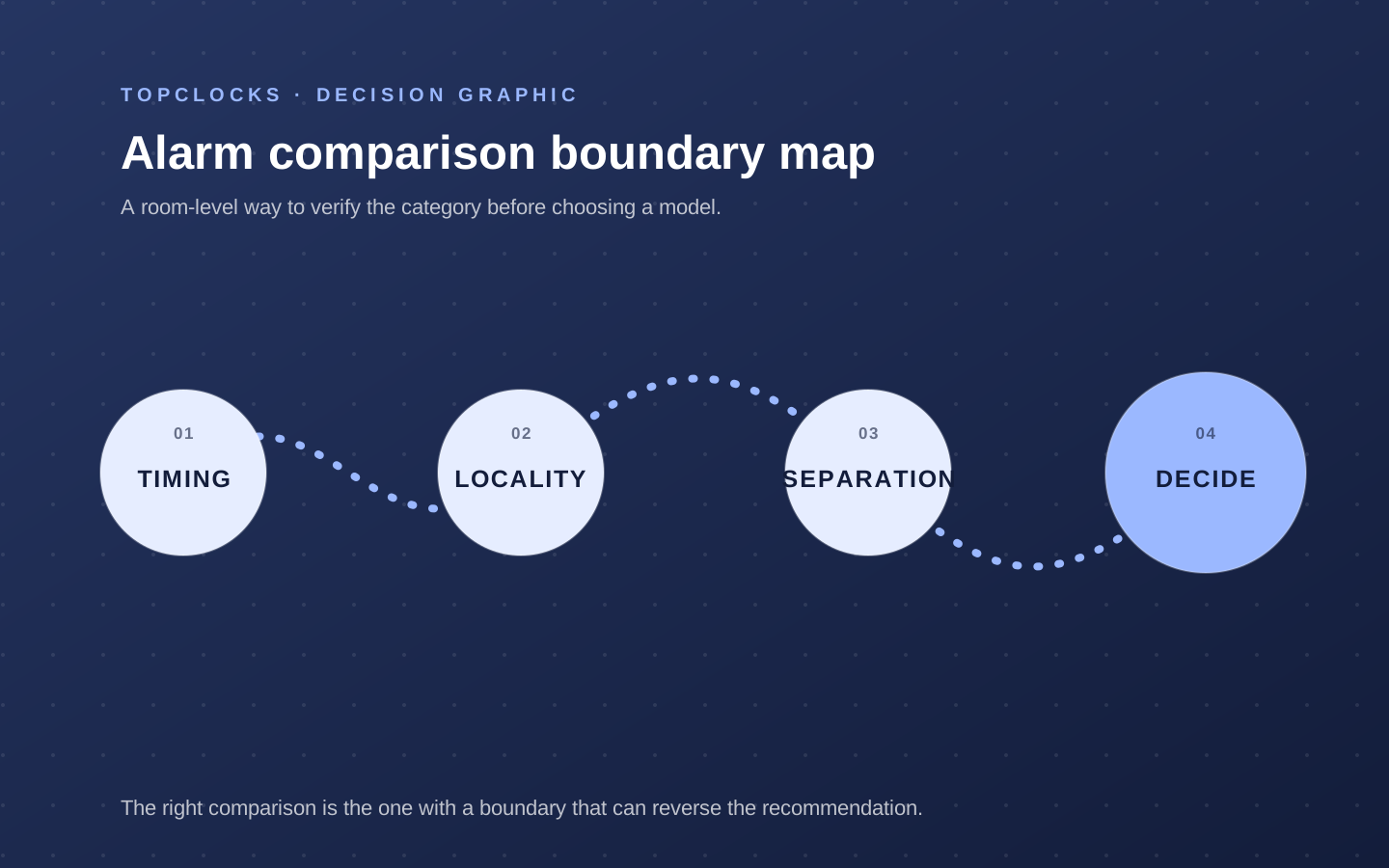
Alarm comparisons become interchangeable when both sides are introduced with the same generic advantages and a final “it depends on your needs.” A decision page earns its place by naming the exact condition that changes the answer. Sunrise versus sound turns on cue timing and physical reach: light begins before wake time and needs a sightline, while sound begins at or near the event and travels differently through the room. Loud sound versus a bed shaker turns on signal access and locality. Phone versus dedicated clock turns on software flexibility versus physical separation and a smaller set of device states.
The boundary should appear before product cards or long feature tables. Ask whether the intended sleeper can receive the channel, whether the signal may affect others, whether the room can support placement, and which dependencies are acceptable. One clear “no” can disqualify a side. If sound is not accessible, a loud-alarm recommendation fails regardless of volume. If the partner follows a later schedule, room-wide light may fail even when the early riser likes gradual waking. If the user needs an outlet-independent travel alarm, a connected bedside clock leaves the comparison.
Some answers point to a combined route. A sunrise routine can finish with sound. A loud alarm can include a shaker. A phone can remain a flexible secondary alarm while a dedicated clock provides a separate primary cue. Combination is not automatically superior: the two paths must be independently configured enough to cover different failures rather than sharing one outlet, speaker, or software state.
- State the physical or operational difference in one sentence.
- Name the condition that disqualifies each side before discussing preferences.
- Allow a combined route only when the extra channel adds meaningful independence.
- Send model-specific claims to official sources and reviews after the route is selected.
Make both sides falsifiable
Compare how each route fails, not how many features it has
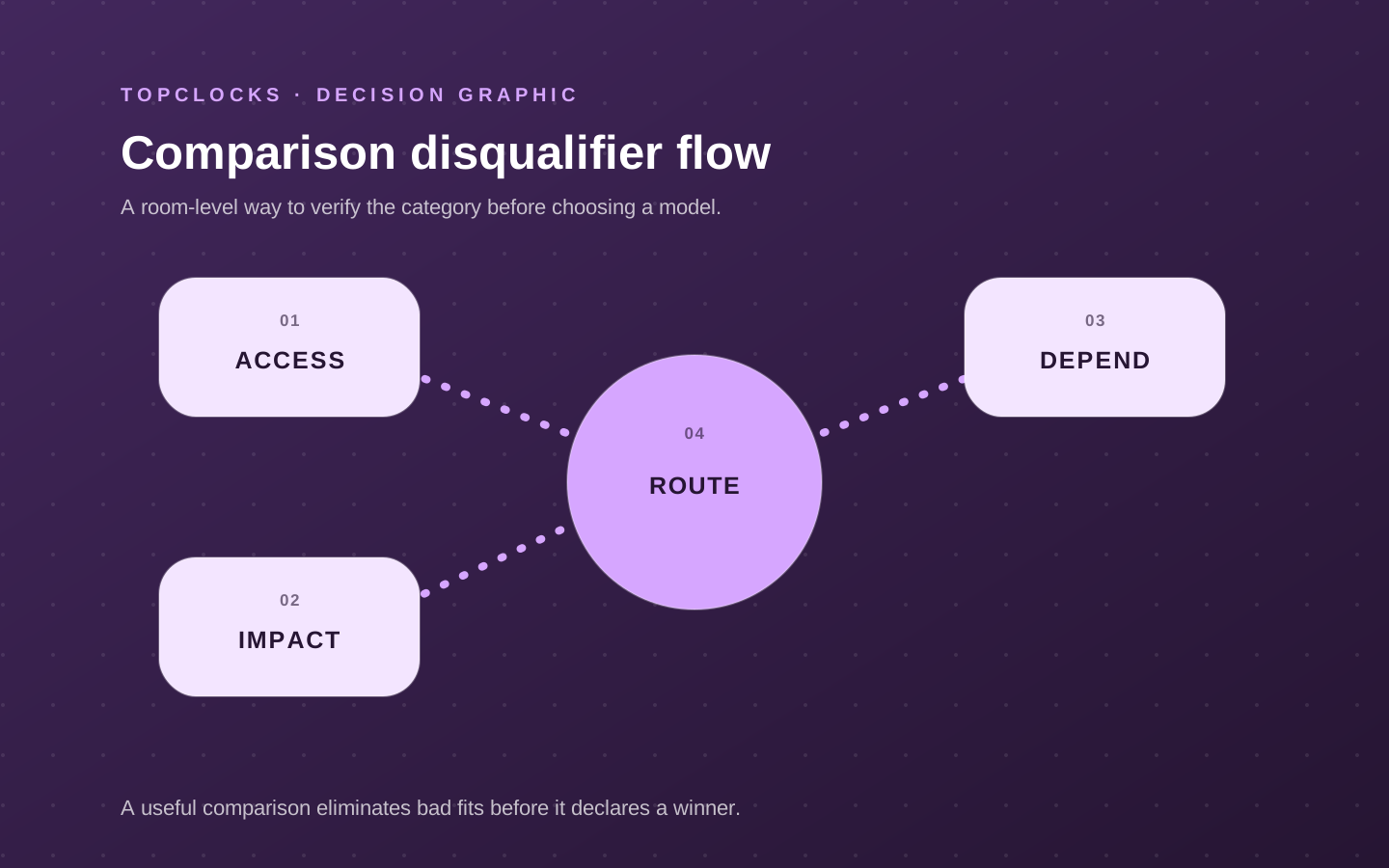
A failure-mode comparison is more durable than a feature-count comparison because it reveals what the user must verify. Sunrise light can be blocked, poorly aimed, too dim at the sleeper, or disruptive to a partner before wake time. Sound can be inaccessible, covered, set to the wrong source, too easy to stop, or unacceptable through shared walls. A shaker can move, disconnect, lose charge, or transmit through a shared mattress. A phone can be undercharged or left in an unexpected software state. A dedicated clock can lose mains power, reset, or retain settings without sounding.
Place those failures beside the relevant control.
Light failures are addressed through placement, intensity, duration, and a final cue. Sound failures are addressed through accessible tone, usable volume range, distance, and a distinct backup. Shaker failures are addressed through physical placement, connector or battery checks, and another channel. Phone failures are addressed through volume, the current platform’s alarm and interruption settings, charging, permissions, and retesting after updates. Dedicated-clock failures are addressed through visible alarm state, physical controls, backup behavior, and a low-stakes unplug test.
The comparison should not imply that every listed remedy works for every sleeper. It should show what evidence would support the choice. If the user cannot perform the required test or accept the remaining failure, that side loses. This is a stronger conclusion than a universal winner because it stays attached to the real scenario.
- Failure probability is not enough: consider the consequence and whether an independent backup is warranted.
- Shared components matter: two functions on one device may disappear together.
- Room behavior matters: light, sound, and vibration have different physical boundaries.
- Maintenance matters: batteries, cables, apps, presets, and schedules change after the initial setup.
Use scenarios without inventing a winner
The same two options can produce opposite answers in different rooms
Consider an early riser sharing a bed with a light sleeper. A sunrise clock may feel gentle to the intended user and still illuminate the partner’s side before their schedule. A loud alarm may wake both immediately. A localized shaker or wearable may reduce spillover, although vibration can transfer through a shared mattress. The best route follows the signal boundary, not the marketing tone used to describe it.
Now consider a traveler. A phone offers automatic time changes, multiple schedules, and no additional device, but it depends on charge and settings.
A compact battery clock creates separation and may provide a second power path, but the alarm hand or small controls may be harder to set after arrival. A folding projection clock adds ceiling readability while relying on USB power for full operation. The answer changes with destination power, bag space, and the user’s ability to verify the alarm in an unfamiliar room.
For a sleeper who repeatedly misses one tone, the loud-versus-shaker comparison is more useful than sunrise-versus-sound if tactile delivery is plausible. For a sleeper who wakes abruptly and wants a lead-in, sunrise-versus-sound is the correct page. For someone whose real concern is bedtime scrolling, notifications, and physical controls, phone-versus-clock addresses the unresolved decision. Choosing the comparison is itself part of the search task.
- Use a receiver scenario to identify accessible channels.
- Use a room scenario to identify signal spillover and placement constraints.
- Use a failure scenario to identify which option covers the current weak point.
- Use a maintenance scenario to identify app, battery, cable, and schedule work over time.
A scenario belongs on the current comparison only when the objects and decision stage remain the same. If the scenario introduces a new primary task, link to a focused type, need, feature, or guide page instead of expanding the comparison until its boundary disappears.
Turn the result into a test
A comparison result is provisional until the chosen route passes the room
After a route wins the comparison, convert the reason into a test.
If sunrise light wins because it should create a gradual cue, place the lamp at the intended height and distance, use the planned duration, and confirm that the light reaches the sleeper without waking the partner too early. If a bed shaker wins because it should localize the signal, test it under the real pillow or mattress and ask whether movement transfers to the other side. If a dedicated clock wins because it should separate the routine from the phone, test its controls, alarm indicator, and power behavior without using the phone as a hidden setup crutch.
Then test the losing side’s disqualifier. This guards against a comparison that was decided by assumption. Sound thought to be disruptive may be acceptable at an adjustable lower setting. A shaker thought to be private may move the whole bed. A smart clock thought to need Wi-Fi at wake time may run saved routines locally, while still needing service access for changes. The source and room test should confirm the boundary.
Finally, record the remaining risk. A single cue may be sufficient for ordinary mornings and insufficient for a flight or safety-sensitive shift. A combined route can cover the risk when it uses a different channel or power source. Do not treat two alarms on the same device as full independence. Do not treat a product card as a substitute for the current manual.
- Test the winning option under the exact condition that made it win.
- Test the losing option’s disqualifier when that check is safe and practical.
- Verify current model behavior, included accessories, and dependencies at the official source.
- Revisit the comparison after moving rooms, changing schedules, replacing a phone or mattress, or changing accessibility needs.
The comparison is complete when the reader can explain both the recommendation and the condition that would reverse it. Without that boundary, the page has only rearranged generic pros and cons.
Verify in the room
Compare one unresolved trade-off at a time
Name the decision that is still open: gradual versus immediate cue, room-wide versus bed-local alert, or flexible phone routine versus a separate bedside device. Do not compare two categories on every visible feature.
Treat this as a selection experiment for alarm clock comparisons, not a claim that one model will work for every sleeper. The objective is to expose a mismatch while the clock can still be returned, moved, or reconfigured.
Place both options in the same room scenario and give them the same wake job. Compare the cue path, bystander effect, power path, control action, and setup burden under that one scenario. Keep the first run deliberately ordinary. Extreme settings can hide a placement problem, and a special one-night routine does not show whether the setup is maintainable on workdays, school days, weekends, and schedule changes.
A comparison fails when it declares a universal winner, counts features with different purposes, or ignores that the alternatives break in different ways. Write the likely failure before running the test. That note prevents a bright display, attractive sound library, charging pad, or app from receiving credit for a wake path it cannot protect.
Write a paired result for each criterion: what one option gains, what it gives up, who experiences the trade-off, and how the reader can verify it. A simple dated log is enough. Avoid converting one successful morning into a universal result; repeat the check after changing bedding, furniture, power, software, room, or schedule because the signal path may have changed.
- One decision question: write the observed state, not a yes-or-no impression. Add the condition that produced it and the next check if the result was unclear.
- Same room scenario: write the observed state, not a yes-or-no impression. Add the condition that produced it and the next check if the result was unclear.
- Cue timing and reach: write the observed state, not a yes-or-no impression. Add the condition that produced it and the next check if the result was unclear.
- Bystander impact: write the observed state, not a yes-or-no impression. Add the condition that produced it and the next check if the result was unclear.
- Dependency and power: write the observed state, not a yes-or-no impression. Add the condition that produced it and the next check if the result was unclear.
- Trade-off verification: write the observed state, not a yes-or-no impression. Add the condition that produced it and the next check if the result was unclear.
A comparison passes when the winner changes logically with the sleeper, room, consequence, or required independence. Reject a conclusion that stays the same after the scenario changes; it is probably ranking products rather than resolving the decision. If the result is mixed, do not average it into a score. Preserve the unresolved condition and compare only models that give you a direct way to verify it.
When reading product pages for alarm clock comparisons, translate each promising label back into an observable state. “Reliable” should identify the cue that survives the expected power and dependency conditions. “Easy to use” should identify who sets the alarm, in what light, and how the active state is confirmed. “Best” should disappear unless the scenario and disqualifiers are stated beside it.
Close the hidden gaps
Questions that settle a choice about alarm clock comparisons
For alarm clock comparisons, these questions close the gaps left by retailer filters and broad “best alarm” lists. Each answer is a boundary for the shortlist, not a promise about an untested model.
What should be tested before buying alarm clock comparisons?
Place both options in the same room scenario and give them the same wake job. Compare the cue path, bystander effect, power path, control action, and setup burden under that one scenario. Use the exact device revision and current manual when a control, accessory, app, or backup behavior affects the result.
Which failure should be ruled out first?
A comparison fails when it declares a universal winner, counts features with different purposes, or ignores that the alternatives break in different ways. Test that failure first, while the consequences are low, instead of increasing every setting at once.
How many checks make the result dependable?
Within this review of alarm clock comparisons, one successful check confirms that the setup can work; it does not show that it is robust. Repeat it on ordinary mornings and after any change that affects the signal, power, placement, schedule, or stop action. High-consequence mornings deserve an independently tested backup.
Can specifications settle the choice?
Specifications and manuals can narrow the shortlist for alarm clock comparisons by establishing intended controls, compatibility, power requirements, and operating states. They cannot establish what one sleeper will hear, see, or feel through a particular room and bed. Keep documented facts and room observations separate.
When should a candidate for alarm clock comparisons leave the shortlist?
Reject a conclusion that stays the same after the scenario changes; it is probably ranking products rather than resolving the decision. A disqualifier should remove the model before price, design, reviews, or optional content are compared.
What does a passing result look like?
A comparison passes when the winner changes logically with the sleeper, room, consequence, or required independence. The result should be visible in the log and repeatable without a special workaround that the household is unlikely to maintain.
Finish the decision about alarm clock comparisons by writing one sentence: “This setup should wake this person, in this room, through this signal, under these power conditions, and it will be checked this way.” If any blank remains, the page has identified the next research task rather than pretending the purchase is settled.
Before relying on it
Run the complete alarm path
A product page can confirm features. Only a real setup check confirms that the selected signal, placement, controls, and power path work together in the room.
- State the disqualifier for each side.
- Keep model claims tied to current sources.
- Avoid a universal winner.
- Link to the next category or review.
Role-based product shortlist
Models worth comparing for this decision
These are desk-researched candidates, not a claim that one clock wins for everyone. Each card explains the scenario it fits, the limitation to verify, and the primary source used for the factual details.
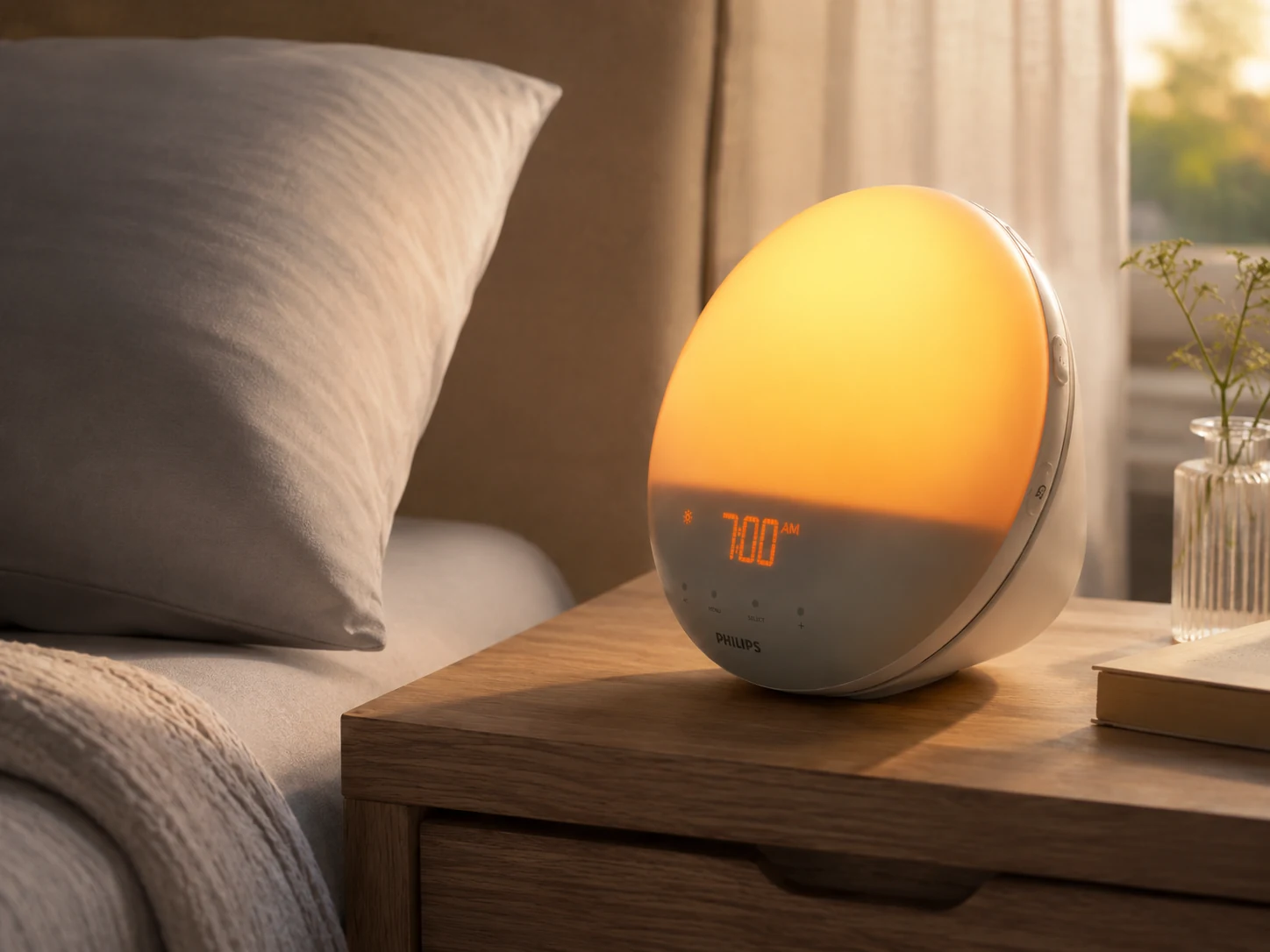
Compare for a self-contained sunrise alarm
Philips SmartSleep HF3520/60
HF3520/60 anchors the gradual-light side of the comparison without adding an app or subscription to the decision.
HF3520/60 provides an adjustable 20-, 25-, 30-, 35-, or 40-minute sunrise simulation, two alarm profiles, natural wake sounds, FM radio, tap snooze, and bedside controls without requiring an app or subscription. The default sunrise duration is 30 minutes.
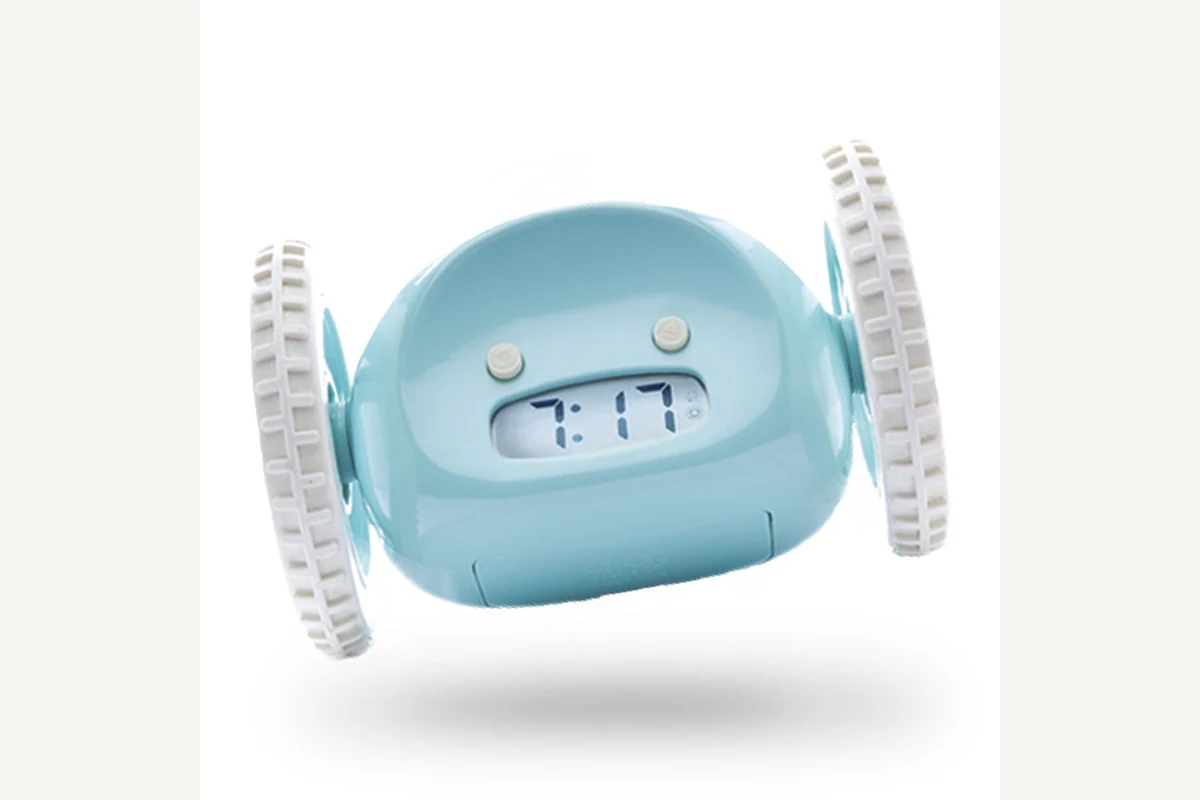
Compare when standing up is part of the plan
Clocky
Clocky is the deliberate movement example: its value comes from changing what the sleeper must do to silence the alarm.
Clocky can allow one snooze, then roll away while beeping so the sleeper has to leave the bed to stop it. The running function can also be disabled.
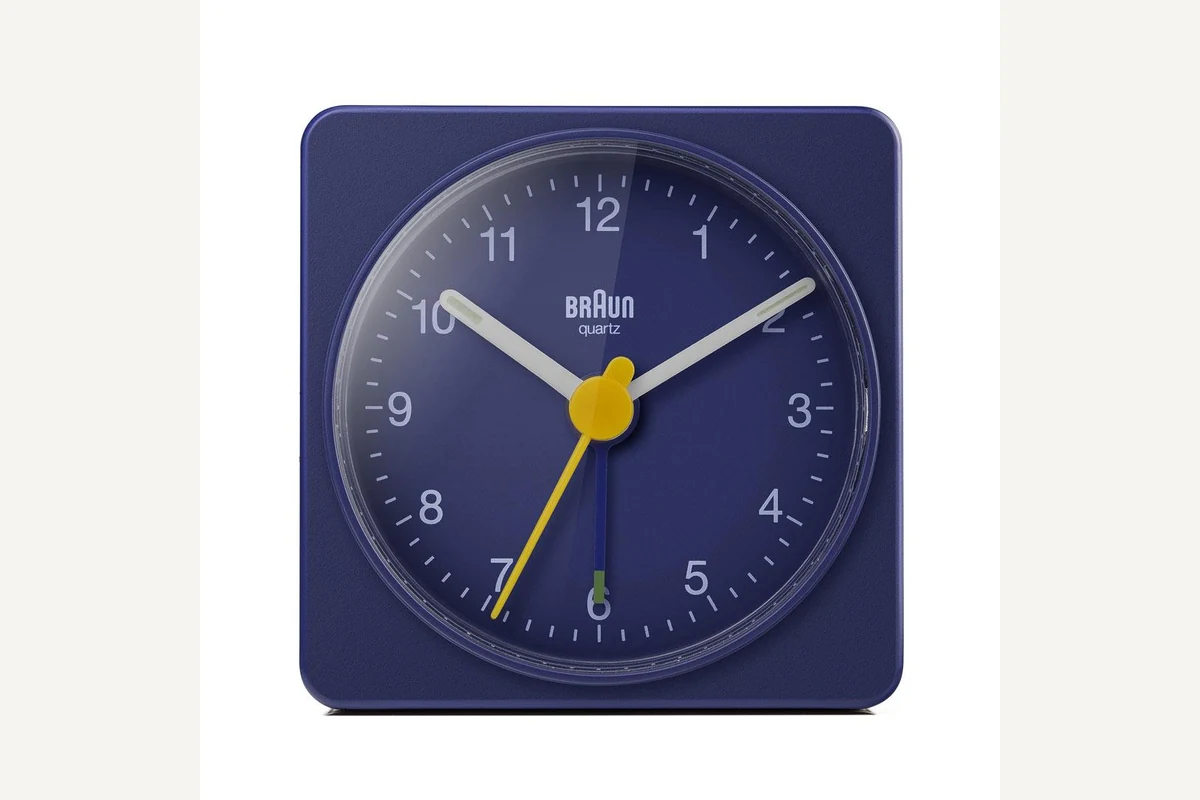
Compare for compact, app-free travel use
Braun BC02
BC02 is the low-dependency baseline against which smart, charging, and multi-signal claims can be judged.
BC02 is a 57 mm square analog clock powered by one AA battery. It uses a quiet quartz tick movement, luminous-tipped hands, and a crescendo beep without an app, account, or wall outlet.
Evidence trail