TOPCLOCKS GUIDE
Alarm Clocks
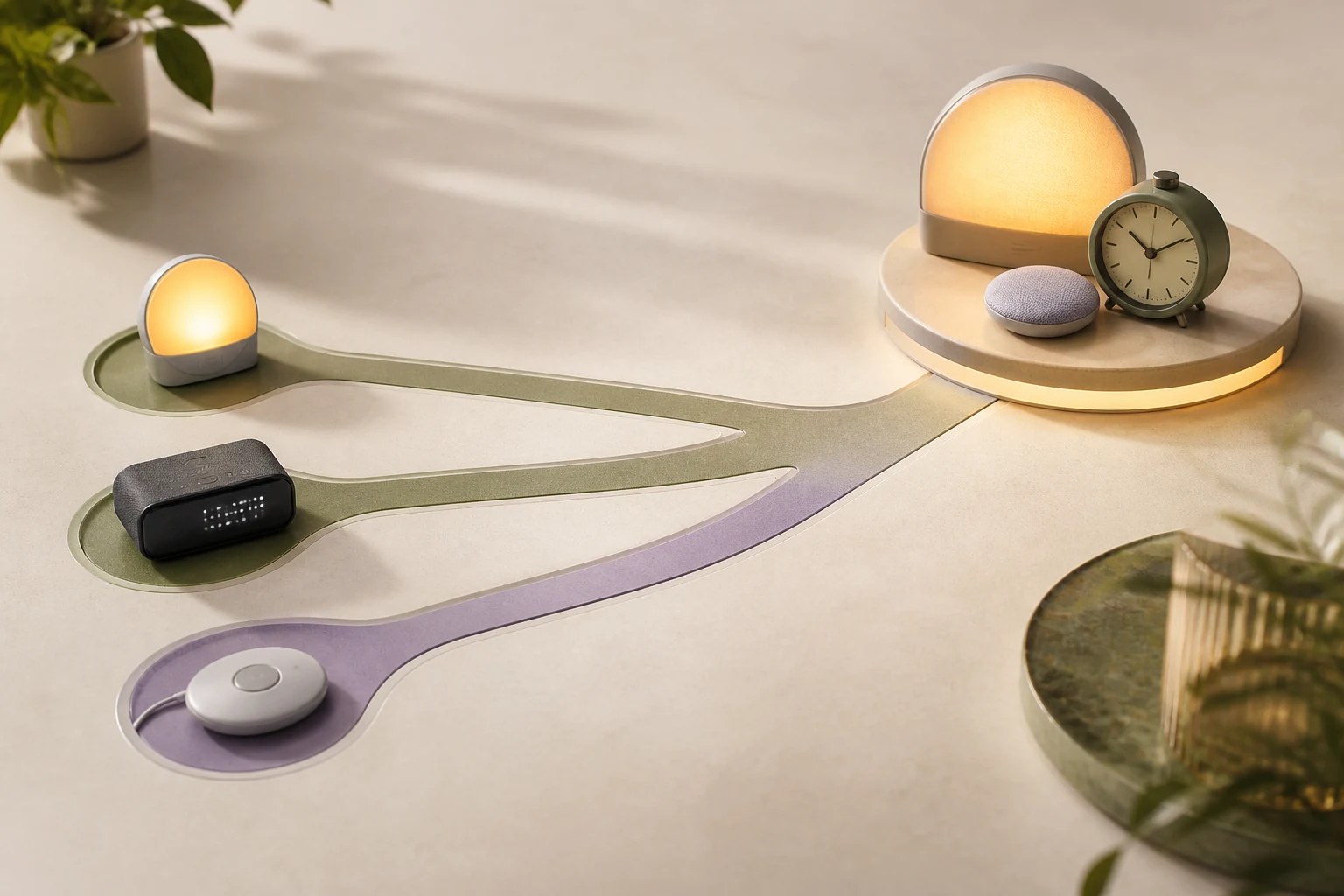
Choose an alarm clock by what needs to change in your morning: the signal you notice, the person you share a room with, or an alarm you keep dismissing. Start with a route below, then compare the controls and power limits of individual models.
What needs to work differently?
| Your morning | Start here | Check before buying |
|---|---|---|
| You need a straightforward bedside clock | Digital alarm clocks | Readable digits, accessible controls, and an alarm you can set without a phone. |
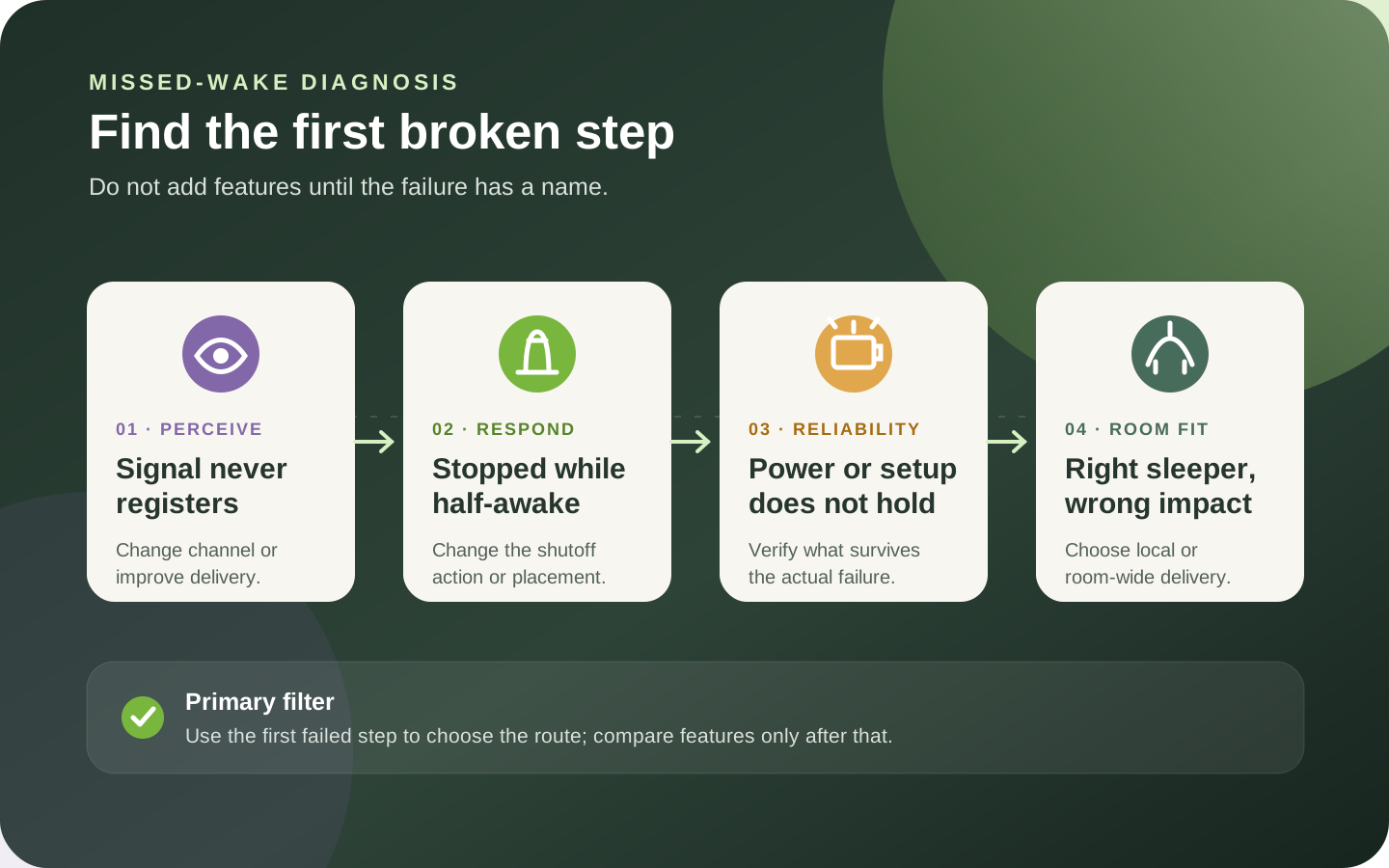
| You sleep through sound or dismiss it half awake | Alarm clocks for heavy sleepers | Separate a missed cue from automatic shutoff; the solutions differ. |
| Sound is not a dependable cue for you | Non-audible wake-up options | Documented vibration or light, accessory compatibility, placement, and backup behavior. |
| Your partner sleeps later | Alarm clocks for couples | Whether the cue reaches the other sleeper and whether stopping one alarm preserves the next. |
| You want light before the audible alarm | Sunrise alarm clocks | Ramp timing, final brightness, sound settings, and what happens without mains power. |
| A power cut could interrupt your alarm | Battery backup explained | Whether backup preserves settings, sounds an alarm, or powers the full clock. |
Choose the cue before the clock format
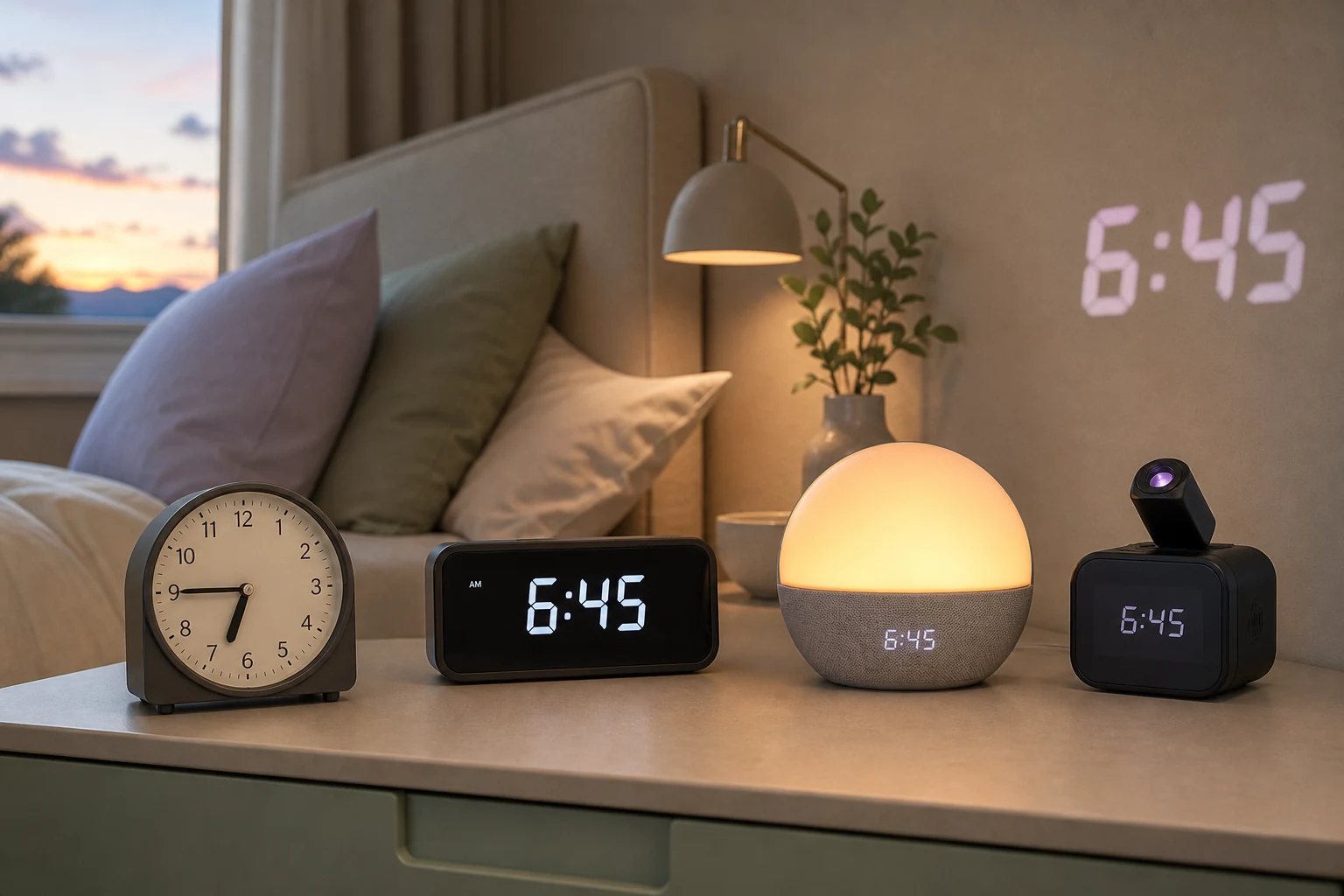
Sound, light, and vibration describe how an alarm reaches you. Movement and tasks describe what you must do to stop it. A digital display, radio, or projection is a separate choice; it does not establish wake-up reliability.
- Loud alarms: consider a stronger audible cue when room-wide sound is acceptable.
- Vibrating alarms: compare local vibration, placement, and optional sound. A shaker can still transmit through a shared mattress.
- Light alarms: compare the sunrise routine and available final cues.
- Movement and task-based routines: investigate automatic dismissal before choosing a rolling clock, remote control, or app task.
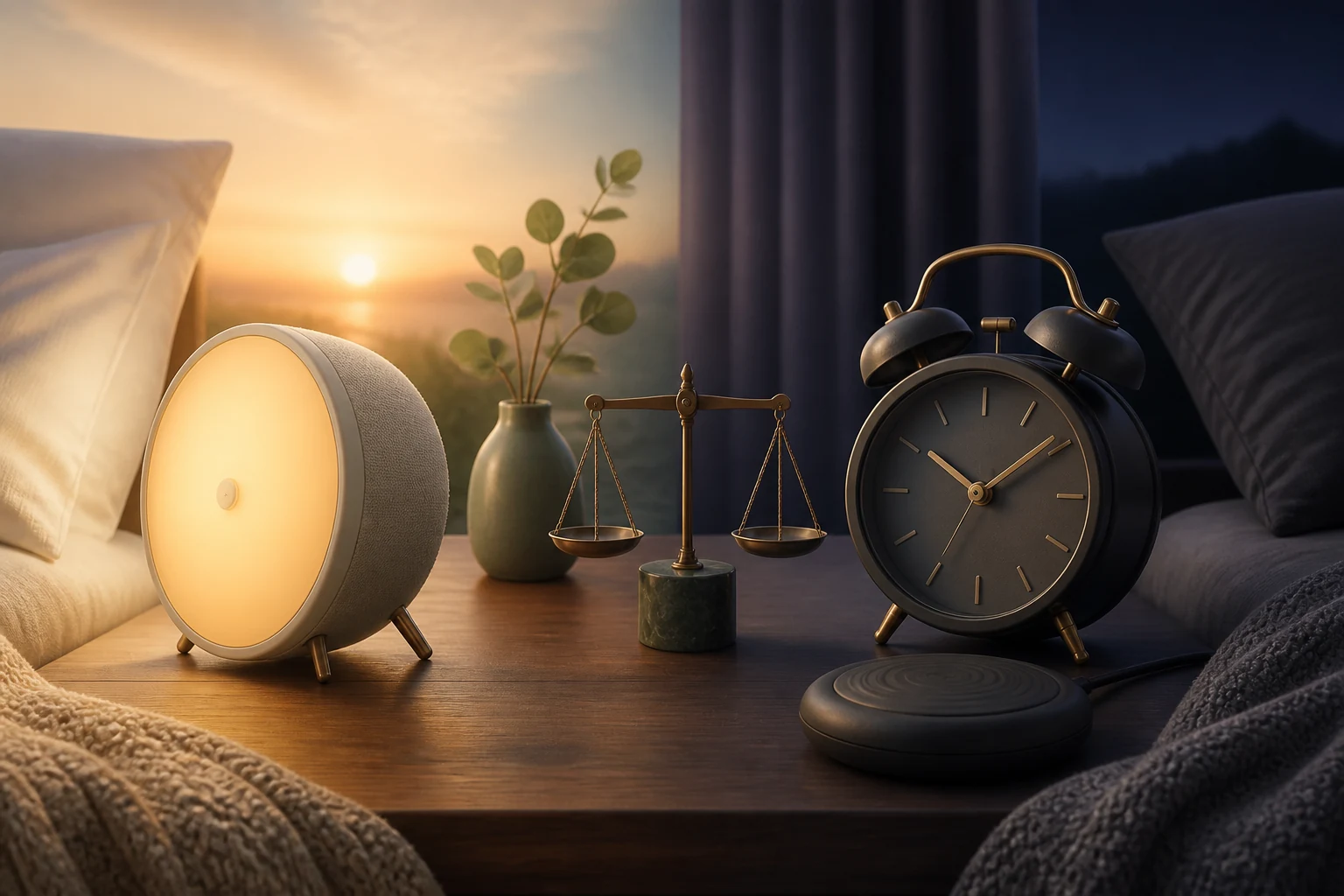
Sunrise vs sound · Loud alarm vs bed shaker
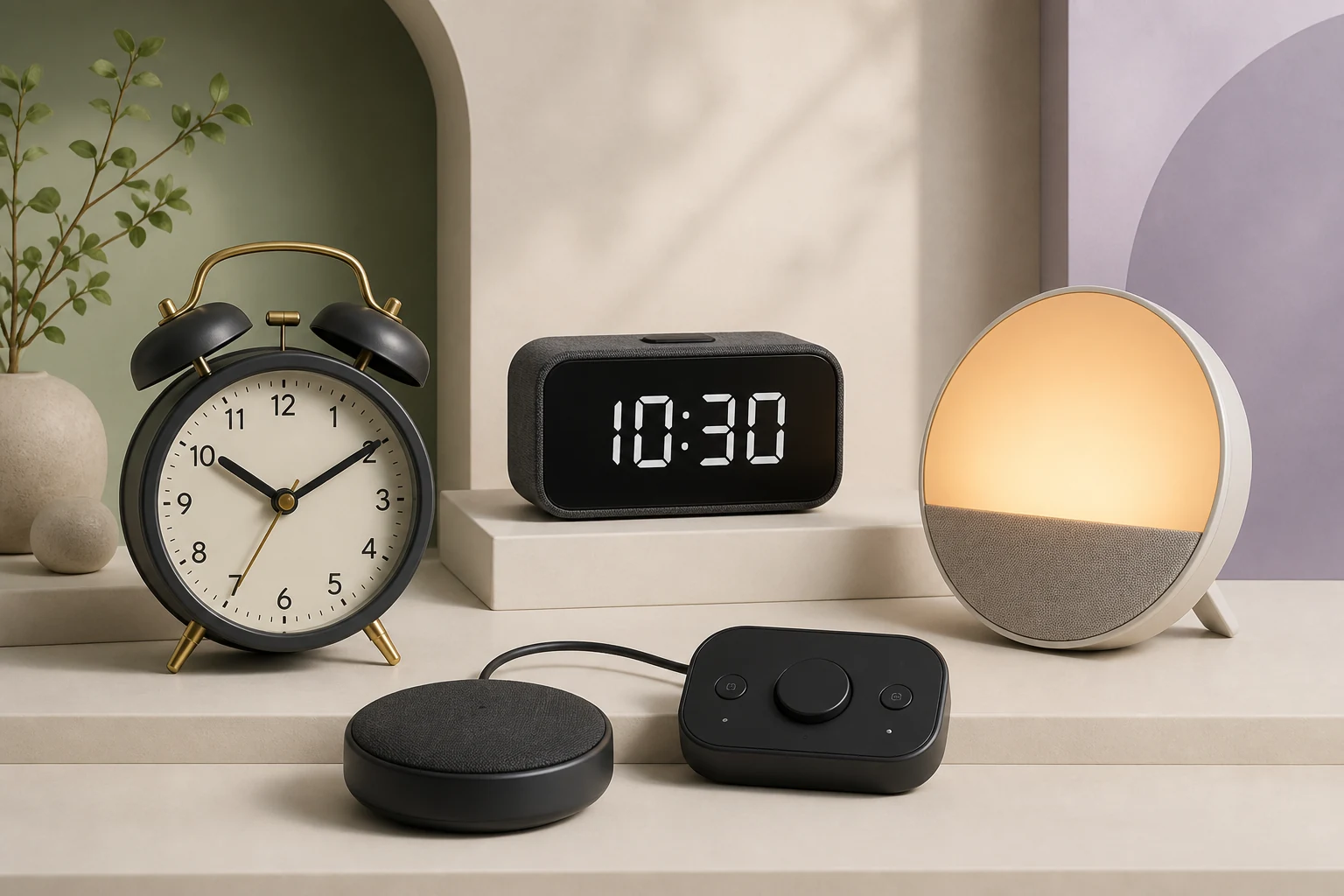
Browse alarm clock types
a scheduled light routine.
Loud
room-wide audible alerts.
Vibrating
a wearable or bed-shaker cue.
Digital
compare readable displays and everyday controls.
Projection
read the time on a wall or ceiling.
Radio
compare tuner, alarm-source, and preset behavior.
Smart
check setup, schedules, app access, and subscriptions.
Analog
compare dial readability and manual settings.
Travel
check portable power, locks, and time-zone changes.
Filter the shortlist by a feature that matters
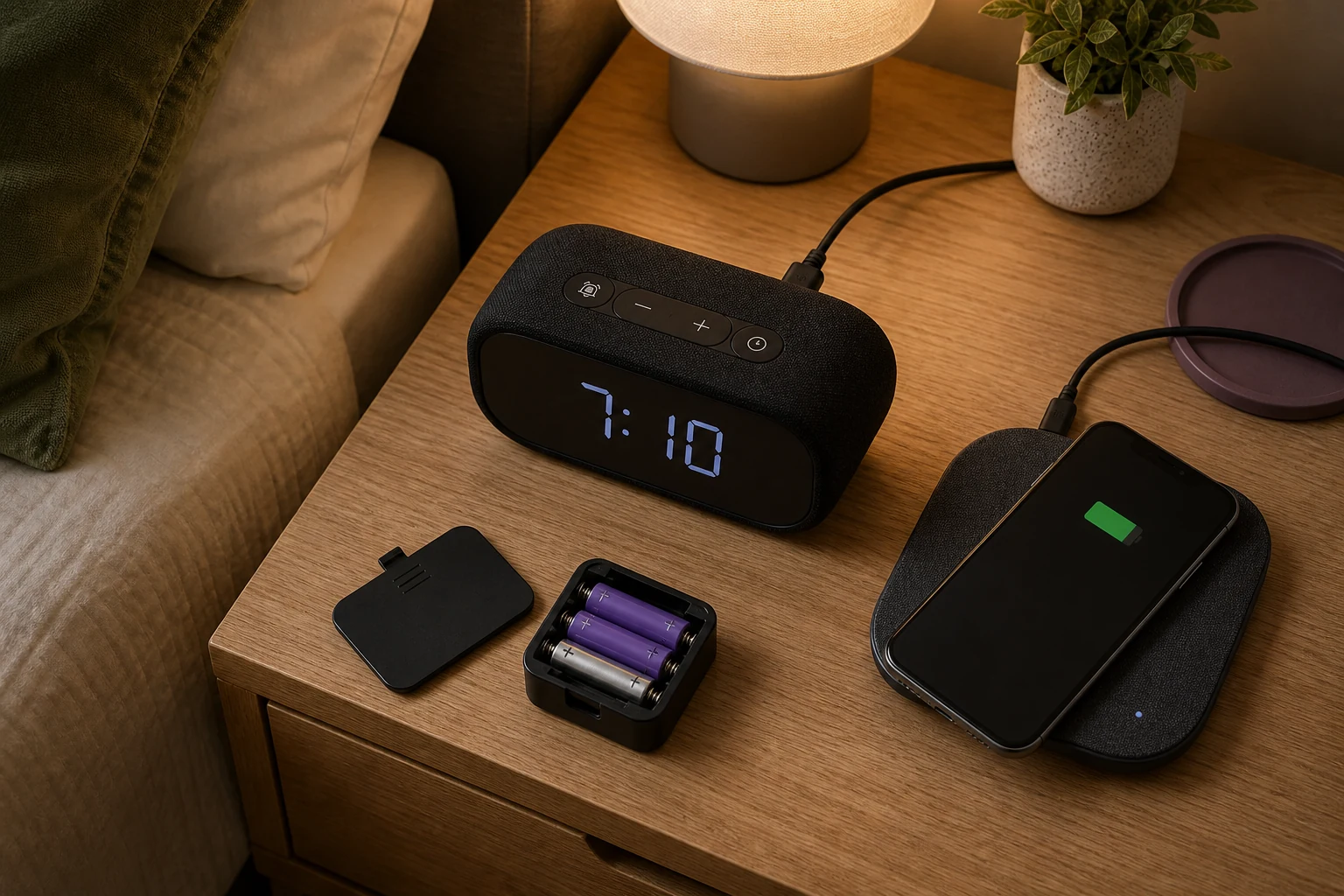
- Battery-operated clocks: check primary battery operation, controls, and the exact battery requirement rather than relying on a backup label.
- White noise and bedtime audio: compare playback controls separately from the scheduled wake signal.
- Dual alarms: two times do not necessarily mean independent controls or different signals.
- Dimmable displays: compare the lowest brightness and a true display-off mode.
- Backup power: distinguish time memory from an alarm that works during an outage.
- Phone charging: check the port, supported device, case, and required adapter.
Compare models within a brand
Model names and generations matter. Use these guides for differences in controls, schedules, light, accessories, and power rather than assuming every clock from a brand behaves alike.
Settle the remaining question
Choose by sleeper and room, including children’s wake-up routines. If you have two options, open the comparisons. For a buying checklist or a failed routine, use the guides.
Rehearse tomorrow’s setup while you are awake
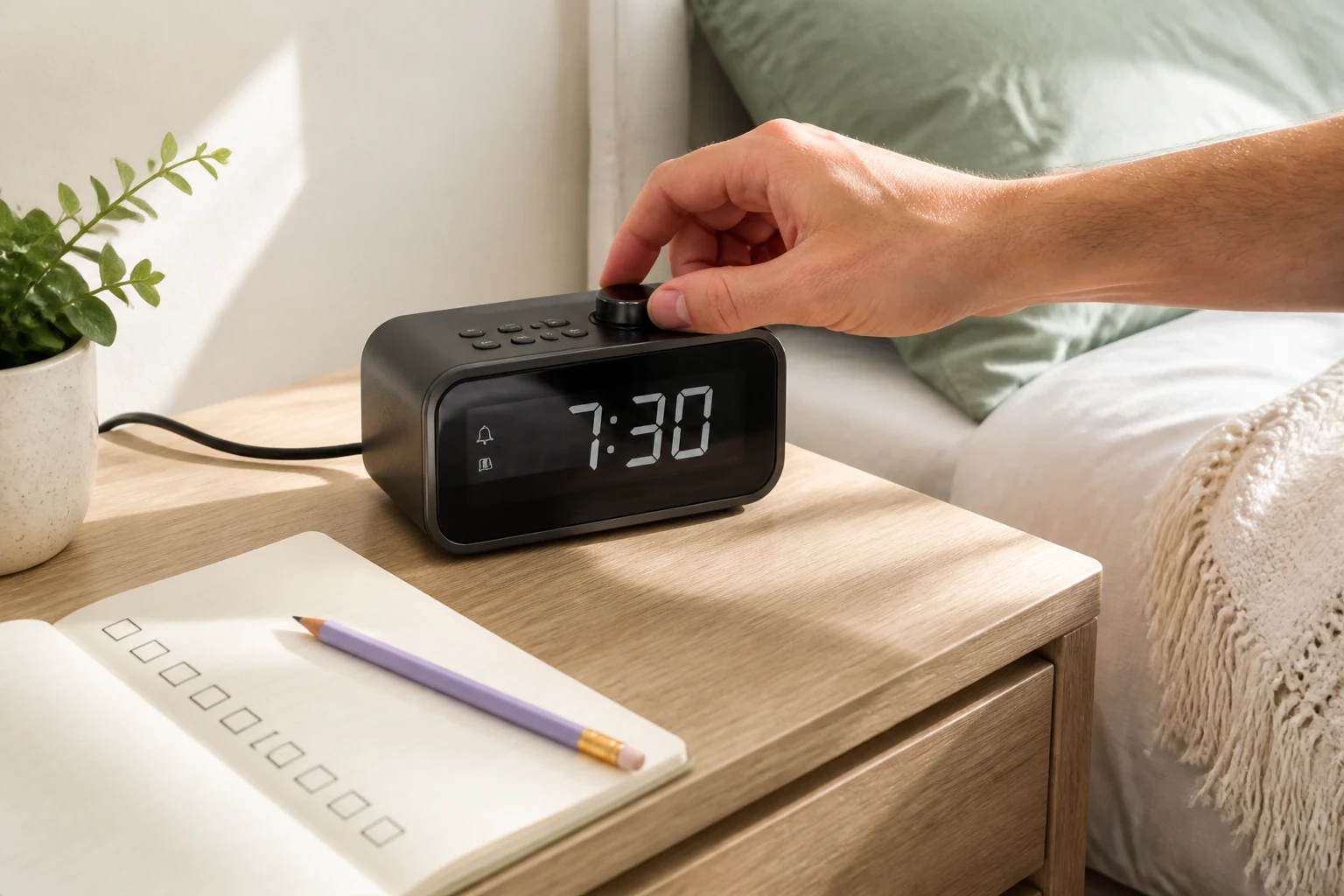
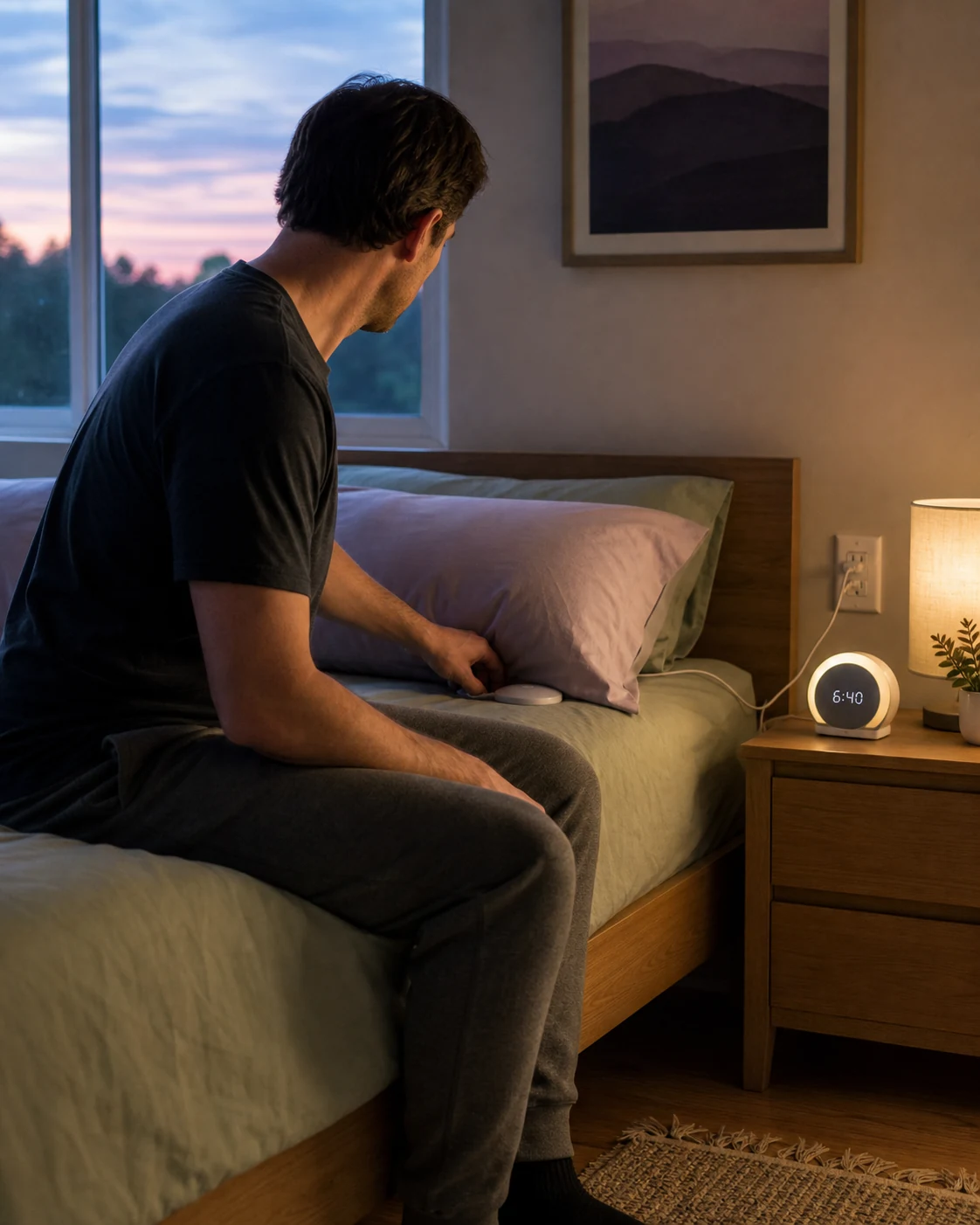
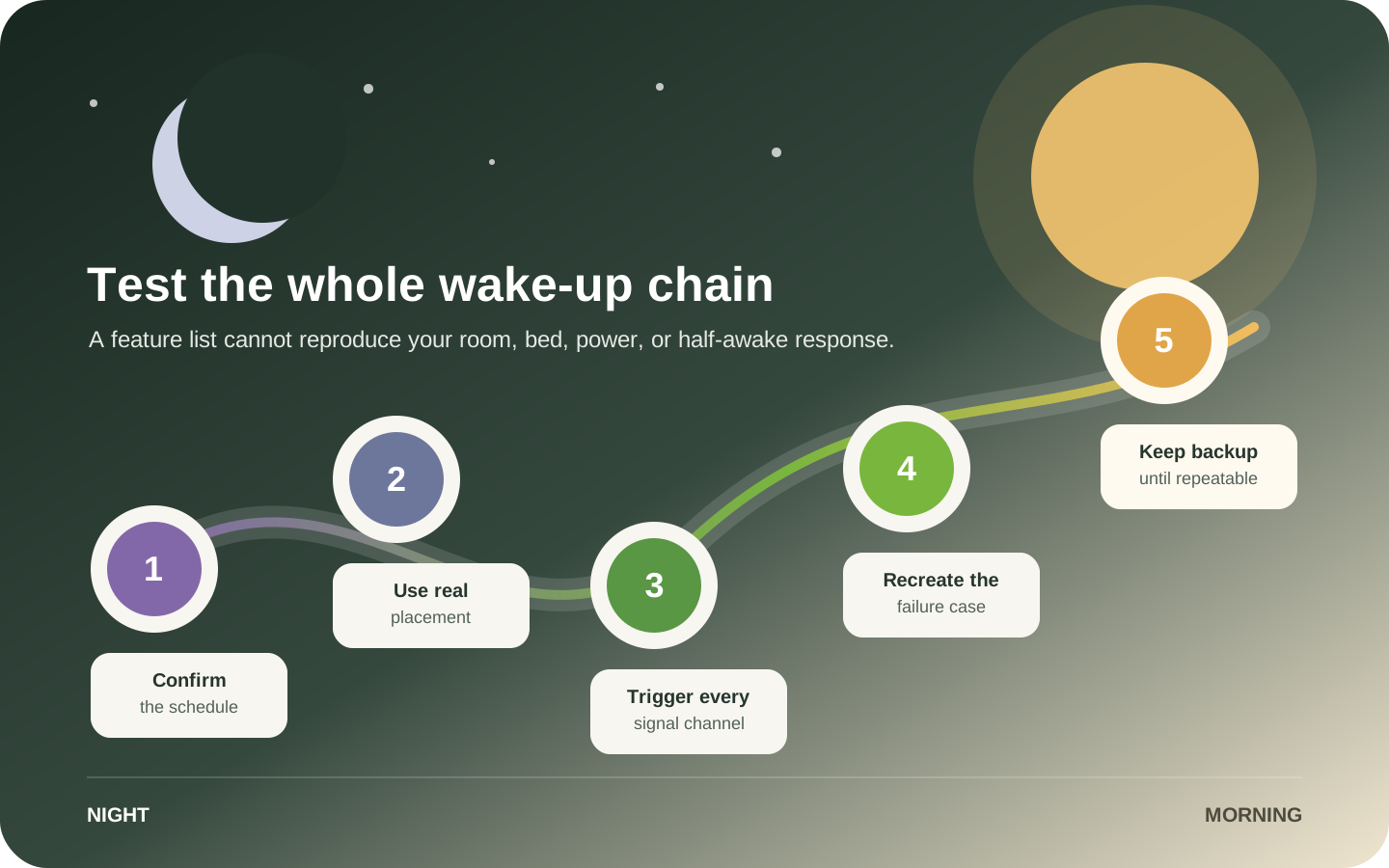
Set a test alarm, put the clock and any shaker where you will use them, then try snooze and stop. Check that tomorrow’s schedule remains enabled. If outage operation matters, follow the model’s manual and distinguish the settings that survive from the wake cues that still run.
What the guides establish
Manufacturer documents can establish a control or supported mode. They cannot establish whether a particular cue will wake you or leave your partner asleep. A trial in your room answers a different question from a specification check.
Before you choose a route
Does a vibrating alarm avoid waking a partner?
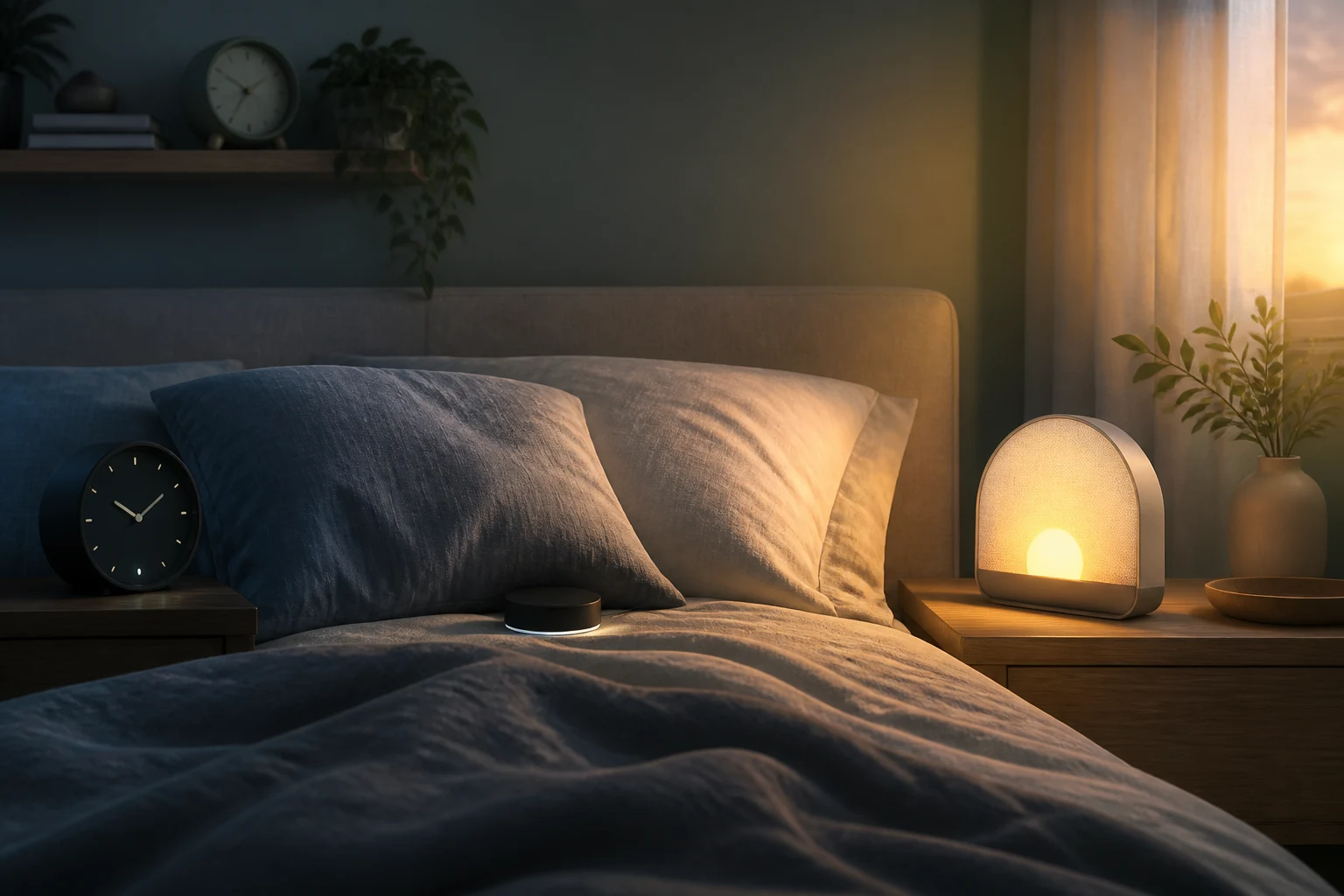
Not automatically. Placement, mattress construction, contact between sleepers, and any enabled sound can affect the other person. Compare the couples route before treating vibration as private.
Can one clock cover a weekday alarm and a different weekend time?
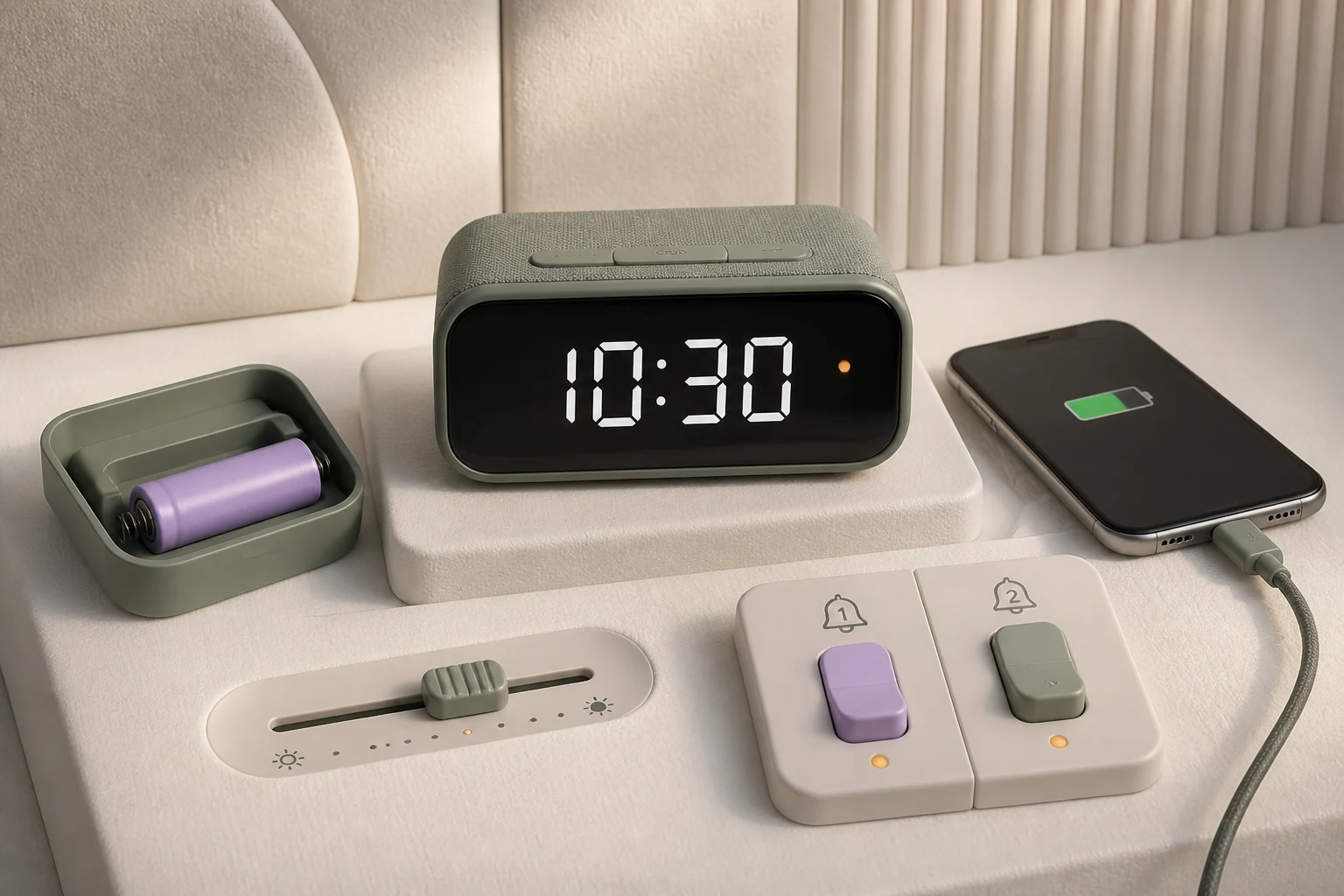
Only if its scheduling and alarm controls support that routine. Two alarm times may still repeat every day. Check the exact model in the dual-alarm guide.
Should I buy a new clock if I keep sleeping through alarms?
First identify whether you miss the signal, dismiss it, or discover that it never ran. The failure guide helps choose which part to change.