Philips SmartSleep HF3520/60 vs HF3650/60: Which Wake-Up Light Should You Buy?

US exact-model comparison · Philips documentation checked September 1, 2026

Neither model needs an app, account, or paid subscription for its documented operation. Both have two profiles, FM radio, colored sunrise, a wind-down function, display-off, and nine-minute snooze that silences sound while leaving the lamp on. HF3520 reveals its hidden display after a touch; HF3650 uses proximity. The useful question is whether HF3650’s other bedside utilities solve a problem HF3520 leaves open.

This comparison covers two exact US models. HF3520/60 is the round Philips Wake-up Light with a filled circular light face. HF3650/60 is the higher-tier Sleep and Wake-Up Light, formerly called Somneo, with an open center and touch controls. Features from HF3670 connected models, other Somneo revisions, or the HF3500 range do not apply unless Philips explicitly lists the model.

See the exact differences Open the two model cards

Author: TOPCLOCKS Editorial TeamUpdated: September 1, 2026
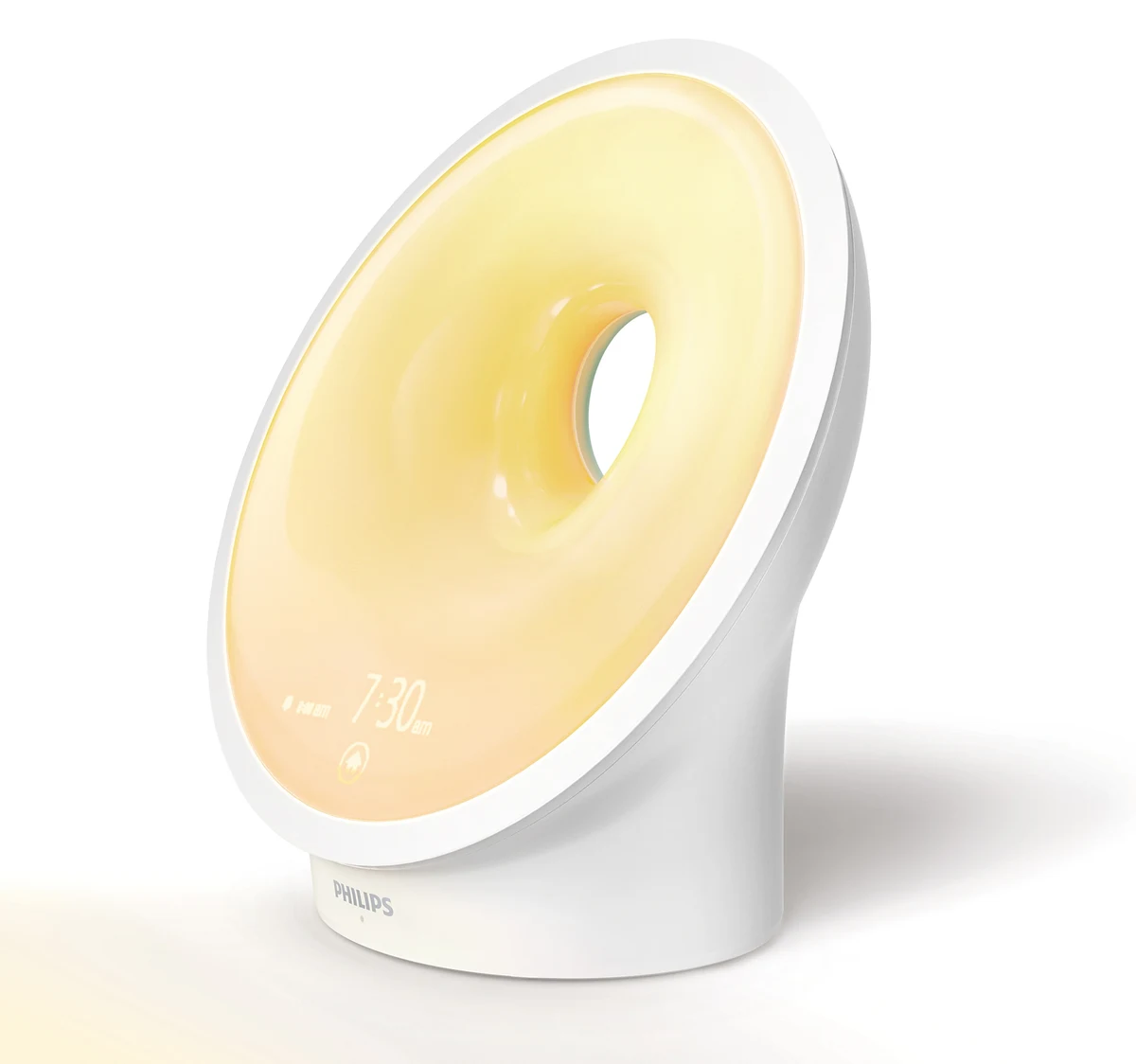
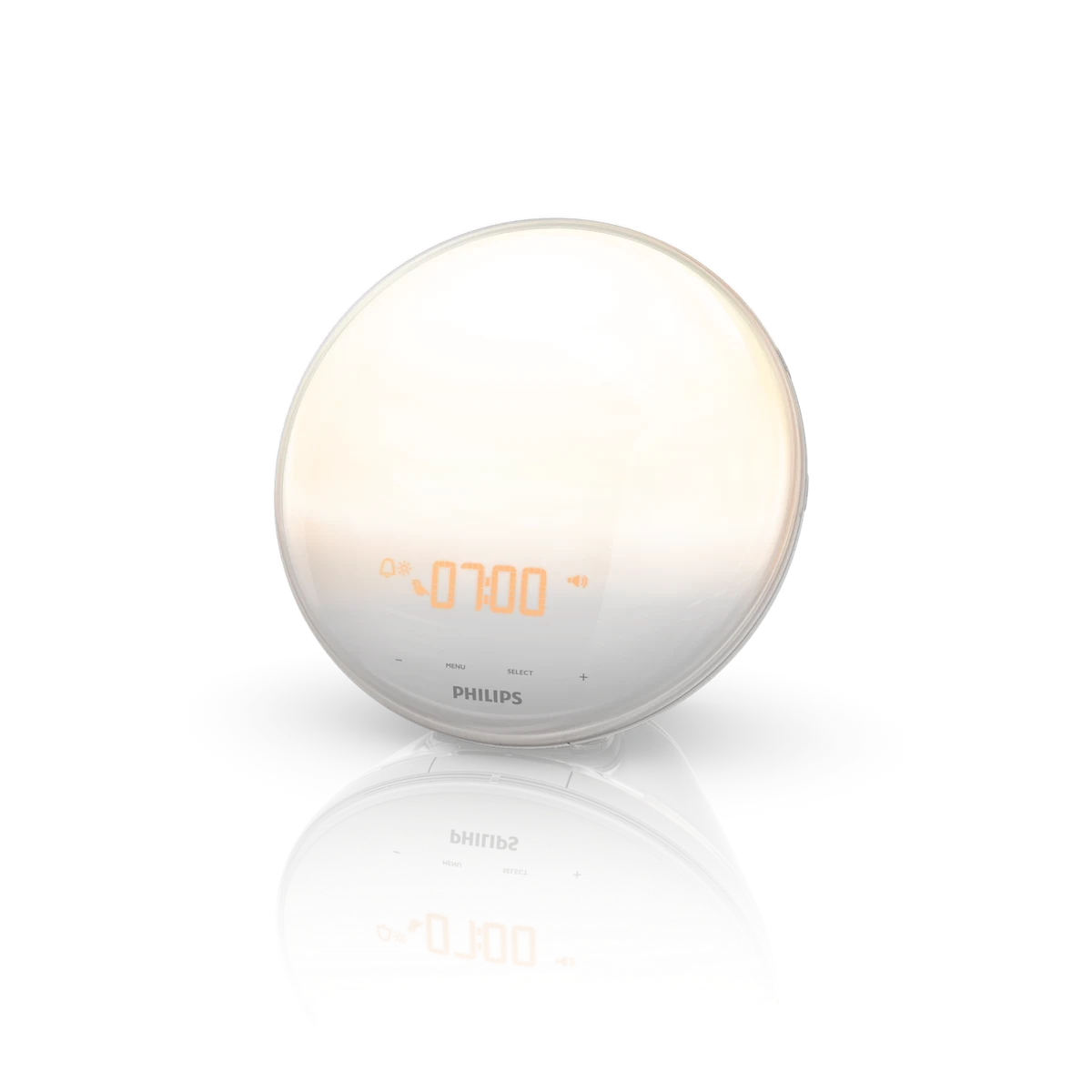
Exact Philips SmartSleep HF3520/60 in an official angled product view Exact Philips SmartSleep HF3650/60 in an official product view
Two different official Philips product images of the exact US models. TOPCLOCKS has not altered their shape, controls, or proportions.

Which Philips model fits the routine you already have?

Decision first

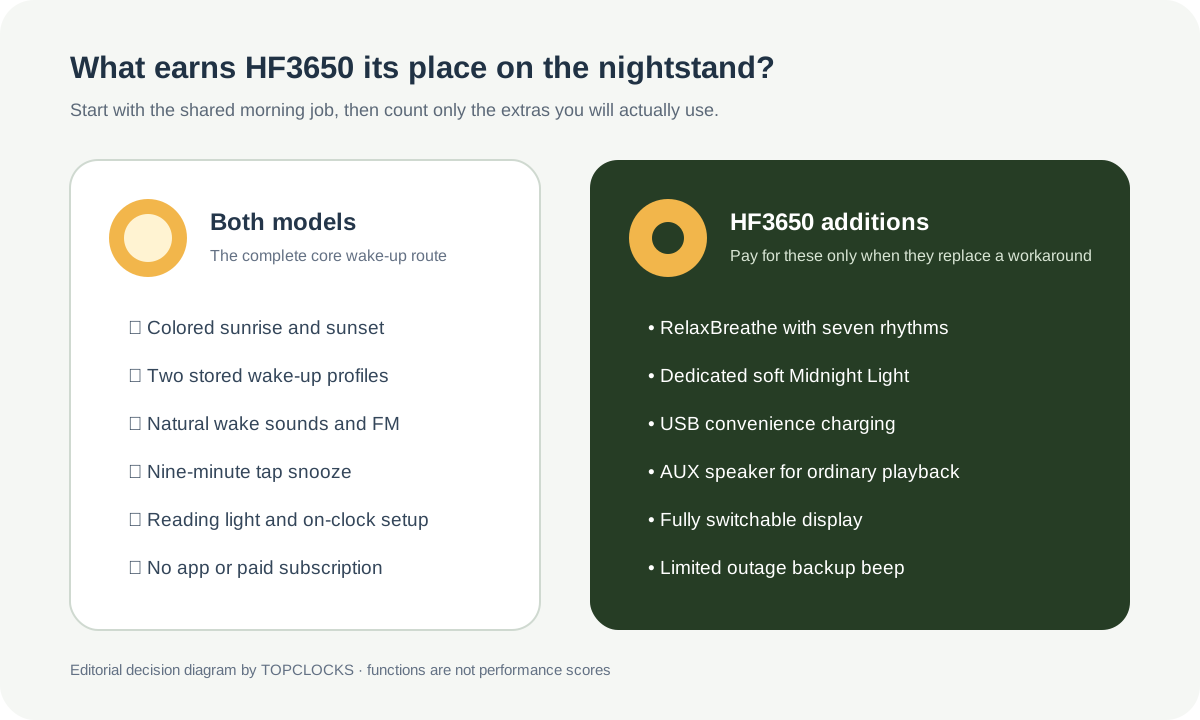
Choose the Philips SmartSleep HF3520/60 if you want a self-contained colored sunrise alarm with two wake-up profiles, FM radio, five natural sounds, and a 20–40-minute dawn curve. Choose the Philips SmartSleep HF3650/60 if you will use its wider 5–60-minute curve, RelaxBreathe, AUX playback, USB charging, Midnight Light, or documented power-failure beep.

Decision diagram separating the functions shared by HF3520 and HF3650 from the extra bedside jobs added by HF3650
Editorial decision diagram by TOPCLOCKS; not a product photograph or performance score.

Do not pay for the HF3650 because its current product sheet says 310 lux while the HF3520 sheet says 300 lux. That product-sheet difference does not establish a meaningful bedside advantage without an identical-condition measurement.

Start with the action you expect to repeat, not the longer specification list.

The HF3520 handles the central morning job without an app. You set the clock, two profiles, light intensity, sound, and FM options on the device. Its sunrise duration is adjustable within the documented 20–40-minute range, with 30 minutes as the default. For a buyer who mainly wants light, a wake sound, and two stored times, the simpler model already covers the requirement.

HF3650 remains an on-device clock rather than adding a phone workflow. Its wake-up curve runs from 5 to 60 minutes, with 30 minutes as the default. It adds light- or sound-guided RelaxBreathe, Midnight Light, AUX playback, and USB phone charging. Both clocks can hide the display; only the reveal method differs.

That makes the choice conditional:

  • Pick HF3520/60 when a 20–40-minute colored sunrise, two profiles, five sounds, and FM already describe the alarm you intend to use.
  • Pick HF3650/60 when at least one of its additional functions changes the nightly routine, the placement of devices on the nightstand, or what happens during a short power failure.
  • Keep looking within Philips documentation if a seller lists a different suffix. SmartSleep is a family name, not proof that every model has the same controls.

HF3650 has more functions. Whether they are worth paying for depends on which ones you will actually use.

Need to compare Philips with other wake-up lights first? Use the Sunrise Alarm Clocks guide before narrowing to these two models.

HF3520/60 and HF3650/60 side by side

Exact-model functions and the buying consequence of each difference
Decision point Philips HF3520/60 Philips HF3650/60
Main role Standalone colored sunrise alarm Standalone sunrise alarm plus extended wind-down and bedside tools
App, Wi-Fi, subscription None required in the documented workflow None required in the documented workflow
Wake-up profiles 2; time, light, and sound are set in each profile, while dawn duration has a separate adjustment procedure 2; time, light, sound, and wake-up curve duration are documented per profile
Sunrise duration 20–40 minutes; 30-minute default 5–60 minutes; 30-minute default
Published maximum light 300 lux 310 lux
Brightness levels 20 25
Wake sounds 5 natural sounds 7 wake sounds
Radio FM FM
Snooze Tap the clock; official sources disagree about the exact tap target; 9 minutes; sound pauses, light stays on Tap the top; 9 minutes; sound pauses, light stays on
Wind-down 5–60-minute fall-asleep function with fading light; natural sound or FM Sunset Simulation plus RelaxBreathe and 3 relaxation sounds
Own audio No smartphone or iPod music playback AUX speaker playback; AUX cannot be the wake-up sound
Bedside utility Reading lamp; display-off with touch-to-reveal Reading lamp, Midnight Light, USB charging; display-off with proximity reveal
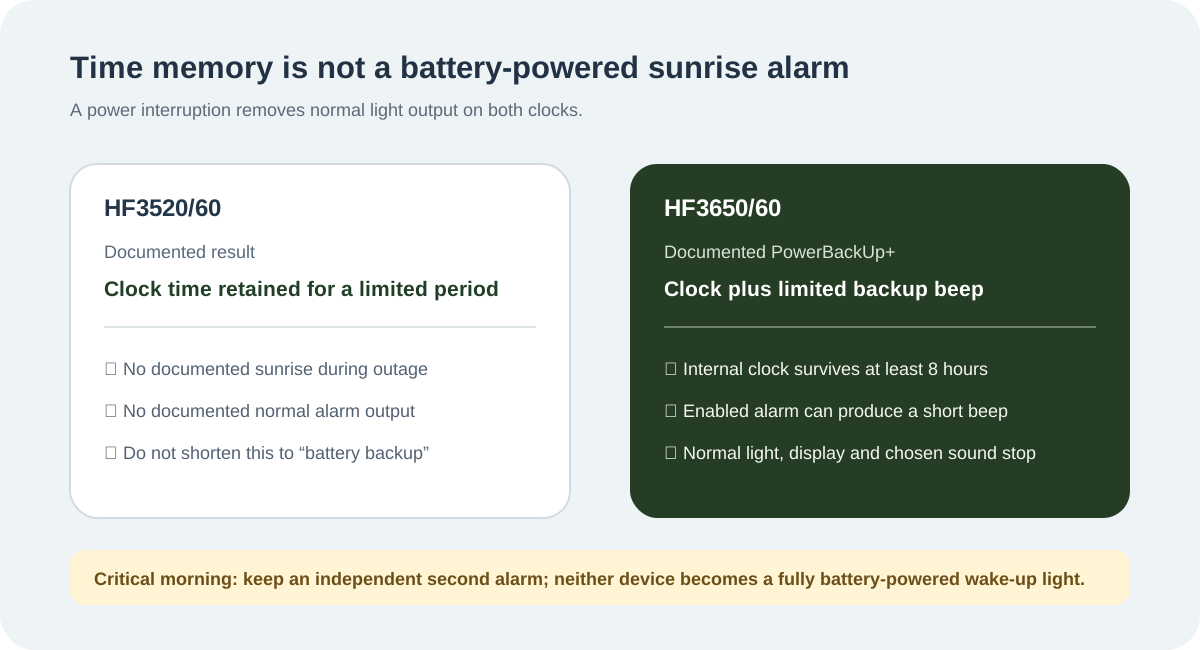
Power interruption Product sheet lists 4–8-hour time backup; a newer North American manual says time is saved up to 8 hours; a different Philips manual gives unqualified reset-after-failure wording, so the official wording conflicts; normal powered alarm output is not documented Clock and limited backup beep remain available for at least 8 hours; normal light and display do not

These are manufacturer-documented capabilities, not TOPCLOCKS scores or results from a side-by-side bedroom test. A higher feature count does not establish a more dependable wake-up, and the published lux figures do not show what reaches a particular sleeper’s eyes.

The two exact Philips models

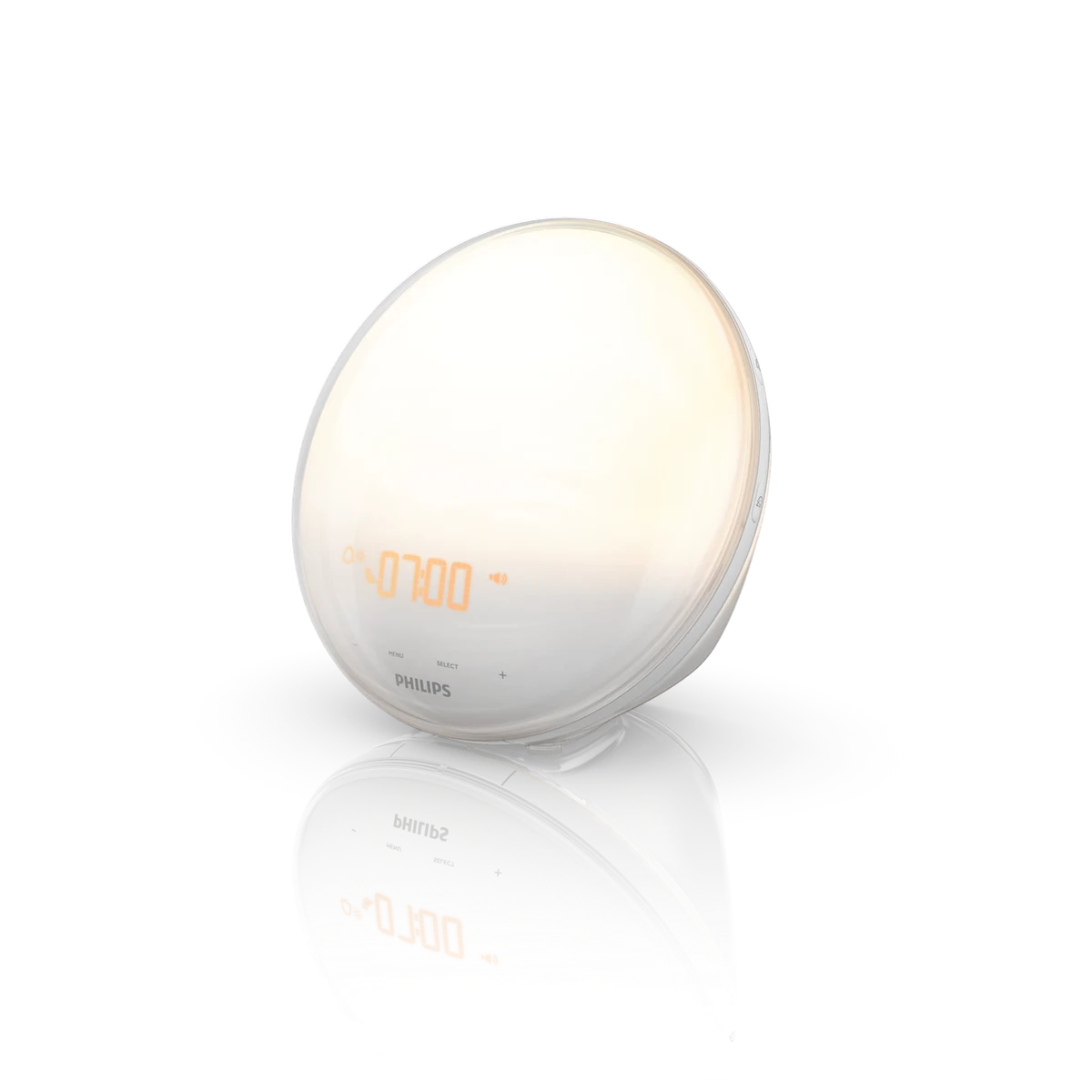
Exact Philips SmartSleep HF3520/60 wake-up light in an official angled product view
Official Philips product image of the exact HF3520/60; the product shape and controls are unaltered.

Classic standalone wake-up light

Philips SmartSleep Wake-up Light HF3520/60

The HF3520 is the direct choice when morning light is the main purpose. Philips documents a red-to-orange-to-yellow sunrise, 20 light settings, up to 300 lux, five natural wake sounds, FM radio, and two profiles. Its display adjusts with room light, can be set to level 0 to switch it off, and returns after a touch. The clock uses a tap gesture for snooze.

Read the short model assessment

Its limits are equally useful in the decision. It does not charge a phone, accept smartphone music, offer RelaxBreathe, or provide the HF3650’s separate Midnight Light. Those omissions are not defects if the clock only needs to run a repeatable sunrise and provide a reading or fading bedtime lamp.

Best fit: a buyer who wants two on-device alarm times and does not need the nightstand to double as a charging and relaxation station.

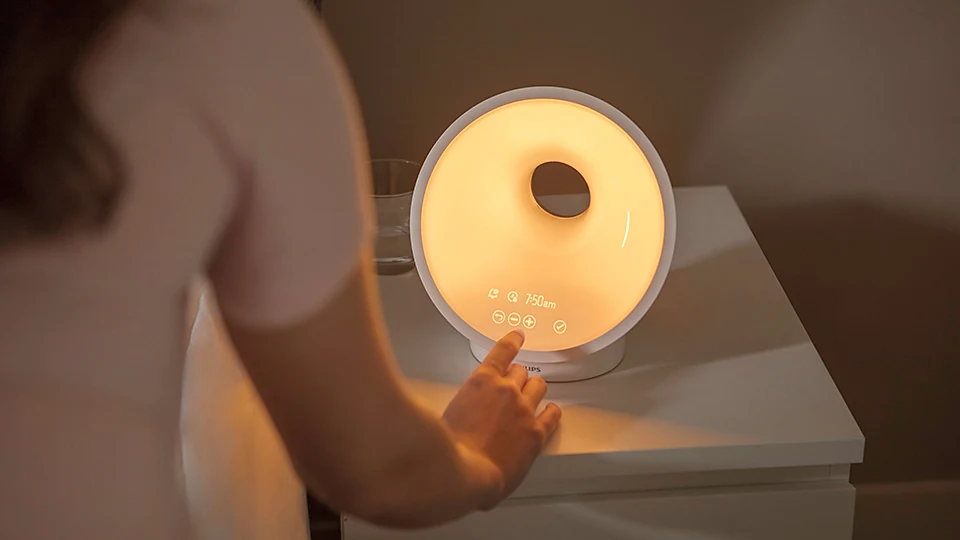
Exact Philips SmartSleep HF3650/60 with its illuminated touch controls in an official bedside photograph
Official Philips bedside image of the exact HF3650/60 and its touch interface; not a generated product likeness.

Premium standalone sleep-and-wake light

Philips SmartSleep Sleep and Wake-Up Light HF3650/60

The HF3650 keeps the same app-free operating idea but builds a broader bedside system around it. Its exact product sheet lists 25 light levels, a 310-lux maximum, seven wake sounds, three relaxation sounds, FM, AUX, USB charging, Midnight Light, and no app-enabled alarm scheduler. The manual documents two wake-up profiles, not an unlimited calendar.

Read the short model assessment

The open-center body and touch display are also different from the HF3520’s round face and menu-button layout. Model identity matters here: a photograph of one clock attached to the other model number is a warning to confirm the listing before buying.

Best fit: a buyer who will use the longer or shorter wake curve, guided breathing, proximity-revealed display, night light, AUX speaker, charging port, or backup beep often enough to justify the added complexity.

Partner-link policy: the full-review links and Amazon links are separate. TOPCLOCKS may earn a commission from qualifying purchases. Confirm the exact model suffix, seller, package, availability, and return terms before buying.

Why 300 versus 310 lux should not decide the purchase

The exact Philips sheets list 300 lux for HF3520/60 and 310 lux for HF3650/60. That gives HF3650 a ten-lux lead on paper, but those numbers alone do not show which lamp delivers more light at the pillow.

Lux depends on where it is measured. Philips places both clocks about 40–50 cm, or 16–20 inches, from the sleeper’s head. Distance, direction, an obstruction, or the far side of a shared bed changes the light reaching the sleeper. A product-sheet maximum does not reproduce those room conditions.

The useful light differences are the controls around the output:

  • HF3520 provides 20 intensity settings and a 20–40-minute sunrise.
  • HF3650 provides 25 settings and a 5–60-minute sunrise.
  • Both move through warm dawn colors toward a brighter yellow and allow a no-sound wake profile.

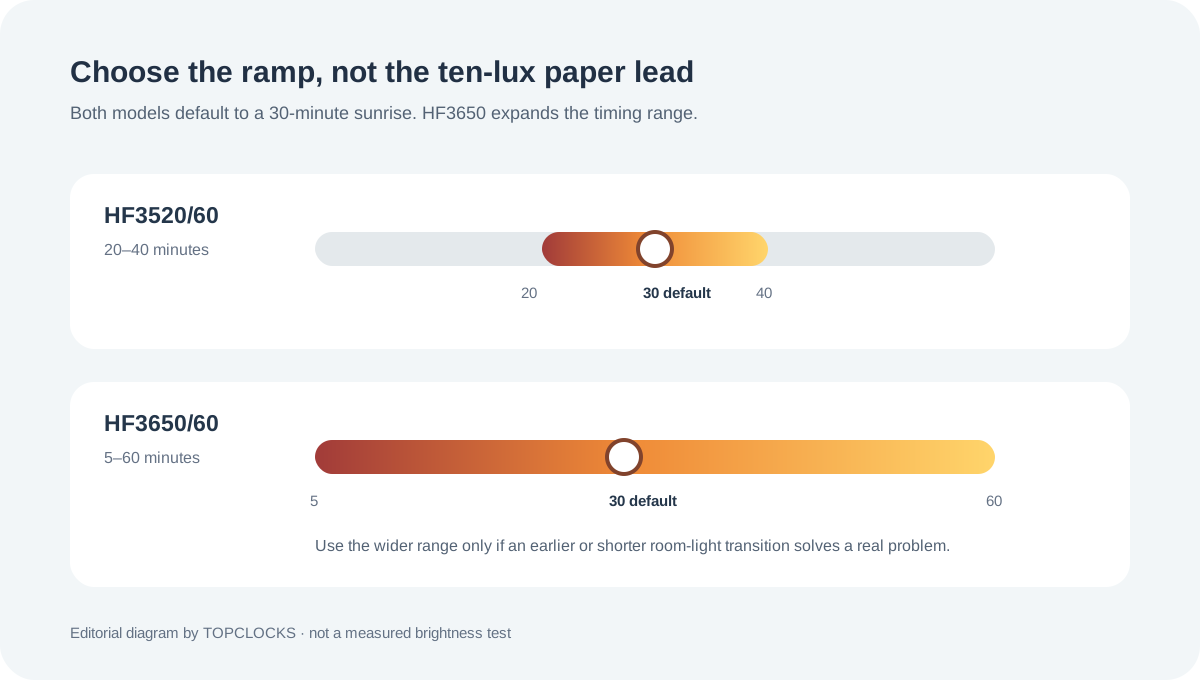
The wider duration range can matter. A light-sensitive sleeper may prefer a shorter curve so the room does not begin brightening too early. Someone who wants a slower transition can use the HF3650 beyond the HF3520’s 40-minute ceiling. Those are configuration choices, not proof that either curve produces a better health or sleep outcome.

Placement deserves its own check before changing models. Set the clock on a stable surface at roughly the documented distance. Lie in the normal sleep position and look for obstructions between the lamp and the pillow. If the clock must sit behind a water bottle, books, or another lamp, fix the line of sight before concluding that the product is too dim.

When the unresolved choice is light versus a conventional audible deadline, continue with sunrise versus sound alarms instead of treating ten lux as the answer.

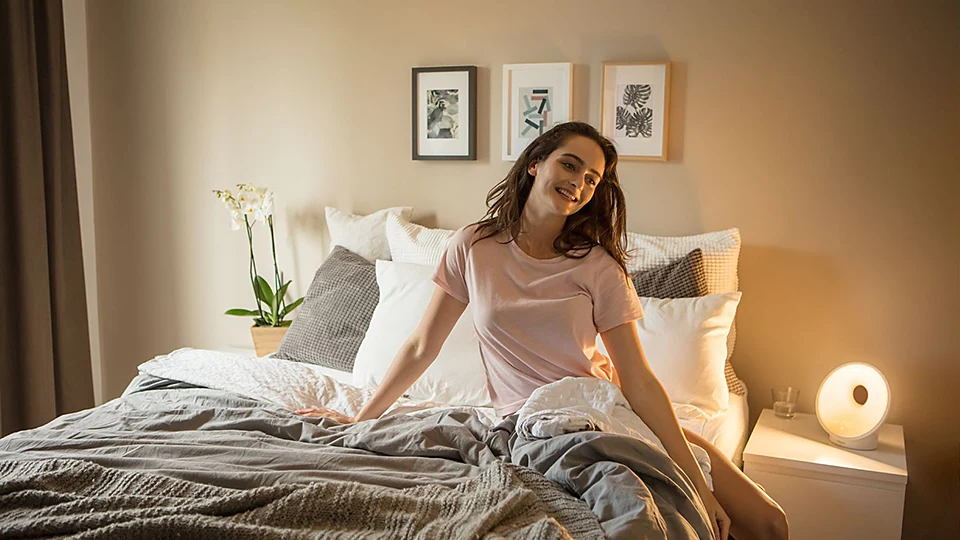
Exact Philips HF3650/60 illuminating a bedroom in an official sunrise scene
Official Philips scene showing the exact HF3650/60. It illustrates placement and room spill; it is not a TOPCLOCKS lux measurement.
Editorial timeline comparing the HF3520 20-to-40-minute sunrise range with the HF3650 5-to-60-minute range
Editorial diagram by TOPCLOCKS. Both models use a 30-minute default; HF3650 adds a wider selectable range.

Two wake-up profiles do not create a weekly calendar

Both clocks store two wake-up profiles, but not identical documented fields. HF3520 profile setup covers time, light intensity, and sound; dawn duration uses a separate procedure with both alarm buttons. HF3650 explicitly includes curve duration within each profile alongside time, light, and sound. The count is shared; the controls are model-specific.

Philips documents two stored configurations that the owner enables; the instructions contain no automatic day-of-week switching. If the weekday profile is set for 6:30 a.m. and the weekend profile for 8:00 a.m., verify which alarm icons are active before Friday night. A second stored time reduces re-entry; it does not know the household schedule.

Daily control differs in feel rather than connectivity. HF3520 uses menu and alarm buttons around its circular body; when display brightness is set to 0, touching the display reveals it. HF3650 uses a touch display that appears when approached and can also be shut off for sleep. Neither workflow requires a phone, but neither should be assumed intuitive from a product image alone.

Rehearse three actions while fully awake:

  1. snooze the active sound;
  2. dismiss today’s alarm;
  3. confirm that the intended next profile remains active.

Philips documents nine-minute snooze for both. The lamp stays on and only the sound pauses. Pressing a control that dismisses or deactivates the profile is different from snoozing it. That distinction matters more on an important morning than the number of decorative sound options.

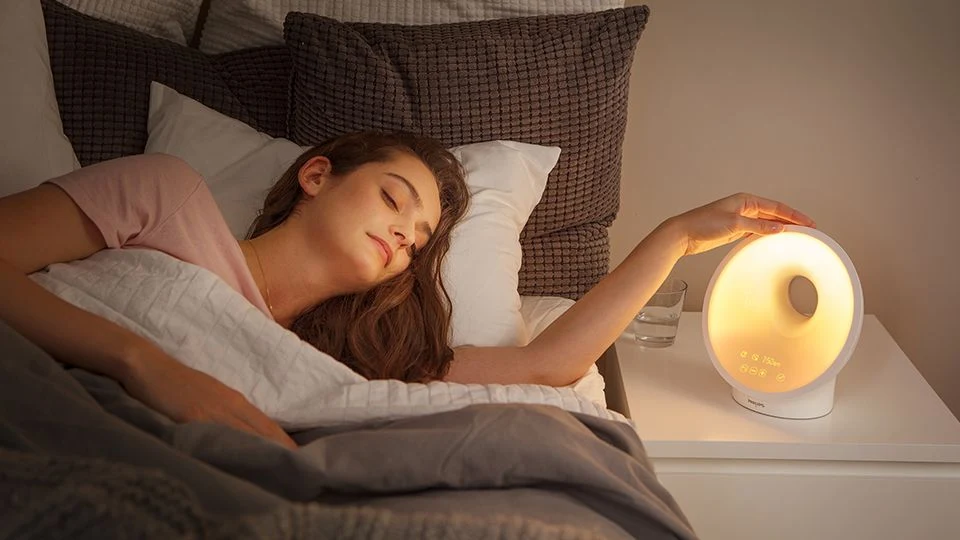
Sleeper reaching to tap snooze on the exact Philips HF3650/60 in an official bedside photograph
Official Philips image of the exact HF3650/60. Practice profile selection, snooze, and dismissal before an important morning.

What the HF3650 adds after the morning is over

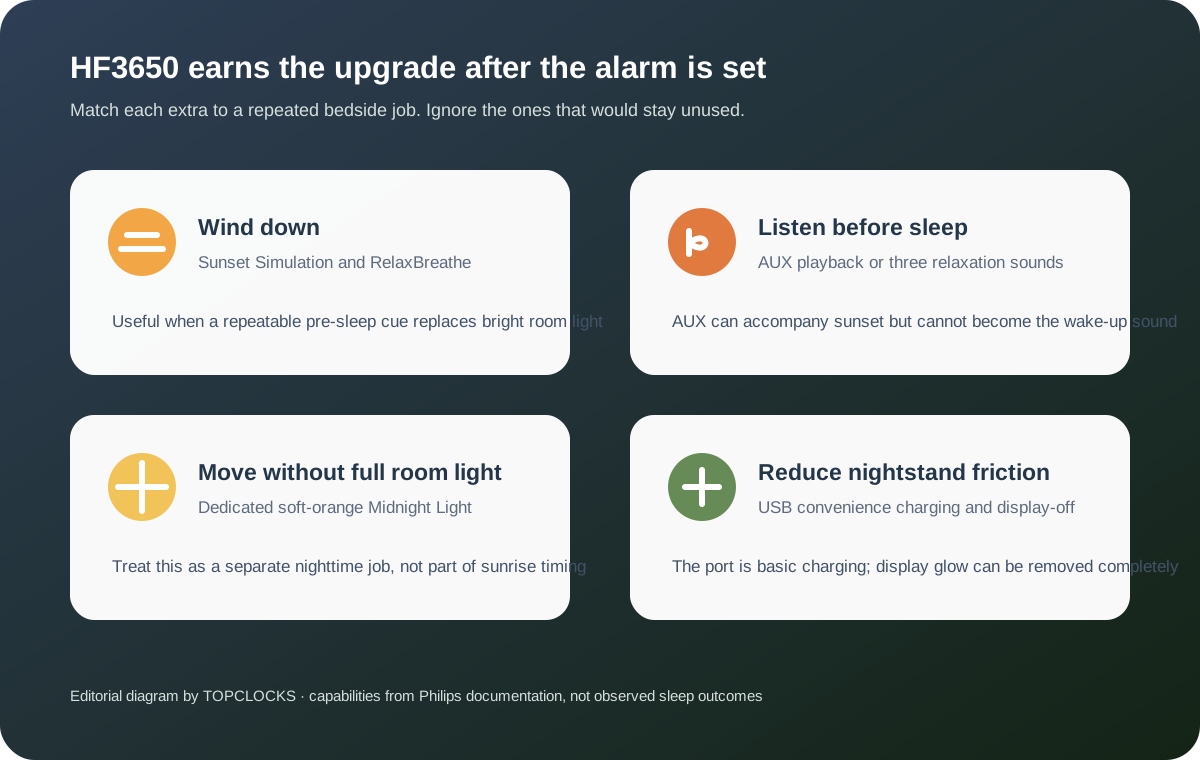
The clearest HF3650 upgrade appears before sleep, not at the 310-lux endpoint.

Its Sunset Simulation lets the light fade from brighter yellow through orange toward soft red. A natural sound, FM radio, silence, or an AUX source can accompany that wind-down. The HF3520 also has a fall-asleep function: the light dims over a selectable 5–60-minute period, and the user can choose a natural sound or FM. The higher model is not the only one with a sunset.

HF3650 separates itself with RelaxBreathe. Philips documents seven preset breathing rhythms, guided by either light or sound. This is an optional relaxation routine built into the clock. It should not be described as treatment for insomnia, anxiety, or another condition, and this comparison does not claim an observed sleep result.

The smaller utilities may be more decisive than RelaxBreathe:

  • Midnight Light provides a soft orange light activated from the top of the clock, without turning on the main reading lamp.
  • Display-off with proximity reveal lets HF3650 show the time when a hand approaches. Display-off itself is not an upgrade over HF3520, which also offers level 0 but requires a touch to reveal the display.
  • USB charging is documented for a mobile phone. Philips specifies 5 V and up to 1000 mA and makes no fast-charging claim.
  • AUX input lets the clock serve as a wired speaker for a connected source.

If none of those functions belongs in the nightly routine, the HF3650 may add menus without adding value. If two of them replace separate bedside devices or repeated workarounds, the higher model has a concrete job.

Editorial diagram arranging HF3650 evening functions by wind-down, listening, nighttime movement, and nightstand utility
Editorial diagram by TOPCLOCKS; capabilities come from Philips documentation and are not observed sleep outcomes.

Sound, FM radio, and the AUX limit

HF3520 offers five natural wake sounds and FM radio. HF3650 expands the built-in wake choices to seven and adds three relaxation sounds, while retaining FM. A buyer choosing radio should check reception where the clock will sit; the product specification cannot establish the strength of a local station in a bedroom.

The AUX port needs a precise boundary. HF3650 can play audio from a connected phone or other source through its speaker. AUX can also accompany Sunset Simulation. Philips’s manual then states that music from an AUX-connected device cannot be used as the wake-up sound.

In practical terms:

  • use FM or the built-in sounds for the alarm;
  • use AUX for ordinary speaker playback or a supported wind-down session;
  • do not buy HF3650 on the assumption that any song or podcast on a phone can become the morning alarm.

HF3520 has no comparable smartphone/iPod music playback in its exact specification. Neither clock is an app-managed streaming speaker, and neither requires an audio subscription.

Alarm source

Use a built-in wake sound or FM. Rehearse volume and reception from the pillow.

Ordinary playback

HF3650 can play a wired AUX source, but Philips does not allow that source to become the wake-up sound.

Ownership

Neither exact model needs an audio subscription or app-managed streaming service.

If app-built routines are the real alternative, compare Hatch Restore 3 with Philips HF3520/60 as a separate ownership decision.

What a power cut changes

The two Philips documents use backup language for different outcomes.

Official HF3520 wording varies. The exact sheet lists four to eight hours of time backup; a newer North American manual says up to eight hours; another Philips manual gives an unqualified reset-after-failure instruction. None says the lamp, nature sound, or FM alarm remains powered. “Time backup” is therefore not shorthand for “battery alarm.”

HF3650 documents PowerBackUp+ more explicitly. During a power failure, its normal functions, including the light and display, do not work. The internal clock and a separate backup alarm remain active for at least eight hours. If an enabled alarm falls inside that period, the clock produces a simple beep for about one minute.

That beep is a real functional difference. It is also limited:

  • it is not the chosen colored sunrise;
  • it is not the selected FM station or nature sound;
  • it does not turn HF3650 into a fully battery-powered bedside clock.

When one missed alarm would have serious consequences, use an independent backup alarm as well. The documentation describes device behavior; it does not guarantee that one light alarm will wake every sleeper or cover every duration of outage.

For a wider look at clocks that preserve time or alarm output differently, use the battery-backup alarm clock guide.

Editorial diagram separating HF3520 time retention from the HF3650 limited power-failure backup beep
Editorial diagram by TOPCLOCKS. Neither model supplies its normal sunrise light during a power failure.

How each clock affects a shared bedroom

A sunrise alarm sends light into the room before the set alarm sound. Two stored profiles do not create two private pools of light. If one person wakes at 5:30 a.m. and the other at 7:00 a.m., the earlier ramp may reach both sides of the bed.

Neither model is automatically better for couples. Both can run a light-only profile, and both can use sound at the alarm time. HF3650’s 5–60-minute range gives more control over when the room begins changing, but a shorter curve is not the same as invisible light. HF3520’s 20-minute minimum may already suit the room.

Before settling on a model, agree on the earliest acceptable start of light and test the intended position while both sleepers are present. Keep the face directed toward the person who needs it, without blocking the lamp. Then decide whether sound should remain off, use a built-in tone, or use FM. This is a household compatibility check, not a claim about sleep quality.

Both display-off options can help when the clock digits themselves are the unwanted night light. HF3650’s Midnight Light can also reduce the need to turn on the main lamp during a brief nighttime trip. Those are separate issues from the sunrise ramp and should be evaluated separately.

The alarm clocks for couples guide starts with partner disturbance and separate wake times when the product pair is still too narrow.

Check the light start

Agree on the earliest acceptable ramp and direct the face toward the sleeper who needs it.

Check the night display

Evaluate display glow separately from sunrise spill; HF3650 can turn the display fully off.

A first-week check before you keep either clock

Use the seller’s actual return deadline and the instructions supplied with the exact unit. The following checks are a rehearsal plan for the owner, not results of a TOPCLOCKS product test.

Night one: confirm the exact model and controls

Match the model suffix on the clock, box, and instructions, then verify the adapter type and electrical details against the manual. Set the current time. Locate snooze, dismiss, alarm-profile, lamp, sound, and display-brightness controls before dark. On HF3650, also find Midnight Light if that function influenced the purchase.

Mornings one and two: establish one baseline

Set one profile at the normal wake time and keep the default 30-minute curve. Choose a moderate light level and one documented alarm source. After the first morning, change only one variable: light level, sound volume, or placement. Changing all three at once makes the useful adjustment hard to identify.

Midweek: rehearse the second profile

Store the second wake time and practice switching between profiles. Check the enabled alarm icons after every change. If the household uses different weekday and weekend times, make the Friday-evening switch part of the routine rather than assuming the clock reads a calendar.

Check the night features separately

Try the fading-light function without tying its success to the next morning. Test display-off and reveal behavior on either clock. On HF3650, add RelaxBreathe, AUX, Midnight Light, and charging only if they matter. A feature that stays unused should not remain part of the justification for choosing the higher model.

Keep a backup during the learning period

Use another alarm for critical mornings until snooze, dismiss, profile selection, and placement are familiar. No one-week rehearsal establishes long-term reliability, but it can expose a control workflow that does not fit the user.

Still unsure what signal and backup arrangement the sleeper needs? Use the Alarm Clock Finder before changing brands.

Questions before choosing

Is HF3650 brighter than HF3520?

Its current exact-model sheet lists 310 lux versus 300 lux for HF3520/60. That numerical difference does not prove a meaningful advantage at the pillow. Distance, angle, obstructions, selected level, and room layout can outweigh it. Choose HF3650 for its range and extra functions, not a ten-lux paper lead.

Do either of these Philips clocks require an app or subscription?

No app, Wi-Fi service, or paid subscription is part of the documented operation of either exact model. HF3650/60 is not the app-connected HF3670. Configuration happens on the clock.

How many alarms can each model store?

Both manuals document two wake-up profiles, but not identical fields. HF3520 sets time, light, and sound in each profile and documents dawn duration in a separate adjustment procedure. HF3650 explicitly includes duration within each profile. Neither instruction set turns two profiles into automatic weekday scheduling.

Can HF3650 wake me with music from my phone?

No. Its AUX input can play a connected source through the speaker and can accompany Sunset Simulation, but Philips says AUX music cannot be used as the wake-up sound. Use a built-in sound, FM, or no sound for the alarm.

Does HF3520 have a sunset function?

Yes. Its fall-asleep function fades the lamp and can use natural sound or FM over a selectable 5–60-minute period. HF3650 adds a more developed wind-down set, including RelaxBreathe and dedicated relaxation sounds, but sunset is not exclusive to the higher model.

Does the light turn off when I snooze?

No. Philips documents the same basic behavior for both: tapping snooze mutes the sound for nine minutes while the lamp remains on. If darkness during snooze is nonnegotiable, the documented snooze behavior does not meet that requirement.

Which model is better during a power outage?

HF3650 has the clearer emergency behavior: its normal light and display stop, but a limited beep can sound if an enabled alarm falls within the backup period. HF3520’s sheet says four to eight hours, a newer manual says up to eight, and another gives unqualified reset-after-failure wording. None promises normal alarm output during retained time. Neither clock becomes a fully battery-powered sunrise clock.

Is HF3650 worth replacing a working HF3520?

Only if a named difference solves a current problem. A wider 5–60-minute curve, proximity reveal instead of touch reveal, Midnight Light, RelaxBreathe, AUX, USB charging, or the backup beep can justify the move. If HF3520’s two profiles, 20–40-minute curve, five sounds, FM, display-off, and fading light already fit the routine, 310 versus 300 lux is not an upgrade case.

Sources and editorial boundary

This is a documentation-based buying comparison. TOPCLOCKS did not claim a hands-on brightness measurement, sound-pressure test, outage trial, sleep study, or long-term reliability test. Philips model-specific documents take priority over retailer copy and family-level feature summaries.

Primary sources:

The current HF3650/60 sheet lists 310 lux, while an older family manual gives a nominal range up to 350 lux depending on model. This comparison uses the newer exact-model value. Prices, sellers, availability, return terms, and warranties can change and should be checked at the time of purchase.