Troubleshooting guide
Why You Sleep Through Alarms: A Practical Failure Check
A missed alarm can come from the device, the signal, the placement, the schedule, or the sleeper’s current condition. This page helps separate those paths without diagnosing a sleep disorder.
The decision first
At what point does your alarm routine fail?
First prove that the alarm is active, audible or otherwise accessible, powered, and placed correctly. Then test a different signal rather than stacking identical alarms. Persistent difficulty waking, severe daytime sleepiness, or a sudden change deserves discussion with a qualified health professional.
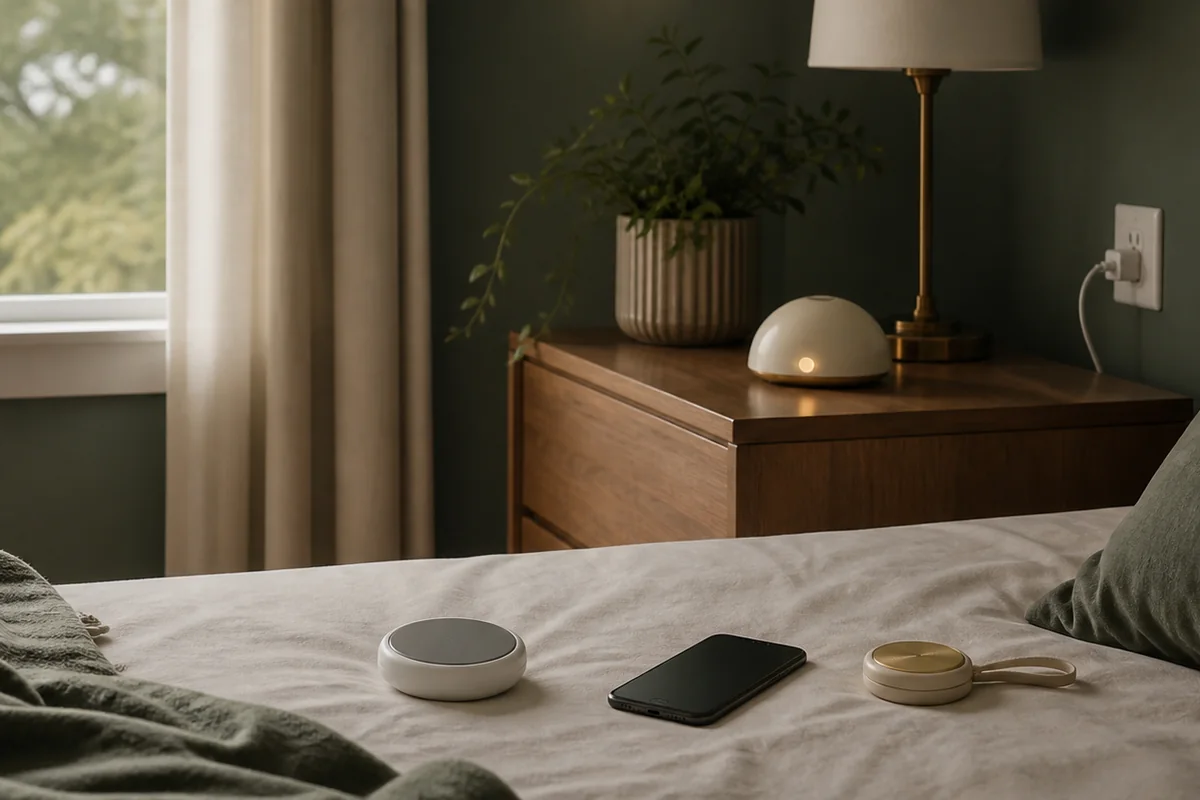
Nonnegotiable checks
The criteria that can change the answer
Device state
Alarm enabled, correct day, correct AM/PM, source available, and volume set.
Signal path
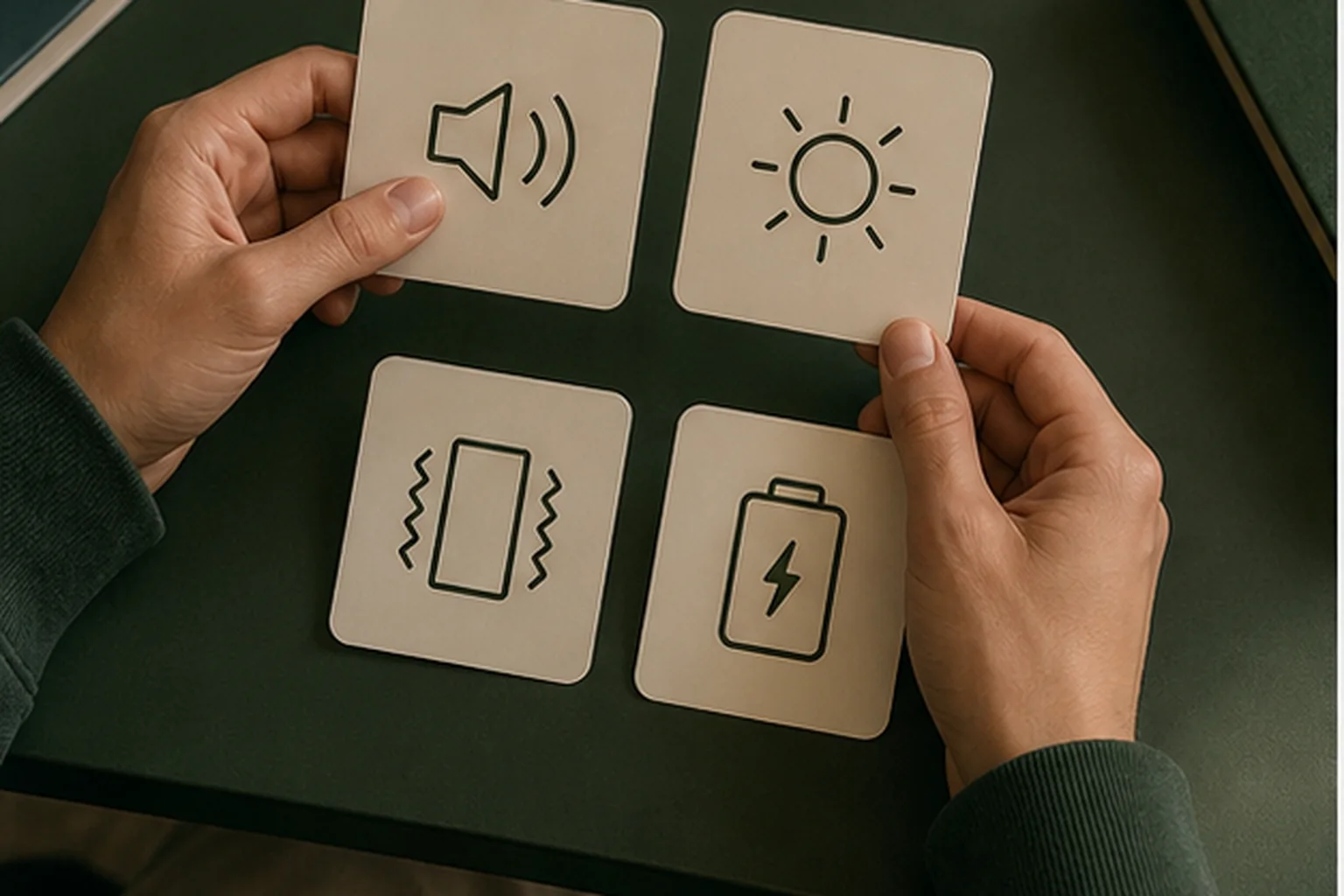
Speaker unblocked, light visible, shaker connected, wearable charged.
Power state
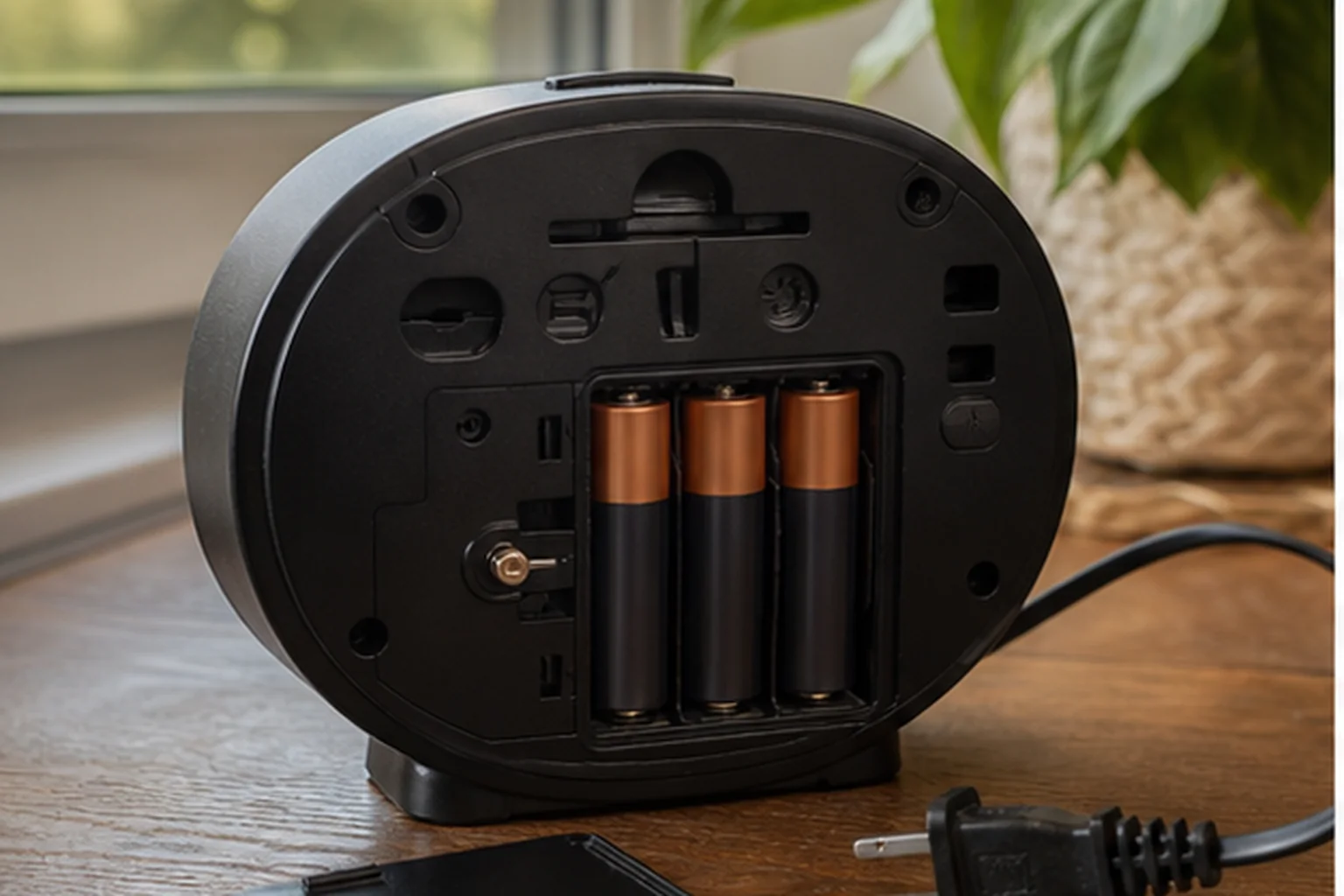
Outlet secure and backup behavior understood.
Sleep context
Track recurring misses and avoid treating a clock as medical treatment.
What changes in practice
Compare the trade-offs, not the feature count
| Route | Decision value |
|---|---|
| More volume | May help an accessible sound signal, with more room impact. |
| Different signal | Adds true redundancy when sound is easy to miss. |
| Move the alarm | Requires deliberate action, but may disturb others longer. |
| Earlier light | Changes the lead-in, but still needs correct placement. |
Build a failure record
Reconstruct the missed morning from schedule to waking response
“I slept through the alarm” can describe several events. The alarm may never have started because it was disabled, scheduled for the wrong day, set to an inaudible source, underpowered, or affected by a device state. It may have started but failed to reach the sleeper. It may have been heard and dismissed without full awareness. The sleeper may have stood up and returned to bed. Troubleshooting starts by identifying which event occurred.
Check the evidence available from the device and household. Was the active indicator visible the night before? Did another person hear or feel the alarm? Did the phone show a dismissed or missed alarm? Was the clock still displaying correct time? Was the shaker connected and in place? Was the light blocked? These observations do not diagnose sleep; they locate technical and behavioral links that can be tested.
Write a simple sequence: scheduled time and day, power state, selected signal and volume, placement, what others observed, stop or snooze state, and when the sleeper remembers waking. Avoid changing many variables before the sequence is understood. Adding more alarms can erase useful evidence and repeat the same weak path.
- Alarm did not start: inspect schedule, day, active state, power, software permissions, and source.
- Alarm started but was not received: inspect accessible channel, intensity, distance, sightline, or vibration path.
- Alarm was stopped automatically: inspect placement, snooze, stop control, and required movement.
- Woke and returned to sleep: inspect the next action and recognize the boundary of product advice.
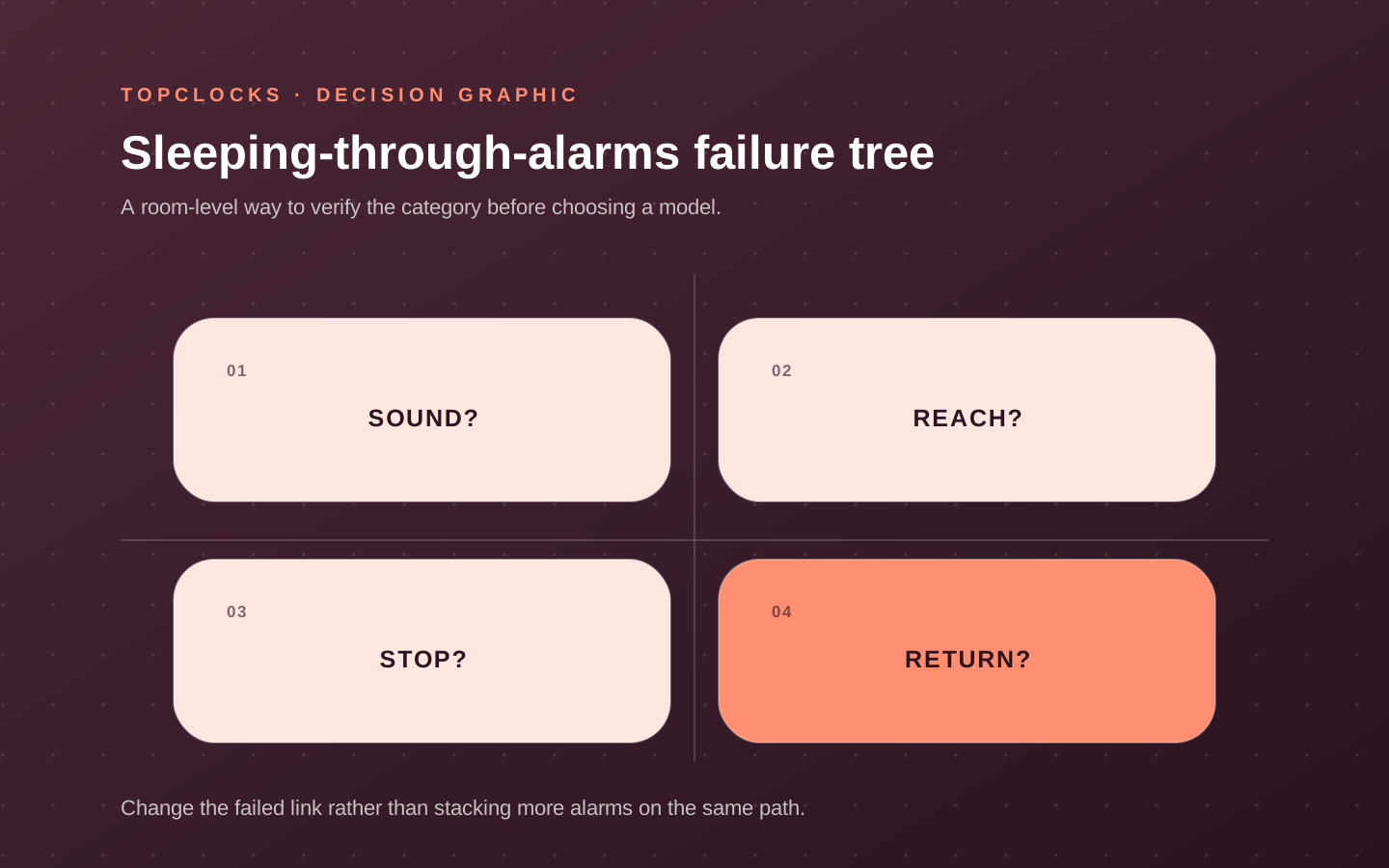
Use controlled adjustments
Change the failed link instead of stacking similar alarms
If the device failed to start, fix scheduling and power before buying a stronger alarm.
Set one short daytime test, confirm day pattern and source, verify actual alarm volume, and check the current phone platform’s alarm and interruption settings. Read the clock’s outage behavior. A battery compartment may preserve memory without sounding. For a connected alarm, test the saved routine after disconnecting the phone or network as the manufacturer documents.
If the cue started and was missed, change delivery. Move the speaker, choose a distinct accessible tone, place sunrise light near the sleeper’s field, or add tactile vibration. Test each channel alone. If the cue was stopped automatically, move the shutoff point to require safe deliberate movement or use a device that changes the stopping action. If the sleeper returns to bed, pair stopping with one simple morning action rather than another sequence of half-awake snoozes.
Make one change per test and record the result. A new tone plus new position plus new schedule plus three backup alarms may work and will not reveal why. Controlled changes help determine whether the current device can be kept, which category should replace it, and what backup is genuinely independent.
- Test during the day before relying on any new configuration.
- Use the normal phone case, bedding, curtains, partner, and room conditions.
- Keep the primary cue understandable; intensity should be the lowest reliable level.
- Remove obsolete or overlapping alarms after the successful path is known.
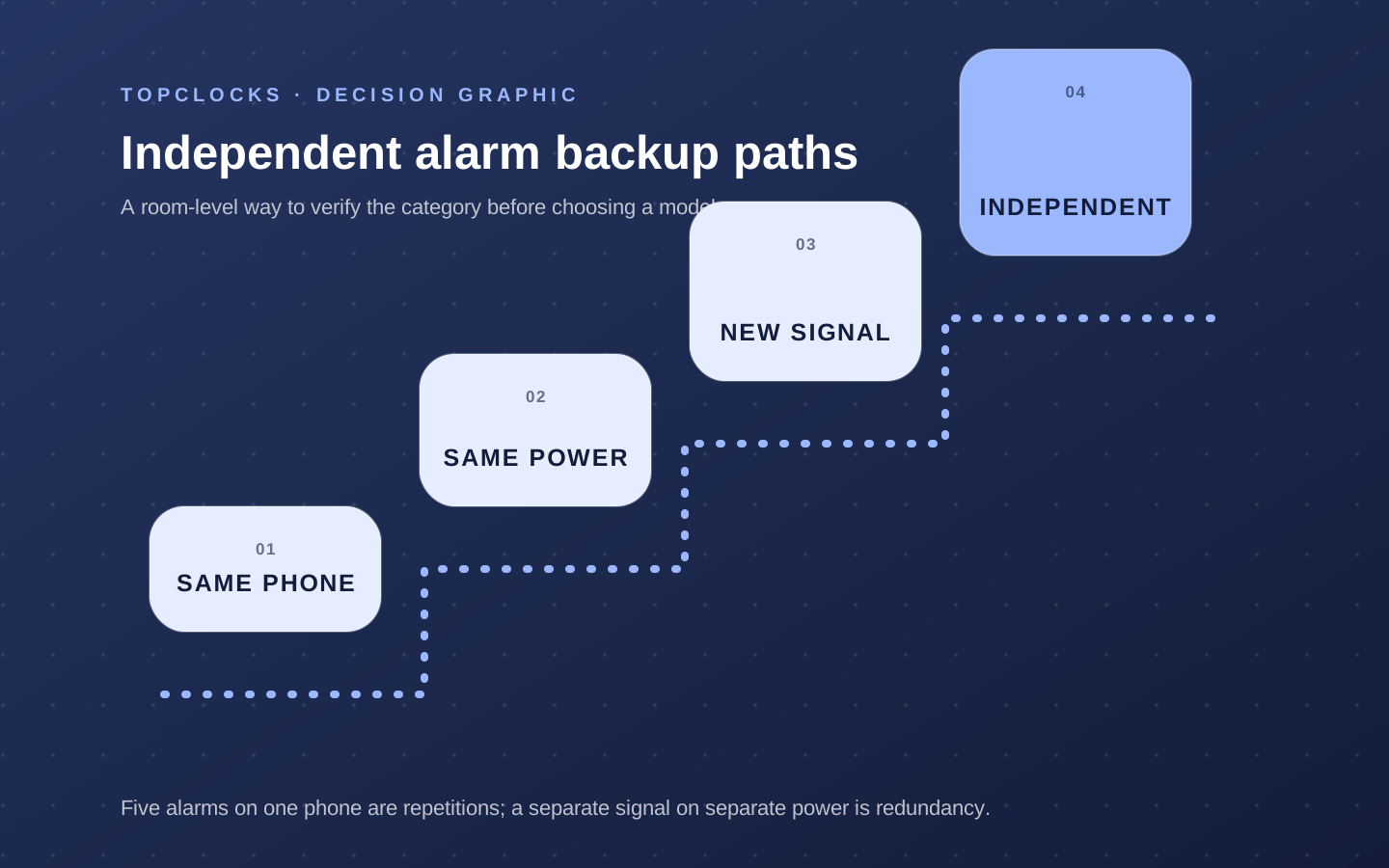
Redundancy is not repetition
A second alarm should cover a different failure
Several alarms on one phone provide repeated opportunities to respond and still depend on one battery, speaker, operating-system state, bedside position, and user action. Two alarms on one clock share its hardware and outlet. A stronger backup changes the signal, device, power source, placement, or required response. The amount of independence should match the consequence of missing the event.
Examples include a mains-powered sunrise clock backed by a battery sound alarm, a sound alarm backed by a bed shaker, or a bedside clock backed by a separate device across the room. A combined clock with sound and vibration diversifies delivery but remains one device. That may be enough for ordinary use and not enough for a flight, examination, or safety-sensitive shift. Test the backup separately so its role is known.
Schedule the backup intentionally. If it starts too close to the primary, both can become one confusing event. If it starts too late, it cannot protect the deadline. Keep signals acceptable for partners and neighbors. More stimulation is not inherently more reliable and can encourage rapid disabling.
- Identify the exact failure the backup is meant to cover.
- Choose at least one different dimension: channel, hardware, power, placement, or action.
- Test the backup alone and after the primary is deliberately disabled in a controlled daytime scenario.
- Review battery and schedule state before high-consequence mornings.
Know where product advice ends
Persistent waking difficulty is not proof that a more extreme clock is the answer
Alarm setup can address a disabled schedule, inaccessible cue, poor placement, weak power path, automatic silencing, and lack of backup. It cannot determine why a person is unusually difficult to wake or replace assessment of sleep, medication, health, or safety concerns. Avoid labeling the problem as laziness and avoid presenting one device as a cure.
Keep a basic record if the problem persists: sleep and wake schedule, missed alarms, observed alarm behavior, daytime sleepiness or impairment, and relevant changes. This record can improve both technical troubleshooting and a conversation with a qualified health professional. Do not stop or change medication based on an alarm guide. Seek appropriate advice when difficulty waking is persistent, worsening, associated with significant daytime impairment, or otherwise concerning.
Product selection remains practical within that boundary. Clocky can change the action required to stop an alarm. Hatch Restore 3 can begin light and sound before the deadline. Philips HF3520/60 provides a self-contained light-and-sound path. Each addresses a specific setup hypothesis and none guarantees waking or explains the underlying difficulty.
- Verify device and routine failures before escalating products.
- Use source-backed product language and avoid medical conclusions.
- Keep safety-critical backup independent while the problem is being evaluated.
- Seek qualified guidance for persistent difficulty or daytime impact.
The page succeeds when it produces a clearer failure record, a safer alarm path, and an honest next step—not when it attaches a confident cause to limited evidence.
Verify in the room
Reconstruct the missed morning minute by minute
Troubleshooting begins with what happened, not with a more aggressive product. Confirm the schedule, power, signal, physical reach, stop action, and whether sleep resumed after dismissal. Treat this as a selection experiment for sleeping through alarms, not a claim that one model will work for every sleeper. The objective is to expose a mismatch while the clock can still be returned, moved, or reconfigured.
Run low-stakes checks during the day and then on ordinary mornings. Keep the device, bedding, room, volume, and routine unchanged for the first observation so the failed link remains visible. Keep the first run deliberately ordinary. Extreme settings can hide a placement problem, and a special one-night routine does not show whether the setup is maintainable on workdays, school days, weekends, and schedule changes.
The audit fails when several variables change at once, when memory substitutes for the alarm log, or when repeated missed alarms are treated only as a device-shopping problem. Write the likely failure before running the test. That note prevents a bright display, attractive sound library, charging pad, or app from receiving credit for a wake path it cannot protect.
Record scheduled days, alarm-active state, power, actual cue, device position, first response, snooze count, final stop location, and time out of bed. A simple dated log is enough. Avoid converting one successful morning into a universal result; repeat the check after changing bedding, furniture, power, software, room, or schedule because the signal path may have changed.
- Schedule armed: write the observed state, not a yes-or-no impression. Add the condition that produced it and the next check if the result was unclear.
- Power available: write the observed state, not a yes-or-no impression. Add the condition that produced it and the next check if the result was unclear.
- Cue produced: write the observed state, not a yes-or-no impression. Add the condition that produced it and the next check if the result was unclear.
- Cue reached sleeper: write the observed state, not a yes-or-no impression. Add the condition that produced it and the next check if the result was unclear.
- Dismissal behavior: write the observed state, not a yes-or-no impression. Add the condition that produced it and the next check if the result was unclear.
- Return-to-sleep pattern: write the observed state, not a yes-or-no impression. Add the condition that produced it and the next check if the result was unclear.
A correction passes when it changes the identified failure and works on repeated ordinary mornings without excessive disruption. Reject endless escalation. Persistent difficulty waking, major daytime impairment, or concern about sleep, health, or medication warrants discussion with a qualified professional. If the result is mixed, do not average it into a score. Preserve the unresolved condition and compare only models that give you a direct way to verify it.
When reading product pages for sleeping through alarms, translate each promising label back into an observable state. “Reliable” should identify the cue that survives the expected power and dependency conditions. “Easy to use” should identify who sets the alarm, in what light, and how the active state is confirmed. “Best” should disappear unless the scenario and disqualifiers are stated beside it.
Close the hidden gaps
Questions that settle a choice about sleeping through alarms
For sleeping through alarms, these questions close the gaps left by retailer filters and broad “best alarm” lists. Each answer is a boundary for the shortlist, not a promise about an untested model.
What should be tested before buying sleeping through alarms?
Run low-stakes checks during the day and then on ordinary mornings. Keep the device, bedding, room, volume, and routine unchanged for the first observation so the failed link remains visible. Use the exact device revision and current manual when a control, accessory, app, or backup behavior affects the result.
Which failure should be ruled out first?
The audit fails when several variables change at once, when memory substitutes for the alarm log, or when repeated missed alarms are treated only as a device-shopping problem. Test that failure first, while the consequences are low, instead of increasing every setting at once.
How many checks make the result dependable?
Within this review of sleeping through alarms, one successful check confirms that the setup can work; it does not show that it is robust. Repeat it on ordinary mornings and after any change that affects the signal, power, placement, schedule, or stop action. High-consequence mornings deserve an independently tested backup.
Can specifications settle the choice?
Specifications and manuals can narrow the shortlist for sleeping through alarms by establishing intended controls, compatibility, power requirements, and operating states. They cannot establish what one sleeper will hear, see, or feel through a particular room and bed. Keep documented facts and room observations separate.
When should a candidate for sleeping through alarms leave the shortlist?
Reject endless escalation. Persistent difficulty waking, major daytime impairment, or concern about sleep, health, or medication warrants discussion with a qualified professional. A disqualifier should remove the model before price, design, reviews, or optional content are compared.
What does a passing result look like?
A correction passes when it changes the identified failure and works on repeated ordinary mornings without excessive disruption. The result should be visible in the log and repeatable without a special workaround that the household is unlikely to maintain.
Finish the decision about sleeping through alarms by writing one sentence: “This setup should wake this person, in this room, through this signal, under these power conditions, and it will be checked this way.” If any blank remains, the page has identified the next research task rather than pretending the purchase is settled.
Before relying on it
Run the complete alarm path
A product page can confirm features. Only a real setup check confirms that the selected signal, placement, controls, and power path work together in the room.
- Run a daytime test.
- Check the active-alarm indicator.
- Use a distinct backup signal.
- Seek professional advice when the problem persists or affects daytime safety.
Role-based product shortlist
Models worth comparing for this decision
These are desk-researched candidates, not a claim that one clock wins for everyone. Each card explains the scenario it fits, the limitation to verify, and the primary source used for the factual details.
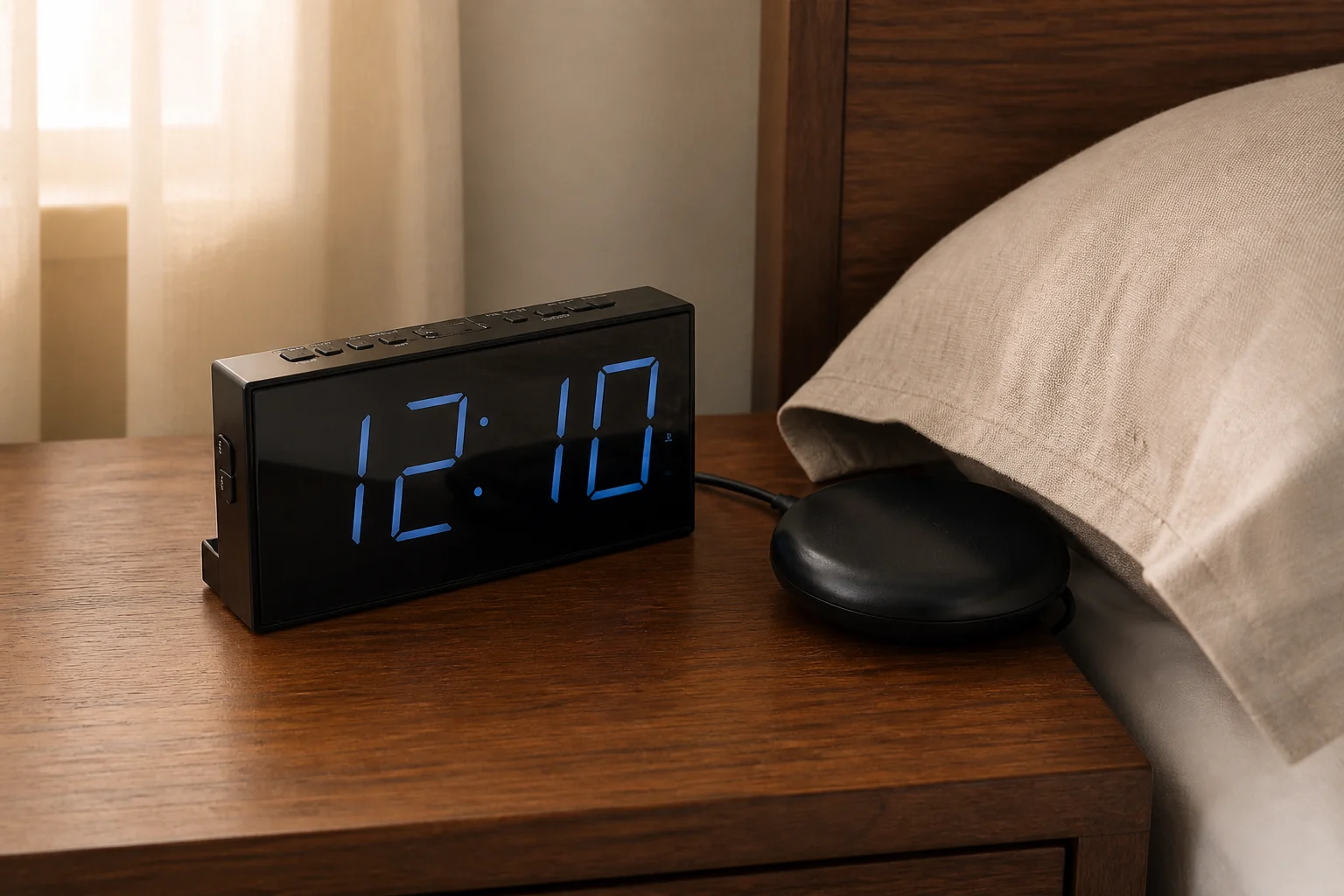
Compare for sound, vibration, or both
Roxicosly CR1001EM Bed Shaker Alarm Clock
Roxicosly is the layered bedside option when ordinary sound is noticed but not acted on and a tested under-pillow or under-mattress shaker adds useful redundancy.
Roxicosly combines a wired bed shaker with an adjustable audible alarm, dual alarm times, nine-minute snooze, 24-hour Alarm Pause, large digits, and a USB charging output.
Compare when standing up is part of the plan
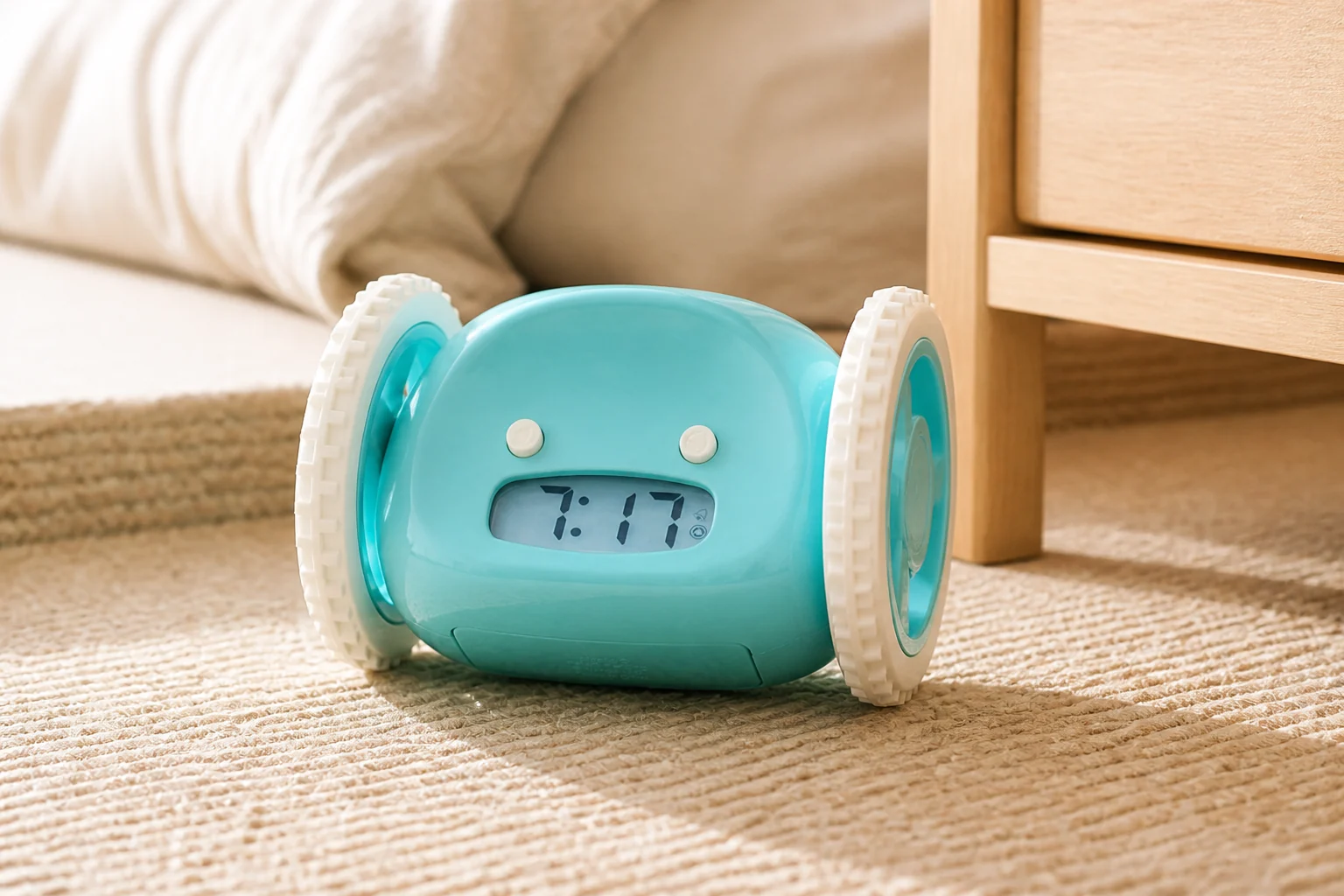
Clocky
Clocky is appropriate when the failure occurs after hearing the alarm—the sleeper shuts it off without fully getting up.
Clocky can allow one snooze, then roll away while beeping so the sleeper has to leave the bed to stop it. The running function can also be disabled.
Compare for app-built light and sound routines
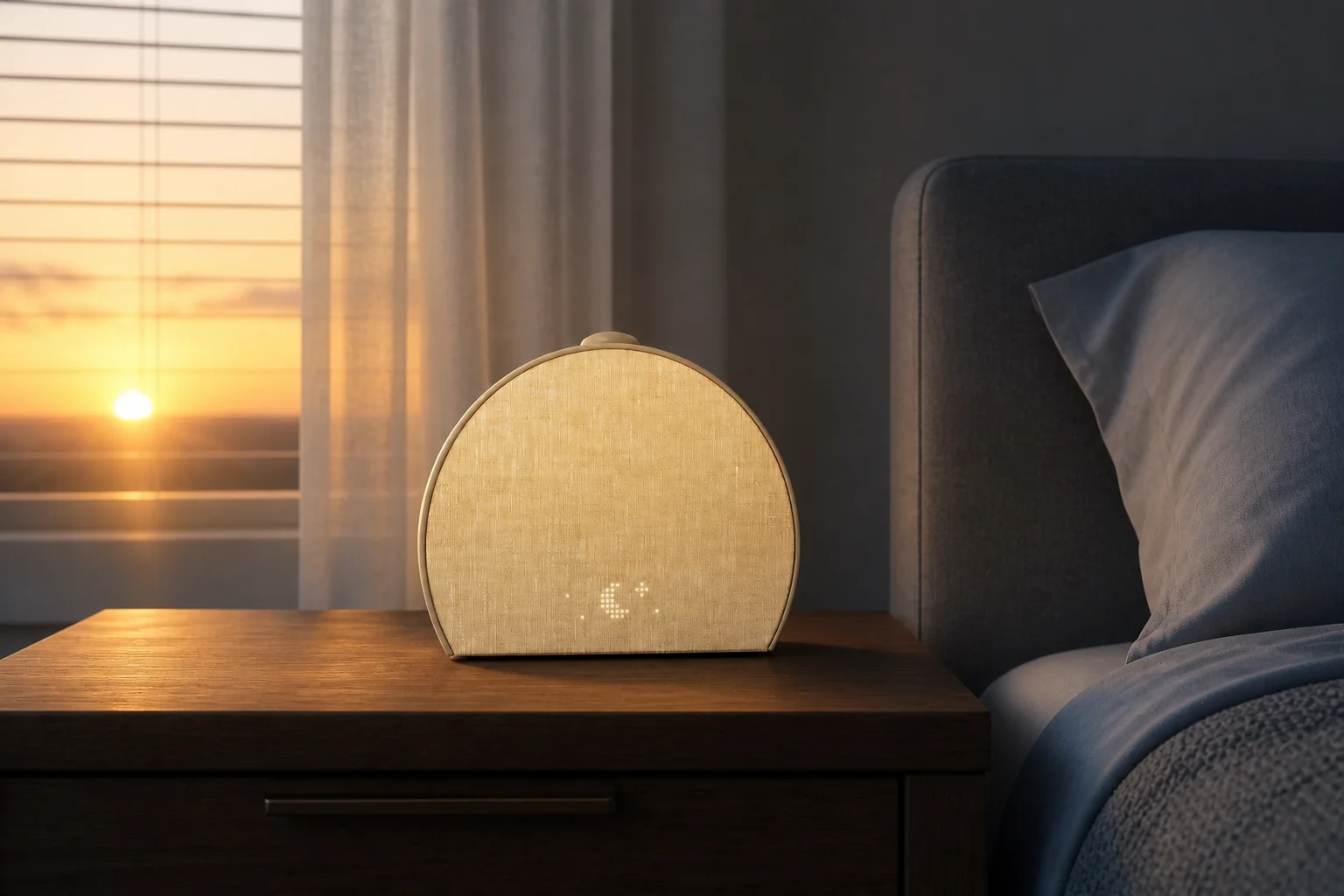
Hatch Restore 3
Restore 3 can change cue timing by beginning light and sound before the wake deadline instead of relying on one instant signal.
Restore 3 combines sunrise light, sound routines, and more direct device controls than earlier Restore models. A phone is still required for setup and customization, while core routines can be used from the clock afterward.
Compare for a self-contained sunrise alarm
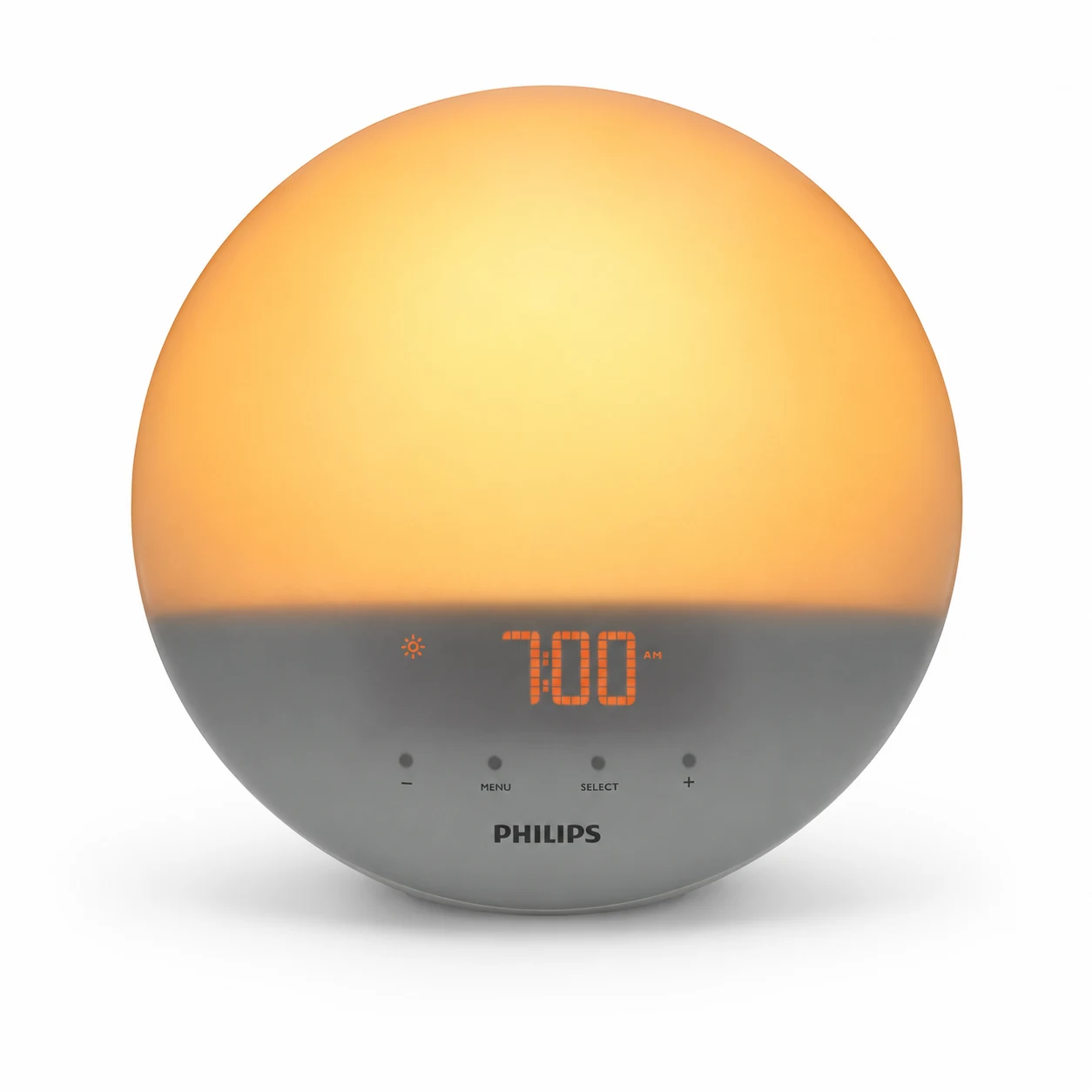
Philips SmartSleep HF3520/60
HF3520/60 supplies a self-contained version of the same layered idea, with sunrise followed by a selected wake sound.
HF3520/60 provides an adjustable 20-, 25-, 30-, 35-, or 40-minute sunrise simulation, two alarm profiles, natural wake sounds, FM radio, tap snooze, and bedside controls without requiring an app or subscription. The default sunrise duration is 30 minutes.
Evidence trail