Alarm clock type
Loud Alarm Clocks: Volume Is Only the First Check
A louder signal can travel farther through a room, but maximum output does not tell you whether the tone is adjustable, tolerable, or quick to stop.
The decision first
Can the room tolerate the sound you need?
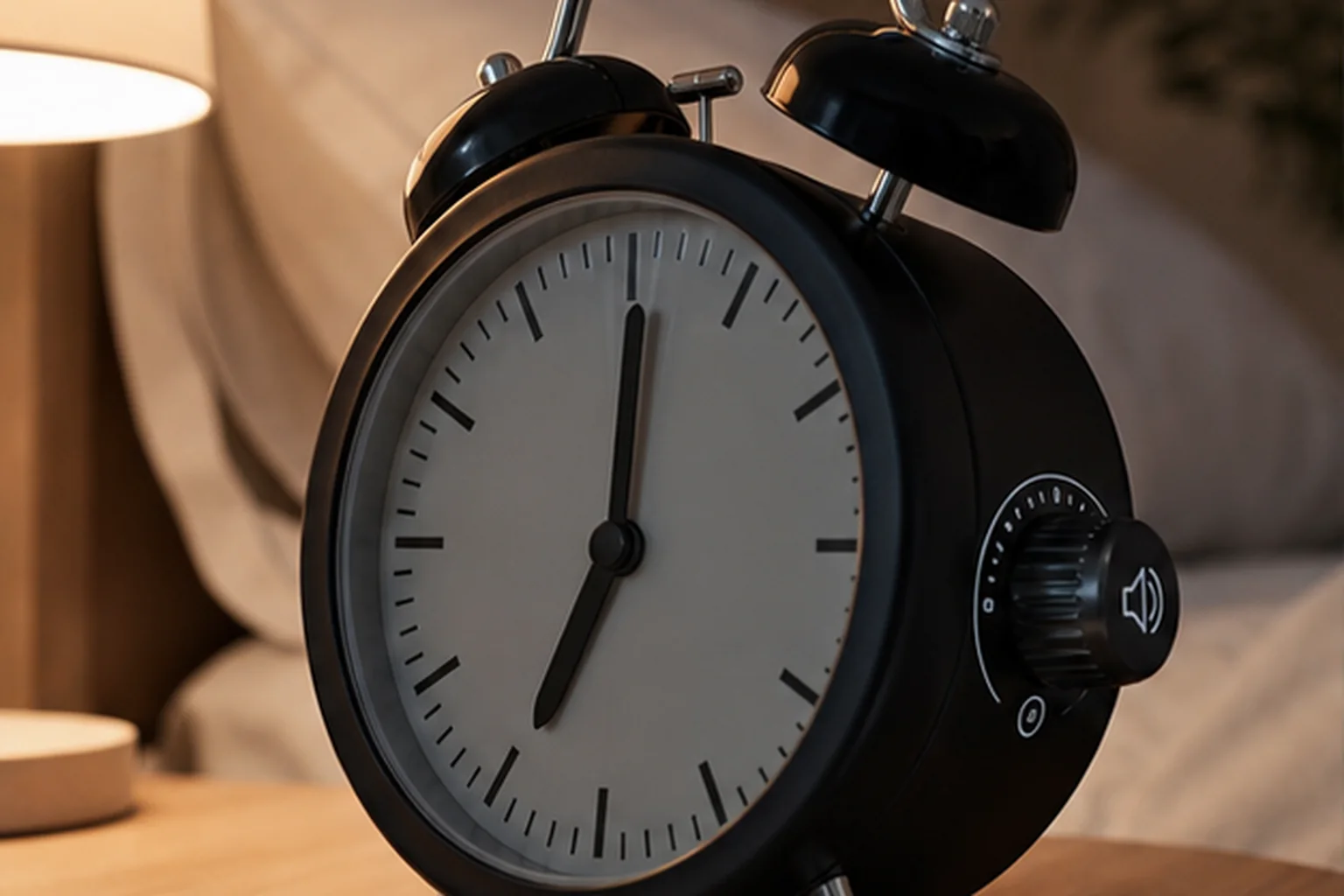
A loud alarm is a sensible starting point when sound is accessible and the room can tolerate it. Prefer adjustable volume or tone over an unexplained maximum claim. For repeat misses, compare a combined sound-and-vibration model rather than adding more volume by default.
Nonnegotiable checks
The criteria that can change the answer
Adjustment range
Look for useful steps, not only a maximum-volume claim.
Tone character
A changeable pitch can matter when one frequency is easy to miss.
Shutoff path
The control should be distinct and reachable without a bright menu.
Room impact
Consider a partner, children, neighbors, and shared walls.
What changes in practice
Compare the trade-offs, not the feature count
| Route | Decision value |
|---|---|
| Best fit | Sleepers who can hear alarms but miss softer bedside tones. |
| Not the first route | Deaf or hard-of-hearing users who need a non-audible alert. |
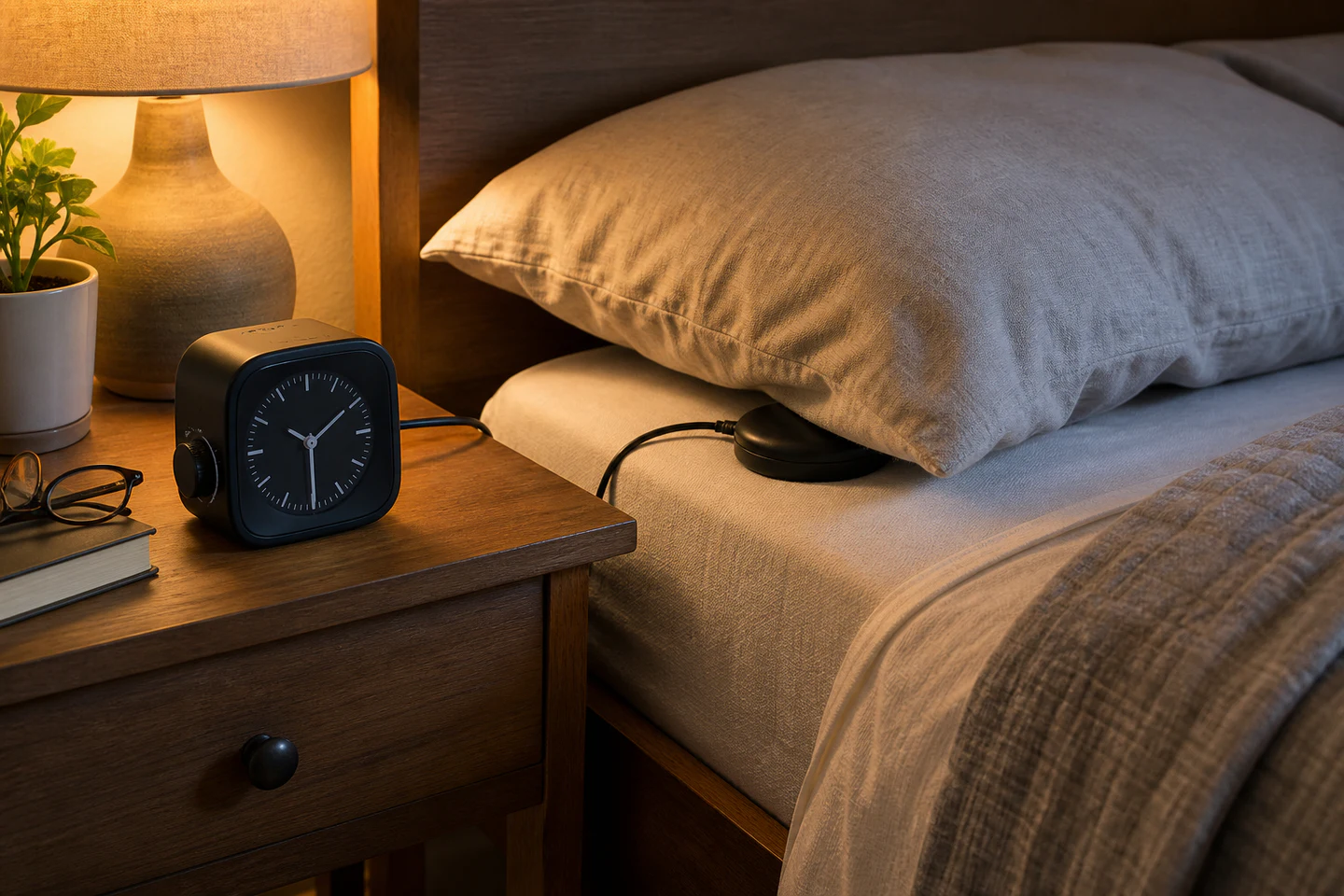
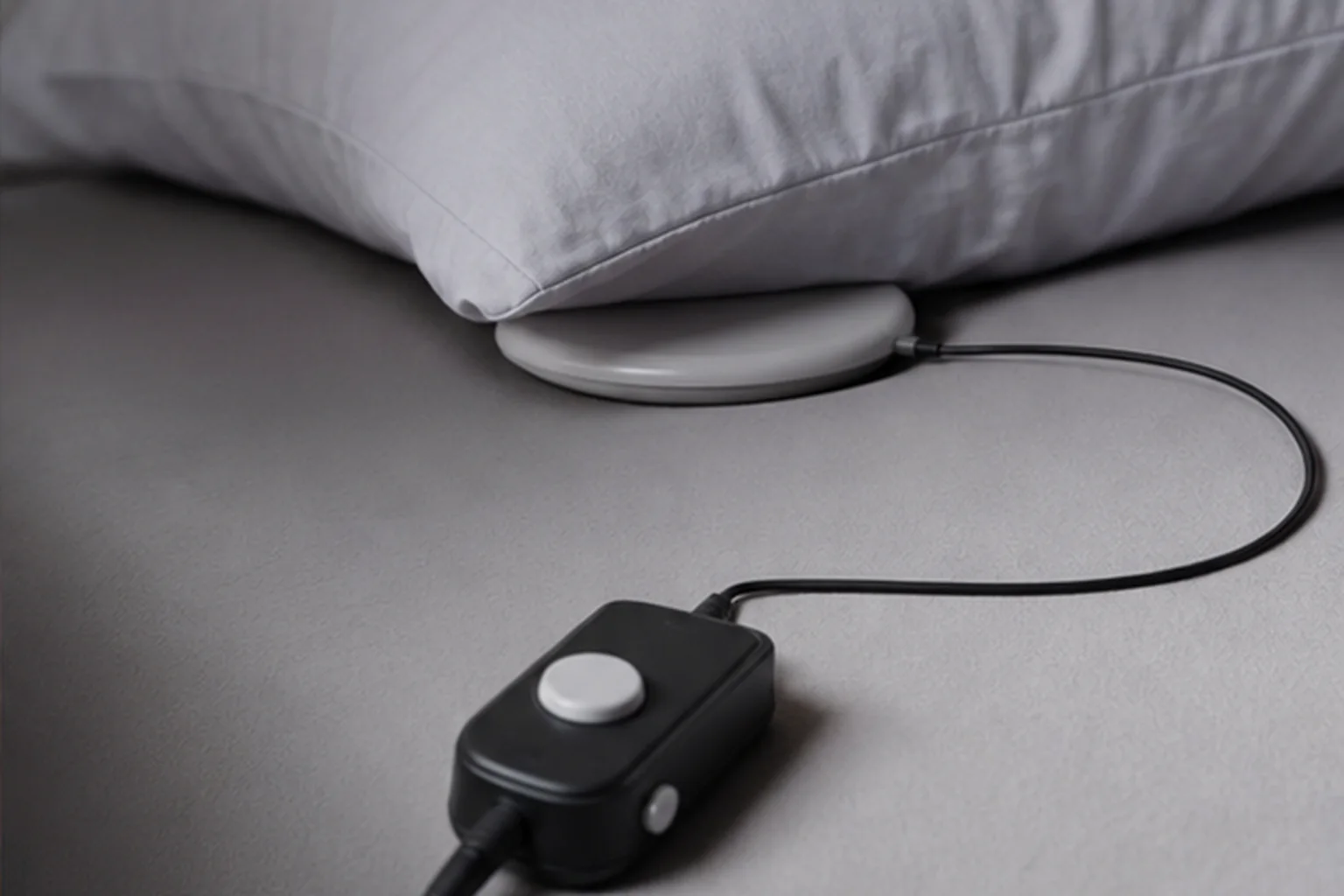
| Useful pairing | Bed shaker or flashing light when sound alone is unreliable. |
| Common failure | A clock placed too close becomes easy to silence without standing. |
Volume is a range
Choose the lowest reliable setting, not the highest advertised number
Maximum output is easy to market and difficult to translate into a bedroom result. Distance, orientation, bedding, room surfaces, tone frequency, hearing access, and background noise all change what arrives at the sleeper. A model with a very high stated maximum can still be a poor choice if the adjustment jumps from too soft to intolerable, the tone is easy to miss, or the control cannot be found in darkness. The useful specification is a controllable range that includes a reliable and acceptable setting.
Start with signal access.
A louder audible alarm is a valid route only when sound is a realistic channel for the intended sleeper. Deaf or hard-of-hearing users may need tactile or visual delivery rather than escalation. A heavy sleeper who hears the alarm and dismisses it automatically may need placement, movement, or a second channel more than additional volume. When sound is accessible, compare adjustable volume, selectable pitch or tone, ascending behavior, alarm duration, and the stop path.
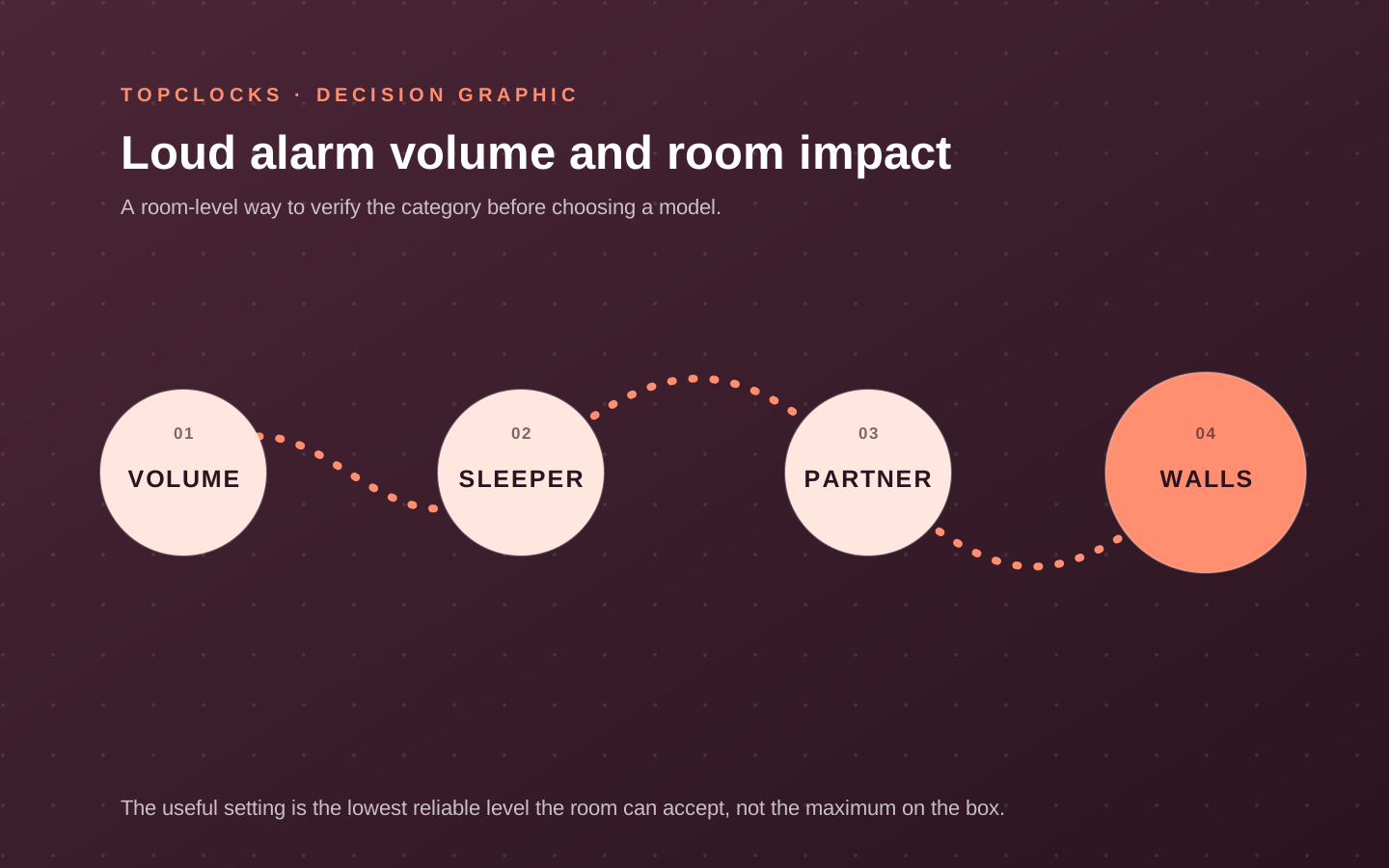
Room tolerance creates the upper boundary. A partner, children, roommates, neighbors, and shared walls can receive a high-output cue that was intended for one person. Repeated disturbance is not a minor cosmetic trade-off. It can make the setup unsustainable and encourage hurried silencing. The right level is the lowest one that wakes the receiver with adequate margin under the normal difficult condition.
- Confirm that alarm volume is adjustable independently from radio or playback volume when that distinction matters.
- Check whether the alarm ramps, begins at the selected level, or uses a fixed pattern.
- Use tone or pitch options to improve access before treating more volume as the only solution.
- Test from the sleeping position with the door, curtains, bedding, and background devices in their normal state.
Never use a maximum dB claim as a guarantee that a clock will wake every sleeper. It is a source-backed product characteristic, not a universal outcome.
Make waking deliberate
Placement and shutoff behavior can matter more than another volume step
A loud clock beside the hand can be heard clearly and stopped without full waking. Moving it across the room may require standing and create a stronger transition into morning, but the move also changes audibility, display readability, cable routing, and partner impact. Placement should therefore be tested as a package rather than offered as universal advice. A distant clock that becomes too quiet or is hidden behind furniture has solved the wrong problem.
Controls need to be predictable during partial wakefulness. Stop and snooze should feel distinct, and the active-alarm state should remain understandable after either is pressed. Check whether the alarm repeats, how long snooze lasts, whether the next day remains armed, and whether a power interruption changes the state. A bright screen or nested touch interface can make a supposedly strong alarm difficult to manage without fully lighting the room.
Consider the cable and furniture path before choosing distance. A mains-powered clock should not create a trip hazard. A shaker cable needs its own safe reach. A battery clock may offer more placement freedom while requiring battery maintenance. If standing up is the intended action, place the stop point where it requires deliberate movement but does not create a dangerous path in darkness.
- Test bedside and across-room positions during the day before committing to either.
- Confirm the speaker is not covered and the alarm remains audible in the normal sleep position.
- Practice stop and snooze without looking, then verify the state for the next alarm.
- Keep the route to the clock clear and avoid cable arrangements that can be pulled or tripped over.
If the user hears the alarm but repeatedly returns to bed, the solution may include a separate morning action or routine. The clock can prompt that action; it cannot guarantee sustained wakefulness or resolve persistent sleep difficulty.
Add a different channel
Layer sound with vibration or light when repeat misses have different causes
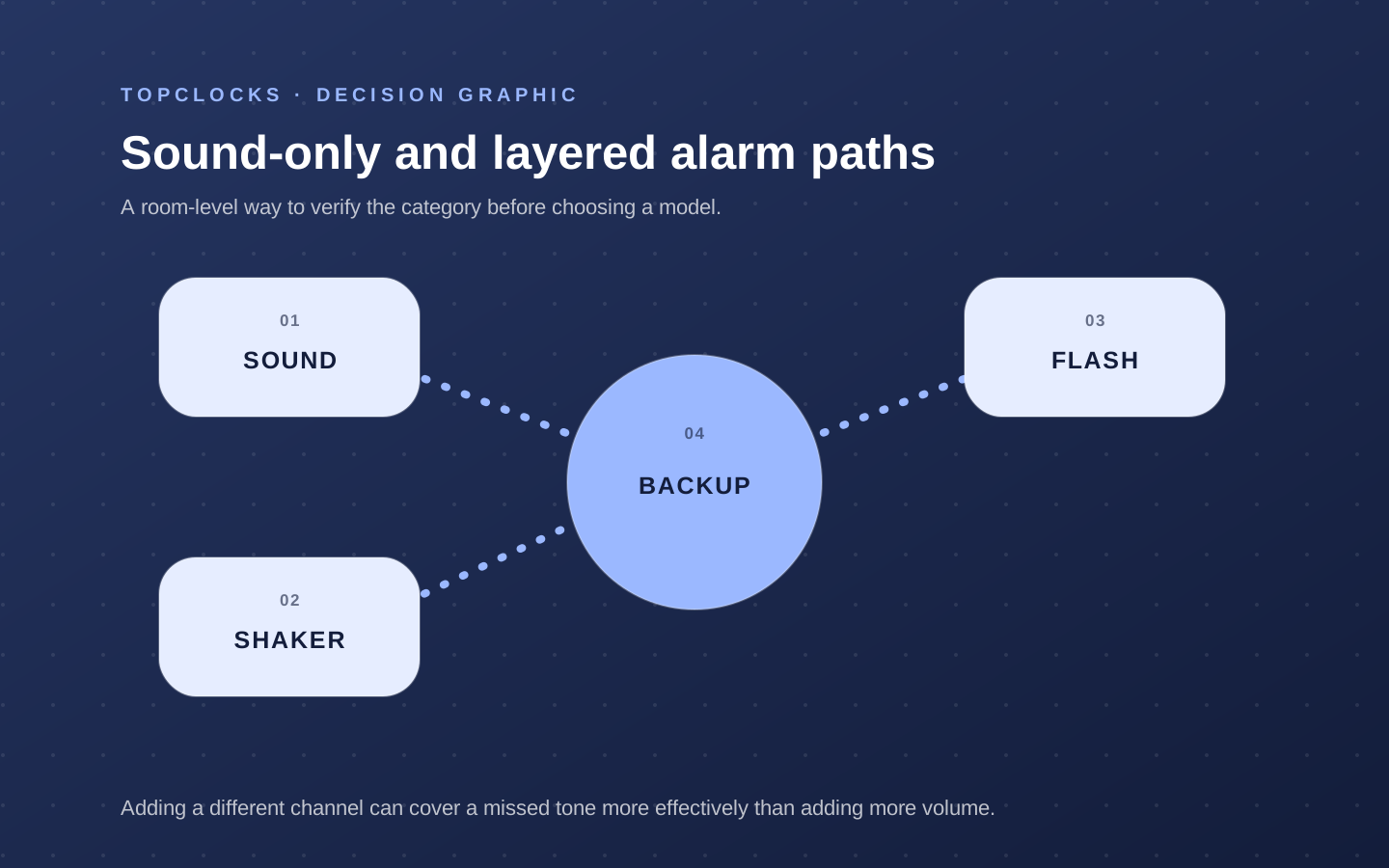
A combined alarm is most valuable when its channels cover different failures. Sound can travel through the room while a shaker delivers a tactile cue through the bed. Flashing light can add a visible event, although line of sight and room impact still matter. If all channels start together on one device, they share schedule, mains, and control failures; the combination improves delivery diversity but not full device independence.
Decide which channel is primary and which is backup. For a sound-accessible heavy sleeper, adjustable sound may be primary and the shaker may cover a missed tone. For a hard-of-hearing sleeper, vibration may be primary while sound is optional or serves other household members. For a couple, a shaker may be primary to limit sound, with a lower-volume tone as the final backup. This ordering determines silent-mode requirements and testing.
More intensity is not always more reliability. A strong shaker can move, rattle against furniture, or transmit through a shared bed. Flash can miss a sleeper facing away and illuminate a partner’s side. A very loud speaker can create room-wide disruption. Each channel needs its own placement and acceptance test. If the consequence is high, a separate backup device on different power can cover failures that an integrated combination cannot.
- Verify that vibration can operate without sound when silent use is required.
- Test the shaker under the actual bedding and secure it according to the manufacturer’s instructions.
- Place light where it enters the sleeper’s field rather than merely brightening a wall.
- Do not call two channels independent when they share one schedule, power supply, and stop control.
The goal is a layered path with understandable roles, not a bedside emergency system running every signal at maximum strength.
Compare models by fit
Build the shortlist around adjustment, room impact, and verified backup behavior
Use three candidate roles rather than a single ranking. A purpose-built high-output model belongs on the list when the user needs a wide sound range and may also benefit from a shaker or flash.
An adjustable mainstream digital clock belongs when stronger sound is needed without the footprint and maximum output of an accessibility-oriented system. A movement-based alarm belongs when the cue is heard but the missing step is getting out of bed. These products solve different failures and should not be ordered by loudness alone.
For every candidate, record the stated volume or adjustment method only when it comes from a current manufacturer page or manual. Then record the tone choices, ramp behavior, alarm duration, snooze and stop controls, display brightness, power input, and exact backup behavior. Check what is included: a shaker shown in photographs may be optional on one system and included on another. Keep price and availability outside stable copy unless they are actively maintained.
Run a staged test.
Start at a conservative setting during the day, then increase only as needed. Test the intended placement and ask other household members about impact. If a shaker or flash is part of the decision, test each alone and in combination. Unplug the clock during a short daytime alarm test when the manual indicates backup behavior and the test is safe. Confirm the alarm state after power returns.
- Reject a model whose useful setting cannot fit the room, even if its maximum is impressive.
- Reject a model whose sound is not an accessible channel for the intended user.
- Reject a combined model when the required silent mode, cable reach, or included accessory is absent.
- Keep an independent second device for high-consequence mornings when one clock remains a single point of failure.
The best loud alarm for a particular room is the model that can be set high enough, controlled clearly, stopped deliberately, and accepted by the household. That conclusion is narrower—and more useful—than declaring the loudest model the winner.
Verify in the room
Test usable sound at the pillow, not the number on the box
A loud alarm clock has to reach the sleeper through the room without making the setup unsafe or intolerable for everyone nearby. Maximum volume is only one part of that path. Treat this as a selection experiment for loud alarm clocks, not a claim that one model will work for every sleeper. The objective is to expose a mismatch while the clock can still be returned, moved, or reconfigured.
Use the intended distance, speaker direction, bedding, closed or open door, and shared-wall conditions. Test a lower setting first and keep the shutoff control where the planned routine requires it. Keep the first run deliberately ordinary. Extreme settings can hide a placement problem, and a special one-night routine does not show whether the setup is maintainable on workdays, school days, weekends, and schedule changes.
Loudness fails when the tone is poorly matched to the listener, the speaker is blocked, the clock is silenced half-awake, or household spillover makes the chosen setting unusable. Write the likely failure before running the test. That note prevents a bright display, attractive sound library, charging pad, or app from receiving credit for a wake path it cannot protect.
Record the selected tone, volume step, distance from pillow, door state, whether the sleeper responded, and whether another person or room was affected. A simple dated log is enough. Avoid converting one successful morning into a universal result; repeat the check after changing bedding, furniture, power, software, room, or schedule because the signal path may have changed.
- Tone and pitch option: write the observed state, not a yes-or-no impression. Add the condition that produced it and the next check if the result was unclear.
- Volume steps: write the observed state, not a yes-or-no impression. Add the condition that produced it and the next check if the result was unclear.
- Speaker direction: write the observed state, not a yes-or-no impression. Add the condition that produced it and the next check if the result was unclear.
- Pillow distance: write the observed state, not a yes-or-no impression. Add the condition that produced it and the next check if the result was unclear.
- Room spillover: write the observed state, not a yes-or-no impression. Add the condition that produced it and the next check if the result was unclear.
- Separate backup channel: write the observed state, not a yes-or-no impression. Add the condition that produced it and the next check if the result was unclear.
A loud alarm passes when a tolerable setting reliably prompts a deliberate waking action in the actual room.
Reject the setup if it requires the maximum setting before placement and tone have been tested, or if sound is not an accessible primary channel. If the result is mixed, do not average it into a score. Preserve the unresolved condition and compare only models that give you a direct way to verify it.
When reading product pages for loud alarm clocks, translate each promising label back into an observable state. “Reliable” should identify the cue that survives the expected power and dependency conditions. “Easy to use” should identify who sets the alarm, in what light, and how the active state is confirmed. “Best” should disappear unless the scenario and disqualifiers are stated beside it.
Close the hidden gaps
Questions that settle a choice about loud alarm clocks
For loud alarm clocks, these questions close the gaps left by retailer filters and broad “best alarm” lists. Each answer is a boundary for the shortlist, not a promise about an untested model.
What should be tested before buying loud alarm clocks?
Use the intended distance, speaker direction, bedding, closed or open door, and shared-wall conditions. Test a lower setting first and keep the shutoff control where the planned routine requires it. Use the exact device revision and current manual when a control, accessory, app, or backup behavior affects the result.
Which failure should be ruled out first?
Loudness fails when the tone is poorly matched to the listener, the speaker is blocked, the clock is silenced half-awake, or household spillover makes the chosen setting unusable. Test that failure first, while the consequences are low, instead of increasing every setting at once.
How many checks make the result dependable?
Within this review of loud alarm clocks, one successful check confirms that the setup can work; it does not show that it is robust. Repeat it on ordinary mornings and after any change that affects the signal, power, placement, schedule, or stop action. High-consequence mornings deserve an independently tested backup.
Can specifications settle the choice?
Specifications and manuals can narrow the shortlist for loud alarm clocks by establishing intended controls, compatibility, power requirements, and operating states. They cannot establish what one sleeper will hear, see, or feel through a particular room and bed. Keep documented facts and room observations separate.
When should a candidate for loud alarm clocks leave the shortlist?
Reject the setup if it requires the maximum setting before placement and tone have been tested, or if sound is not an accessible primary channel. A disqualifier should remove the model before price, design, reviews, or optional content are compared.
What does a passing result look like?
A loud alarm passes when a tolerable setting reliably prompts a deliberate waking action in the actual room. The result should be visible in the log and repeatable without a special workaround that the household is unlikely to maintain.
Finish the decision about loud alarm clocks by writing one sentence: “This setup should wake this person, in this room, through this signal, under these power conditions, and it will be checked this way.” If any blank remains, the page has identified the next research task rather than pretending the purchase is settled.
Before relying on it
Run the complete alarm path
A product page can confirm features. Only a real setup check confirms that the selected signal, placement, controls, and power path work together in the room.
- Confirm volume is adjustable.
- Check whether the alarm ramps or starts at full output.
- Test the stop and snooze controls in darkness.
- Ask whether the room can accept the signal.
Role-based product shortlist
Models worth comparing for this decision
These are desk-researched candidates, not a claim that one clock wins for everyone. Each card explains the scenario it fits, the limitation to verify, and the primary source used for the factual details.
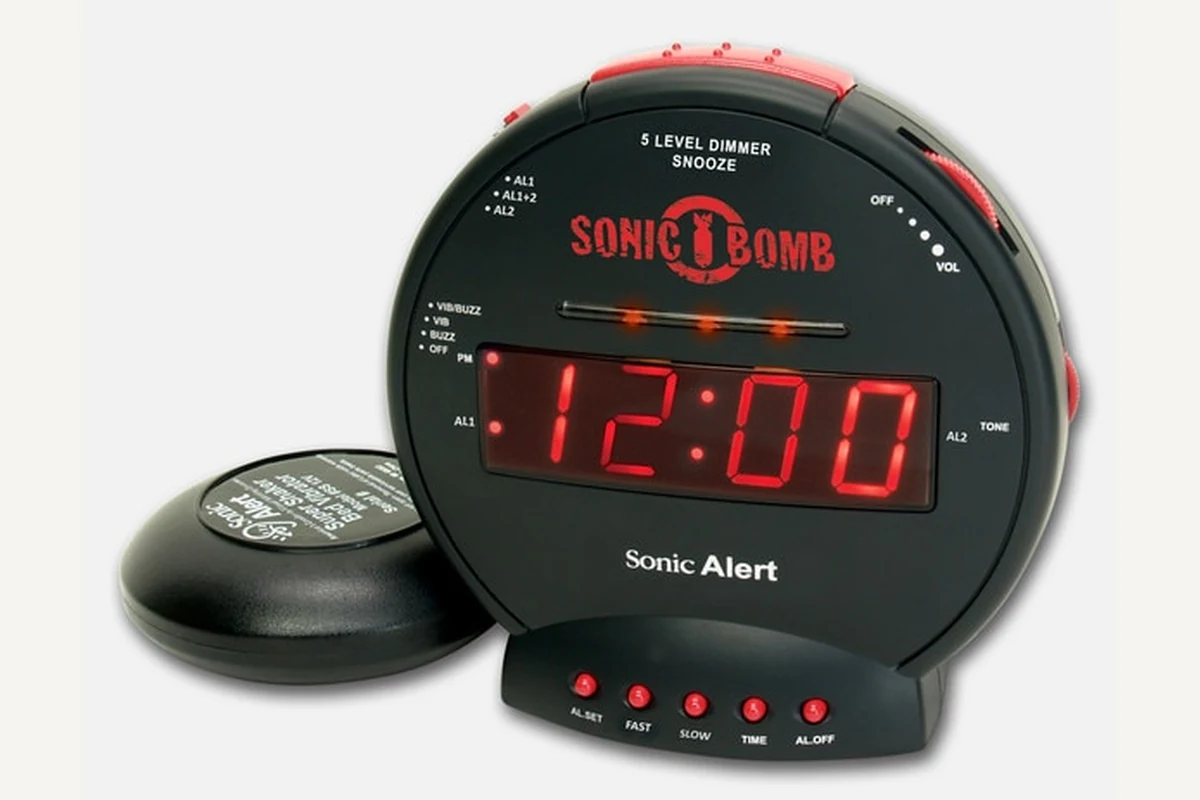
Compare for loud sound plus a bed shaker
Sonic Alert Sonic Bomb SBB500SS
Sonic Bomb is the direct high-output candidate, with a shaker and flash available when more sound alone is the wrong answer.
The clock combines adjustable sound, flashing lights, dual alarms, and an included 12-volt bed shaker. The manufacturer lists a 113 dB maximum, so the useful question is how far below that maximum the sleeper can set it.
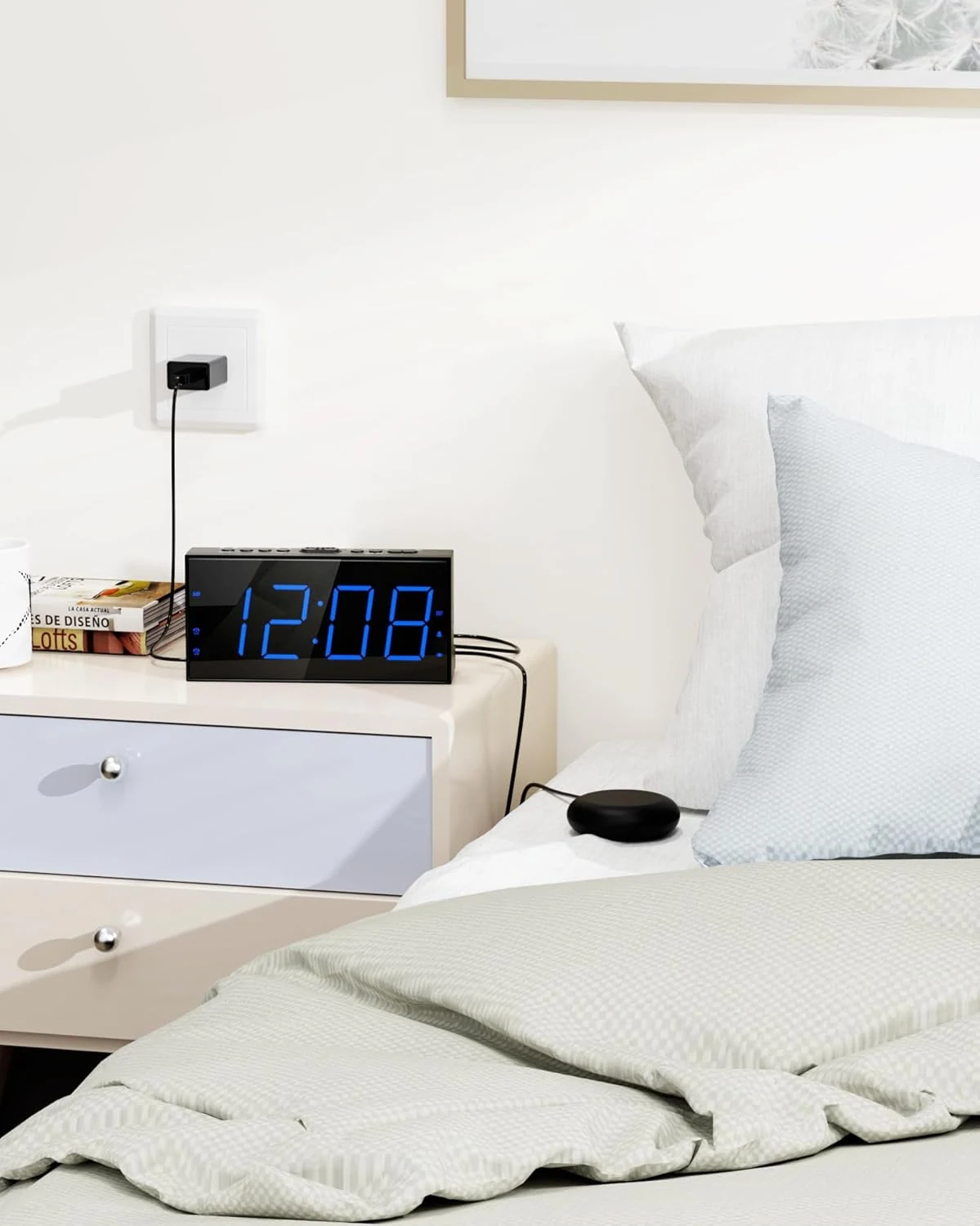
Compare for sound, vibration, or both
Roxicosly CR1001EM Bed Shaker Alarm Clock
Roxicosly is the adjustable sound-plus-shaker route, but its own listing warns against assuming it is a screaming-loud clock.
Roxicosly combines a wired bed shaker with an adjustable audible alarm, dual alarm times, nine-minute snooze, 24-hour Alarm Pause, large digits, and a USB charging output.
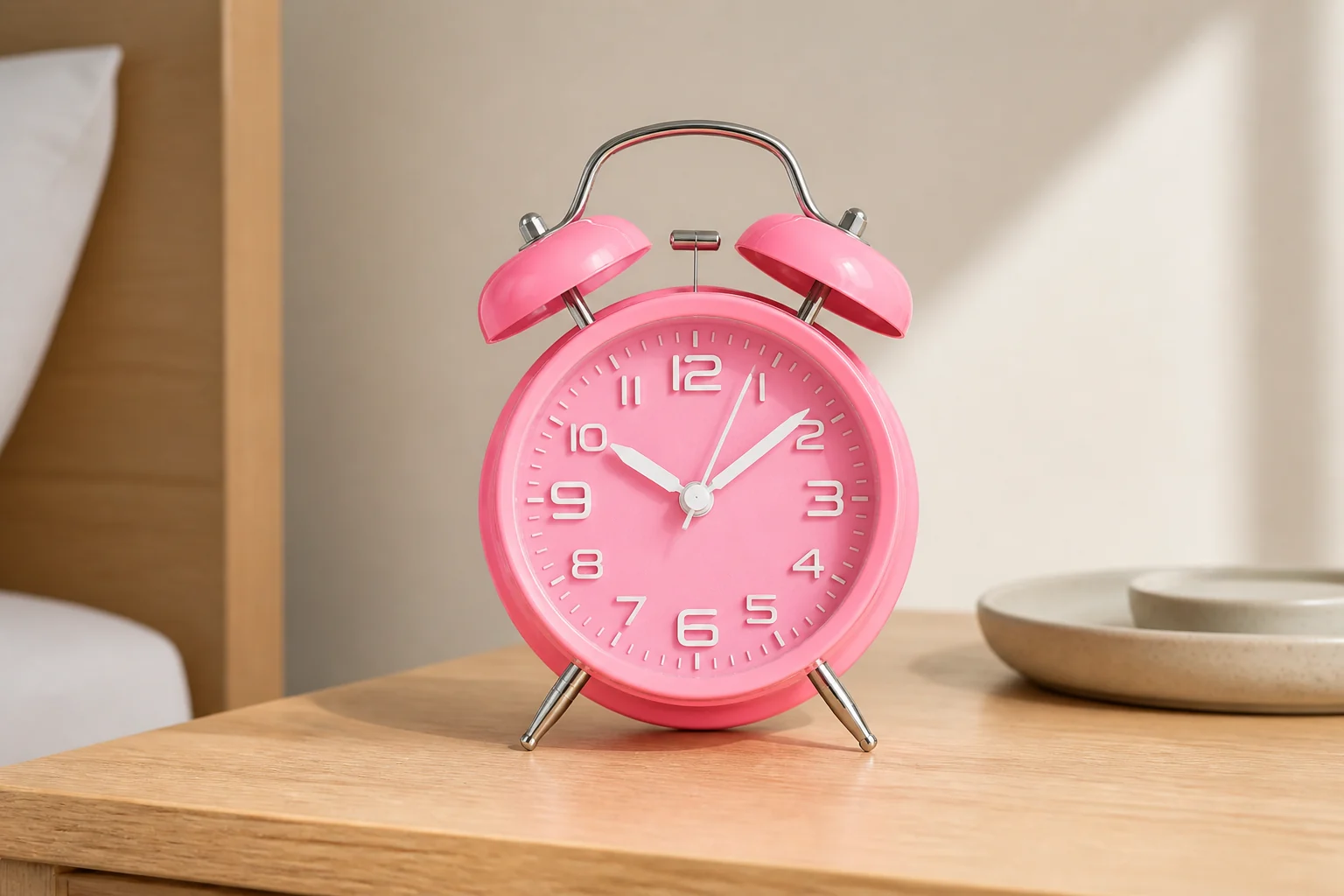
Compare for a battery twin-bell wake-up
Peakeep MHP3122 Twin Bell
Peakeep supplies a mechanical twin-bell strike without snooze, while analog alarm-hand precision remains the trade-off.
MHP3122 uses a real twin-bell hammer, a silent sweep movement, a temporary dial light, and one AA battery. It has no snooze, app, account, outlet, or charging dependency.
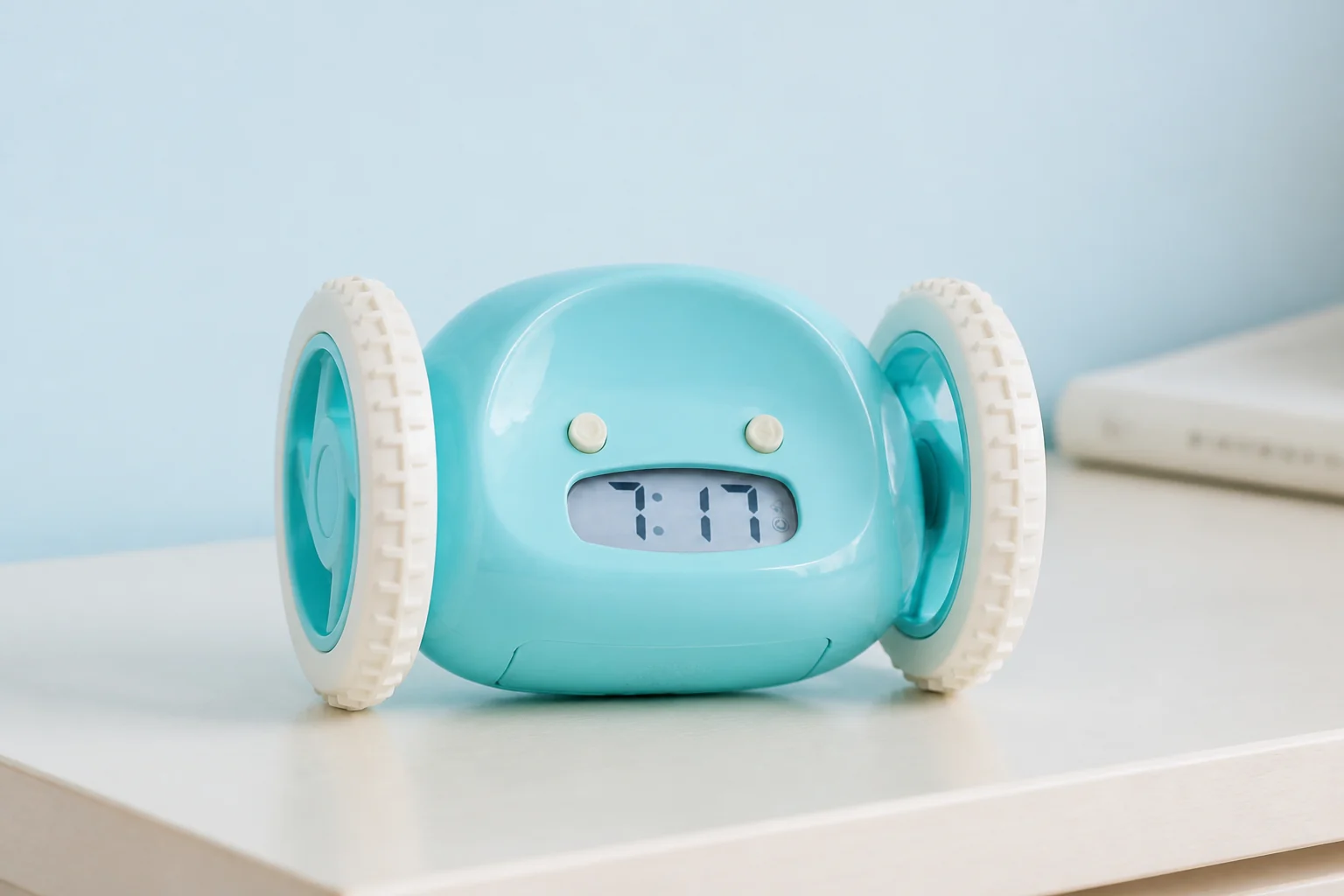
Compare when standing up is part of the plan
Clocky
Clocky takes a different approach: it adds pursuit and standing up instead of competing only on maximum volume.
Clocky can allow one snooze, then roll away while beeping so the sleeper has to leave the bed to stop it. The running function can also be disabled.
One question worth separating
Is the loudest alarm always the most reliable?
No. Reliability also depends on whether the sleeper can access the signal, whether the tone is adjustable, where the clock is placed, and whether a second signal is available.
Evidence trail