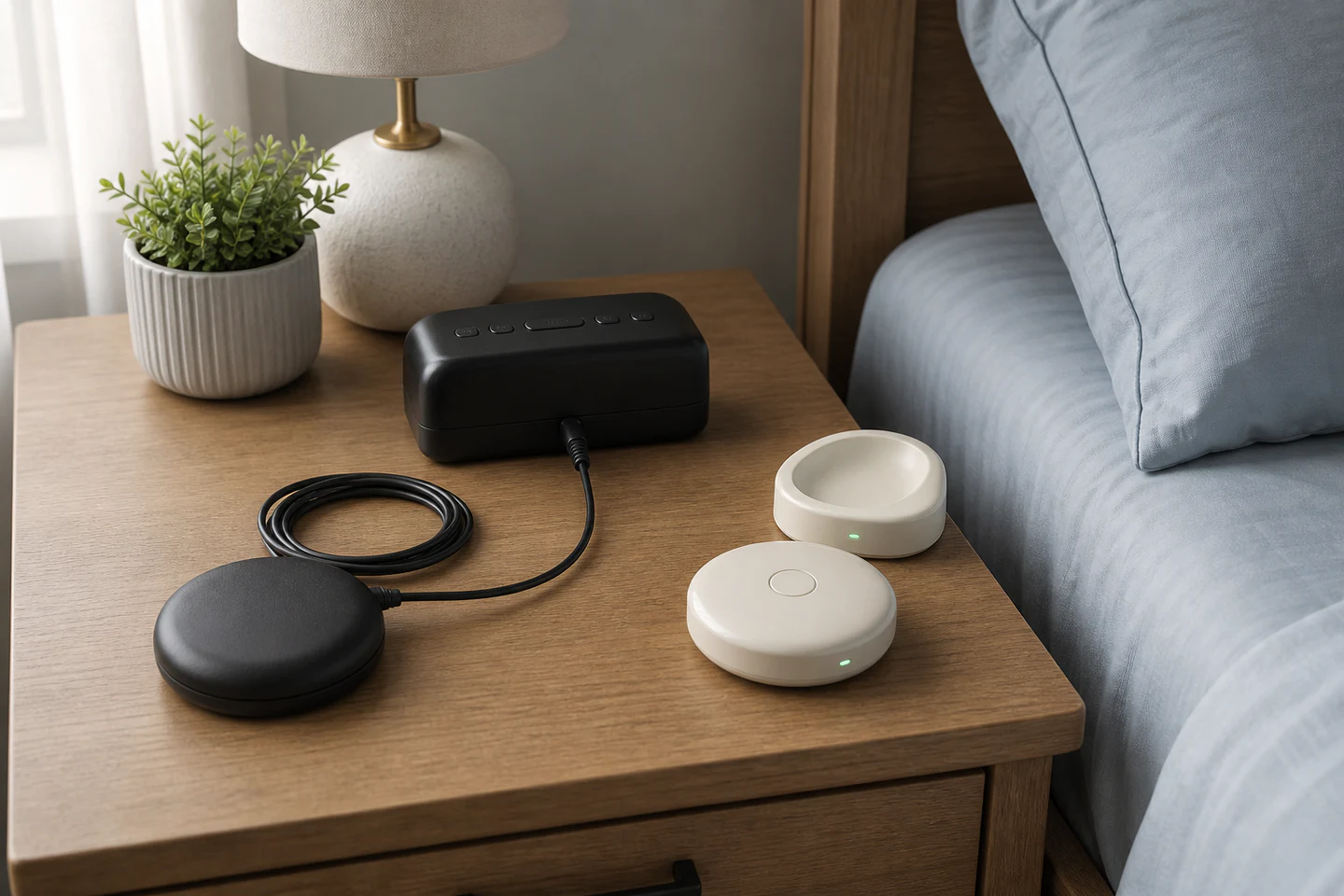
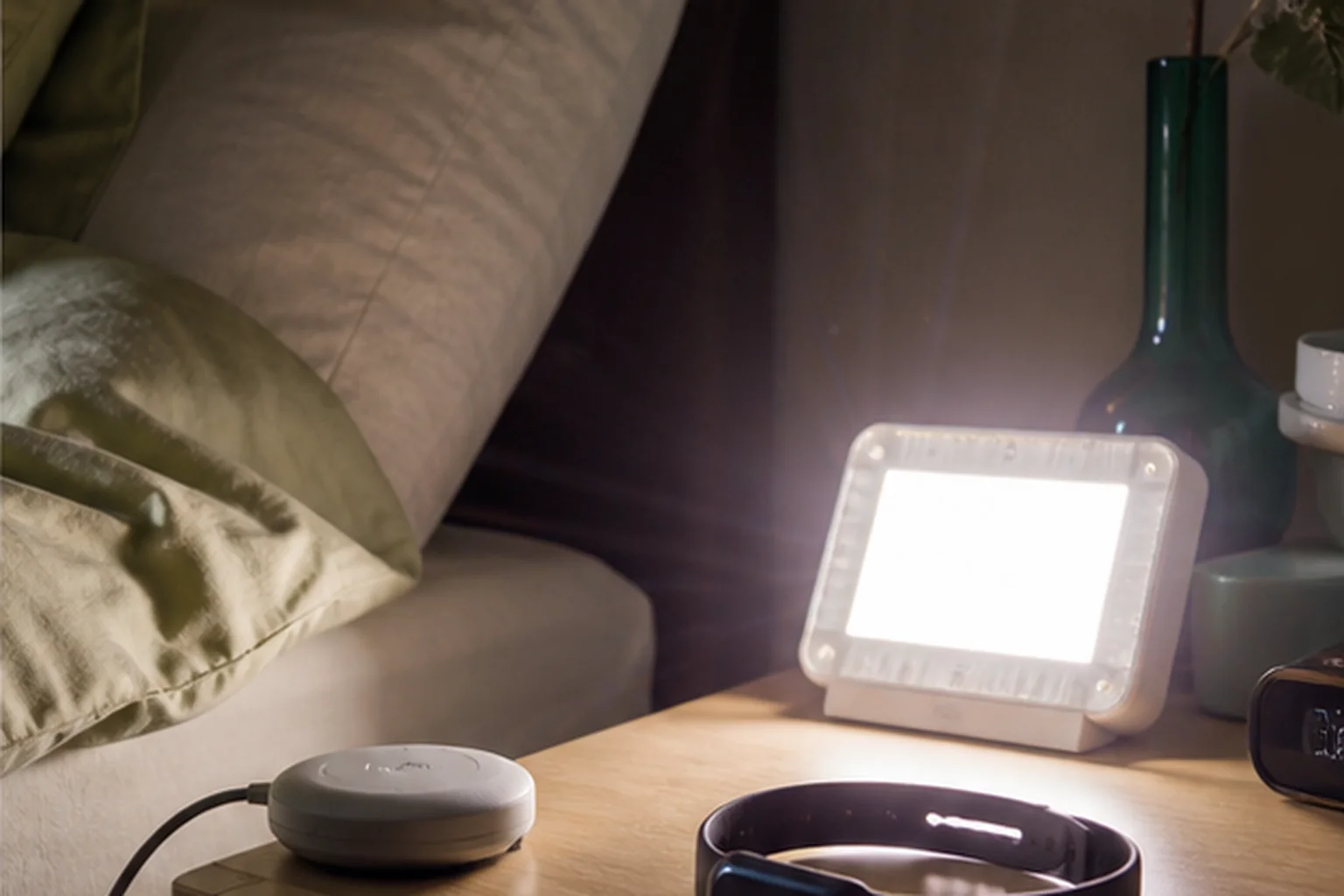
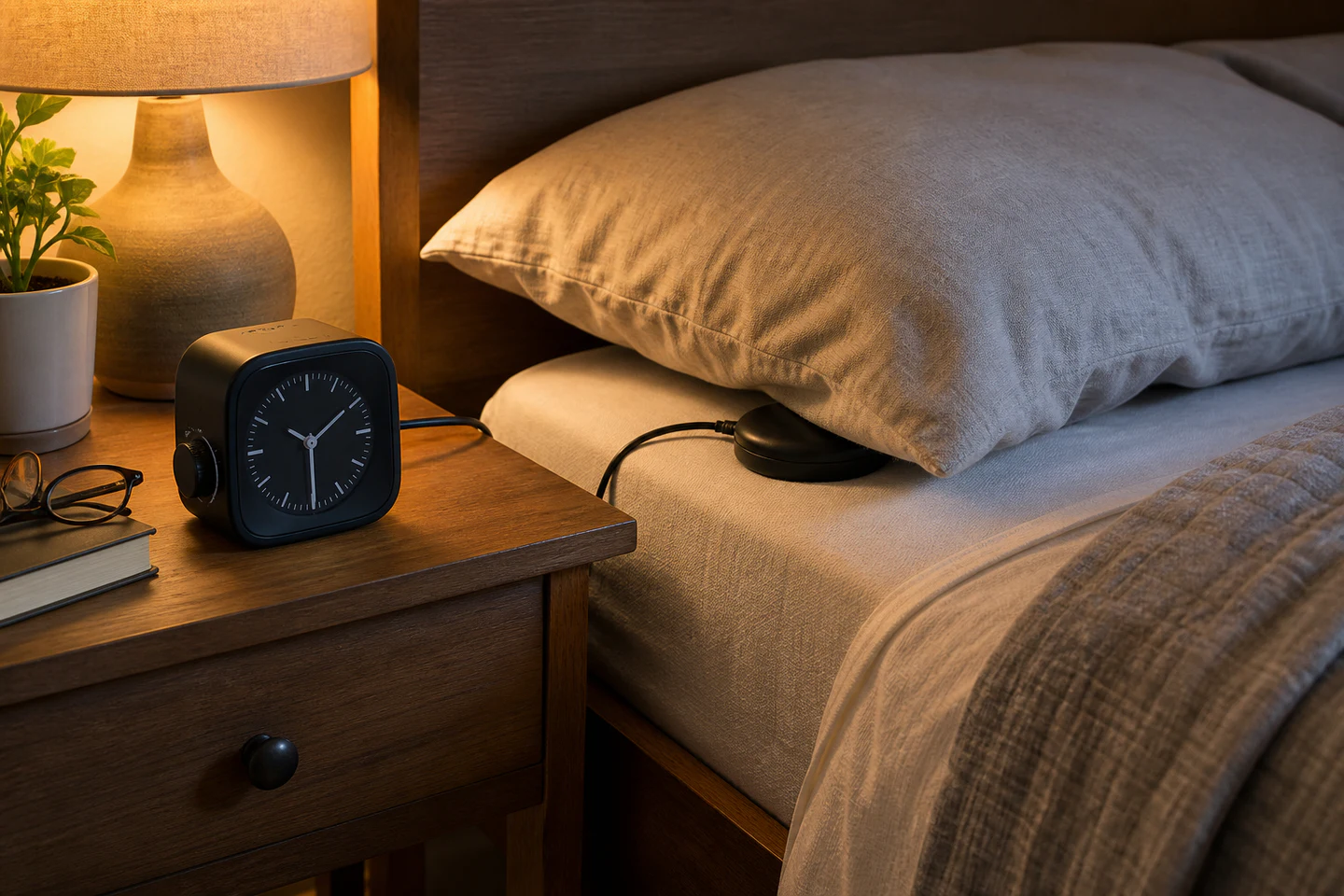
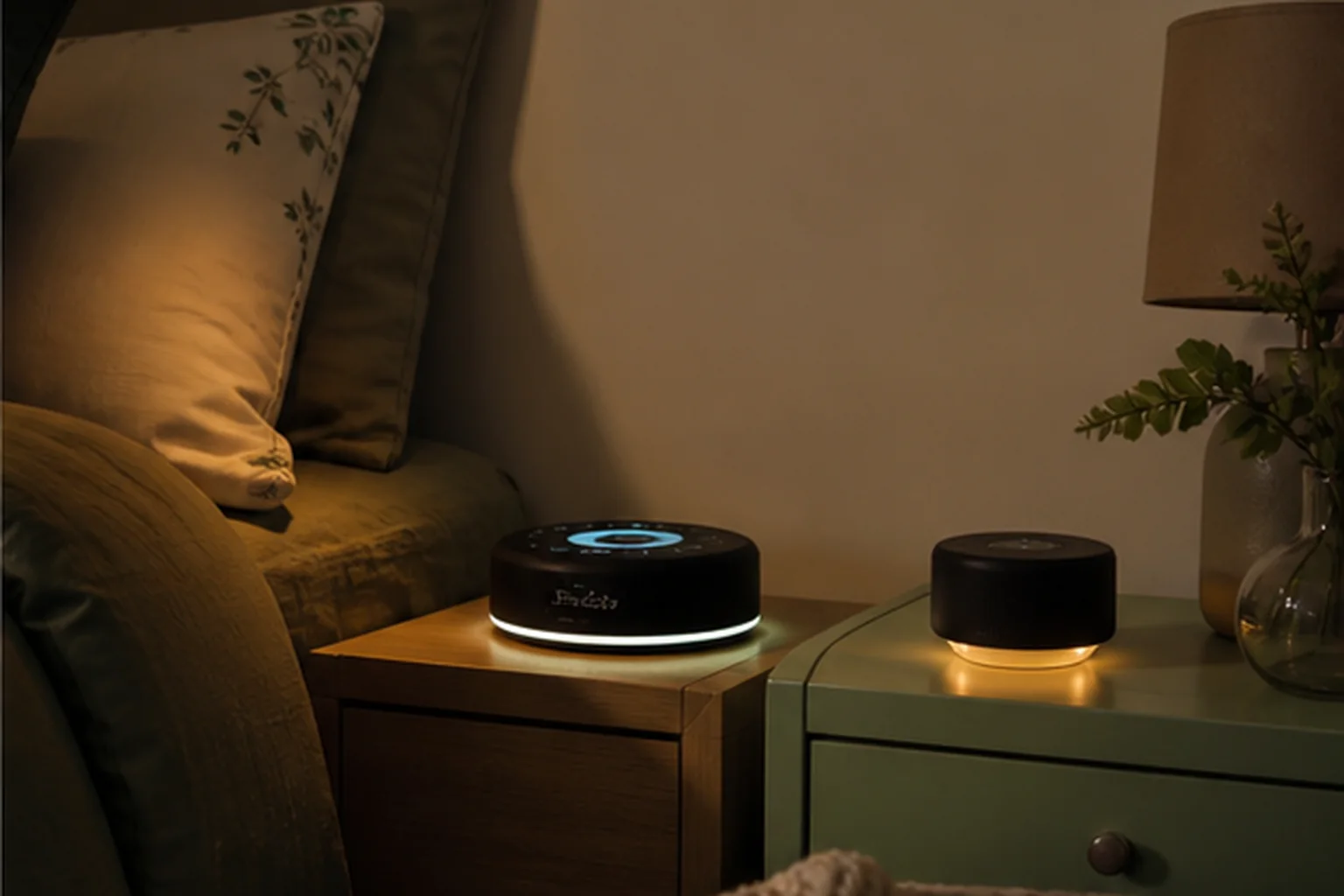
Best vibrating alarm clocks
5 Best Vibrating Alarm Clocks for 2026, Ranked by Signal Fit
The strongest motor on a product page is not automatically the best alarm. The signal still has to cross the real pillow, mattress, or bedding and remain easy to verify before sleep.
The decision first
Will the vibration reach you through your actual bed without waking the whole room?
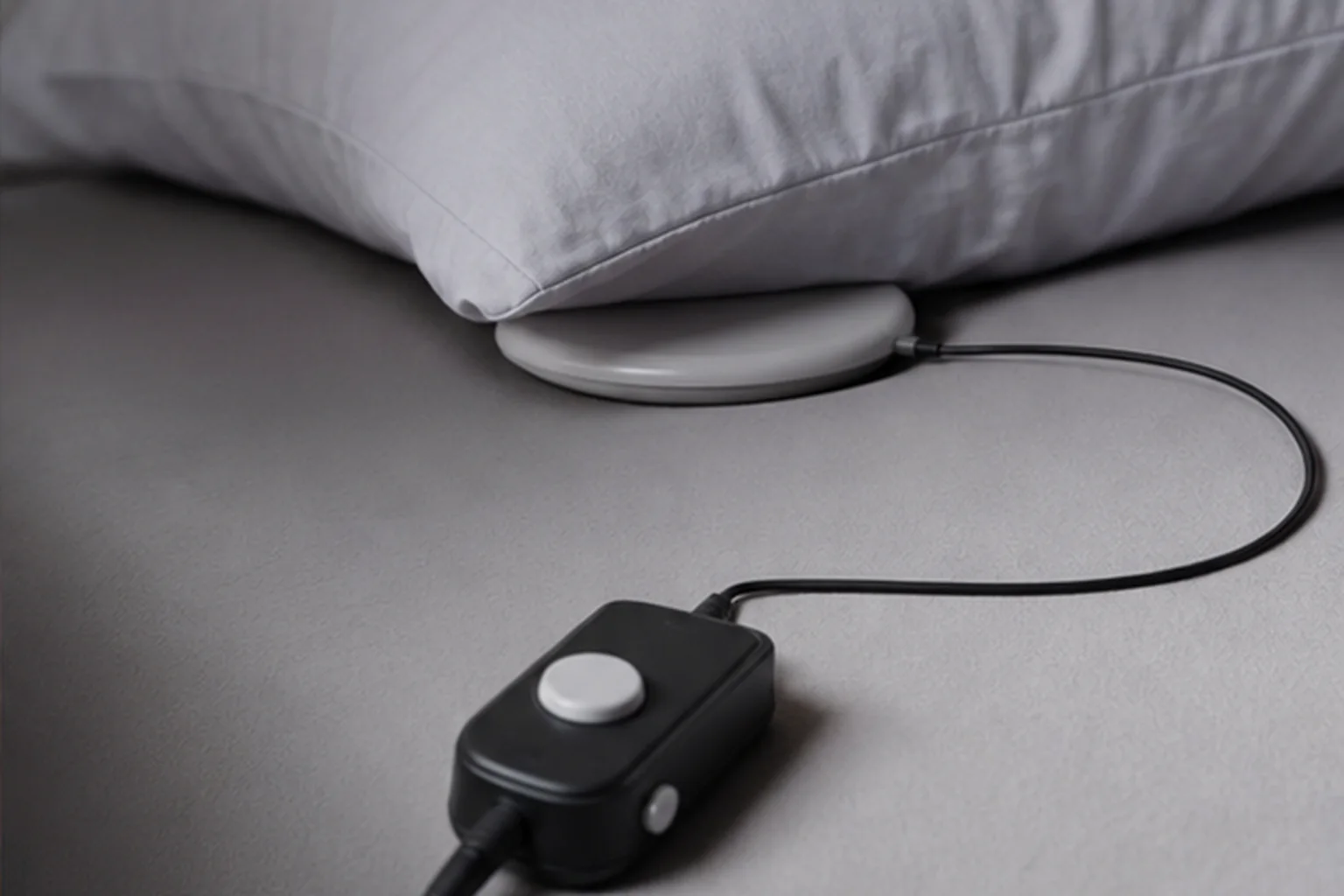
The best vibrating alarm clock is the one whose tactile path fits the sleeper and the bed. Start with the five currently available models that passed our evidence gate, then choose between a fixed wired system, a wireless bedside puck, or an app-configured portable shaker. Silent mode, placement, power, and the visible armed state matter more than an unsupported claim about “maximum” strength.
Transparent research ranking
How We Scored the Five Vibrating Alarm Clocks
The score uses fixed anchors and weights rather than Amazon stars or a relative ladder. It is based on current manuals, manufacturer documents, exact-model records, and a dated availability check. No hands-on vibration measurement is implied, and a partner link cannot change a score. This page uses method version 1.0. Read the complete scoring method.
| Rank | Product image | Model | Best fit | Score | Evidence | Main limit |
|---|---|---|---|---|---|---|
| #1 |
|
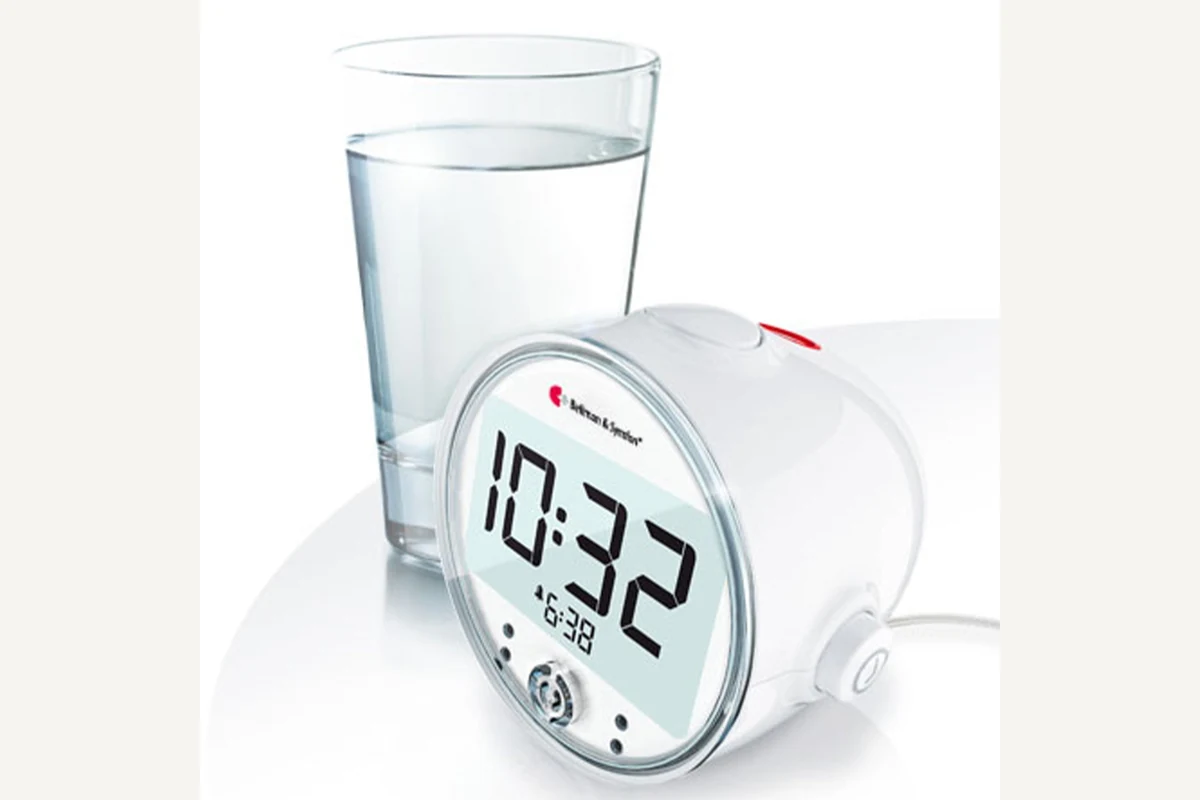
Bellman Alarm Clock Pro BE1370 | Best overall multi-signal bedside system | 8.3/10 | Research-based score, checked August 29, 2026 | The highest purchase price and a multi-part bedside setup. |
| #2 |
|
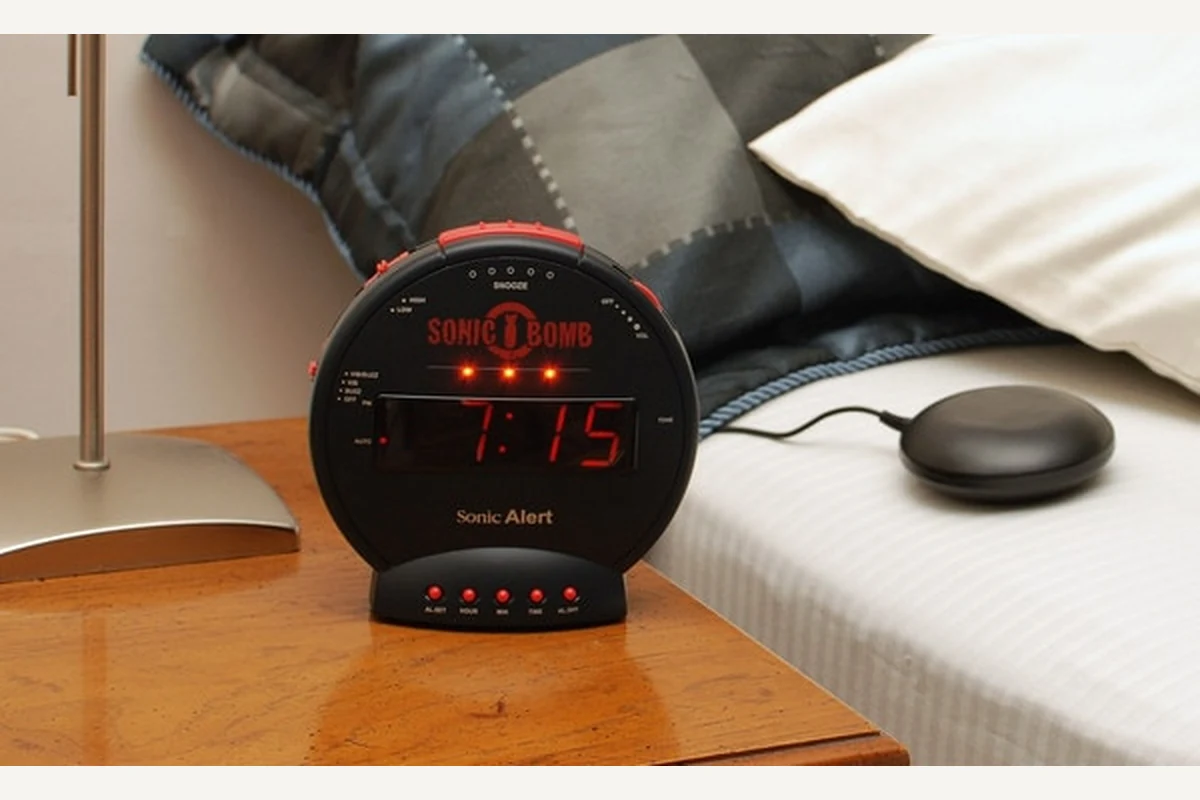
Sonic Alert Sonic Bomb SBB500SS | Best value wired multi-signal alarm | 7.7/10 | Research-based score, checked August 29, 2026 | Battery backup preserves the clock state; it is not documented as full outage wake operation. |
| #3 |
|
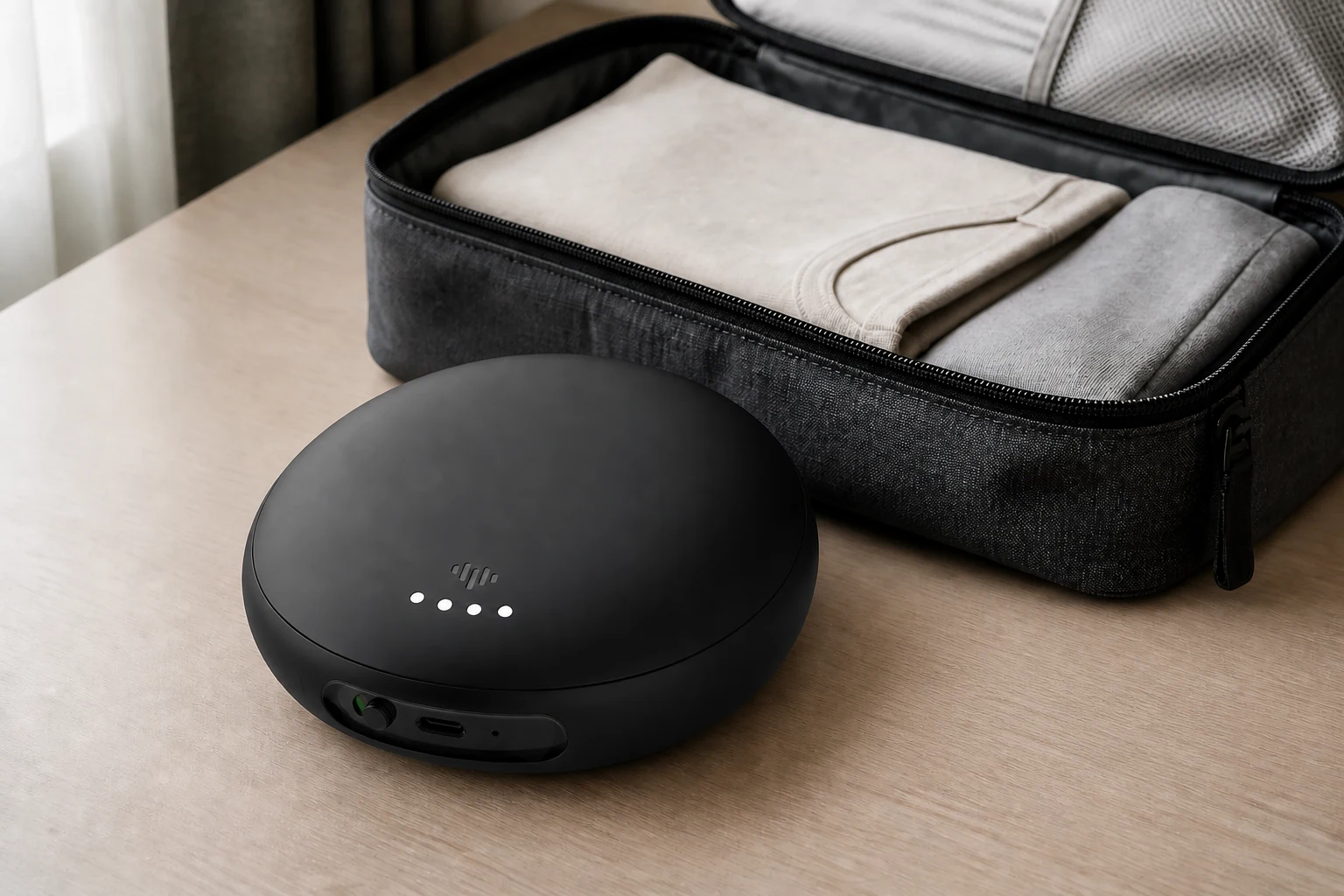
iLuv SmartShaker 3 SMSHAKER3BK | Best portable app-configured shaker | 7.3/10 | Research-based score, checked August 29, 2026 | The routine depends on a compatible app, successful alarm transfer, and sufficient charge. |
| #4 |
|
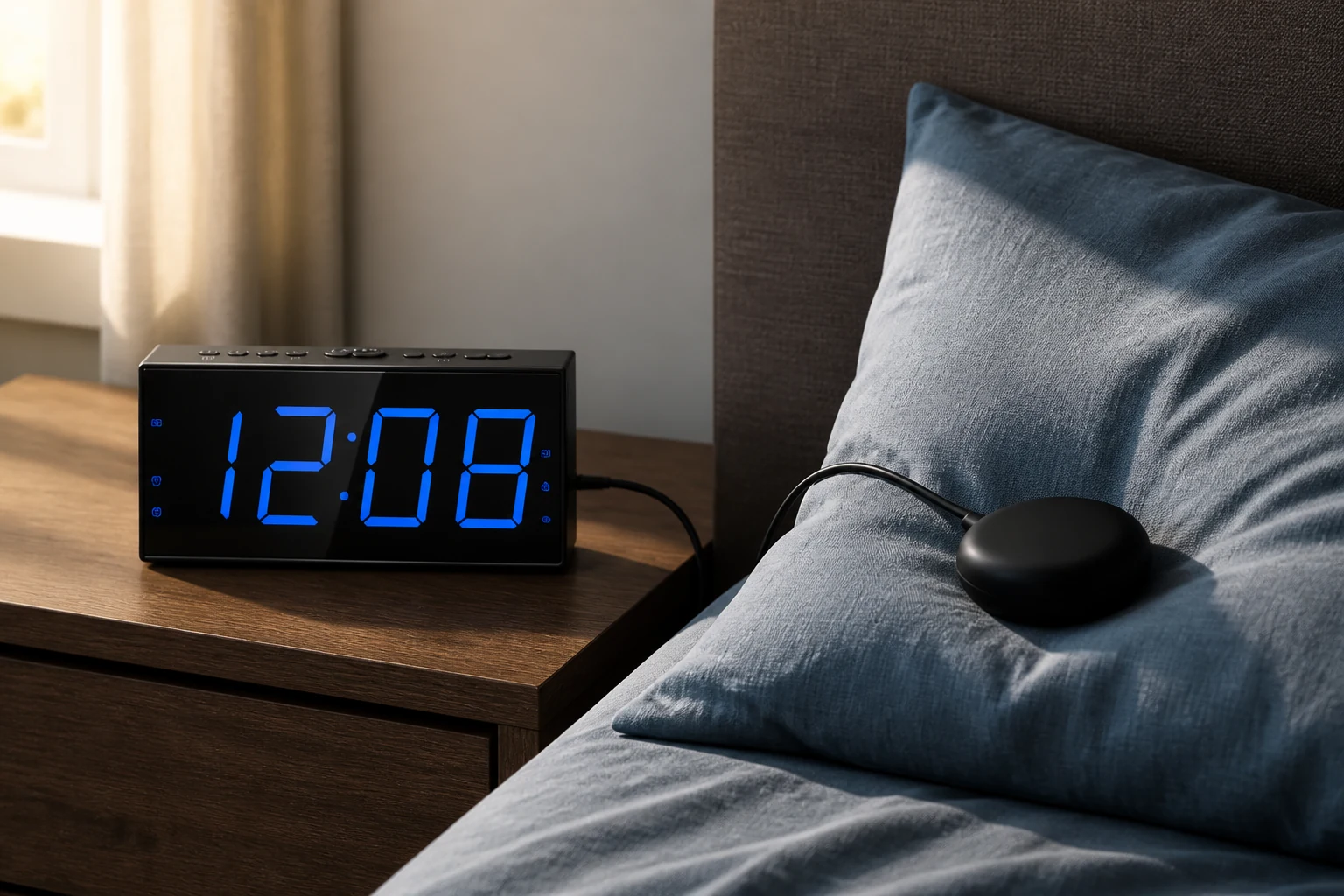
Roxicosly CR1001EM Bed Shaker Alarm Clock | Best budget wired shaker with a sound-off mode | 6.5/10 | Research-based score, checked August 29, 2026 | The clock lacks a documented full outage alarm path, and the listing does not support an extreme-loudness assumption. |
| #5 |
|
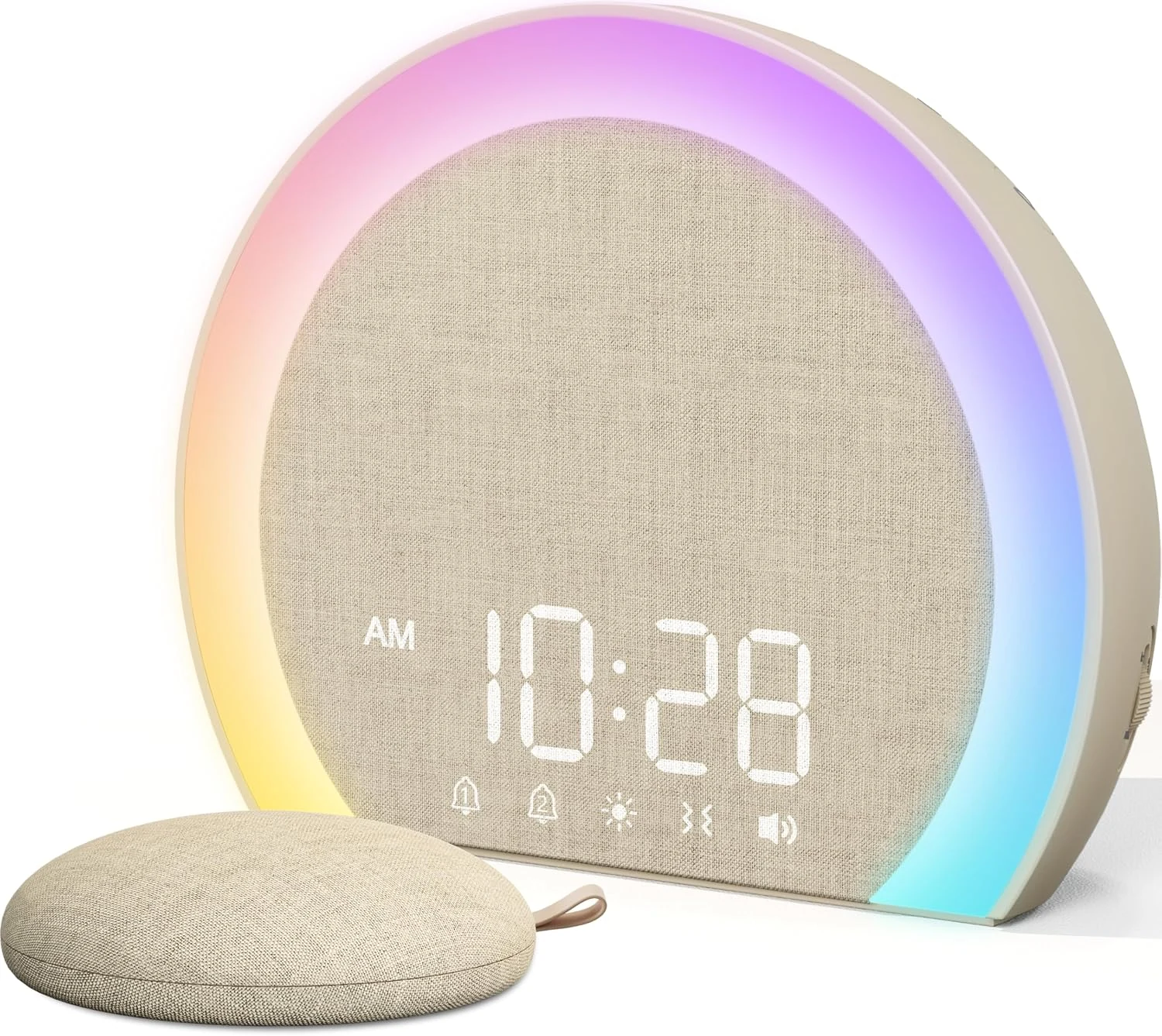
ANJANK KX213-Latte Wireless Bed Shaker Alarm Clock | Best wireless bedside clock and puck | 6.0/10 | Research-based score, checked August 31, 2026 | The exact listing states there is no clock battery backup, and the puck adds a separate charge and link state. |
Nonnegotiable checks
The criteria that can change the answer
Vibration path
Under a pillow, under a mattress, and on the bed frame can feel different.
Silent mode
Some systems pair vibration with sound unless configured otherwise.
Connection
A wired shaker is only useful if the cable safely reaches the bed.
Redundancy
A light or second device can cover a displaced shaker.
What changes in practice
Compare the trade-offs, not the feature count
| Route | Decision value |
|---|---|
| Wired bedside system | The schedule and shaker stay together, but cable reach, connector seating, and mains behavior become part of the alarm path. |
| Wireless clock and puck | The bed is free of a long cable, while receiver charge and the radio link add two states to inspect. |
| App-configured shaker | A compact local alarm can suit travel or a shared room after stored-alarm and disconnected behavior are proved. |
| Multi-signal system | Sound, flash, and vibration cover more sensory routes, but they can still share one clock and one power source. |
Trace the physical signal
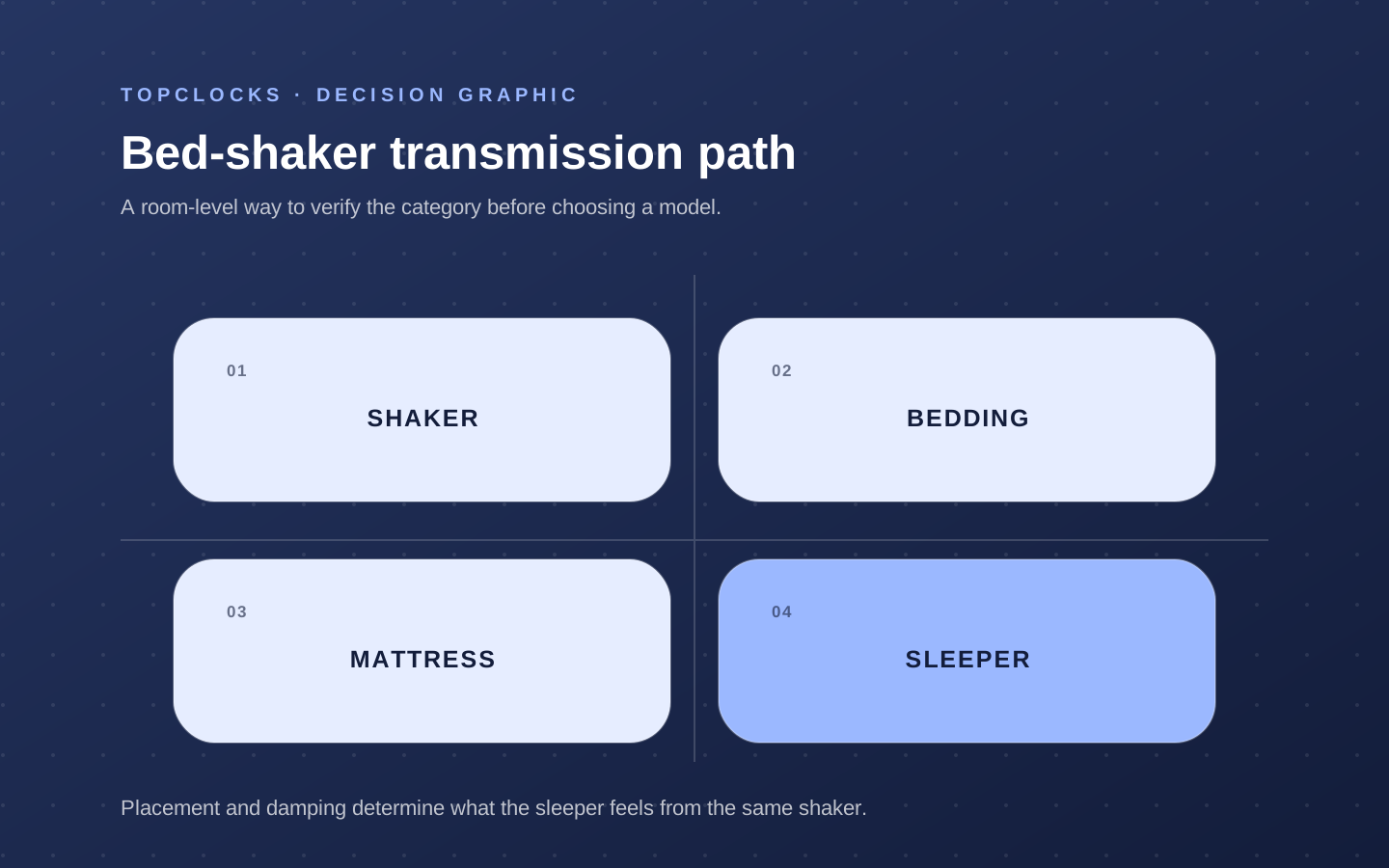
Shaker strength is only the start of the vibration path
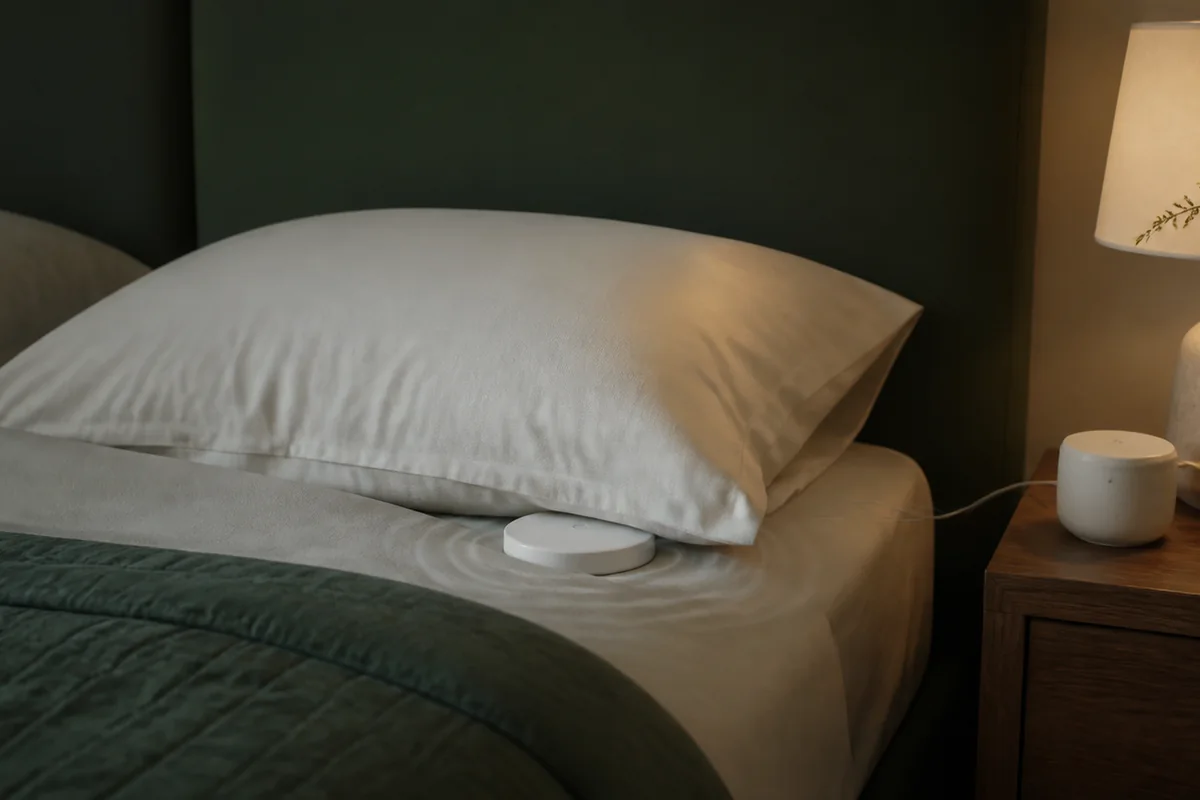
A vibrating alarm does not wake through a specification; it wakes through contact. The motor moves a puck, pillow unit, wearable, or part of the clock, and that movement must pass through bedding or skin to the sleeper. A thick mattress can damp a puck placed beneath it. A soft pillow can isolate a compact unit. A bed frame can spread vibration farther than expected. Two products with similar claims may therefore feel different in the same bed, and one product may feel different after the bedding changes.
Follow the manufacturer’s placement instructions before improvising. Under a pillow, beneath a mattress, between mattress and foundation, and attached to a frame are not interchangeable positions. Confirm that the device cannot fall, slide beyond reach, or press uncomfortably against the user. A wired puck adds cable length, connector fit, and routing to the path. A portable battery unit removes the cable while adding battery state and a smaller contact area. A wearable removes mattress damping while adding comfort, fit, and charging.
The correct comparison is therefore not simply “strongest shaker.” It is the lowest reliable tactile setting in the intended position, with a stable physical and power path. Test while lying in the normal position with usual bedding. If the bed is shared, ask the partner what they feel; silent operation can still move the mattress or make a puck rattle against furniture.
- Identify exactly where the device is intended to sit and whether that position remains stable overnight.
- Measure cable reach without stretching, pinching, or routing it across a walking path.
- Test through the real pillow, mattress, protector, topper, and frame rather than on a hard tabletop.
- Repeat the test after changing bedding, moving rooms, or replacing the mattress.
Choose the dependency path
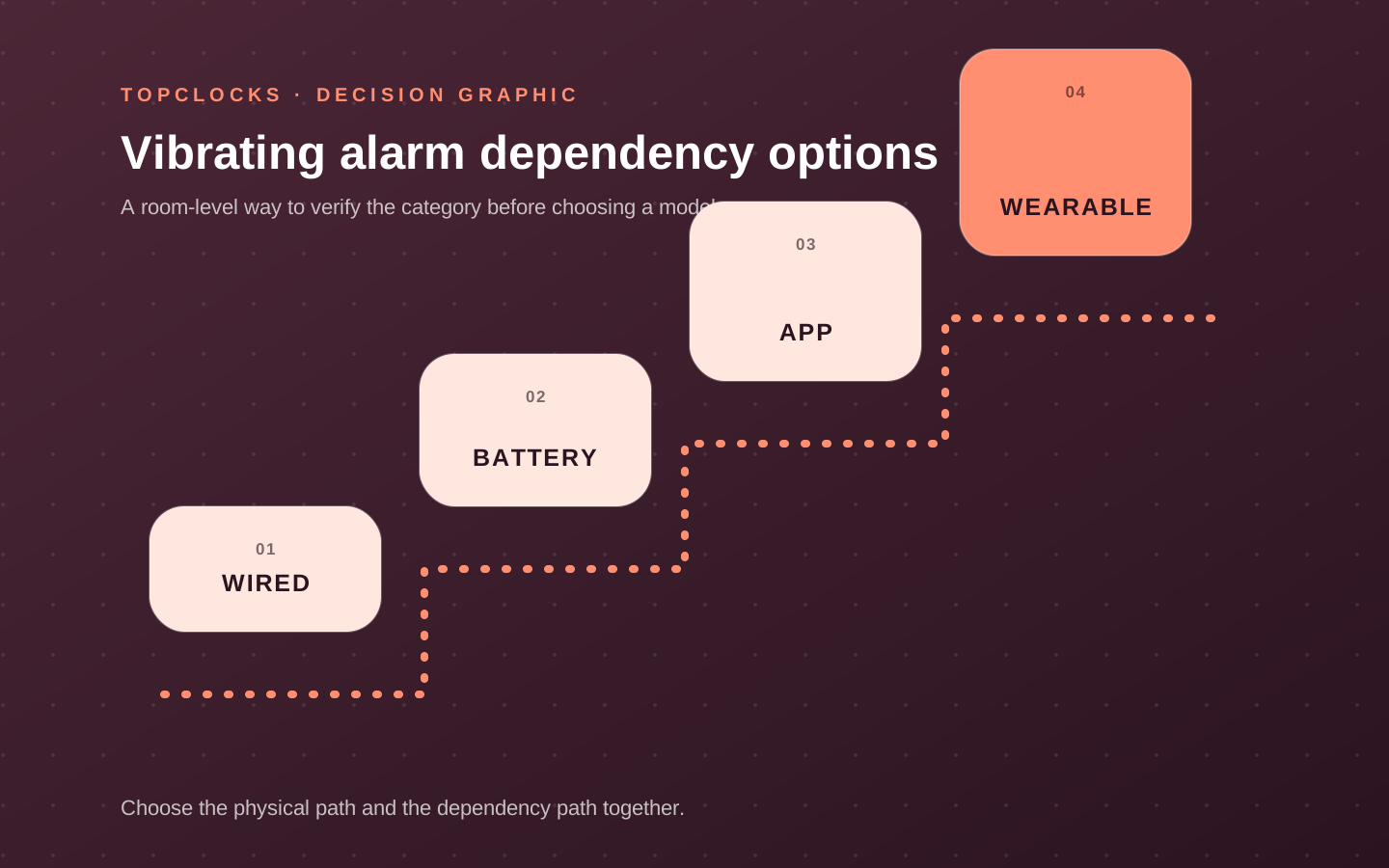
Wired, battery, Bluetooth, and wearable alarms solve different constraints
A wired bed shaker connected to a bedside clock provides a stable on-device schedule and may combine vibration with sound or flash. Its limitations are physical: the cable, proprietary connector, power supply, and multi-part setup. A battery pillow alarm is compact and travel-friendly, with no app or outlet at wake time, but the smaller motor, battery condition, alarm lock, and under-pillow position need verification. Neither route is universally stronger; they fail differently.
A Bluetooth shaker can make scheduling easier and may store alarms on the device after setup.
The important question is not the wireless label but what happens when the phone is disconnected, powered off, replaced, or updated. Confirm whether the alarm is stored locally, how battery status is shown, and whether the app is needed only for configuration or also for the wake event. A wearable keeps the tactile signal on the body and may reduce bed transfer, while adding charging, fit, sleep comfort, and the possibility of being removed during the night.
Choose the form factor after naming the room and failure. A fixed accessible setup may favor a wired system with flash and a separate backup battery. A traveler may value a locked battery pillow alarm. A couple may prefer a wearable or local puck, provided the shared mattress does not transmit the movement. A user who changes schedules often may value app setup, provided saved alarm behavior is clear.
- Wired system: inspect connector, cable, included shaker, power supply, and outage behavior.
- Battery pillow unit: inspect lock, battery indicator, placement, alarm duration, and replacement routine.
- Bluetooth shaker: inspect local alarm storage, app compatibility, charging, and disconnected behavior.
- Wearable: inspect contact, comfort, battery margin, alarm duration, and whether it stays on overnight.
Local does not mean independent
Verify silent mode and add a genuinely different backup when needed
Some vibrating clocks use vibration as one option; others pair it with sound unless a specific mode is selected. If silent operation matters, the source must explicitly describe shaker-only or vibration-only use, and the mode should be tested after power loss and routine changes. Muting the speaker with tape, covering it, or lowering system volume is not the same as a supported silent mode and can hide the alarm state.
A tactile primary signal still needs a backup proportionate to the consequence. A flash can provide a visual channel if it is in the sleeper’s field of view.
A lower-volume sound may help a user with some hearing access, but it should not be treated as accessible without confirmation. A second vibration device may help if it uses separate power and placement, yet two pucks on one clock remain dependent on one schedule and one power supply. For critical mornings, a separate device with a different channel provides broader coverage.
Partner impact must be measured. A puck can remain acoustically quiet and still produce audible buzzing against a frame or transfer movement across a mattress. A wearable can be more local and may vibrate too gently or stop after a short interval. The test should include the intended receiver and the bystander under normal room conditions.
- Set vibration-only mode, restart or power-cycle as appropriate, and confirm the mode persists.
- Test each channel alone before testing a combined alert.
- Keep the backup on a different device or power path when the morning consequence is high.
- Do not assume a silent alarm is private until sound from the motor and bed transfer are checked.
Why these five made the ranking
The top five solve different vibration and dependency problems
A model enters this ranking only after it passes the exact-model, evidence, review, image, and current-availability checks. We did not measure one maker’s shaker against another in a laboratory. The TOPCLOCKS score instead compares the documented wake path, fit for a tactile alarm, controls, power behavior, nighttime impact, support, and value. An unmeasured “strongest vibration” claim would imply precision the available evidence cannot support.
Sonic Alert Sonic Bomb SBB500SS and Bellman Alarm Clock Pro BE1370 occupy the multi-signal end. Both pair an included wired shaker with audible and visual cues, but their power paths and controls are not interchangeable. Roxicosly CR1001EM is the simpler wired-clock route for a buyer who wants a conventional display, dual alarms, adjustable sound, and a shaker without the larger accessibility-system footprint. Its own product information cautions against treating it as a screaming-loud clock, which is a useful boundary rather than a defect when vibration is the intended cue.
ANJANK separates a rechargeable wireless puck from a plug-in bedside clock. It removes the cable crossing the bed while adding receiver charge and link state. iLuv SmartShaker 3 removes the bedside clock as well: the phone is used to configure and transfer alarms to the compact rechargeable unit. That can suit travel or a shared room, but only after the stored alarm is proved with Bluetooth disabled and the exact app remains compatible.
These roles explain why a lower-ranked model can be the better personal choice. A large fixed system should not win for a traveler merely because it offers more channels.
A portable puck should not win for a high-consequence home setup merely because it is discreet. Use the overall score to identify the most complete documented route, then use the best-fit label and main limit to reverse the order when the room, sleeper, or maintenance routine demands it.
- A wired system suits a fixed bed when the shaker can stay put and the cable can be routed safely.
- A wireless bedside puck trades that cable for a second battery and link to check.
- An app-configured portable shaker belongs on the shortlist only after it passes a stored-alarm test without Bluetooth.
- Multi-signal models make sense when tactile, visual, and audible cues are actually useful, not simply because the feature list is longer.
The best five shortlist is therefore a set of different alarm paths, not five versions of the same puck. Read the full model review before checkout, then test the selected path through the real bedding while the return window is open.
Verify before a real morning
A 15-minute bed-shaker check exposes the common failure points
Run the first check in daylight, not on an important morning. Put the shaker exactly where the current manual allows, using the normal pillow, protector, topper, mattress, and frame. Route a cable with slack but no loop across a walking path. Charge a wireless unit, confirm its switch position, and transfer a short alarm if the phone is part of setup.
Set the alarm five minutes ahead and select vibration-only mode when silent waking is required. Lie in the normal position rather than pressing the puck by hand. Let the pattern run long enough to notice pauses, rattling, migration, and movement across a shared mattress. Stop it with the control that will be used half awake, then confirm whether the next scheduled alarm remains armed.
For an app-configured shaker, repeat the short alarm with Bluetooth disabled and the phone outside the room. For a bedside clock, perform only the safe power check documented for that model: separate saved settings, alarm output, display, flash, and shaker behavior. Do not infer that a backup battery powers every channel. Finally, move normally in the bed and recheck the puck or cable position.
- Placement: the shaker remains in the approved location through normal movement.
- Signal: the intended sleeper notices the cue through the actual bedding.
- Privacy: a partner reports whether vibration or motor noise crosses the bed.
- Controls: stop, snooze, silent mode, and the next armed alarm remain understandable.
- Dependencies: cable, charge, stored schedule, app, and power behavior match the planned routine.
One successful run proves that the setup can work under that condition. Repeat it after changing bedding, moving the clock, replacing a phone, updating an app, or returning from travel. When missing the alarm would have serious consequences, use a second device whose schedule, power, and signal do not share the most likely failure of the first.
Questions before checkout
Vibrating alarm clock questions that can change the recommendation
Is a bed shaker automatically silent?
No. Some clocks offer vibration-only mode, while others combine sound and vibration unless a specific mode is selected. The motor can also buzz against a frame or bedside object. Verify the supported silent setting and ask a partner what they hear and feel from the other side of the bed.
Should the shaker go under the pillow or mattress?
Follow the exact model’s instructions. A position that works for one puck can damp another, strain its cable, or create an uncomfortable pressure point. Thick foam, toppers, pillow density, and the bed frame change transmission. Test only a stable, maker-approved position through the bedding that will actually be used.
Does a wireless shaker need the phone connected all night?
Not necessarily. SmartShaker 3 is designed to retain alarms transferred from its app, while ANJANK uses a separate bedside clock to send the alarm to its puck. The relevant question is where the schedule is stored on the exact model. Prove it with a short disconnected test before relying on the device.
Is one clock with sound, flash, and vibration a complete backup?
It provides several sensory channels, which can be valuable, but those channels may still share one clock, schedule, outlet, and stop control. For a high-consequence morning, a genuinely independent backup should fail differently from the primary alarm.
Can a vibrating alarm replace a fire or emergency alert system?
No. The personal alarms on this page are morning wake devices. They should not be described as whole-home smoke, fire, carbon-monoxide, door, baby, weather, or emergency notification systems. A person who needs accessible emergency alerts should use equipment and professional guidance intended for that purpose.
Which type is most practical for travel?
A compact app-configured shaker avoids a bedside clock and long cable, but it adds charging, app compatibility, alarm transfer, and time-zone checks. A wireless clock-and-puck system still needs its clock and power supply. Pack the whole power path and rehearse the arrival-night setup before choosing by size alone.
Before relying on it
Run the complete alarm path
A product page can confirm features. Only a real setup check confirms that the selected signal, placement, controls, and power path work together in the room.
- Follow the exact maker placement instructions.
- Test vibration-only mode with the normal bedding.
- Inspect the cable, charge, connector, or stored alarm.
- Keep a genuinely independent alert for high-consequence mornings.
Best 5 shortlist
Best 5 Shortlist: Why Each Model Made the Cut
Each mini review names the signal path, strongest use case, and failure to test through the real bed. The score is capped at 8.8 because this ranking is research-based rather than a TOPCLOCKS laboratory comparison.
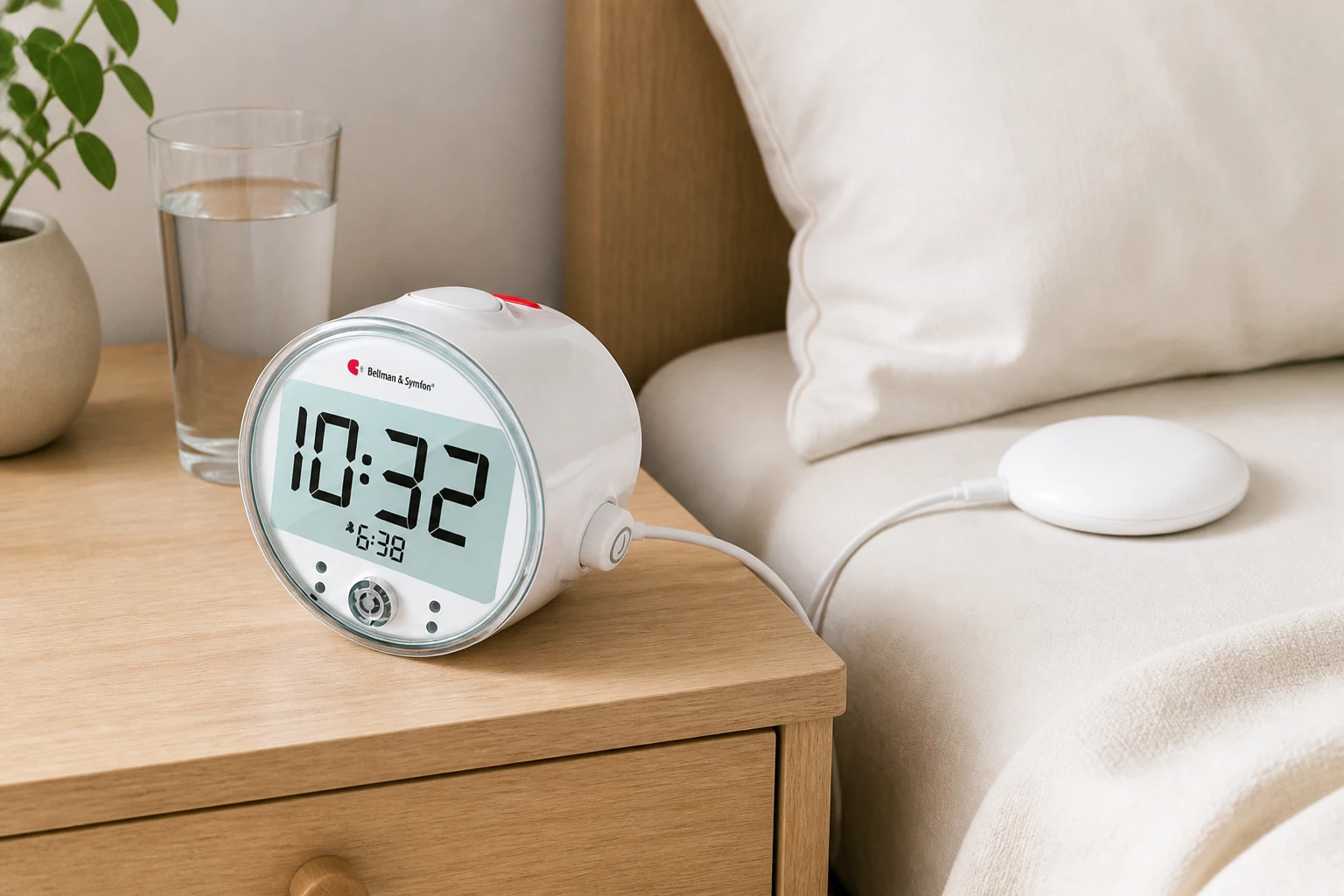
#1 · Compare for three distinct alert channels
Bellman Alarm Clock Pro BE1370
Bellman Pro is the fuller bedside system when vibration needs visible and audible reinforcement on the same alarm path.
Bellman combines an ascending multi-tone alarm, four flashing LEDs, and an included wired bed shaker. Its rechargeable backup batteries are specified to keep the clock, alarm, flash, and shaker working during an outage.
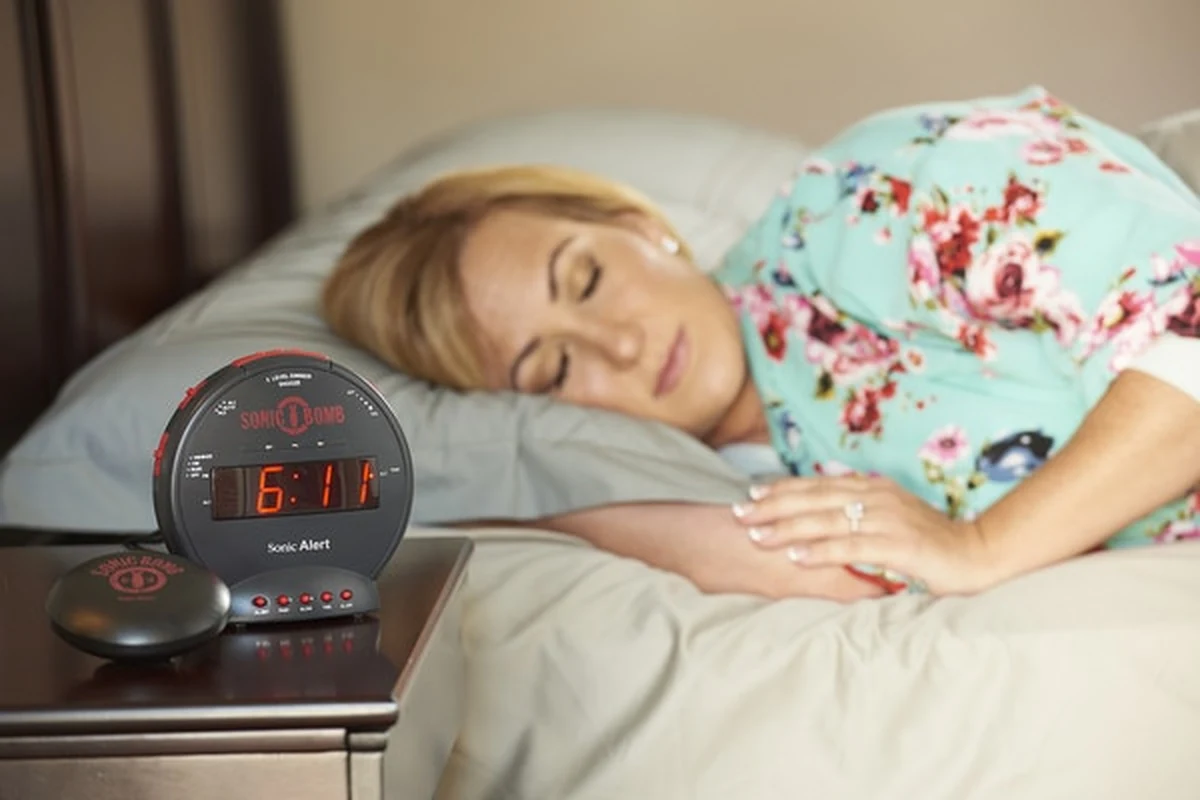
#2 · Compare for loud sound plus a bed shaker
Sonic Alert Sonic Bomb SBB500SS
Sonic Bomb is the multi-channel route when vibration should be backed by adjustable sound and flash rather than used alone.
The clock combines adjustable sound, flashing lights, dual alarms, and an included 12-volt bed shaker. The manufacturer lists a 113 dB maximum, so the useful question is how far below that maximum the sleeper can set it.
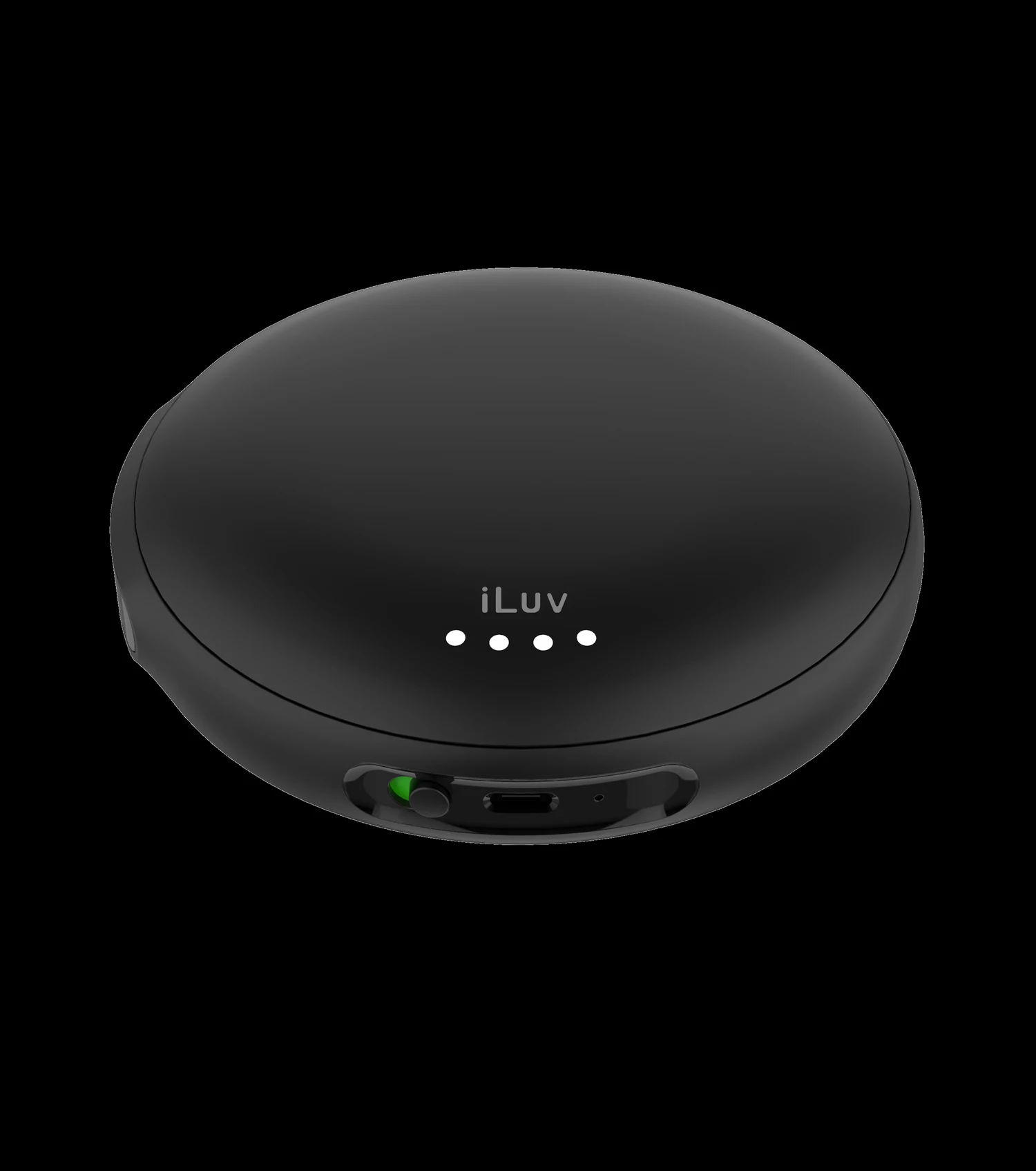
#3 · Compare for a portable app-configured shaker
iLuv SmartShaker 3 SMSHAKER3BK
SmartShaker 3 is the portable personal route: the phone builds the schedule, while a tested local alarm can vibrate at the pillow without filling the room with sound.
SmartShaker 3 stores phone-created vibration alarms in a compact rechargeable puck. Its current official app listing documents local alarm storage, five vibration levels, and up to 14 days per charge, making it a practical candidate for private waking and travel.
#4 · Compare for sound, vibration, or both
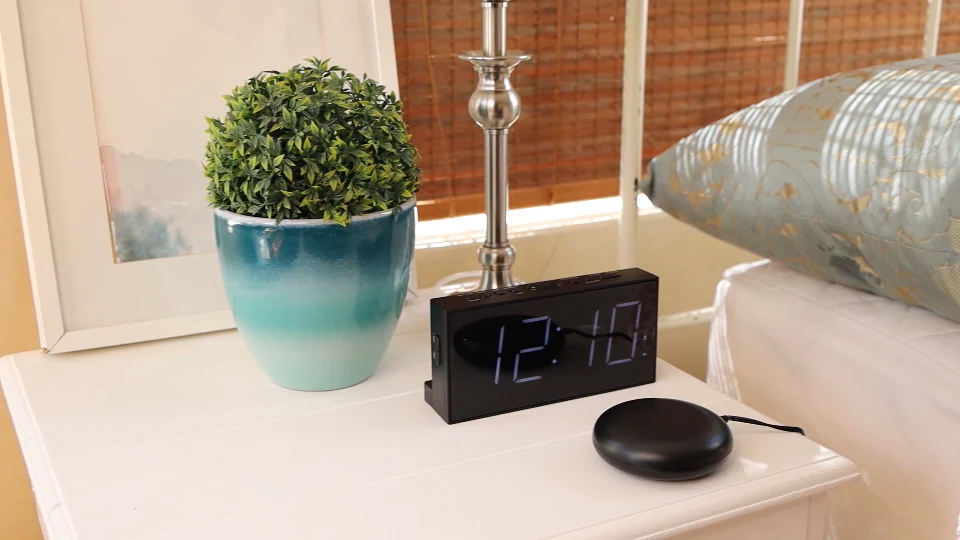
Roxicosly CR1001EM Bed Shaker Alarm Clock
Roxicosly keeps the schedule and display on a conventional bedside clock while adding a wired shaker and a sound-or-vibration mode choice.
Roxicosly combines a wired bed shaker with an adjustable audible alarm, dual alarm times, nine-minute snooze, 24-hour Alarm Pause, large digits, and a USB charging output.
#5 · Compare for a rechargeable wireless shaker
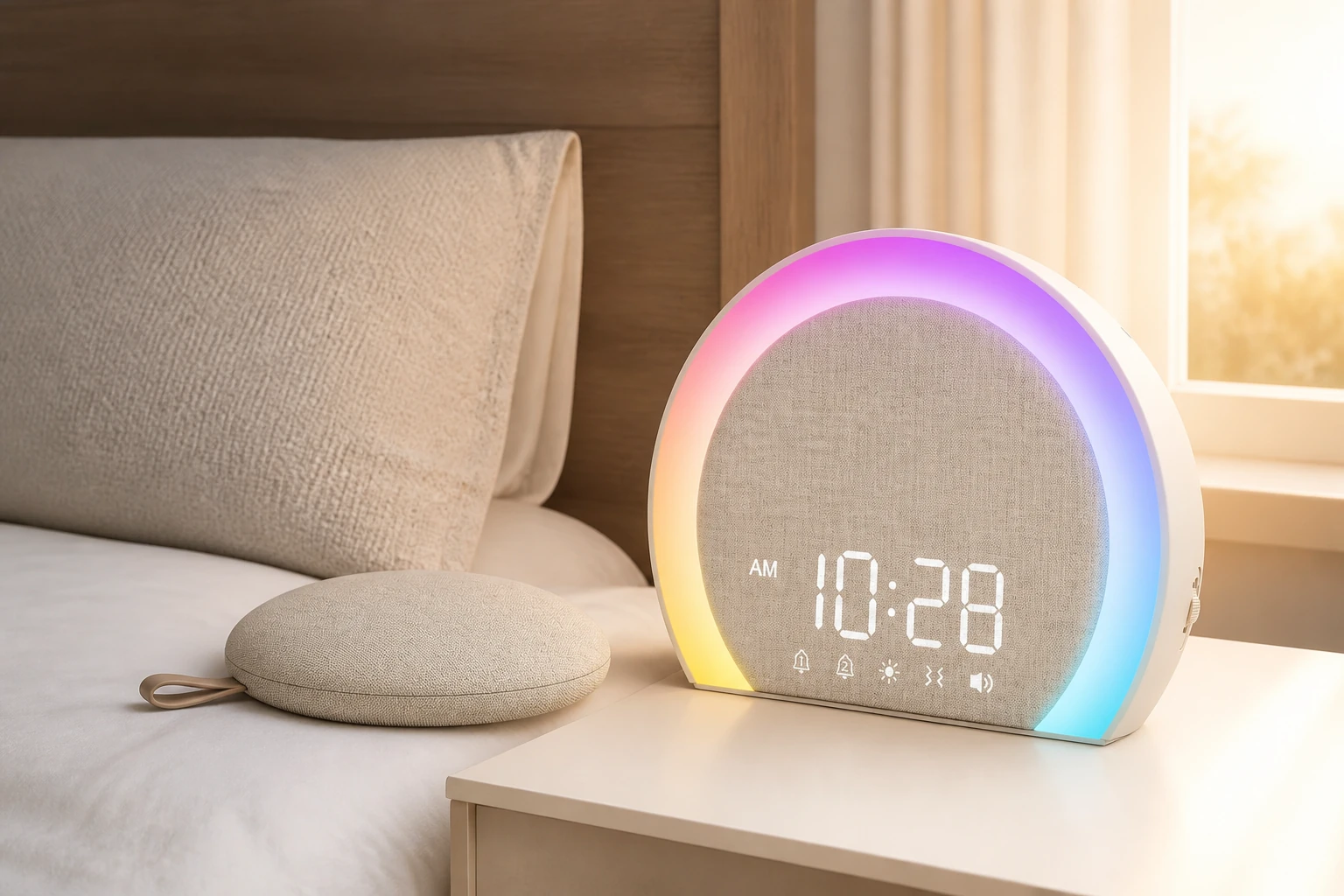
ANJANK Wireless Bed Shaker Alarm Clock
ANJANK separates the rechargeable shaker from the plug-in clock, trading a cable-free bed for another battery and pairing state that must be checked.
ANJANK pairs a plug-in dual-alarm clock with a separate rechargeable wireless shaker. The puck has three vibration levels, while the clock provides eight sounds, adjustable volume, display-off, a night light, and a USB-C phone output.
Evidence trail