Bed-shaker comparison
Wired vs Wireless Bed Shaker Alarm Clocks: Which Setup Is More Reliable?
Both routes deliver vibration near the sleeper. The practical difference is what must remain intact overnight: a physical cable, or a charged wireless path with a known schedule state.

The decision first
Which failure can you prevent before sleep: a loose cable or a low battery?
Choose a wired system for a fixed bedroom when the cable reaches safely and you want to remove shaker charging from the routine. Choose a wireless clock-and-puck system when cable placement is the problem and you can check the puck battery. Choose a phone-configured shaker only when app compatibility, alarm transfer, and disconnected behavior have been verified on the exact model.
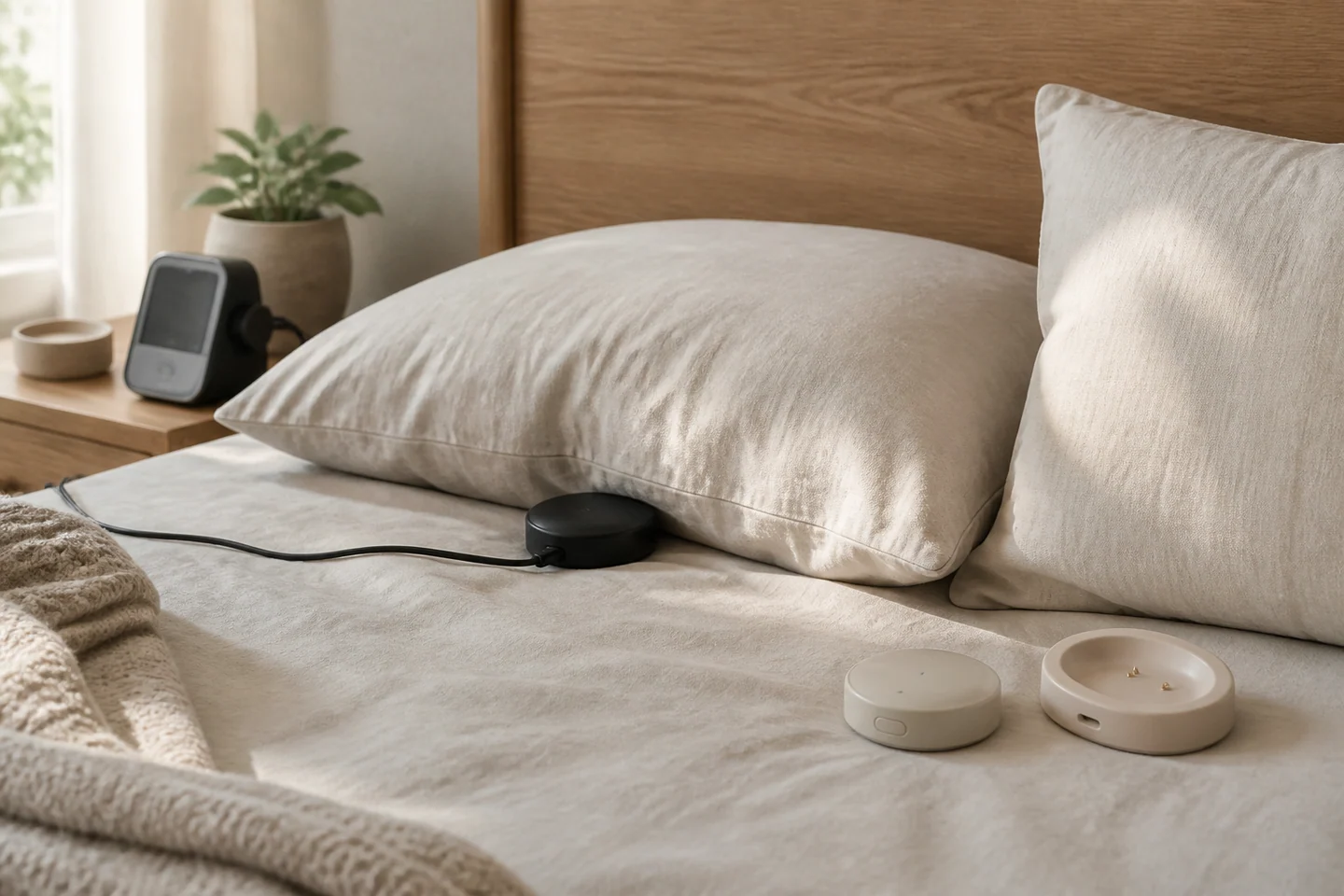
Side-by-side decision
Wired vs wireless bed shaker alarm clocks: the decisive differences
Start by separating the two wireless designs compared here. One keeps the schedule and controls on a bedside clock; the other uses a phone to configure or transfer alarms to the shaker. They remove the long cable in different ways and create different checks before sleep.
-
Wired bedside system
Best when the clock stays in one bedroom, the cable reaches the proven contact point with slack, and removing shaker charging from the routine matters.
-
Wireless clock + puck
Best when the shaker needs to move freely but the user still wants a bedside display and physical alarm controls.
-
Phone-configured wireless shaker
Best when portability matters and the user can verify phone compatibility, alarm transfer, local storage, charge, and disconnected behavior.
| Decision criterion | Wired bedside system | Wireless clock + puck | Phone-configured wireless shaker |
|---|---|---|---|
| Alarm storage and control | The bedside clock stores the schedule and sends the signal through its output jack and cable. | The bedside clock stores the schedule and sends a radio command to the rechargeable puck. | The phone creates or transfers the alarm. Confirm that the exact shaker stores it locally before relying on a disconnected wake-up. |
| Check before sleep | Confirm the alarm indicator, signal mode, seated plug, safe cable route, and shaker position. | Confirm the clock alarm, selected mode, receiver charge, wireless link, and shaker position. | Confirm compatibility, the saved or transferred alarm, armed state, battery charge, and documented disconnected behavior. |
| Bed and room limits | The cable needs enough slack to avoid tension and walkways while keeping the puck at the tested contact point. | The puck is easier to move, but radio range, mattress damping, and movement still need a real-bed test. | The puck travels easily, but the schedule must survive the setup process and the chosen placement must remain repeatable. |
| Power loss or disconnect | Verify time retention, alarm operation, display, and shaker output separately. A battery-backup label alone does not prove all four. | A charged puck does not protect a bedside transmitter that loses power. Test the exact clock-and-receiver combination. | A stored alarm may run without the phone only when the manufacturer documents that behavior and the transfer completed successfully. |
| When to retest | Retest after moving the clock or bed, changing bedding, reseating the connector, or changing the power setup. | Retest after moving either device, changing bedding, recharging the receiver, or restoring power to the clock. | Retest after a new phone, operating-system or app update, reinstall, long period of non-use, or recharge. |
| Reject this route when | The cable must be taut, cross a walking path, pull at the plug, or hold the shaker in a weak position. | The charging routine, usable range, link state, or transmitter outage behavior cannot be made clear and repeatable. | Compatibility, alarm transfer, local storage, or the disconnected state cannot be confirmed on the exact model. |
| Independent backup | Break the shared failure most likely to matter—for example, use a separate device instead of another cue from the same clock. | Break the shared failure most likely to matter—for example, use a backup that does not rely on the same transmitter or outlet. | Break the shared failure most likely to matter—for example, use a backup with its own schedule instead of the same phone workflow. |
Six-model shortlist
Which model fits each waking scenario?
Use these labels to narrow the shortlist, not as wake-up guarantees. “Conditional” means the route can fit only after the exact bed, placement, settings, power path, and backup have been tested.
| Model | Connection | Heavy sleeper | Deaf or hard of hearing | Shared bed | Travel | Critical wake-up |
|---|---|---|---|---|---|---|
| Sonic Bomb SBB500SS | Wired | Strong candidate Sound, flash, and shaker cover several channels; test through the actual bedding. | Good multi-signal fit Vibration and flash do not depend on the sleeper hearing the alarm. | Conditional The shaker can stay local, but sound and flash spread through the room. | Weak The clock, power supply, puck, and cable add bulk. | Conditional All channels share one clock, so add an independently powered backup. |
| Roxicosly CR1001EM | Wired | Conditional Use shaker-only or combined mode; loudness is not independently measured. | Useful tactile route The shaker does not depend on hearing, but there is no flash or wider alert-system integration. | Conditional Shaker-only mode can reduce room sound; test vibration transfer across the mattress. | Weak The plug-in clock, puck, and 71-inch cable travel together. | Conditional Outage wake output is unclear; rehearse it and keep an independent backup. |
| Bellman Alarm Clock Pro BE1370 | Wired | Strong candidate Sound, flash, and shaker cover several sensory channels. | Strong accessibility fit Tactile and visual cues do not depend on the sleeper hearing the alarm. | Conditional Local vibration helps, but flash or sound can disturb a partner. | Weak A multi-part bedside system is cumbersome to pack. | More resilient Documented rechargeable backup helps; retain an independent backup for serious consequences. |
| ANJANK Wireless Bed Shaker | Wireless clock + puck | Conditional Three shaker levels are useful, but strength must be verified through the real bed. | Useful tactile route The clock and puck are not a whole-home or emergency alerting system. | Good after testing The wireless puck can remain near one sleeper; test mattress transfer. | Conditional The puck moves easily, but the clock and mains supply still travel. | Conditional Receiver charge and clock power are separate failure points. |
| Bellman Vibio BE1221 | App-configured wireless | Conditional Vibration is adjustable, but there is no universal measured wake strength. | Good personal alert It provides a local tactile alarm, not a whole-home emergency alerting system. | Good after testing Local vibration limits sound; mattress transfer still needs a real-bed test. | Strong candidate The compact rechargeable puck stores transferred alarms. | Conditional Verify transfer, charge, time, placement, and an independent backup. |
| iLuv SmartShaker 3 | App-configured wireless | Conditional Five vibration levels help, but placement remains decisive. | Good personal alert It provides a tactile alarm, not a whole-home emergency alerting system. | Good after testing Local vibration may spare a partner; test transfer through the shared mattress. | Strong candidate It is compact, rechargeable, and stores alarms locally; resync after time-zone changes. | Conditional Check charge, switch position, stored alarm, time, and an independent backup. |
Nonnegotiable checks
The criteria that can change the answer
Where the alarm is stored
A bedside clock, a wireless puck, and a phone app do not preserve schedules in the same way.
Nightly failure check
A wired route needs a seated connector; a wireless route needs charge plus a known connection or stored-alarm state.
Bed and room fit
Cable reach, mattress damping, radio range, and shared-bed transfer can reverse the recommendation.
Power interruption
Confirm separately what the clock, display, shaker, and stored schedule do when mains or phone access disappears.
Understand the fixed path
A wired shaker removes charging, but the cable becomes part of the alarm
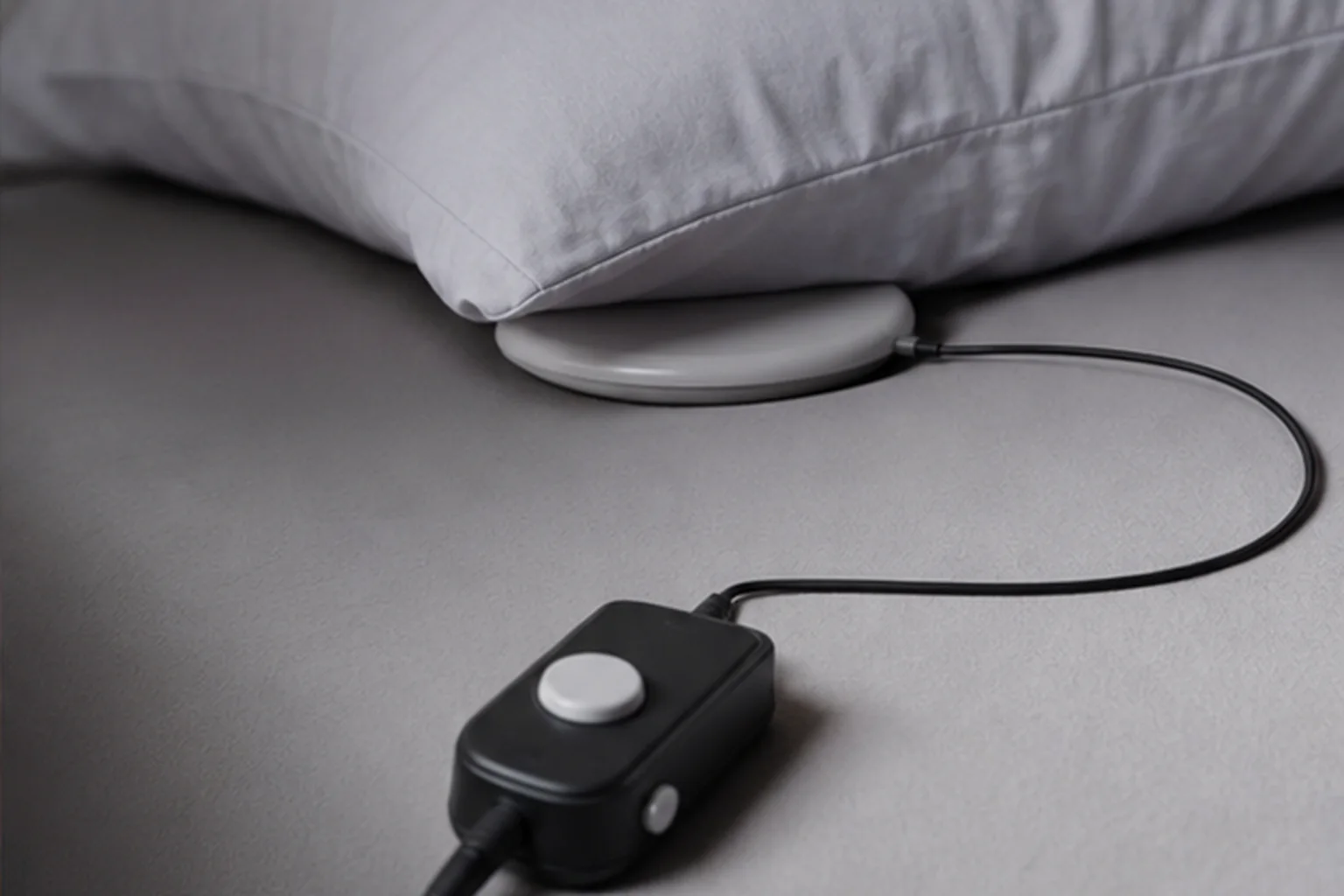
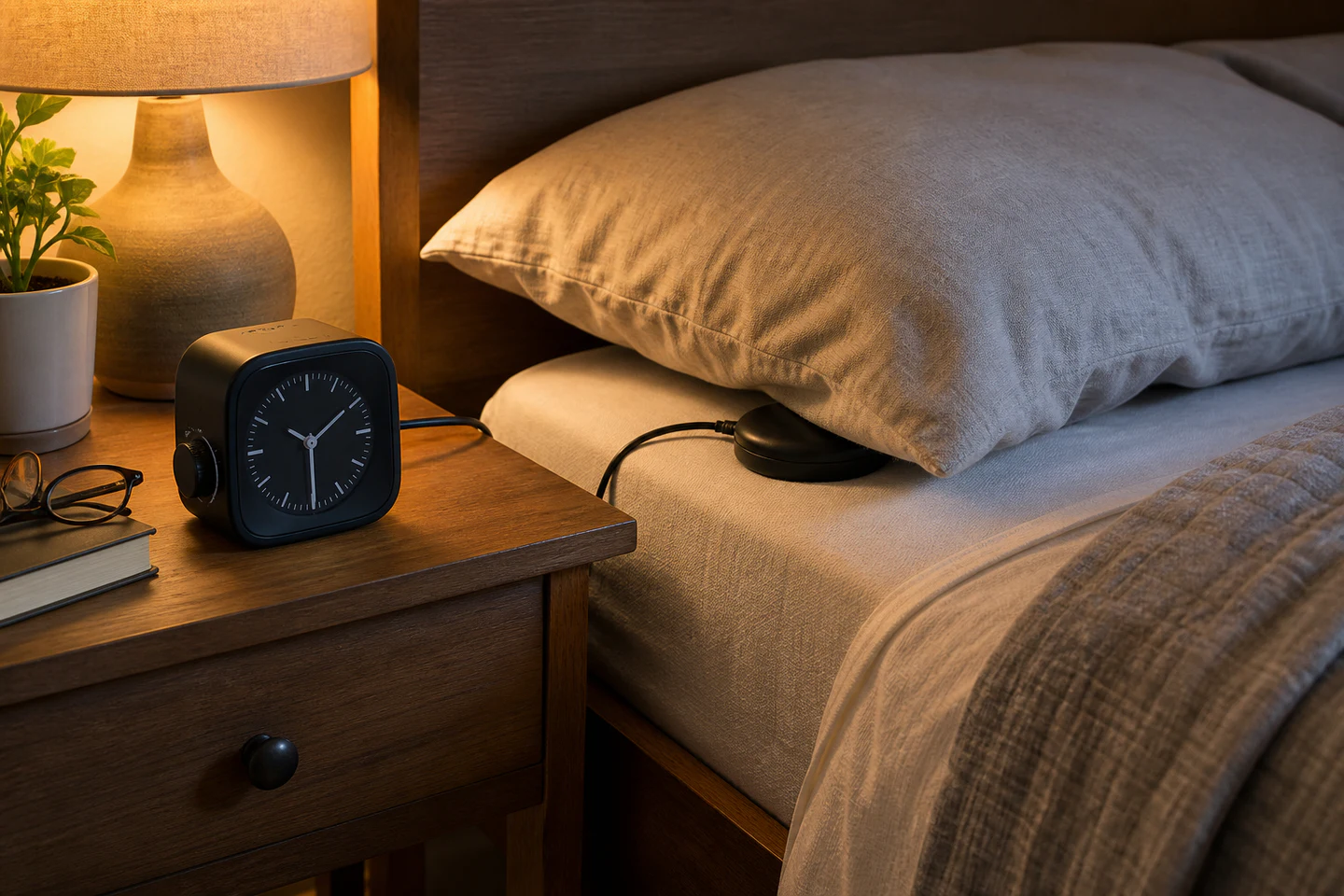
A wired bed shaker follows a visible chain: the alarm is stored in a bedside clock, the clock reaches the selected time, an output jack sends the signal through a cable, and the puck transfers movement into the bed. That fixed path is the main reason to choose wired.
The shaker normally does not need its own charging routine, pairing screen, app permission, or radio link. Before sleep, the user can inspect the alarm indicator, selected mode, connector, and physical placement.
The same simplicity creates a physical constraint. The clock must sit close enough for the cable to reach the intended spot without stretching across a walkway, pulling at the plug, or forcing the shaker into a weak position. A thick topper may require a different location from a thin mattress. A restless sleeper can move the puck or tug the cable. A split or adjustable bed can change the distance overnight. Cable length is therefore not a minor specification: it defines where both the clock and tactile cue can safely live.
Sonic Bomb SBB500SS is the familiar multi-signal example.
Sonic Alert documents adjustable high-output sound, tone, flash, dual alarms, and an included wired 12-volt shaker. That makes it useful when the household wants vibration plus sound or flash from one control point. Bellman Alarm Clock Pro BE1370 takes a similar fixed approach for accessibility, pairing an included bed shaker with ascending sound and flashing LEDs. Bellman also documents rechargeable backup operation, which changes its outage boundary. These are product-source facts, not proof that either shaker will feel equally strong through every bed.
Wired also does not mean independent. If sound, flash, and vibration all come from one clock, they share its schedule, controls, and primary power path. Multiple outputs can improve sensory coverage while leaving a single device failure. Battery backup must be read precisely: some clocks retain time or settings, some continue the alarm, and some keep more functions active. Check the current manual for the exact revision and test the documented behavior during the return window.
- Prefer wired when the alarm stays in one bedroom and the cable reaches the best shaker position safely.
- Inspect nightly the alarm-active indicator, selected signal mode, plug seating, cable route, and puck location.
- Do not infer outage alarm operation from the words “battery backup” without a specific manufacturer statement.
- Reject the layout when the cable must be taut, cross a path, or hold the shaker in a poor contact position.
Dependency map
Wired and wireless bed-shaker dependency paths
Wired bedside system
- Alarm clock
- Seated cable
- Bed shaker
Check the plug and cable route.
Wireless clock and puck
- Alarm clock
- Radio link
- Charged puck
Check charge and link state.
Phone-configured shaker
- Phone app
- Stored schedule
- Charged shaker
Check transfer and disconnected behavior.
Separate two wireless designs
Wireless can mean clock-controlled or phone-configured—and those are different decisions
“Wireless bed shaker” describes the missing long cable, not the location of the alarm logic. Two products can both use a rechargeable puck and still behave very differently. In a clock-controlled system, the bedside clock stores the schedule and sends the wake command to the shaker. In an app-configured system, a phone is used to create or transfer alarms and the puck may store them for later execution. Search results and retailer filters often mix these designs, which is why wireless should never be treated as one dependency pattern.
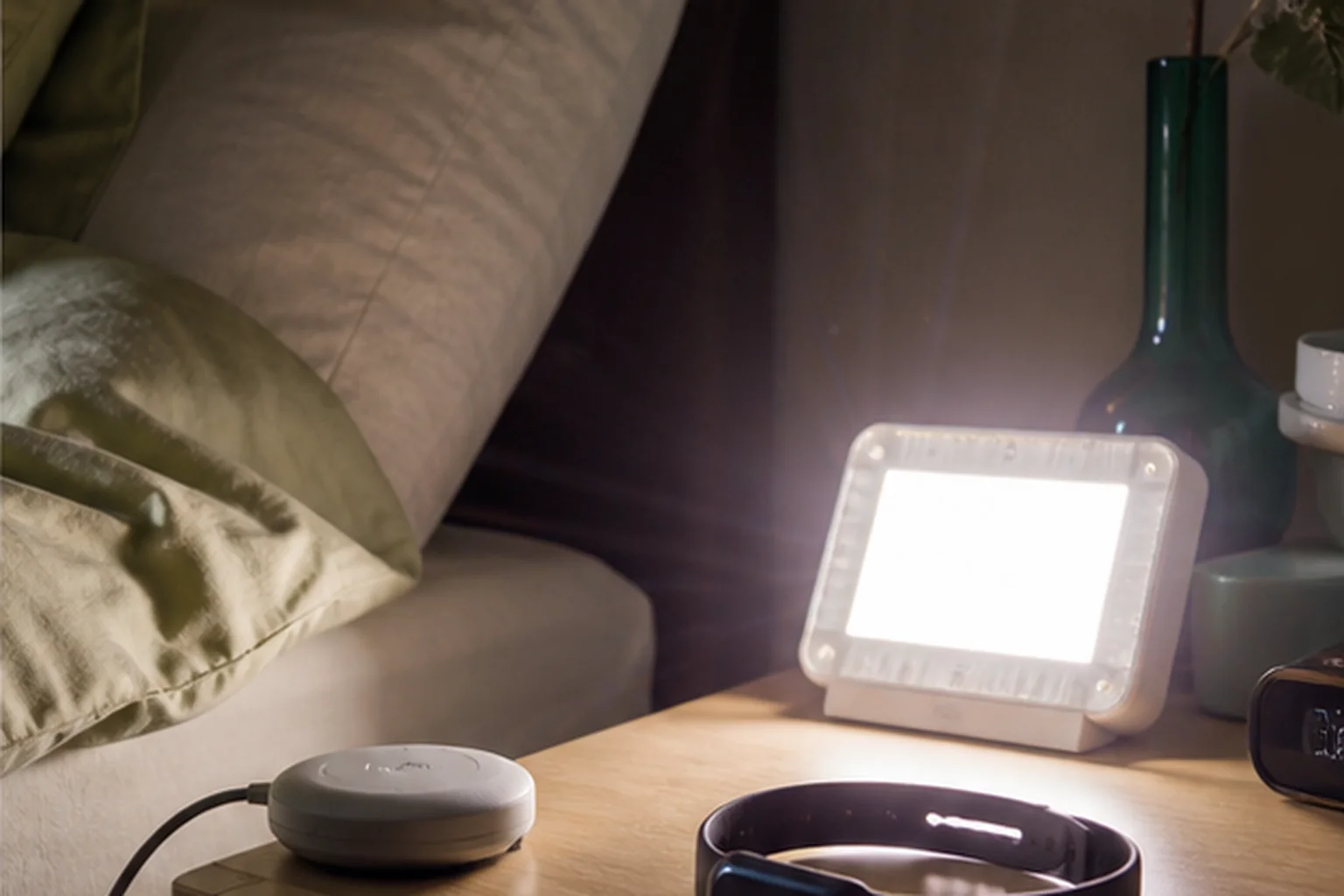
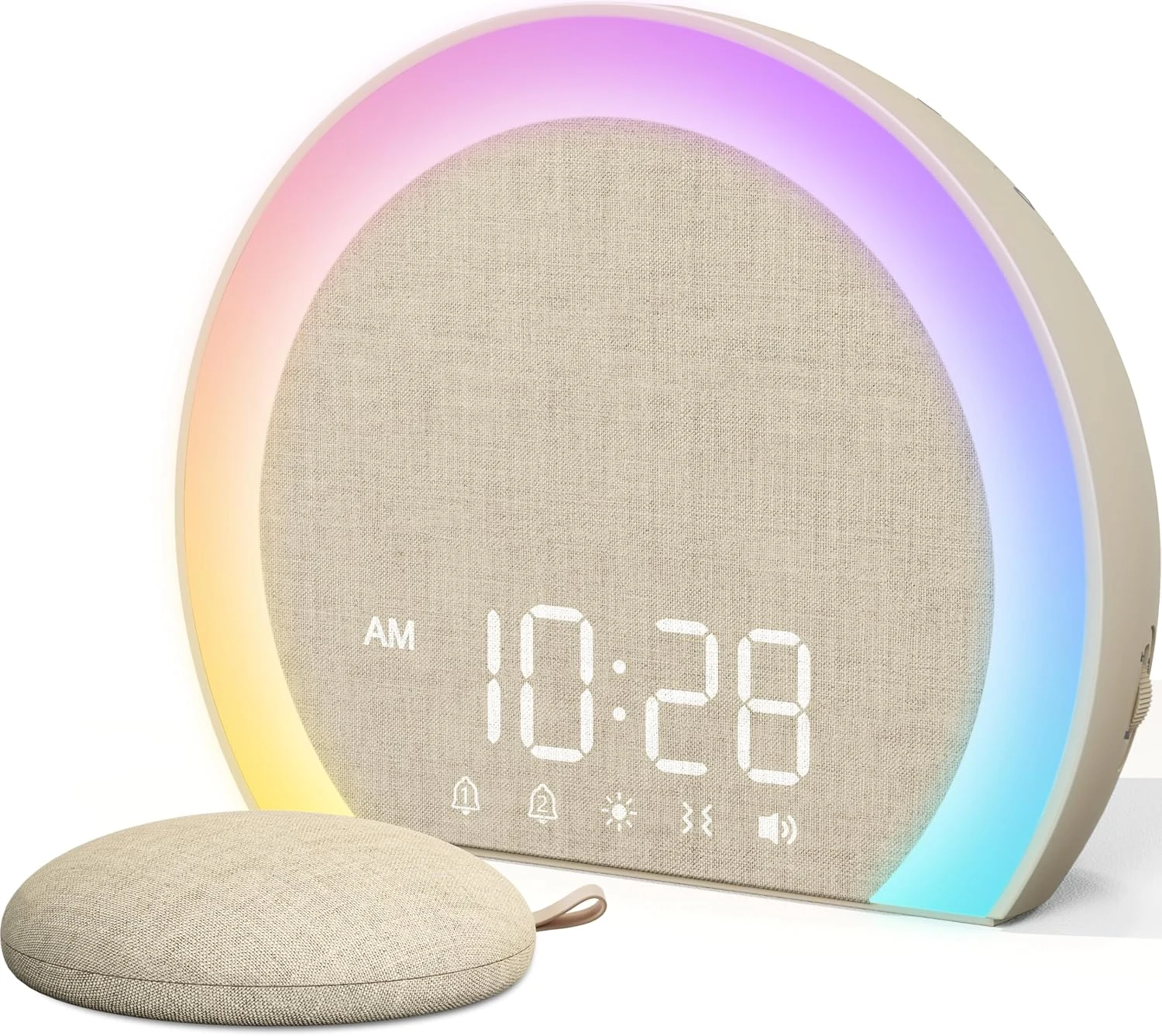
ANJANK’s wireless bed-shaker alarm clock represents the first design. Its plug-in bedside clock provides the screen and direct alarm controls, while a rechargeable receiver can be placed without routing a cable from the nightstand. The manufacturer lists dual alarms, three vibration levels, eight sounds, adjustable volume, display-off, a night light, and USB-C phone output. This route suits someone who wants a movable shaker but does not want a phone to be the daily scheduling interface. It adds two states that a wired shaker avoids: receiver charge and the wireless link from clock to puck.
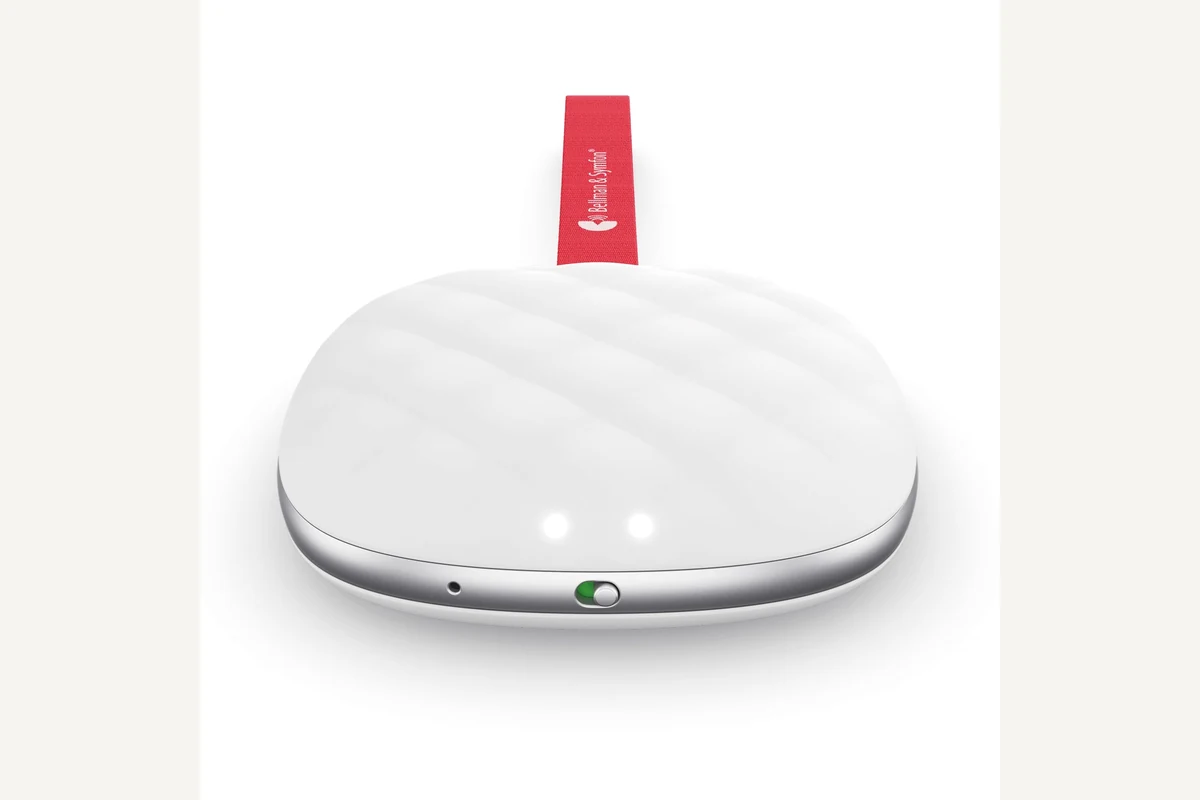
Bellman Vibio represents the second design. The rechargeable puck is configured through a phone app, and Bellman states that alarms are saved on Vibio so the phone does not need to remain connected at wake time.
That distinction matters. Bluetooth can be part of setup without being part of the final wake event. Still, the buyer must confirm current phone compatibility, the transfer or save process, the alarm shown on the device or app, and what happens after a new phone, operating-system update, reinstall, or period of non-use.
Wireless freedom is practical when the nightstand is far from the useful contact point, the bed moves, a cable would cross a path, or the shaker must travel between rooms. It also creates a maintenance task. “Rechargeable” says nothing by itself about the remaining battery at bedtime, low-battery warning, charging time, operation while charging, or the consequences of a missed charge. Those details must come from current product instructions and a real rehearsal.
- Clock-controlled wireless: check the bedside alarm indicator, receiver charge, link, and selected sound/vibration mode.
- Phone-configured wireless: check compatibility, alarm storage, transfer confirmation, charge, and documented disconnected behavior.
- Do not assume: a wireless shaker needs live internet, or that every Bluetooth shaker can alarm without the phone.
- Choose by routine: physical buttons may be easier for frequent changes; an app may be better for complex schedules only when it remains accessible.
Trace power and stored state
Outage behavior belongs to the clock, display, schedule, and shaker separately
A power claim becomes useful only after it is split into components. For a wired system, ask whether the clock keeps time, whether the scheduled alarm still triggers, whether the display stays visible, and whether the shaker output remains active. For a wireless clock-and-puck system, add the receiver battery and radio command. For an app-configured puck, ask whether the alarm is stored locally, whether the phone is needed after setup, and how the puck reveals its armed and charged states.
This prevents a common buying error: treating settings retention as full alarm backup.
A small backup battery may remember the time while leaving the display dark and the shaker inactive. A rechargeable accessibility clock may continue more functions. A wireless shaker may have plenty of charge while the bedside transmitter clock has lost mains power. Conversely, an app-configured shaker may still run a stored alarm even when the phone is elsewhere. Only model-specific documentation or a controlled test can settle these branches.
Run an outage check during the day, never for the first time before an important morning. Set an alarm a few minutes ahead, confirm the intended silent or combined mode, then remove only the power source described in the manual. Observe the display, clock time, alarm indicator, shaker, and next-alarm state. Restore power and check whether the schedule and mode return correctly. Do not open sealed devices, defeat safety features, or perform a test the manufacturer warns against.
Redundancy requires a second failure path, not simply a second cue. Sonic Bomb sound and shaker cover two sensory channels, but both still depend on the same clock. A phone alarm and a rechargeable shaker may both depend on one outlet if they charge together. Two wireless receivers paired to one transmitter may share its schedule and power. For a flight, medication time, shift, examination, or other high-consequence morning, map the primary and backup from schedule through power, signal, placement, and stop action.
- Primary path: write where the alarm is stored, what powers it, what carries the cue, and how it reaches the sleeper.
- Backup path: change at least one important dependency—device, power, signal channel, or placement.
- Outage check: distinguish time retention, alarm operation, display operation, and shaker operation.
- Recovery check: verify the active alarm after power returns, charging completes, pairing changes, or the phone restarts.
Failure check
Bed-shaker alarm failure checks
| Route | Before sleep | After an outage | After moving the setup |
|---|---|---|---|
| Wired | Connector fully seated | Clock and shaker behavior confirmed | Cable reach and pinch points rechecked |
| Wireless clock + puck | Puck charged and linked | Clock schedule and puck state confirmed | Range and mattress placement retested |
| Phone-configured | Alarm transferred to device | Stored alarm behavior confirmed | App compatibility and placement retested |
Test the real bed and room
Mattress damping, partner transfer, movement, and travel can reverse the recommendation
The shaker is not felt in isolation. A soft pillow can absorb movement, a dense foam topper can spread or damp it, a sprung mattress can carry vibration to the other side, and a loose puck can migrate. The same product can feel distinct when placed under a pillow, beneath a mattress edge, between layers, or against a bed frame. Follow the manufacturer’s placement guidance first, then test from the sleeper’s normal position with the usual bedding.
A wireless puck is easier to move toward the most effective point because no long cable returns to the clock. That advantage matters on a large bed, an adjustable base, or a room where the nightstand is not beside the sleeper.
A wired puck may be more predictable after a good route is established, because its power state does not depend on remembering to recharge the receiver. The question is not which technology is stronger in theory. It is which one can remain in the proven position through ordinary movement.
For couples, vibration is local but not automatically private. Motor noise can be audible in a quiet room, and movement can transfer across a shared mattress or frame. Test from both sides of the bed. If one person rises earlier, run silent mode at the actual intended intensity and ask the later sleeper what they notice. A second independent device may work better than increasing intensity until both people wake. Separate schedules also require clear ownership of stop and snooze controls.
Travel changes the calculation again.
A complete wired clock and shaker need luggage space, a suitable outlet, voltage and adapter compatibility, and a cable route in an unfamiliar room. A rechargeable wireless puck is smaller but needs known charge, a compatible phone or clock, and confidence that the stored alarm survived the trip and time-zone change. A portable battery pillow alarm may be another route when outlet independence matters more than advanced schedules. Hotels may provide accessible alerting equipment; request and test it rather than assuming availability or setup.
- Test the real pillow, mattress, topper, bed frame, and sleeping position—not a hard desk surface.
- Mark a safe, repeatable placement so housekeeping, bedding changes, or ordinary movement do not erase the result.
- Measure cable reach with slack and charging reach without placing cords across a walking path.
- For shared beds, record partner response and motor noise separately from the intended sleeper’s response.
- For travel, rehearse the time-zone, charge, stored-alarm, and disconnected states before departure.
Use models to expose boundaries
Six models expose the practical limits of wired and wireless setups
A useful shortlist should make the trade-offs clearer, not produce a false universal ranking.
Sonic Bomb SBB500SS is the fixed, multi-output reference for someone who may use adjustable loud sound, flash, vibration, or a combination from one clock. Roxicosly CR1001EM is the simpler wired route, with sound-only, shaker-only, and combined modes, dual alarms, and a long fixed cable. Bellman Alarm Clock Pro BE1370 is the accessibility-oriented wired alternative, with an included shaker, flashing LEDs, an ascending audible signal, and documented rechargeable backup functions. All three keep the schedule and controls at the bedside, and all three require a safe cable route to the tested contact point.
ANJANK Wireless Bed Shaker Alarm Clock keeps a physical clock but removes the long cable to the puck. It is the direct candidate when the desired change is “move the shaker without setting alarms on a phone.” Bellman Vibio and iLuv SmartShaker 3 remove the bedside clock as well. Both are compact rechargeable shakers configured from a phone and designed to retain transferred alarms. Vibio emphasizes a focused personal tactile alert; the current SmartShaker 3 app listing documents five vibration levels, local alarm storage, and up to 14 days per charge. Neither should be treated as dependent on a live phone connection after a verified transfer, but compatibility, charge, local storage, time, and placement remain part of setup.
Start with a disqualifier. Remove Sonic Bomb, Roxicosly, or Bellman Pro if the cable cannot reach safely. Remove ANJANK if receiver charging or the bedside clock’s outage boundary does not fit the consequence. Remove Vibio or SmartShaker 3 if the intended user cannot reliably manage the current app, phone transition, alarm-transfer check, or time-zone resynchronization. Remove any product when its tactile cue cannot be verified through the actual bed. Only after those boundaries should price, display, sound choices, light, USB charging, appearance, or travel size enter the decision.
The five use cases change the shortlist. A heavy sleeper may benefit from the multi-signal wired systems, but vibration still needs a real-bed test.
A deaf or hard-of-hearing sleeper should prioritize a verified tactile or visual route rather than headline sound output. A couple needs to test both local vibration and mattress transfer. A traveler benefits from a compact rechargeable puck more than a clock, cable, and power supply. A critical wake-up needs an independent second path even when one device offers several signals.
Each product card links to our full review and to Amazon when a current route is available. The source list below records the manufacturer, app, manual, or retailer evidence used for factual claims. An Amazon button is a buying route, not evidence. Availability, seller, revision, accessories, return terms, and price can change; verify the exact model number and included parts before ordering. TOPCLOCKS may earn from qualifying purchases, but the editorial reason to include each model is its distinct dependency pattern.
End with one low-stakes rehearsal. Set the exact schedule, choose silent or combined mode, place the shaker, and confirm the alarm without relying on memory. Repeat after changing bedding, moving the clock, replacing a phone, updating an app, or leaving the device unused. If the morning has serious consequences, keep an independently powered and independently signaled backup until the new route has shown repeatable behavior.
- Sonic Bomb: choose to compare fixed vibration with strong sound and flash from one clock.
- Roxicosly: choose to compare a simpler wired clock with sound-only, shaker-only, and combined modes.
- Bellman Alarm Clock Pro: choose to compare an accessibility-led wired system with documented backup behavior.
- ANJANK: choose to compare a clock-controlled rechargeable wireless shaker.
- Bellman Vibio: choose to compare a phone-configured shaker designed to retain transferred alarms.
- iLuv SmartShaker 3: choose to compare a travel-friendly phone-configured shaker with multiple stored alarms.
There is no single winner across these roles. The winning setup is the one whose schedule, power, physical path, and nightly check remain obvious to the actual user.
Verify in the room
Rehearse the cable, charge, schedule, and disconnected states
Wired and wireless bed shakers can deliver the same kind of tactile cue while depending on different overnight paths. The useful comparison asks which path the household can inspect and maintain without guesswork.
Treat this as a selection experiment for the wired and wireless shaker routes, not a claim that one model will work for every sleeper. The objective is to expose a mismatch while the clock can still be returned, moved, or reconfigured.
Put each shaker in the intended pillow, mattress, or bed-frame position. For wired systems, route the cable without tension and seat the plug fully. For wireless systems, charge the receiver, confirm where the alarm is stored, and test the documented disconnected state. Keep the first run deliberately ordinary. Extreme settings can hide a placement problem, and a special one-night routine does not show whether the setup is maintainable on workdays, school days, weekends, and schedule changes.
A wired system fails when the cable is too short, pulled loose, pinched, or tied to a clock that lost its active schedule.
A wireless system fails when the shaker is discharged, out of range, unpaired, or waiting for an alarm that was never transferred or stored. Write the likely failure before running the test. That note prevents a bright display, attractive sound library, charging pad, or app from receiving credit for a wake path it cannot protect.
Record shaker position, mattress and topper, connector or battery state, alarm-storage location, clock or app indicator, power source, silent-mode result, stop action, and the next armed alarm. A simple dated log is enough. Avoid converting one successful morning into a universal result; repeat the check after changing bedding, furniture, power, software, room, or schedule because the signal path may have changed.
For every check, record the observed state, the condition that produced it, and the next action if the result was unclear:
- Exact shaker placement
- Cable or charge state
- Alarm storage
- Silent operation
- Outage or disconnected behavior
- Independent backup
The route passes when its full overnight state is visible before sleep and the tactile signal is repeatable through the real bed without an unsafe cable or a hidden battery or transfer condition. Reject wired when safe cable reach cannot be maintained.
Reject wireless when charge, compatibility, range, or stored-alarm behavior cannot be confirmed on the exact model. If the result is mixed, do not average it into a score. Preserve the unresolved condition and compare only models that give you a direct way to verify it.
Test backup as a separate path. A loud tone and wired shaker on one clock provide two signals but still share the clock, outlet, and controls. A phone and wireless shaker may share charging or software. For a high-consequence morning, the second alarm should not fail for the same reason as the first.
When reading product pages for the wired and wireless shaker routes, translate each promising label back into an observable state. “Reliable” should identify the cue that survives the expected power and dependency conditions. “Easy to use” should identify who sets the alarm, in what light, and how the active state is confirmed. “Best” should disappear unless the scenario and disqualifiers are stated beside it.
Close the hidden gaps
Questions that settle a choice about the wired and wireless shaker routes
These questions resolve the practical differences that product filters usually hide. The answer still depends on the exact model, bed, sleeper, and documented power behavior.
Does a wireless bed shaker need the phone to stay connected overnight?
Not always. ANJANK stores the schedule in its bedside clock and sends the cue to its rechargeable puck. Bellman Vibio and iLuv SmartShaker 3 are configured by phone, then are designed to retain transferred alarms locally. Prove that behavior with a short disconnected test on the exact app and device revision before relying on it.
Which route is less likely to wake a partner?
A local shaker used without sound can reduce room-wide noise, but no puck is automatically private. A shared mattress can carry vibration to the other side, while flash and audible backup spread farther. Test the intended placement with both sleepers in their normal positions.
Is a wired shaker automatically safer during a power outage?
No. The cable removes a separate shaker-charging step, but the clock may still depend on mains power. Bellman Alarm Clock Pro documents rechargeable backup operation; other models must be checked for the separate behavior of time retention, alarm triggering, display, and shaker output. A charged wireless puck also cannot protect a bedside transmitter that has stopped sending.
Which models make the most sense for travel?
Bellman Vibio and iLuv SmartShaker 3 are compact rechargeable candidates because they do not require a bedside clock and long shaker cable. Travel still adds a charging check, app or transfer check, placement rehearsal, and time-zone resynchronization. ANJANK moves the puck freely but still requires its clock and power supply.
What should a deaf or hard-of-hearing sleeper prioritize?
Start with a tactile or visual channel that does not depend on the sleeper hearing the alarm. Bellman Alarm Clock Pro combines shaker and flash, while the rechargeable pucks provide a personal tactile cue. None of these personal alarm clocks should be described as a whole-home fire, smoke, or emergency alerting system.
What changes when missing the alarm would have serious consequences?
Use a second alarm path that does not share the same schedule, device, outlet, transmitter, phone workflow, or placement failure most likely to matter. Several signals from one clock improve sensory coverage, but they do not become independent backup merely because they sound, flash, and vibrate.
The decision is ready when the household can name the primary signal path, inspect its armed state before sleep, and explain why the backup would survive a different failure.
Before relying on it
Run the complete alarm path
A product page can confirm features. Only a real setup check confirms that the selected signal, placement, controls, and power path work together in the room.
- Run each candidate through the exact pillow, mattress, and topper.
- Verify the alarm with sound disabled when silent waking is required.
- Inspect cable seating or battery status before sleep.
- Test the documented outage or disconnected state during the day.
- Recheck the setup after moving the bed, changing bedding, replacing a phone, or updating an app.
Role-based product shortlist
Models worth comparing for this decision
These are desk-researched candidates, not a claim that one clock wins for everyone. Each card explains the scenario it fits, the limitation to verify, and the primary source used for the factual details.
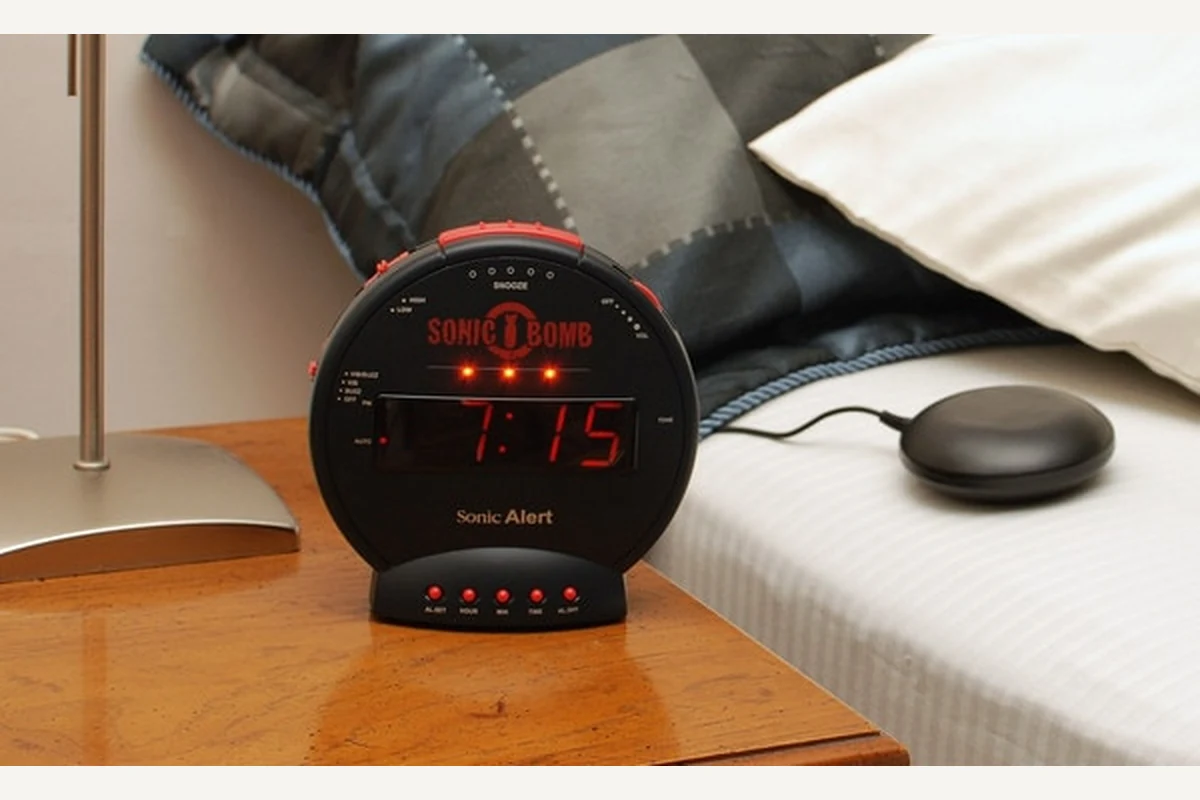
Compare for loud sound plus a bed shaker
Sonic Alert Sonic Bomb SBB500SS
Sonic Bomb is the fixed multi-signal reference: the shaker does not need charging, but its cable, connector, clock power, and selected sound/vibration mode remain one shared alarm path.
The clock combines adjustable sound, flashing lights, dual alarms, and an included 12-volt bed shaker. The manufacturer lists a 113 dB maximum, so the useful question is how far below that maximum the sleeper can set it.
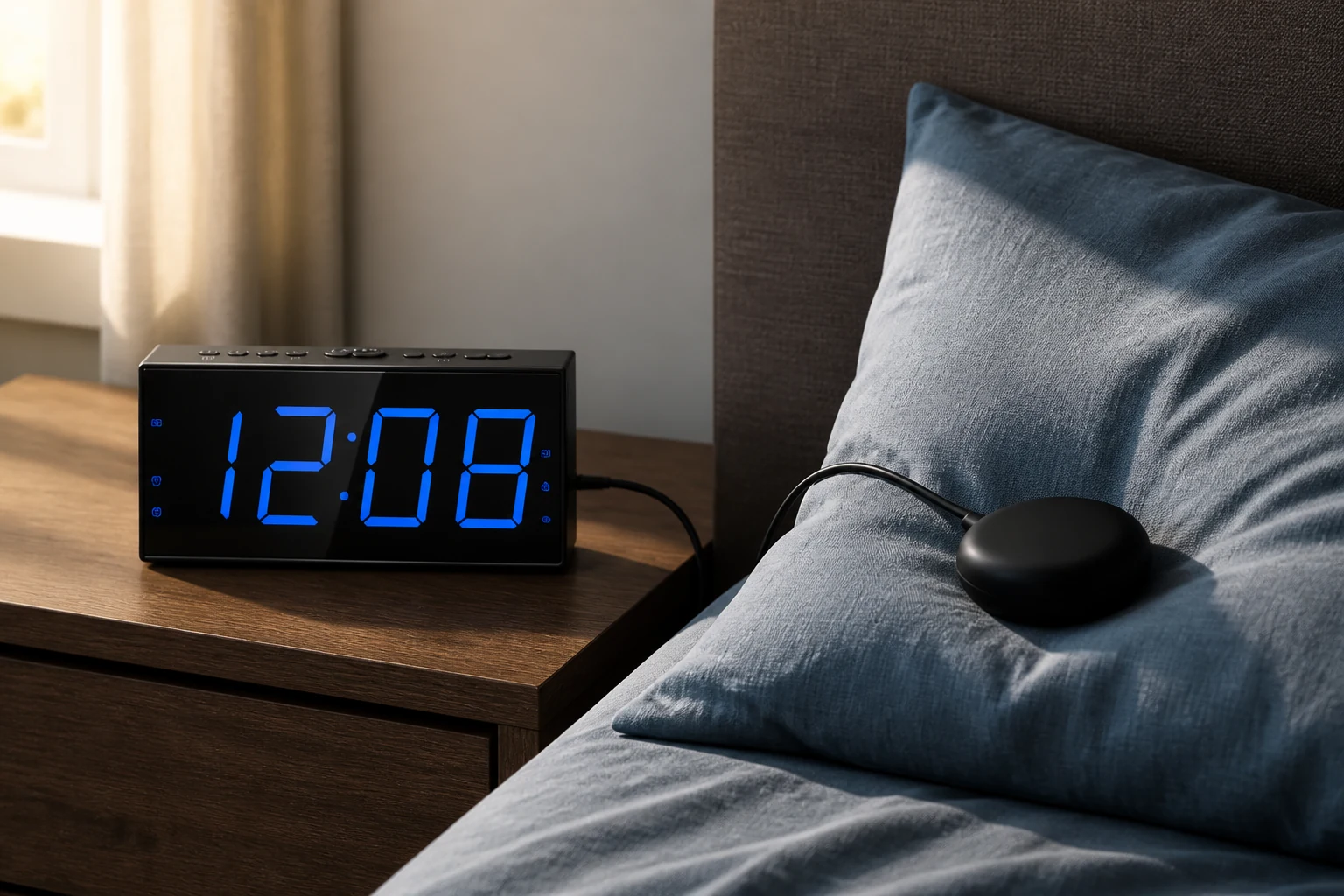
Compare for sound, vibration, or both
Roxicosly CR1001EM Bed Shaker Alarm Clock
Roxicosly CR1001EM is the simpler wired route with sound-only, shaker-only, or combined modes. Its cable is easy to inspect, but the exact outage wake output is not documented and must be rehearsed.
Roxicosly combines a wired bed shaker with an adjustable audible alarm, dual alarm times, nine-minute snooze, 24-hour Alarm Pause, large digits, and a USB charging output.
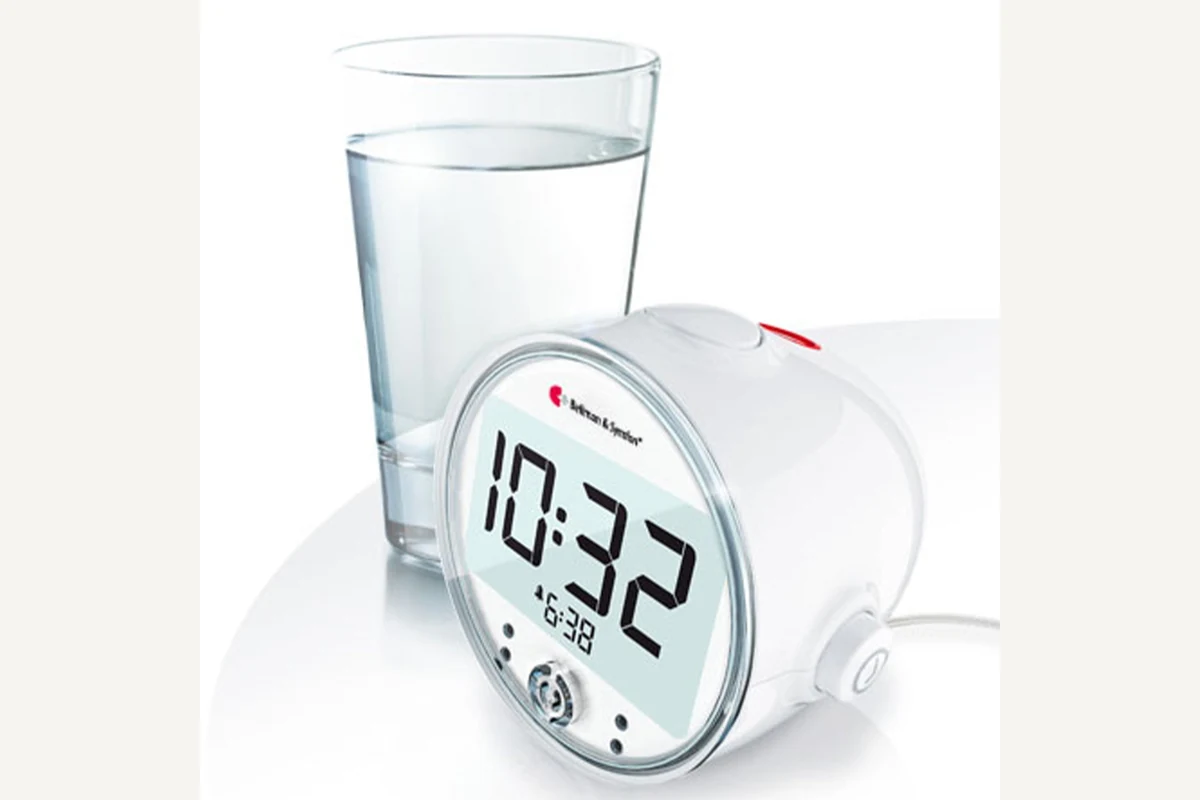
Compare for three distinct alert channels
Bellman Alarm Clock Pro BE1370
Bellman Alarm Clock Pro is the accessibility-focused wired route, adding flash and documented rechargeable backup operation to the included shaker and audible alarm.
Bellman combines an ascending multi-tone alarm, four flashing LEDs, and an included wired bed shaker. Its rechargeable backup batteries are specified to keep the clock, alarm, flash, and shaker working during an outage.
Compare for a rechargeable wireless shaker
ANJANK Wireless Bed Shaker Alarm Clock
ANJANK keeps scheduling on a physical bedside clock while sending the cue to a rechargeable wireless puck, so it removes the long cable without making a phone part of daily alarm setting.
ANJANK pairs a plug-in dual-alarm clock with a separate rechargeable wireless shaker. The puck has three vibration levels, while the clock provides eight sounds, adjustable volume, display-off, a night light, and a USB-C phone output.
Compare for a portable silent alarm
Bellman Vibio BE1221
Bellman Vibio removes the bedside clock as well: alarms are configured in the app and stored on the rechargeable shaker, making phone compatibility and transfer checks part of setup.
Vibio is a rechargeable Bluetooth bed shaker with adjustable vibration. Alarms are created in the app, then remembered by the device, so the phone does not have to remain connected at wake time.
Compare for a portable app-configured shaker
iLuv SmartShaker 3 SMSHAKER3BK
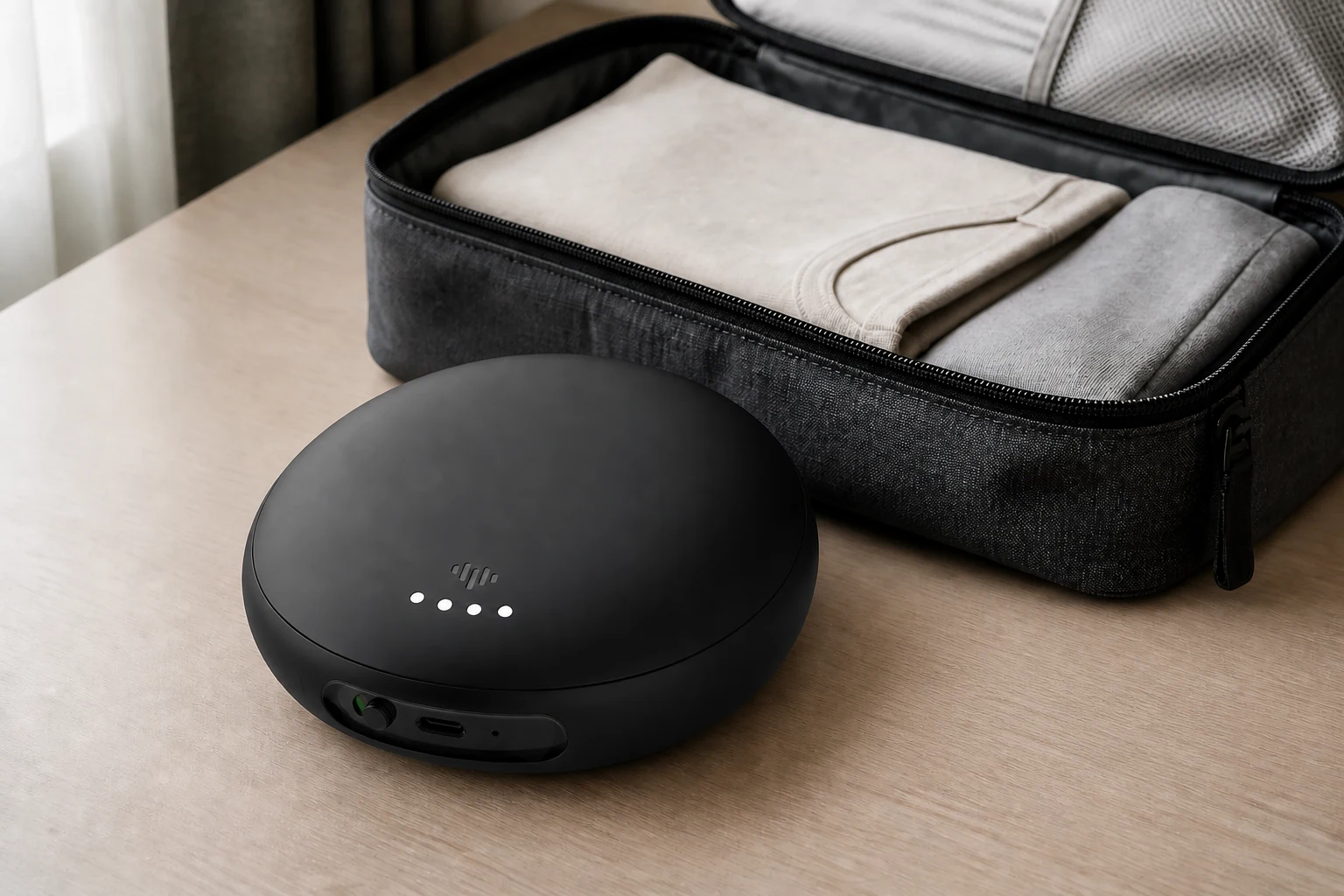
SmartShaker 3 is the second app-configured route: it stores transferred alarms locally, provides five vibration levels, and is easy to pack, but charge, switch position, placement, and time synchronization remain part of the wake path.
SmartShaker 3 stores phone-created vibration alarms in a compact rechargeable puck. Its current official app listing documents local alarm storage, five vibration levels, and up to 14 days per charge, making it a practical candidate for private waking and travel.
Evidence trail