Ranked accessibility-first guide
5 Best Alarm Clocks for Deaf and Hard-of-Hearing Sleepers in 2026
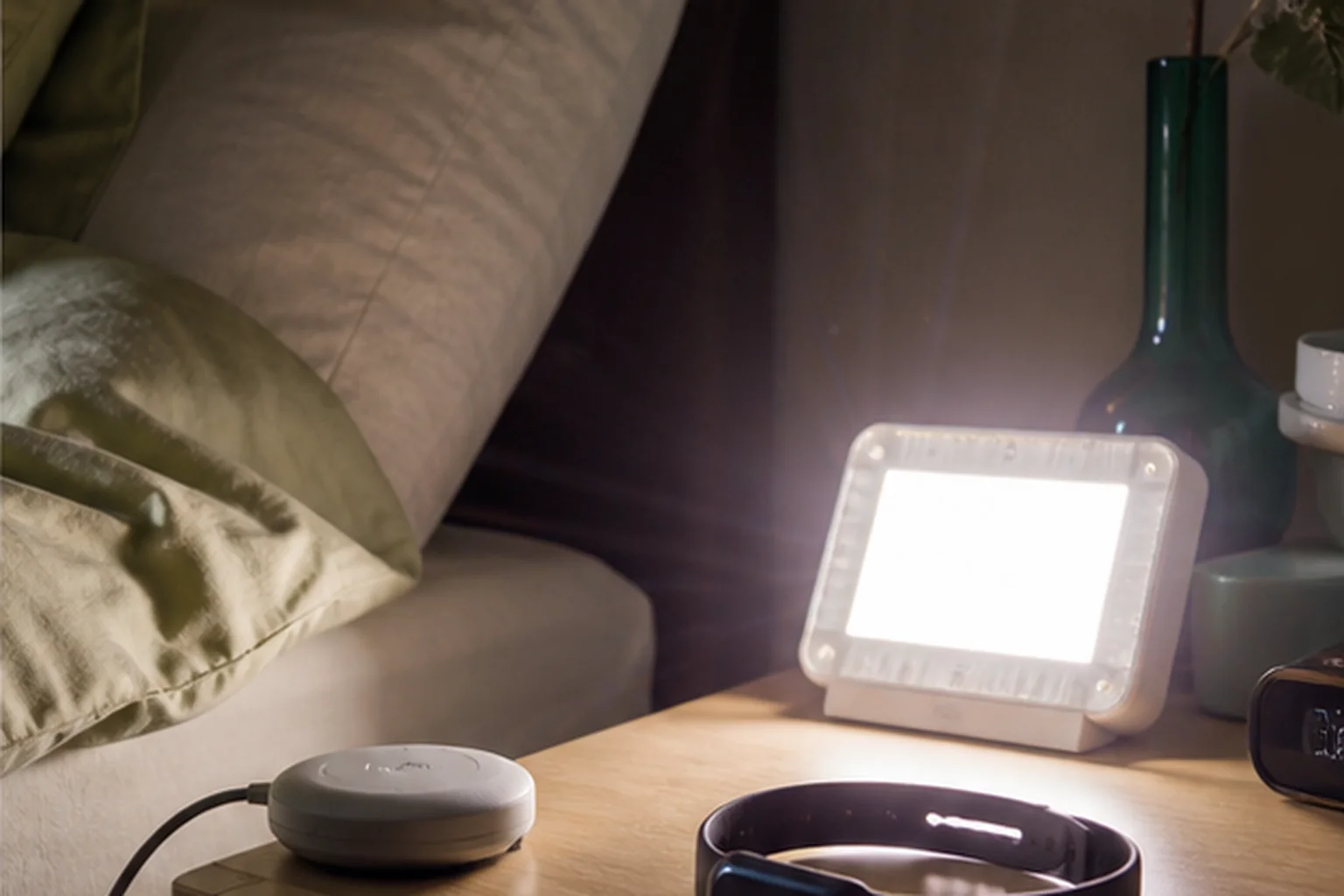
These five ranked alarms use different accessible paths: wired or wireless vibration, flashing light, optional sound, or a portable app-configured puck. The right first choice is the path the sleeper can verify in the actual bed without relying on hearing aids or processors that may be removed at night.
The decision first
Which non-audible signal can you verify every night?
Start with the signal that remains accessible during sleep: vibration, flashing light, or a user-selected combination. Treat sound as an optional layer when it is useful, not as the default requirement. Then verify silent mode, shaker placement, connection, light visibility, and an independent backup before relying on the setup.
Transparent research ranking
How We Scored the Five Accessible Alarm Clocks
Retailer stars do not determine this order. Each score uses the same published weights: manuals and exact-model documents establish the signal, controls, power path, and support, while a dated US check establishes availability. TOPCLOCKS has not measured shaker force, flash output, sound pressure, or individual wake success for this ranking. Partner links cannot change a score. This page uses method version 1.0. Read the complete scoring method.
| Rank | Product image | Model | Best fit | Score | Evidence | Main limit |
|---|---|---|---|---|---|---|
| #1 |
|
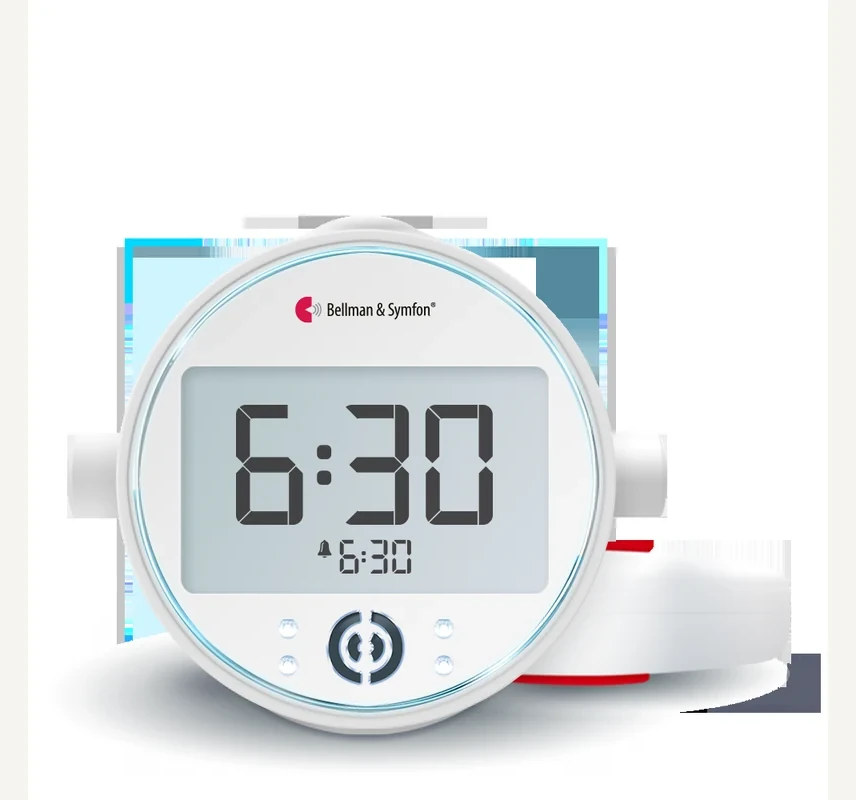
Bellman Alarm Clock Pro BE1370 | Best overall fixed multi-signal system | 8.5/10 | Research-based score, checked August 31, 2026 | It is the largest and most expensive setup here, with a wired shaker and one alarm schedule to configure correctly. |
| #2 |
|
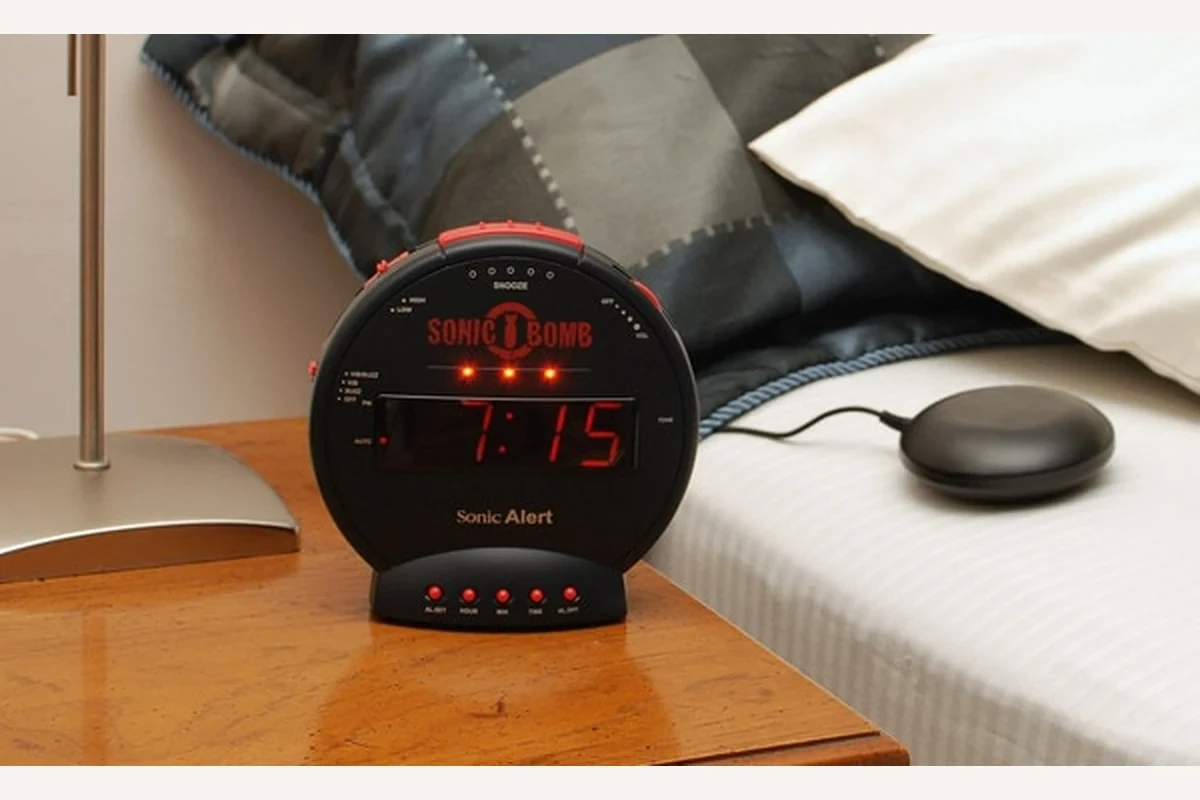
Sonic Alert Sonic Bomb SBB500SS | Best-value wired sound, flash, and shaker combination | 7.7/10 | Research-based score, checked August 31, 2026 | Its battery backup retains settings; the manual does not document full sound, flash, and shaker output through an outage. |
| #3 |
|
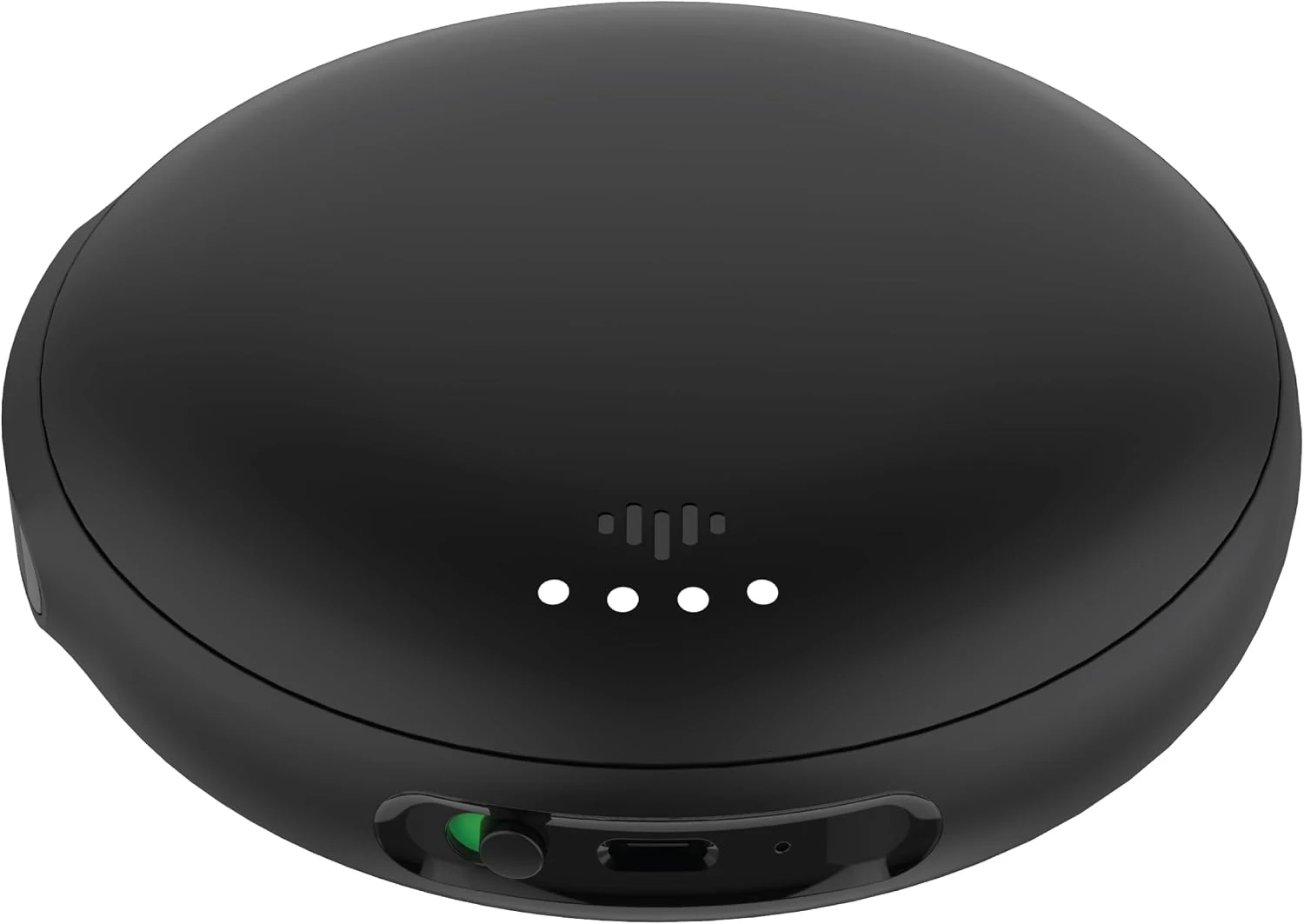
iLuv SmartShaker 3 SMSHAKER3BK | Best compact app-configured travel shaker | 7.3/10 | Research-based score, checked August 31, 2026 | The wake path depends on compatible app setup, successful alarm transfer, switch position, placement, and sufficient charge. |
| #4 |
|
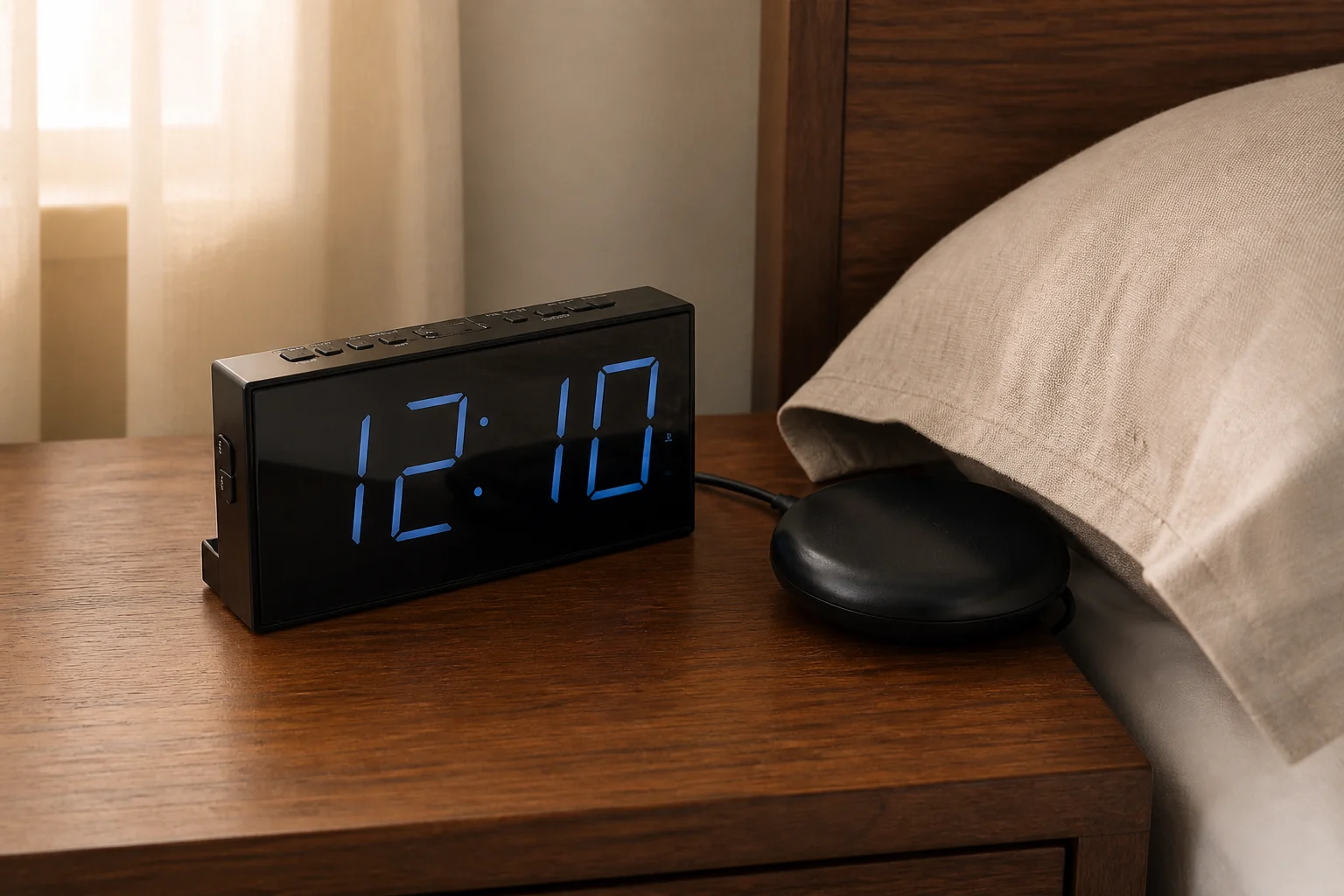
Roxicosly CR1001EM Bed Shaker Alarm Clock | Best budget wired shaker with a sound-off mode | 6.5/10 | Research-based score, checked August 31, 2026 | The available documentation does not establish full alarm output during an outage or an independent visual backup. |
| #5 |
|
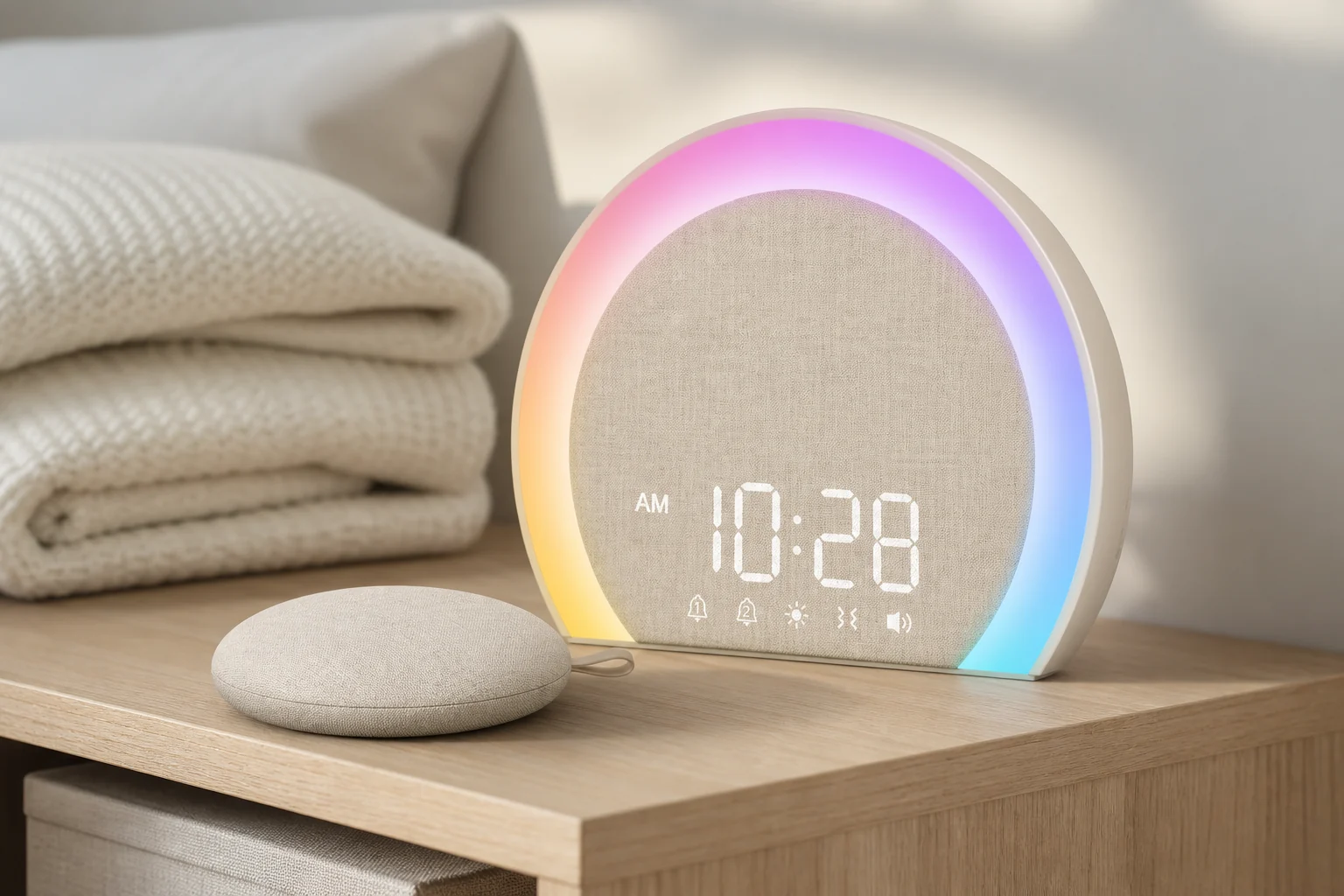
ANJANK KX213-Latte Wireless Bed Shaker Alarm Clock | Best cable-free bedside clock and shaker pair | 6.0/10 | Research-based score, checked August 31, 2026 | The exact listing states there is no battery backup, and ANJANK does not publish an exact KX213 manual on its general support page. |
Nonnegotiable checks
The criteria that can change the answer
User-selected channel
The sleeper decides whether vibration, light, sound, or a mix is appropriate.
Silent operation
Confirm sound can be disabled when a shared room requires it.
Compatibility
Check proprietary shaker ports, wearable support, cables, and receivers.
Backup
A second independent alert covers a loose puck, cable, or power failure.
What changes in practice
Compare the trade-offs, not the feature count
| Route | Decision value |
|---|---|
| Bed shaker | Direct physical cue; placement and connection matter. |
| Flashing light | Visible room cue; line of sight and room layout matter. |
| Wearable vibration | Moves with the sleeper; requires charging and a comfortable fit. |
| Combined system | Adds redundancy, with more setup and components. |
Accessibility first
Choose a channel that remains available during sleep
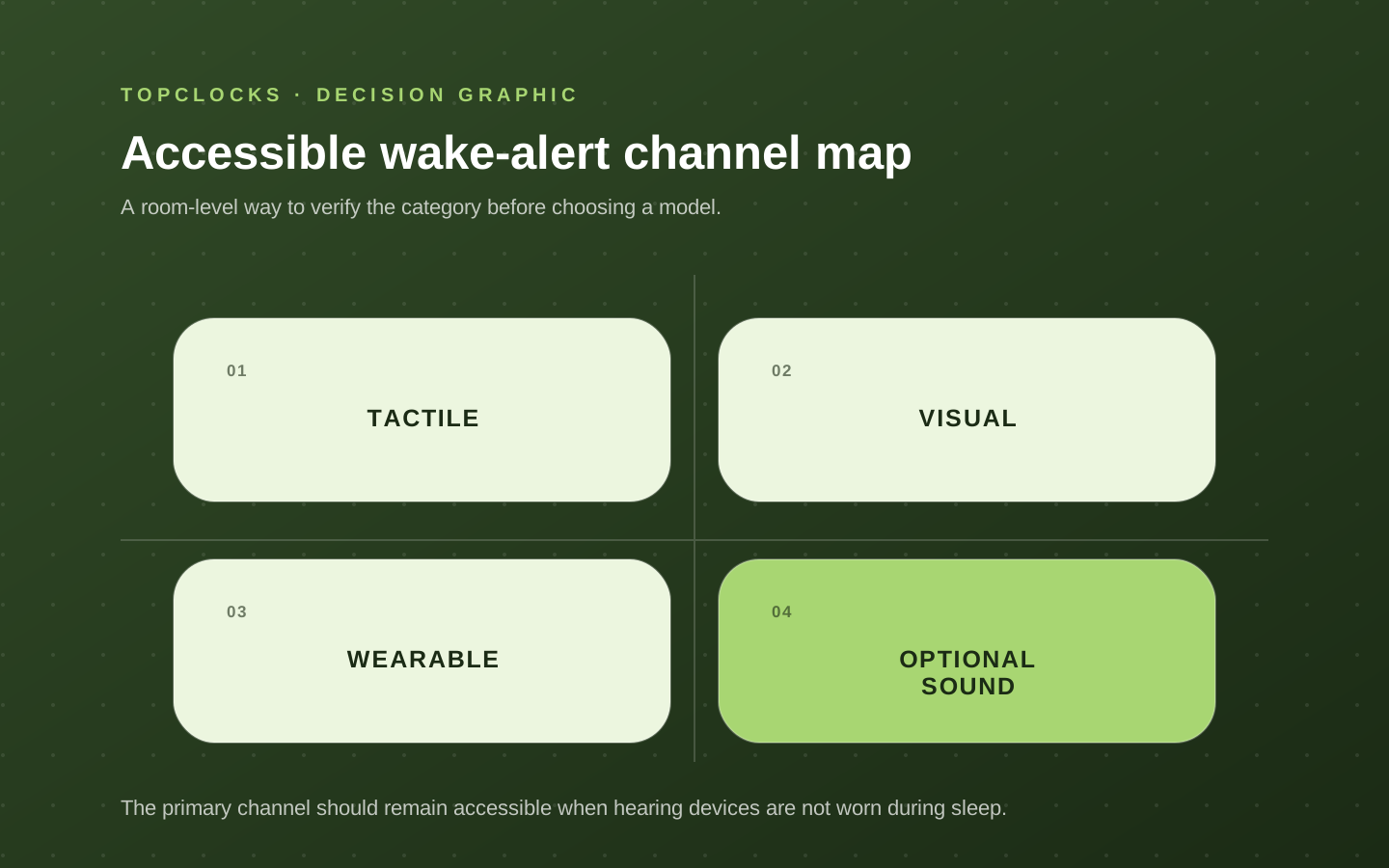
An accessible wake alarm starts with the signal the sleeper can receive while asleep, including the normal state of hearing aids, cochlear implant processors, glasses, or other devices that may not be worn overnight. Sound can remain useful for some hard-of-hearing users when tone and level are appropriate, but louder sound is not a universal solution. Tactile vibration and visible light belong at the front of the comparison when auditory access is limited or absent.
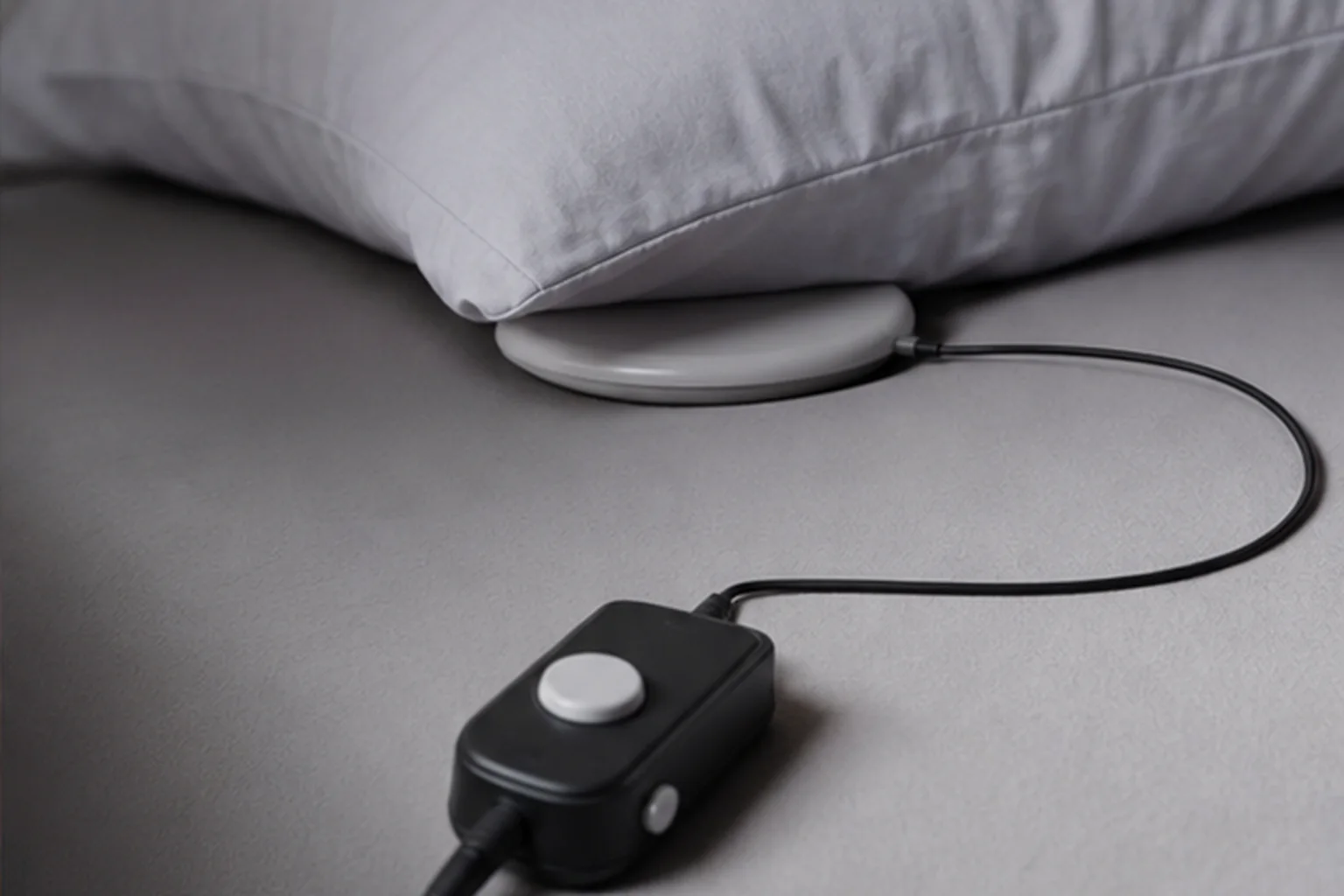
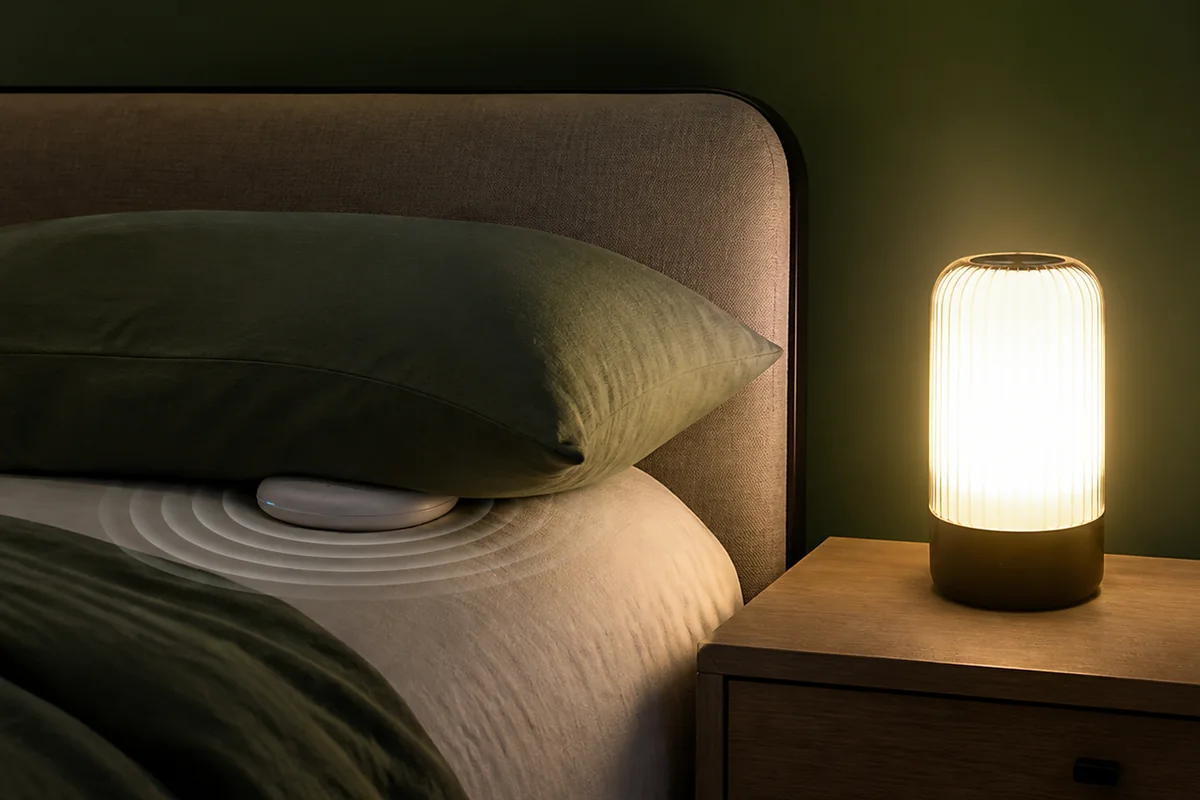
A bed shaker transfers a physical cue through a pillow, mattress, or frame. A wearable places vibration on the body. A flashing or gradually brightening light needs a useful line of sight. Each channel has a distinct placement failure. The strongest product label cannot establish that the cue reaches this sleeper through this bed or room. A controlled test with the intended user is the relevant evidence.
Define primary and optional channels explicitly. A profoundly deaf sleeper may use vibration as primary and flash as backup, with sound disabled. A person with some hearing access may combine an adjustable multi-frequency tone with a shaker. A couple may use tactile delivery to limit room-wide sound. The configuration should not force an inaccessible channel to remain active.
- Confirm a supported vibration-only or silent mode when sound must be off.
- Place the shaker according to the manufacturer’s instructions and test through normal bedding.
- Place visual alerts where the sleeper can receive them, not merely where the room looks bright.
- Use user-specific testing; do not generalize one person’s response to all deaf or hard-of-hearing sleepers.
Choose the system shape
Portable shakers, bedside systems, wearables, and broader alerting systems serve different lives
A portable rechargeable shaker can support changing schedules and travel, especially when alarms are stored on the device after app setup. Its charge, app compatibility, and physical position need routine checks. A battery pillow alarm removes phone and cable dependence, with battery state, alarm lock, and under-pillow stability as the trade-offs. A full bedside system can combine shaker, flash, and adjustable sound, often with larger controls and a fixed cable and power footprint.
A wearable may localize vibration and travel with the user, but comfort, charging, contact, alarm duration, and removal during sleep become part of reliability. Some households use broader assistive alerting systems that connect wake alerts with other notification devices. Compatibility claims for those systems must be checked at the exact manufacturer documentation; a connector, transmitter, or receiver family should not be assumed compatible because the brand matches.
Choose the shape from the daily workflow. A fixed home setup can prioritize clear controls, multiple channels, and outage behavior. Travel can prioritize stored local alarms and portable power. A shared bed can prioritize locality while testing mattress transfer. Frequent schedule changes can justify app control if the saved alarm and disconnected behavior are documented.
- Portable shaker: verify local storage, battery margin, app support, and stable placement.
- Bedside system: verify included shaker, cable reach, selected channels, controls, and backup.
- Wearable: verify contact, comfort, charge, alarm pattern, and overnight retention.
- Alerting ecosystem: verify exact transmitters, receivers, accessories, and power behavior.
Protect distinct failures
Redundancy should cross channels or power paths
Two alarms in one bedside unit can provide schedule repetition and still share one clock, one outlet, one setting state, and one stop control. A shaker and flash on that unit diversify delivery but not every failure. For a high-consequence morning, broader redundancy may use a second device, a different channel, or a different power source. The appropriate level depends on the consequence and the user’s verified response.
Power documentation matters because accessible systems can include several components. A main clock, wired shaker, flash, receiver, charger, and backup cells may not all remain active during an outage. Some systems specify continued alarm, flash, and shaker operation on rechargeable backup; others only retain settings. Read the exact manual and identify every component in the path. Run a safe daytime power test where documented.
Keep routine checks easy. Confirm the active alarm, selected channels, cable connection, shaker position, and battery or charge state before important mornings. A light or wearable backup should be tested independently. Avoid relying on a phone connection unless the device’s wake-time behavior with a disconnected phone is clear.
- Map schedule, power, clock, output channel, and placement as separate links.
- Test primary and backup channels alone before testing them together.
- Use separate hardware or power when one-device failure would be unacceptable.
- Repeat checks after travel, bedding changes, software updates, or accessory replacement.
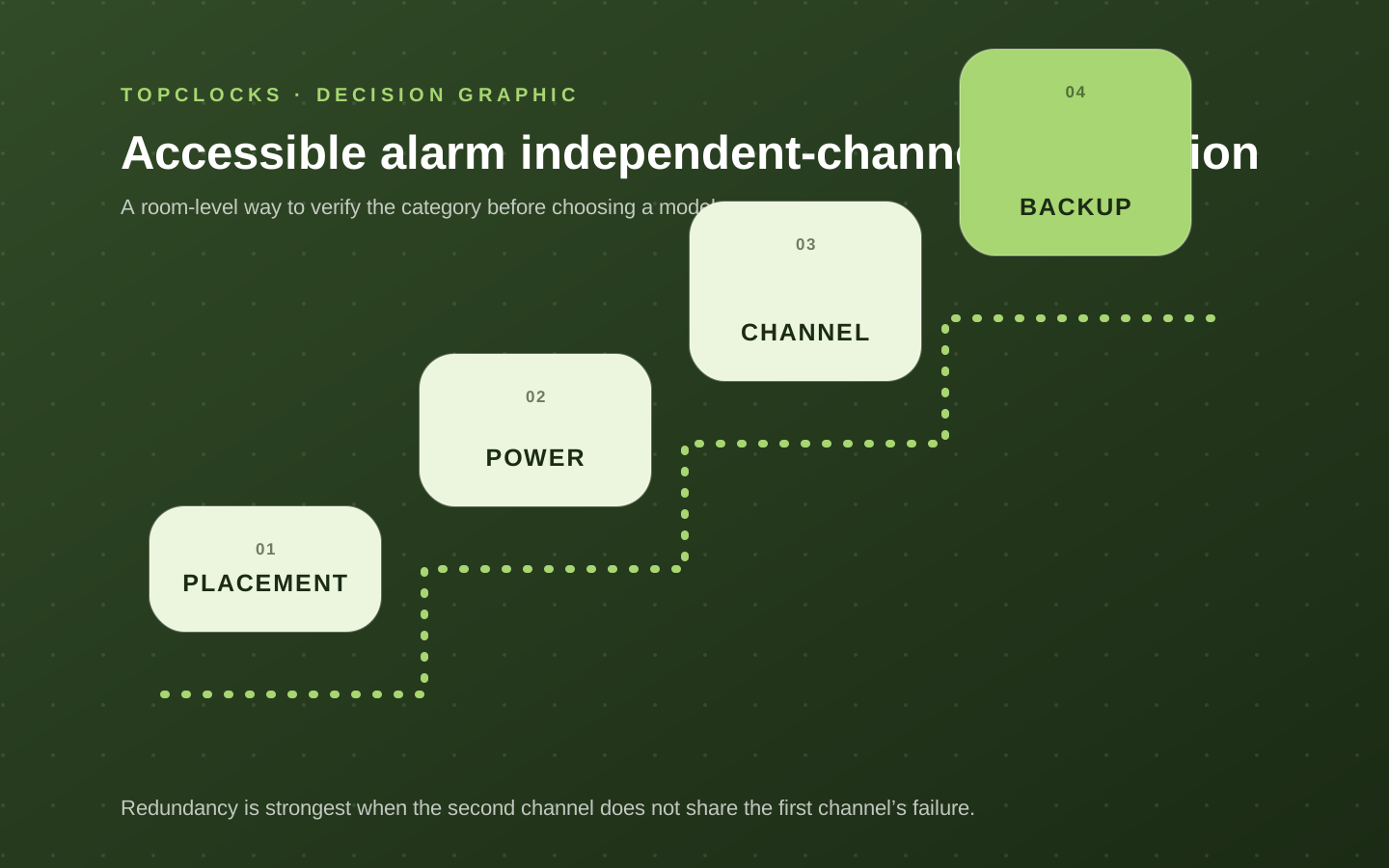
Read roles before scores
Choose a system shape before a score
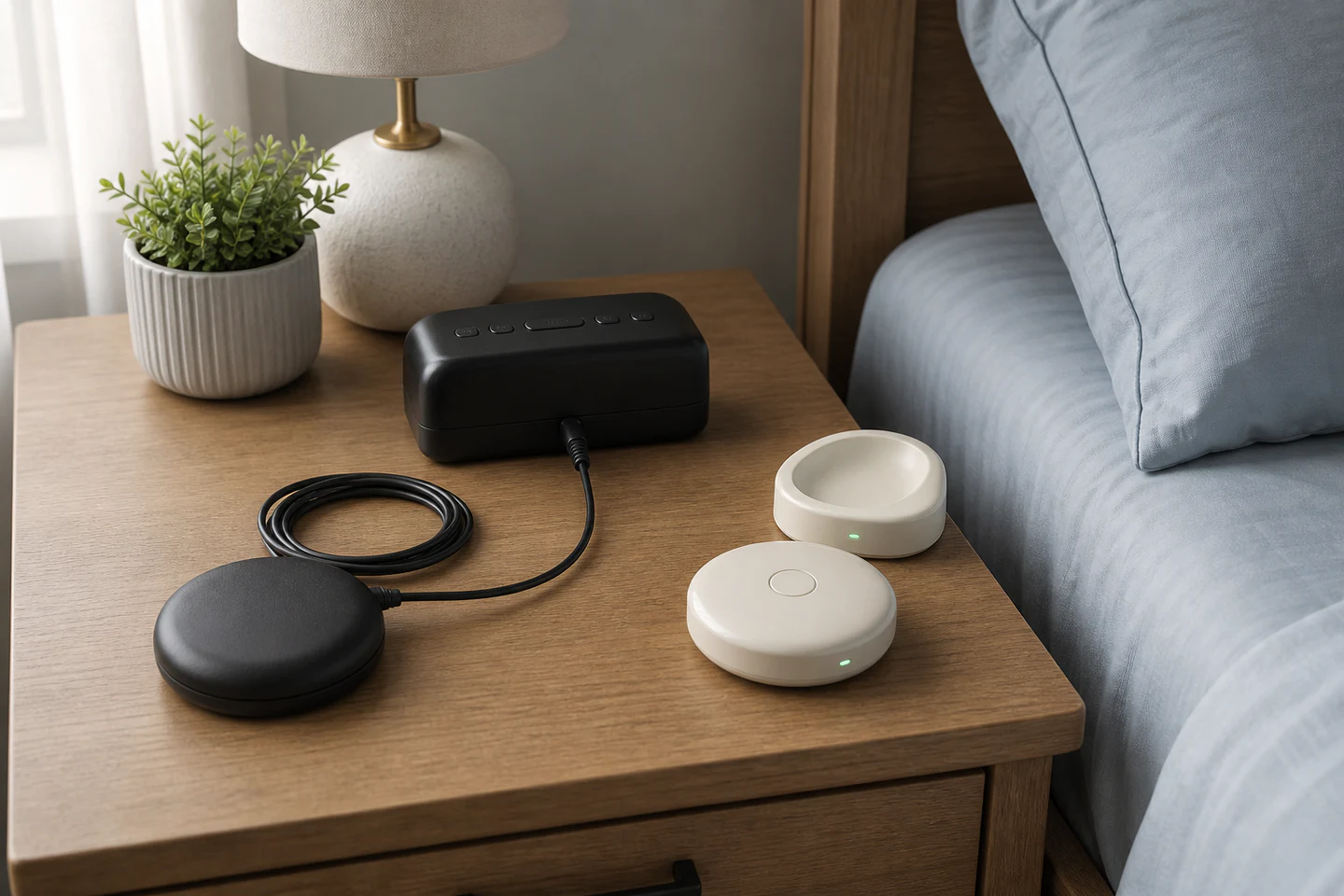
Bellman Alarm Clock Pro BE1370 and Sonic Alert Sonic Bomb SBB500SS are the two fixed multi-signal systems in this set. Both combine a wired shaker with flash and sound, but their outage behavior is materially different. Bellman documents continued clock, alarm, flash, and shaker operation on its rechargeable backup. Sonic describes its battery path as settings backup, so a separate wake device is needed when loss of mains power is part of the risk.
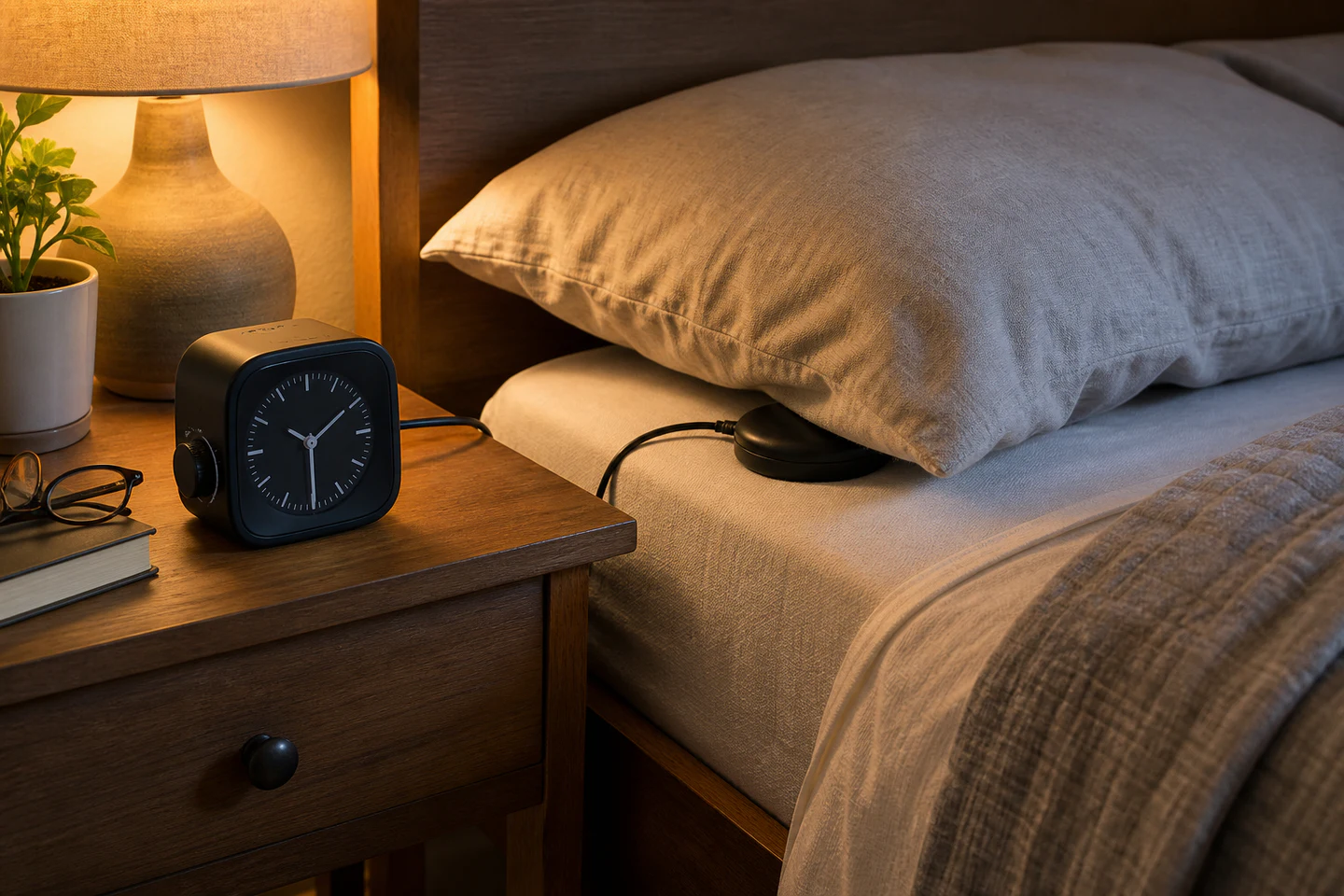
Roxicosly CR1001EM and ANJANK KX213-Latte keep the schedule on a bedside clock and make vibration the practical non-audible route. Roxicosly uses a conventional wired puck and has the lower dated price. ANJANK removes the cable across the bed with a rechargeable wireless puck, then adds charge and link states; its exact listing also says the plug-in clock has no battery backup. Choose between them by the physical bed setup and the failure that is easier to check every night, not by treating “wireless” as an automatic upgrade.
Bellman Vibio BE1221 and iLuv SmartShaker 3 are portable app-configured shakers. Each stores transferred alarms on the device, so the phone does not need to stream the wake event overnight. Both still require a compatible app for setup, a known charge state, stable placement, and a disconnected test. Vibio has the stronger manufacturer support trail and is covered separately below the ranked shortlist. SmartShaker 3 has a smaller travel-oriented role.
Use the ranked role before the decimal score. A large fixed system is not the default winner for travel, and a compact puck is not an independent backup merely because it has its own battery. Open the full review to verify controls and current model identity, then test the selected signal with normal bedding while the return window is open. For an important morning, the backup should differ in hardware, power, or sensory channel from the primary alarm.
- Fixed multi-signal: compare full alarm backup, cable reach, flash sightline, and the selected sound/shaker mode.
- Bedside clock plus shaker: compare wired stability with wireless charge and link checks.
- Portable app-set puck: verify local alarm storage, phone compatibility, placement, and battery margin.
- Every route: confirm silent operation where needed and rehearse the exact stop and re-arm sequence.
The five ranked models and the additional portable option are ordinary morning wake devices. They are not substitutes for smoke, carbon-monoxide, weather, door, baby, or other accessible emergency-notification equipment.
Verify in the room
Verify the non-audible channel on its own
An accessible alarm starts with the cue the sleeper can receive during sleep: tactile movement, visible flashing, or another personally usable channel. Sound may supplement that route but should not be assumed to carry it.
Treat this as a selection experiment for alarm clocks for deaf and hard-of-hearing sleepers, not a claim that one model will work for every sleeper. The objective is to expose a mismatch while the clock can still be returned, moved, or reconfigured.
Test the shaker through the real bed or wearable position and the light from the normal sleeping direction. Remove optional sound from the first check so the non-audible route is evaluated independently. Keep the first run deliberately ordinary. Extreme settings can hide a placement problem, and a special one-night routine does not show whether the setup is maintainable on workdays, school days, weekends, and schedule changes.
Accessibility fails when vibration is damped or displaced, light is blocked, the device depends on hearing equipment not worn during sleep, or backup power does not preserve the accessible cue. Write the likely failure before running the test. That note prevents a bright display, attractive sound library, charging pad, or app from receiving credit for a wake path it cannot protect.
Record cue type, placement, intensity, connection, power state, receiver response, and whether the active alarm can be confirmed without an audible indicator. A simple dated log is enough. Avoid converting one successful morning into a universal result; repeat the check after changing bedding, furniture, power, software, room, or schedule because the signal path may have changed.
- Tactile or visual primary: write the observed state, not a yes-or-no impression. Add the condition that produced it and the next check if the result was unclear.
- Exact placement: write the observed state, not a yes-or-no impression. Add the condition that produced it and the next check if the result was unclear.
- Connector and accessory: write the observed state, not a yes-or-no impression. Add the condition that produced it and the next check if the result was unclear.
- Non-audible confirmation: write the observed state, not a yes-or-no impression. Add the condition that produced it and the next check if the result was unclear.
- Outage operation: write the observed state, not a yes-or-no impression. Add the condition that produced it and the next check if the result was unclear.
- Independent backup: write the observed state, not a yes-or-no impression. Add the condition that produced it and the next check if the result was unclear.
An accessible setup passes when its primary non-audible signal is independently verifiable and the backup fails through a different path. Reject a product when the advertised accessibility route depends on an unverified accessory, phone, service, or power behavior. If the result is mixed, do not average it into a score. Preserve the unresolved condition and compare only models that give you a direct way to verify it.
When reading product pages for alarm clocks for deaf and hard-of-hearing sleepers, translate each promising label back into an observable state. “Reliable” should identify the cue that survives the expected power and dependency conditions. “Easy to use” should identify who sets the alarm, in what light, and how the active state is confirmed. “Best” should disappear unless the scenario and disqualifiers are stated beside it.
Close the hidden gaps
Questions that settle a choice about alarm clocks for deaf and hard-of-hearing sleepers
For alarm clocks for deaf and hard-of-hearing sleepers, these questions close the gaps left by retailer filters and broad “best alarm” lists. Each answer is a boundary for the shortlist, not a promise about an untested model.
What should be tested before buying alarm clocks for deaf and hard-of-hearing sleepers?
Test the shaker through the real bed or wearable position and the light from the normal sleeping direction. Remove optional sound from the first check so the non-audible route is evaluated independently. Use the exact device revision and current manual when a control, accessory, app, or backup behavior affects the result.
Which failure should be ruled out first?
Accessibility fails when vibration is damped or displaced, light is blocked, the device depends on hearing equipment not worn during sleep, or backup power does not preserve the accessible cue. Test that failure first, while the consequences are low, instead of increasing every setting at once.
How many checks make the result dependable?
Within this review of alarm clocks for deaf and hard-of-hearing sleepers, one successful check confirms that the setup can work; it does not show that it is robust. Repeat it on ordinary mornings and after any change that affects the signal, power, placement, schedule, or stop action. High-consequence mornings deserve an independently tested backup.
Can specifications settle the choice?
Specifications and manuals can narrow the shortlist for alarm clocks for deaf and hard-of-hearing sleepers by establishing intended controls, compatibility, power requirements, and operating states. They cannot establish what one sleeper will hear, see, or feel through a particular room and bed. Keep documented facts and room observations separate.
When should a candidate for alarm clocks for deaf and hard-of-hearing sleepers leave the shortlist?
Reject a product when the advertised accessibility route depends on an unverified accessory, phone, service, or power behavior. A disqualifier should remove the model before price, design, reviews, or optional content are compared.
What does a passing result look like?
An accessible setup passes when its primary non-audible signal is independently verifiable and the backup fails through a different path. The result should be visible in the log and repeatable without a special workaround that the household is unlikely to maintain.
Finish the decision about alarm clocks for deaf and hard-of-hearing sleepers by writing one sentence: “This setup should wake this person, in this room, through this signal, under these power conditions, and it will be checked this way.” If any blank remains, the page has identified the next research task rather than pretending the purchase is settled.
Before relying on it
Run the complete alarm path
A product page can confirm features. Only a real setup check confirms that the selected signal, placement, controls, and power path work together in the room.
- Verify sound-off mode.
- Test the shaker under real bedding.
- Place light in the user’s line of sight.
- Keep an independent backup for critical mornings.
Best 5 shortlist
Best 5 Shortlist: Match the Alarm to the Accessible Signal
These are not five versions of the same alarm. Each mini review names the signal it delivers, the situation it suits, and the failure to rehearse in the real bed. Scores stop at 8.8 because manuals can describe a system, but cannot prove it will wake every sleeper.
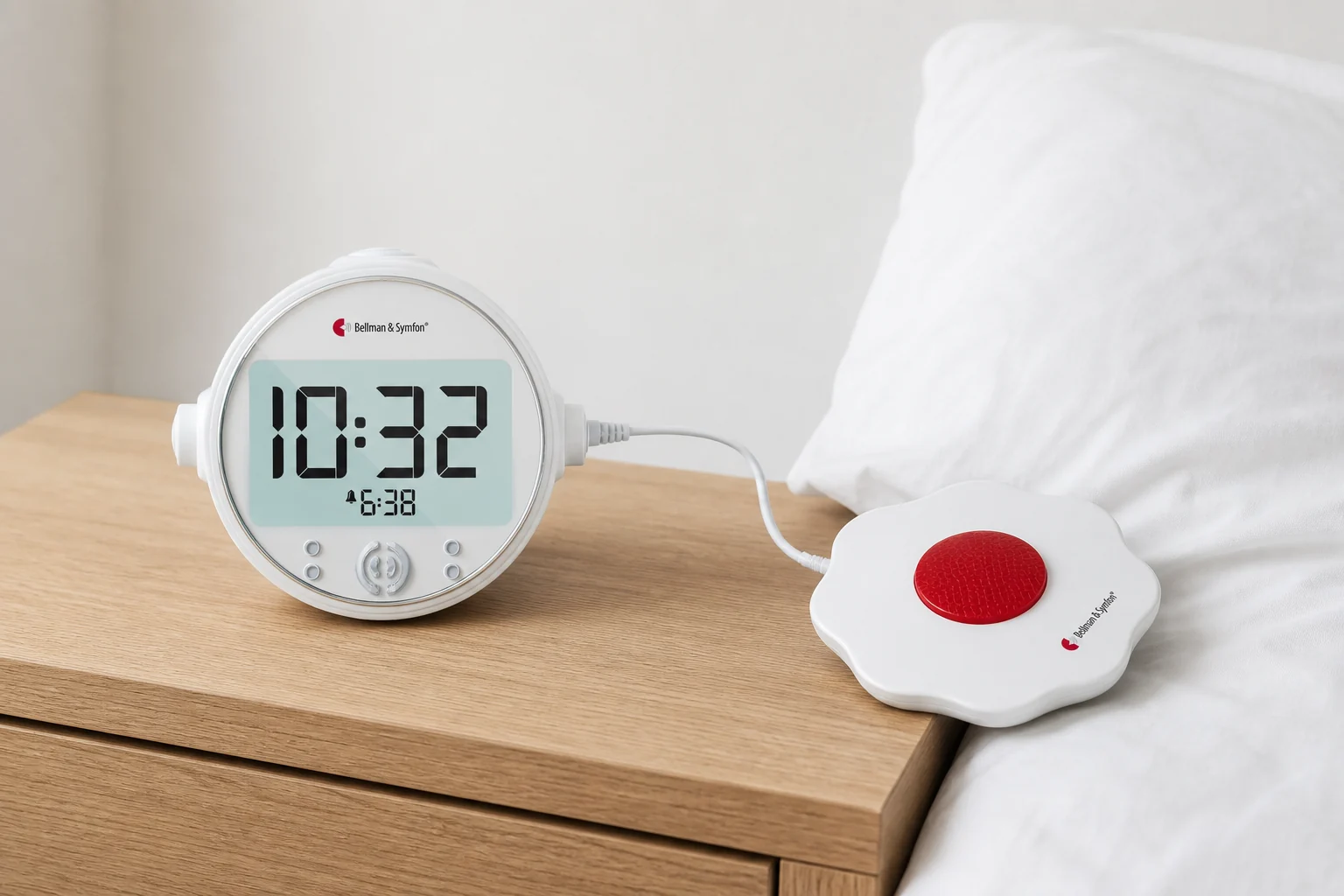
#1 · Compare for three distinct alert channels
Bellman Alarm Clock Pro BE1370
Bellman Pro provides the broader accessible setup, combining a strong shaker with flash and an optional audible channel.
Bellman combines an ascending multi-tone alarm, four flashing LEDs, and an included wired bed shaker. Its rechargeable backup batteries are specified to keep the clock, alarm, flash, and shaker working during an outage.
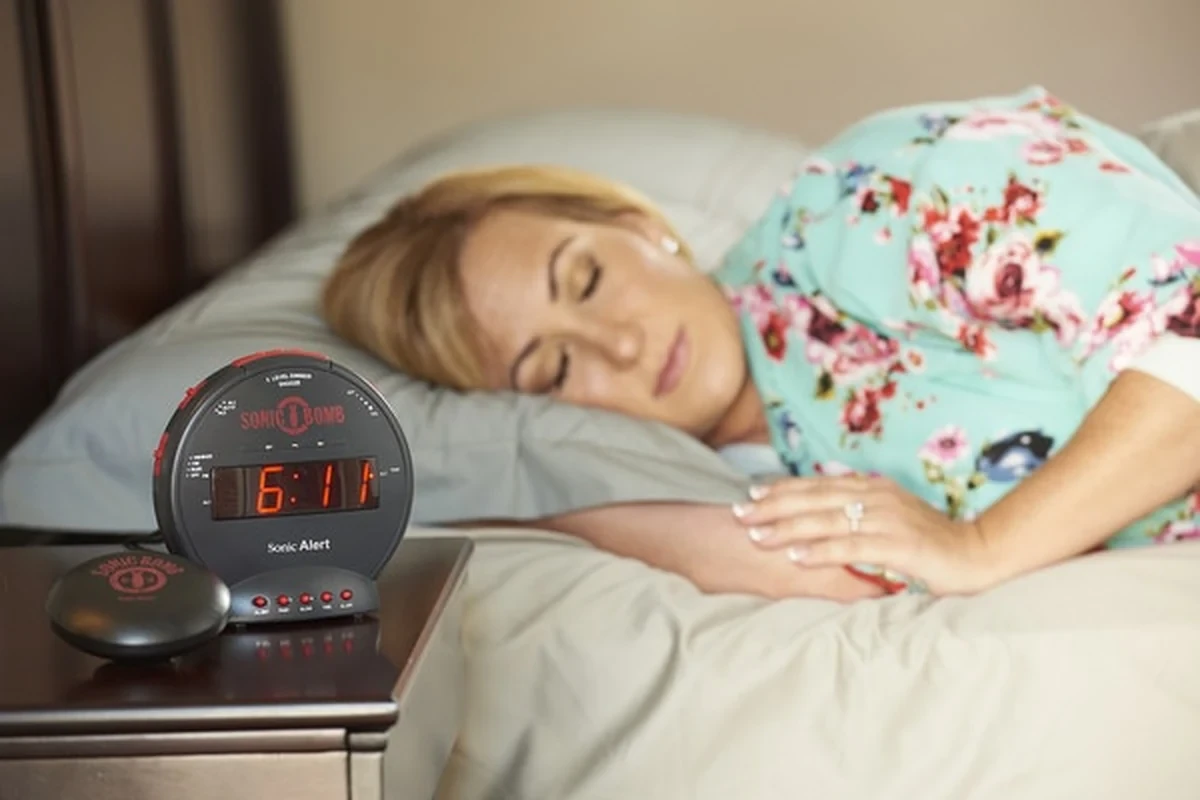
#2 · Compare for loud sound plus a bed shaker
Sonic Alert Sonic Bomb SBB500SS
Sonic Bomb adds a wired bed shaker to flashing lights and adjustable sound, which makes it the broader multi-sensory route.
The clock combines adjustable sound, flashing lights, dual alarms, and an included 12-volt bed shaker. The manufacturer lists a 113 dB maximum, so the useful question is how far below that maximum the sleeper can set it.
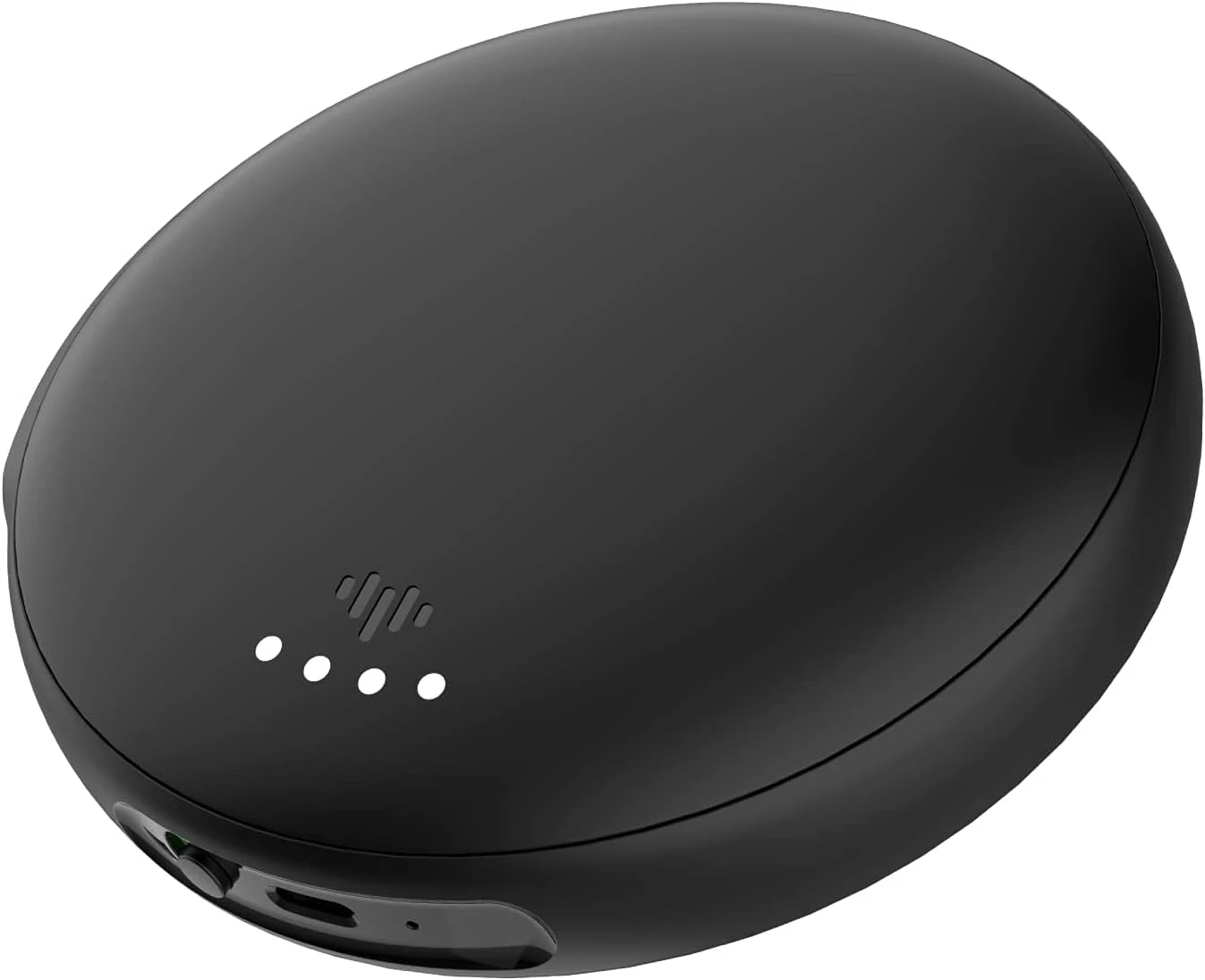
#3 · Compare for a portable app-configured shaker
iLuv SmartShaker 3 SMSHAKER3BK
SmartShaker 3 keeps the wake signal close to one sleeper and stores the alarm on the rechargeable puck after phone setup.
SmartShaker 3 stores phone-created vibration alarms in a compact rechargeable puck. Its current official app listing documents local alarm storage, five vibration levels, and up to 14 days per charge, making it a practical candidate for private waking and travel.
#4 · Compare for sound, vibration, or both
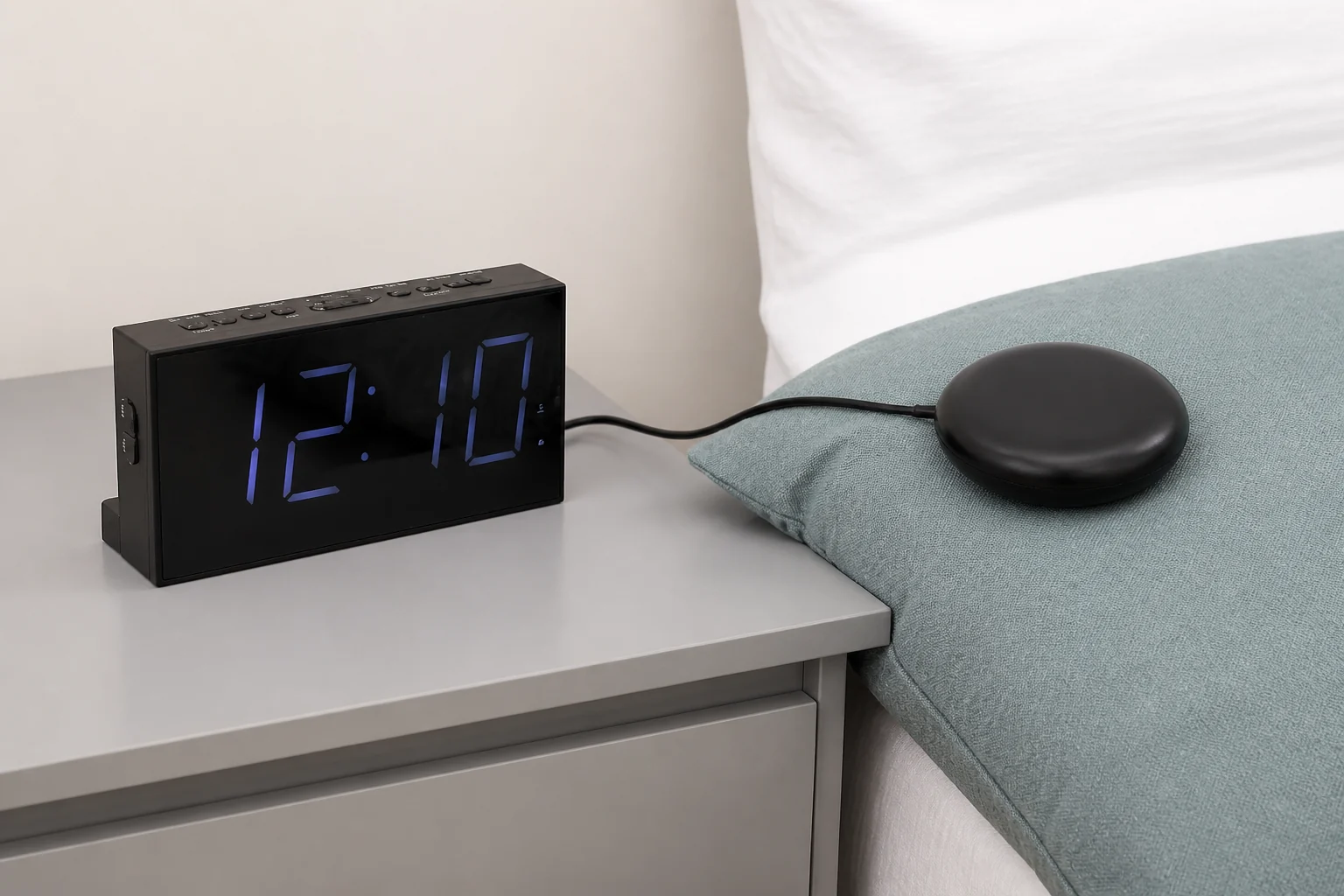
Roxicosly CR1001EM Bed Shaker Alarm Clock
Roxicosly provides a simpler wired-shaker route with a conventional display, but it does not add the Bellman Pro flash channel.
Roxicosly combines a wired bed shaker with an adjustable audible alarm, dual alarm times, nine-minute snooze, 24-hour Alarm Pause, large digits, and a USB charging output.
#5 · Compare for a rechargeable wireless shaker
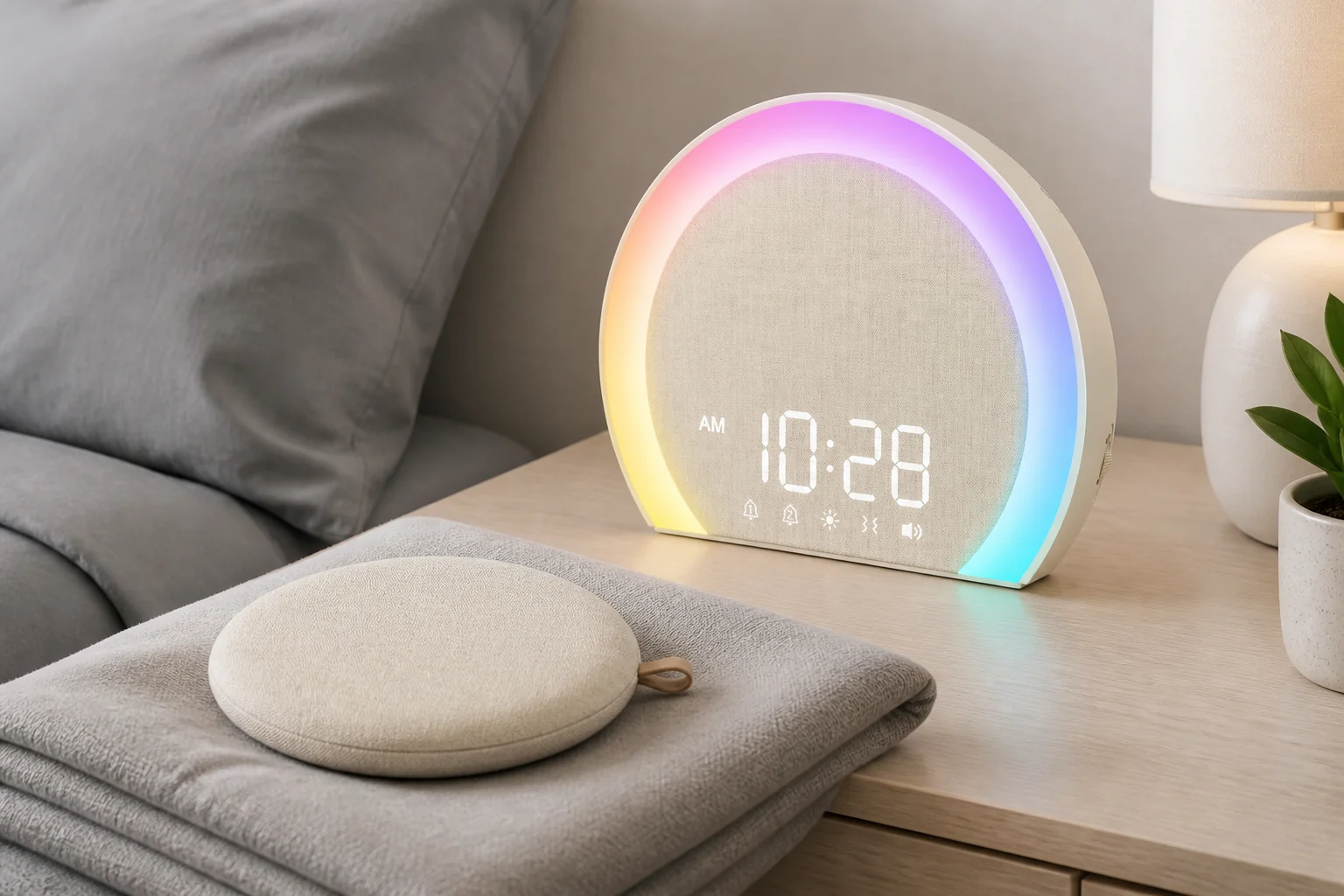
ANJANK Wireless Bed Shaker Alarm Clock
ANJANK removes the shaker cable and adds three vibration levels, but it does not replace a tested accessible system when flash or documented backup is required.
ANJANK pairs a plug-in dual-alarm clock with a separate rechargeable wireless shaker. The puck has three vibration levels, while the clock provides eight sounds, adjustable volume, display-off, a night light, and a USB-C phone output.
Additional option
Additional Portable Alarm Option
Compare for a portable silent alarm
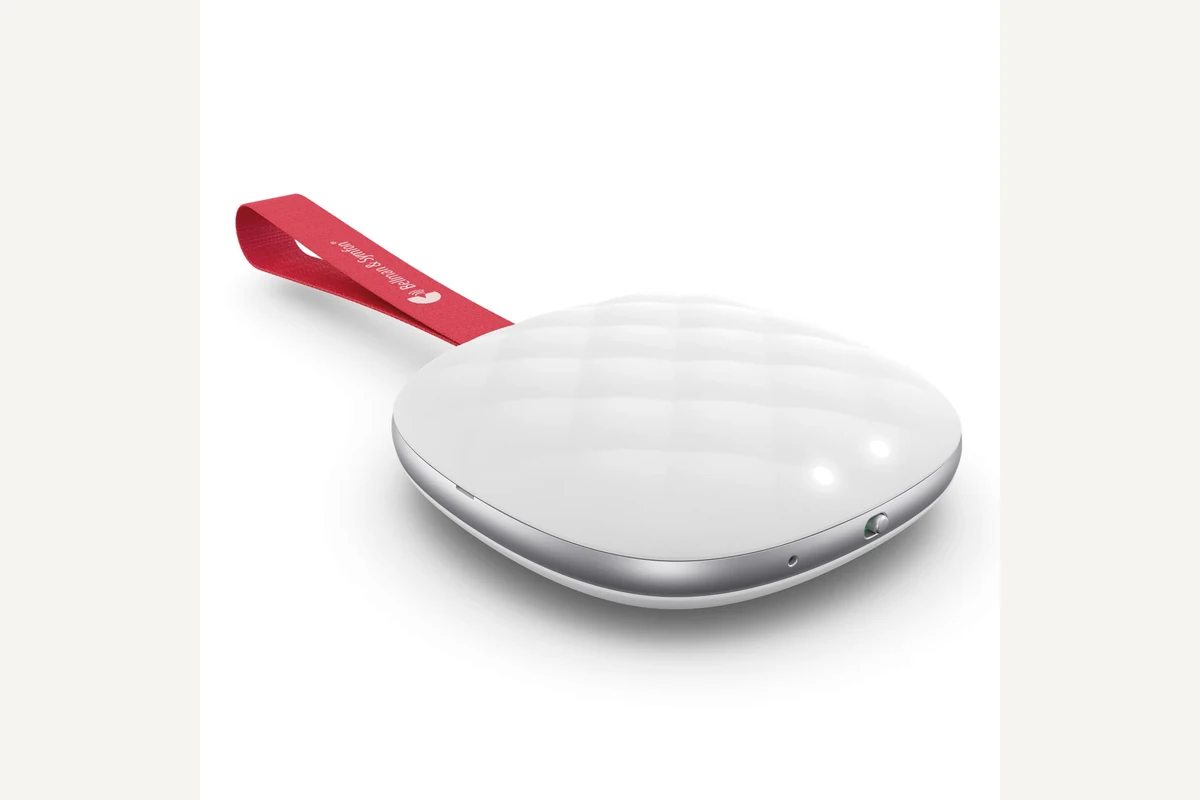
Bellman Vibio BE1221
Vibio is the compact tactile route when a personal shaker is preferable to adding sound throughout the room.
Vibio is a rechargeable Bluetooth bed shaker with adjustable vibration. Alarms are created in the app, then remembered by the device, so the phone does not have to remain connected at wake time.
Evidence trail