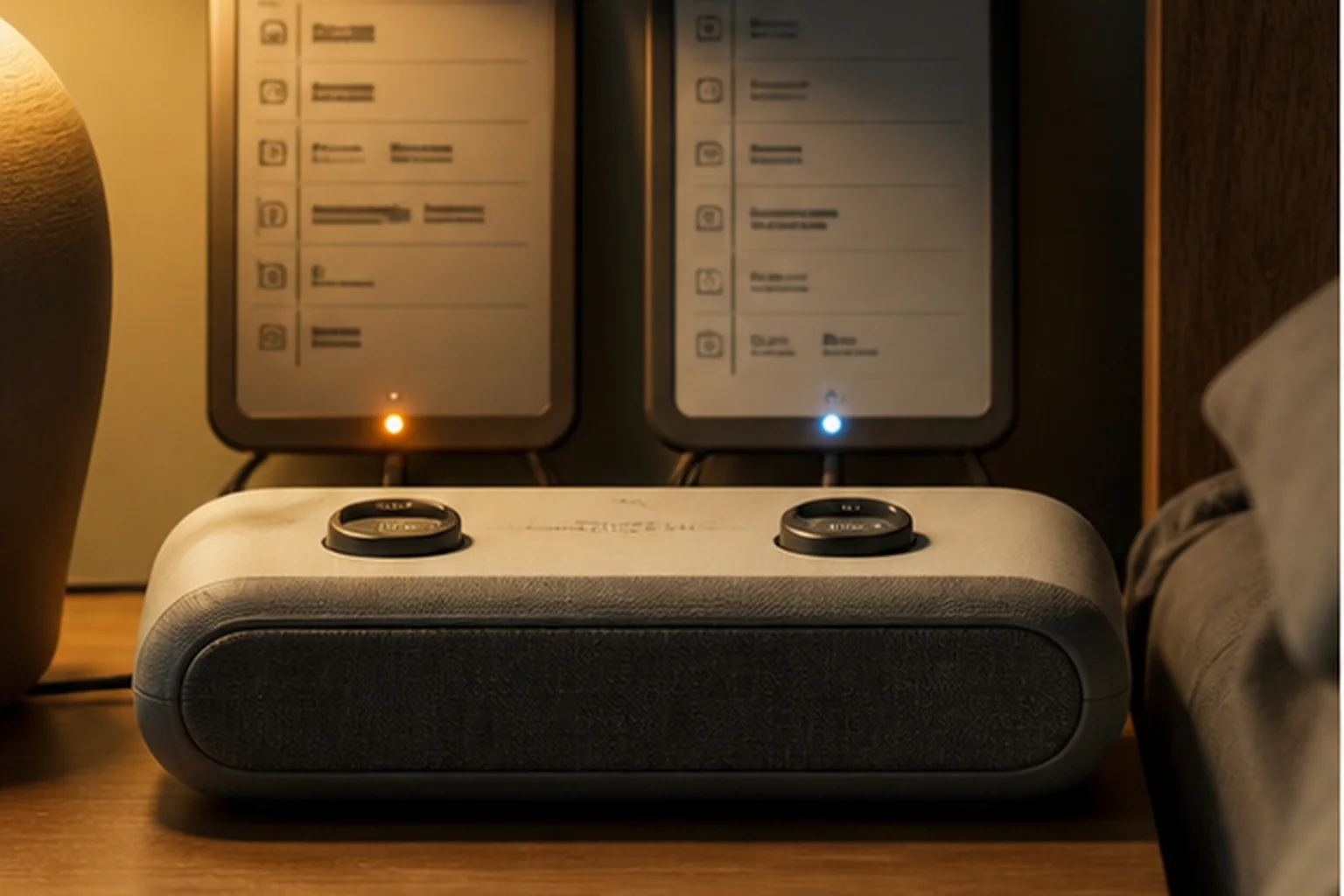
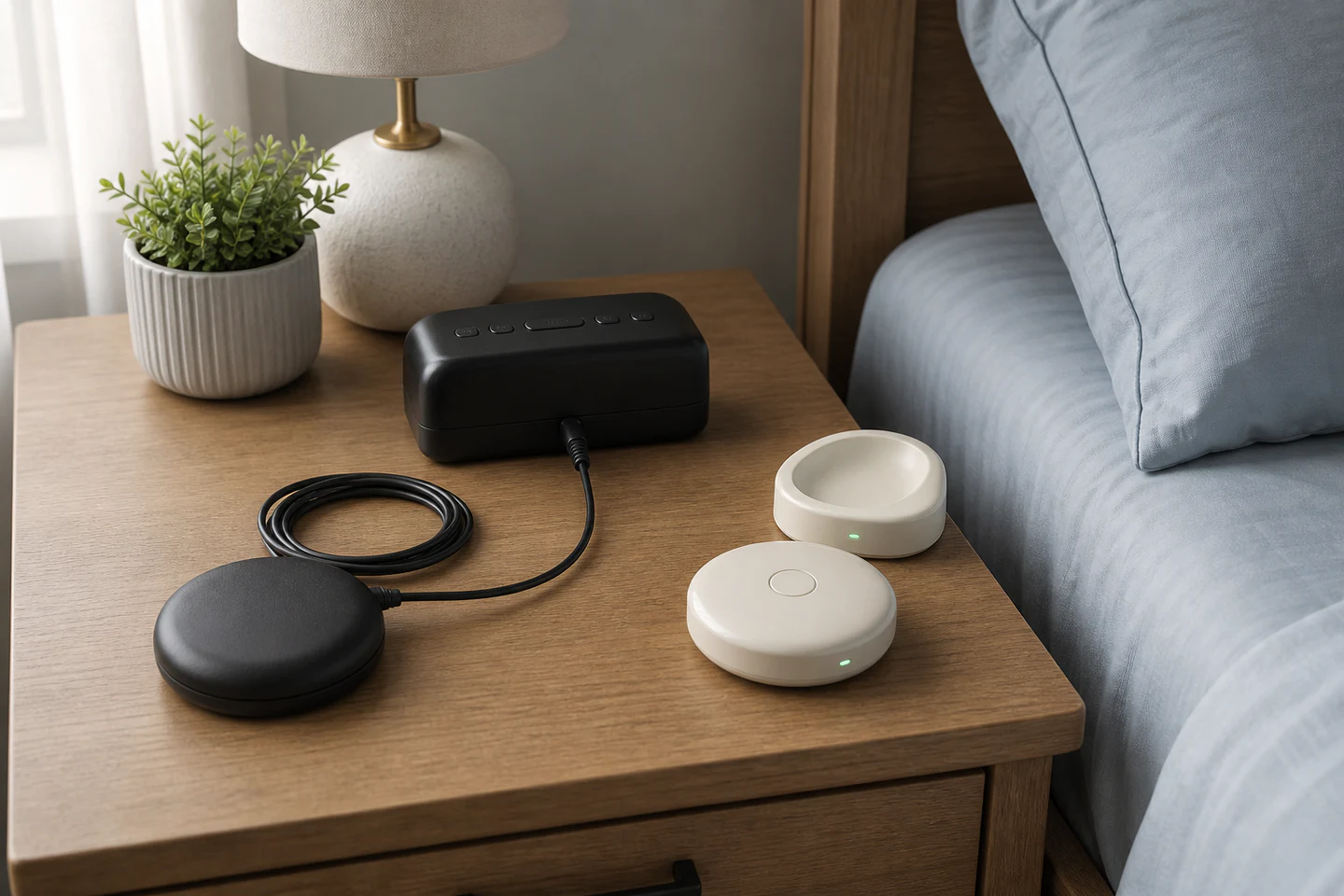
Shared-bedroom scenario
Alarm Clocks for Couples with Different Schedules
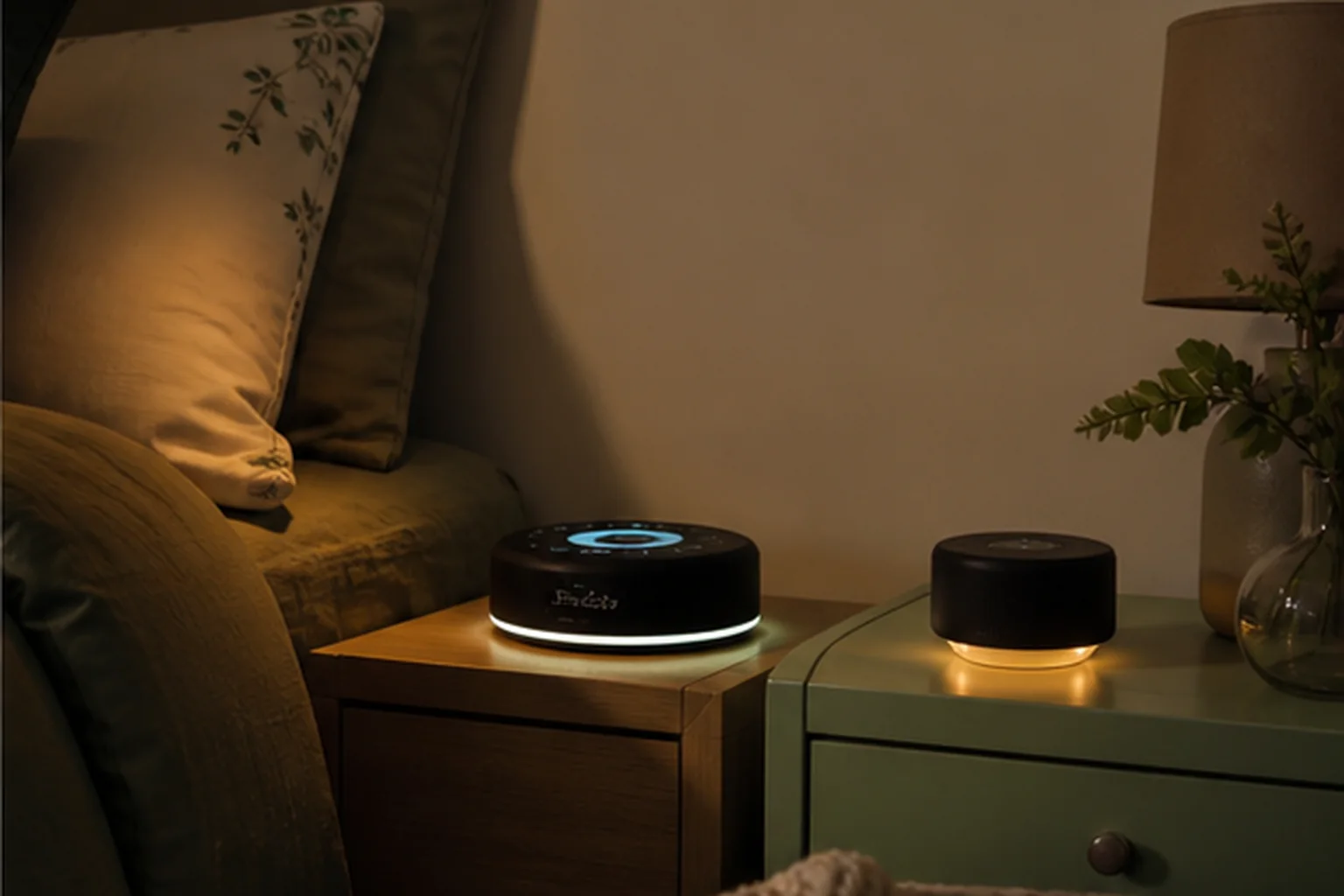
Two alarm times do not automatically protect the later sleeper. Signal spread and the shutoff path matter just as much as the schedule.
The decision first
How can one alarm wake one person without waking both?
Start with separate schedules, then choose how local each alert can be. A bed shaker can reduce room-wide sound. Sunrise light is still a room cue. A dual-alarm clock is useful only when both alarms can use the needed source and follow the right weekday or weekend pattern.
Nonnegotiable checks
The criteria that can change the answer
Independent schedules
Confirm both times and repeat rules can be set separately.
Signal locality
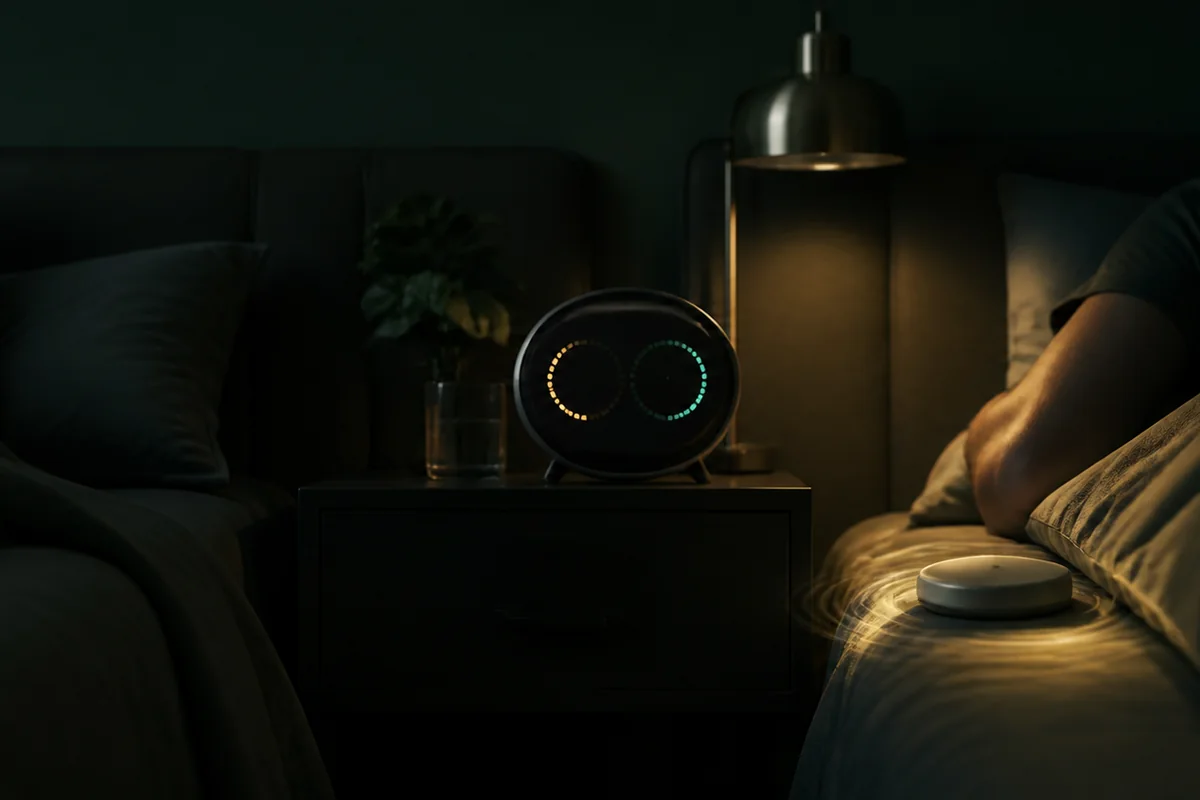
Vibration is more local than sound or room-filling light.
Shutoff speed
Distinct controls reduce fumbling while the partner is asleep.
Display light
A visible alarm indicator should not create constant glare.
What changes in practice
Compare the trade-offs, not the feature count
| Route | Decision value |
|---|---|
| Dual sound alarms | Simple, but both signals spread across the room. |
| Bed shaker | More local, with cable and placement checks. |
| Sunrise routine | Gentler for the early sleeper, but visible to both. |
| Two separate devices | Clear ownership, with more nightstand space and setup. |
Separate two requirements
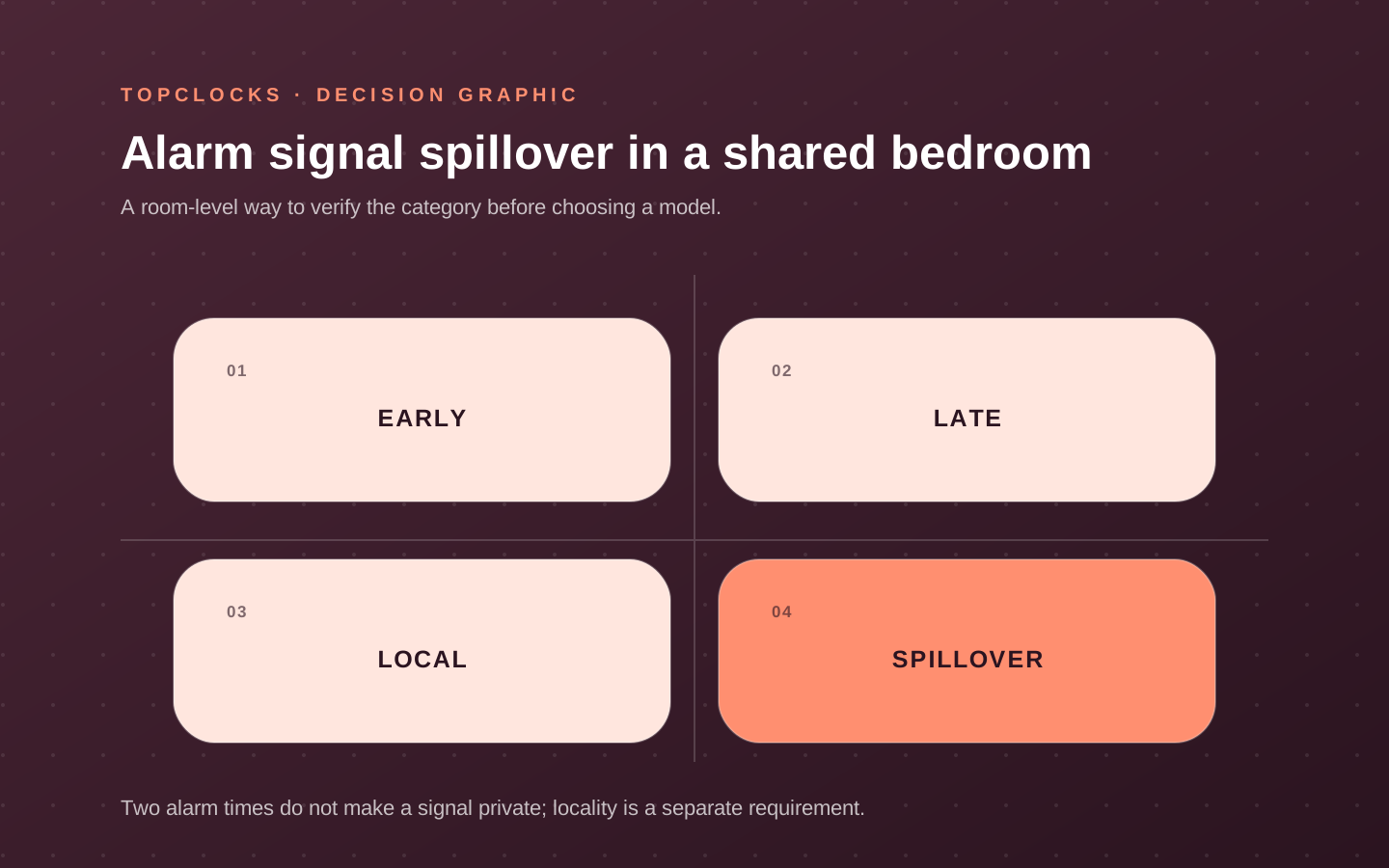
Two alarm times do not make either signal private
A dual alarm can store an early time and a later time on one device. Both may still use one room-wide speaker, one sunrise surface, one snooze button, and one power supply. Couples often need two different things: schedule independence and signal locality. The first prevents repeated reprogramming. The second limits how much the early cue reaches the later sleeper. A product must be evaluated on both axes. Compare the six models and their stop controls.
Sound usually spreads across the room and may travel through walls. Lower volume, a closer speaker, or a wearable can reduce spillover, provided the intended sleeper still receives the cue.
Sunrise light begins before wake time and can illuminate both sides of the bed. A bed shaker can localize vibration near one person and can transfer through a shared mattress. “Silent” describes the absence of alarm sound, not the absence of motor noise or bed movement.
Write separate requirements for each person: wake time and days, accessible signal, acceptable spillover, snooze behavior, and whether the other sleeper ever needs the same device. A single shared clock may fit two similar schedules. Two devices may fit different channels and provide more independent power, at the cost of space and maintenance.
- Confirm what Alarm 1 and Alarm 2 can set independently: days, source, volume, light, and on/off state.
- Test sound, light, and mattress vibration from both sides of the bed.
- Observe how long snooze or a missed stop continues to affect the room.
- Do not treat one shared clock as independent backup hardware.
Choose the physical boundary
Local vibration and wearables reduce spillover only after a real-bed test
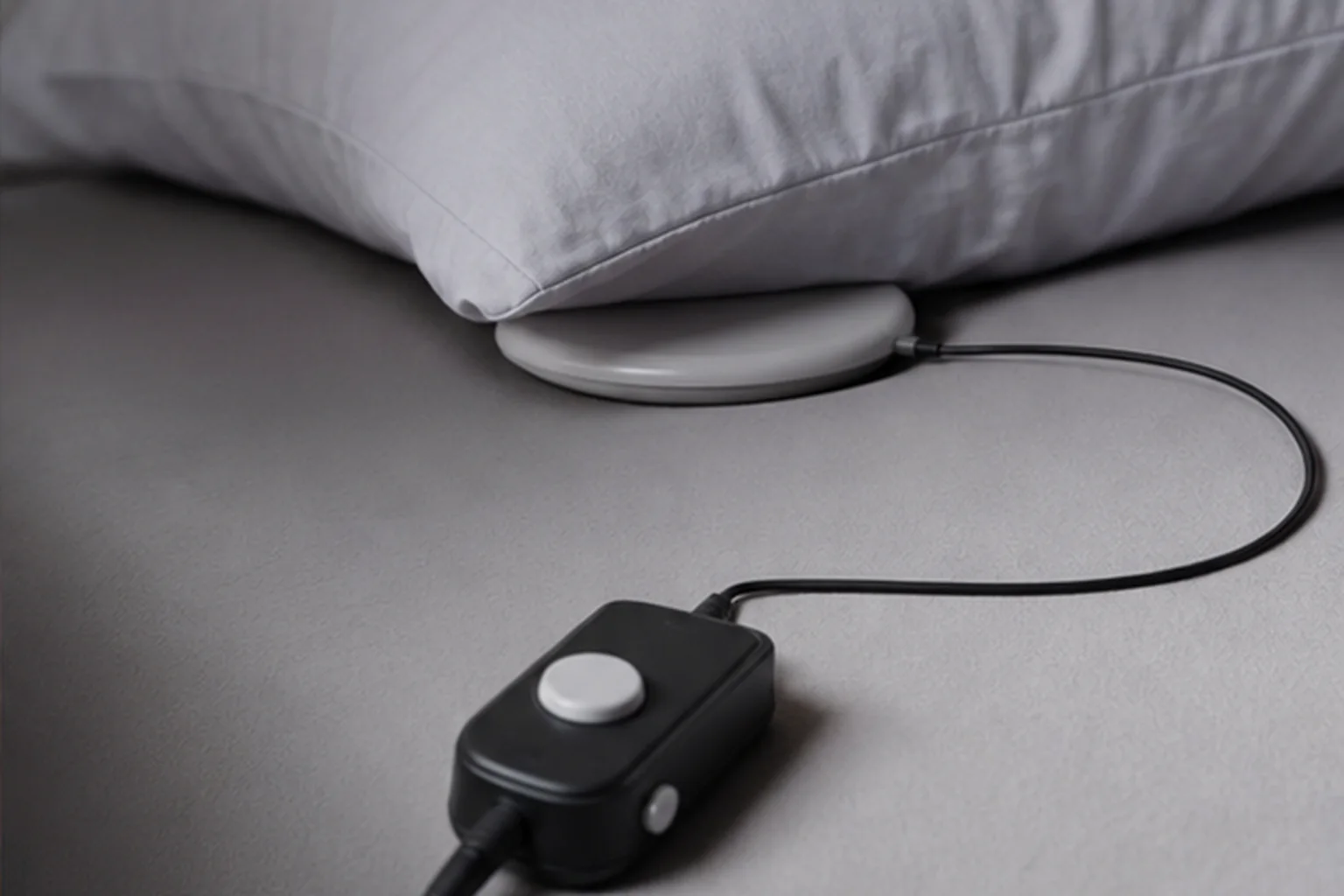
A bed shaker places the alert under a pillow, mattress, or near one side of the bed. That can reduce room-wide sound and still move the shared structure. Mattress type, frame, bedding, puck position, and intensity determine transfer. Test the intended placement with both partners present. Secure a wired shaker according to instructions and check cable reach. A portable shaker removes the cable and adds battery or charging maintenance.
A wearable keeps the tactile motor on the early sleeper’s body, often creating the narrowest physical signal. It can fail through low charge, poor contact, discomfort, short alarm duration, or removal during sleep. A phone or watch vibration may also depend on software and focus settings. Verify the exact alarm behavior rather than assuming every wearable haptic is designed to wake.
Light is not local simply because it is quiet. A sunrise clock can work for couples who share a wake time or tolerate a common lead-in. For different times, test direction, brightness, duration, and partner sensitivity. A final sound may still wake both. Separate lamps or wearable cues can be more local, while adding devices and power paths.
- Choose bed vibration when physical contact is reliable and transfer is acceptable.
- Choose wearable vibration when body contact and charging are more dependable than mattress transmission.
- Choose light when the room can accept a lead-in before the intended wake time.
- Keep a final backup proportional to the consequence and its impact on the later sleeper.
Design independence
One shared clock is simpler; two devices can separate controls and failures
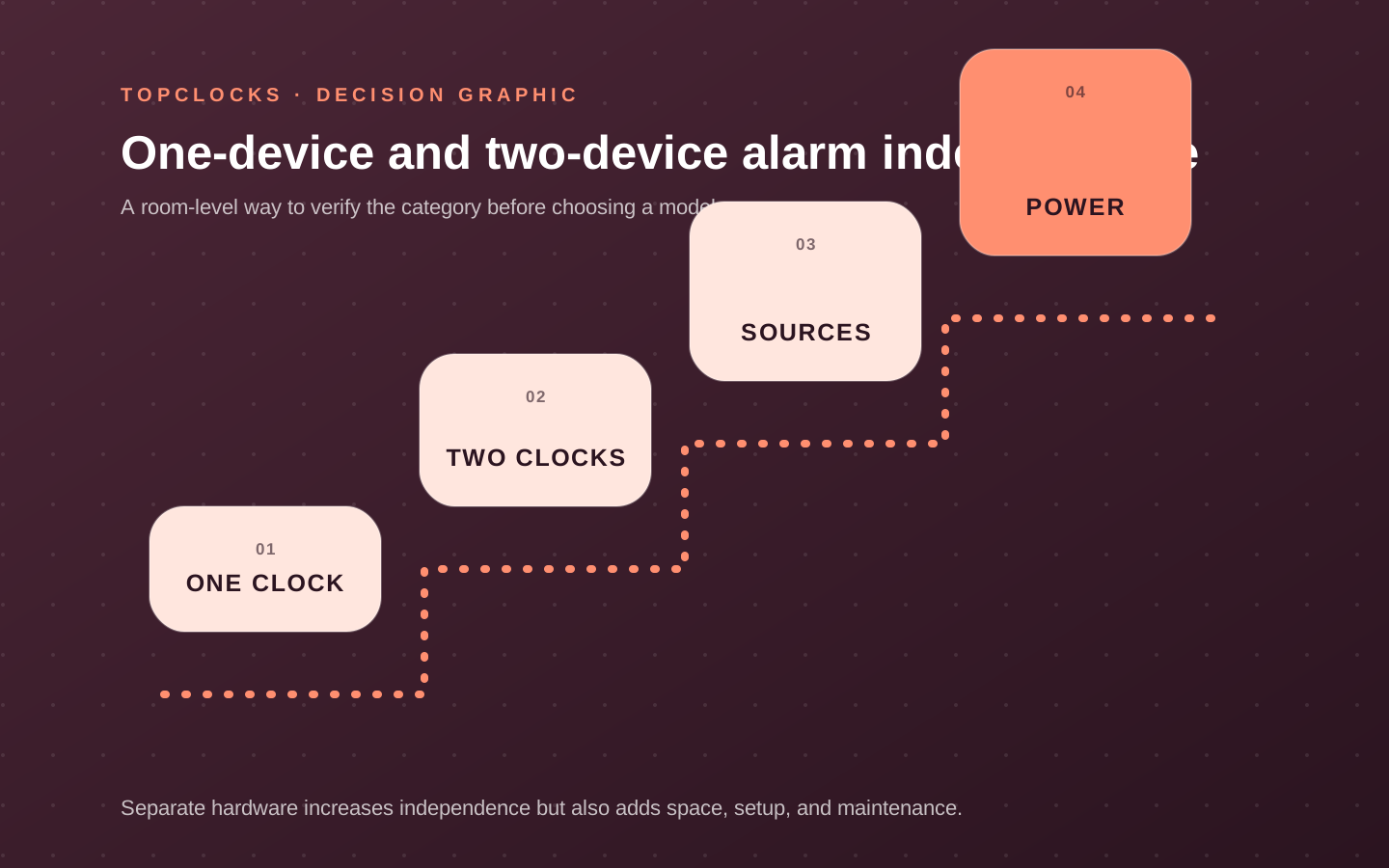
One dual-alarm clock saves space, uses one outlet, and keeps both schedules in one interface. It can be a strong fit when wake sources are similar and both partners understand the controls. The same integration creates a shared failure: one accidental power loss, reset, dimmer change, or stop action can affect both. Confirm whether stopping the first alarm changes the second and whether each active indicator remains visible.
Two devices provide separate schedules, controls, locations, and potentially power sources. One person can use vibration while the other uses sound, or one can use sunrise while the other retains a later dedicated alarm. The costs are more nightstand space, cables, charging, and opportunities for contradictory time or DST settings. Independence should be deliberate: placing both devices on one switched power strip may preserve a shared weak point.
A hybrid setup can use one shared clock for common mornings and a local device for schedule differences. Avoid leaving overlapping alarms active when the routine changes; cleanup is part of reliability. Shift work, travel, and weekends may justify temporary separate devices. Revisit the system rather than forcing one configuration to serve every schedule.
- Use one device when shared control and space outweigh the need for private signals.
- Use two when different channels, locations, or power paths are nonnegotiable.
- Document which alarm belongs to whom and which days it runs.
- Retest after schedule, room, mattress, device, or software changes.
Six documented model routes
Compare six alarm clocks for different wake times
Choose the signal first. Bellman Vibio is the tactile option to investigate when the early sleeper wants to avoid room-wide alarm sound. Sharp SPC100D suits two fixed wake times with shared audio. Consider the sunrise routines on Philips HF3520/60 and Hatch Restore 3 when early light is acceptable; Hatch also lets you disable the light for a sound-only alarm. Loftie's two-phase audio sequence is not a private alarm for each person. ANJANK's wireless puck needs an additional check: the exact listing does not establish a vibration-only mode.
These six candidates serve different jobs; this is not a best-to-worst ranking. The comparison uses published specifications and instructions, not a hands-on test. A blank in the documentation is not a confirmed feature.
| Model and full review | Schedule and physical cue | Stopping the early alarm: what is known | Before sharing one device |
|---|---|---|---|
| Sharp SPC100D | Two stored times, with AL1, AL2 or DUAL selection. Both use an audible room cue. | In DUAL, moving the general ALARM ON/OFF switch to OFF deactivates both alarms. | Do not assume automatic weekday/weekend switching. Check the supplied instructions: Sharp's SPC100D page links a manual labeled SPC100. |
| Loftie Clock | A two-phase sound sequence belongs to one wake event; it does not mean two private channels. The support guide also documents creating and enabling alarms separately. | The small circular top-right button stops an active alarm. To disable a saved alarm, select it in ALARMS and choose UNSET. | Check the current device settings. The product page lists a 3-, 6- or 9-minute second-stage delay, while the Alarms support article still describes nine minutes. |
| ANJANK Wireless Bed Shaker | The B0DNZ88MGF listing identifies KX213-Latte and documents two alarm times plus a rechargeable wireless puck. | The inspected listing does not establish a stop-current action that preserves the second alarm. | Confirm vibration-only operation in the exact supplied manual before buying for silent waking. The bedside clock needs mains power and has no battery backup. |
| Bellman Vibio BE1221 | Multiple app-managed alarms use one local vibration puck. Saved settings continue when the phone is off or disconnected. | The manual distinguishes one strap pull for snooze from two pulls for stop; alarm enable/disable is managed in the app. | One puck is one cue location, even with several saved alarms. Test vibration transfer through your mattress and keep the puck charged. |
| Philips SmartSleep HF3520/60 | Two app-free alarm times with sunrise light and a selected sound or FM radio. Light can reach both sleepers before either alarm time. | The specification sheet does not settle how stopping or overlapping profiles affects the later alarm. | Rehearse both times with the supplied instructions and check the second alarm indicator. “Time backup” is not proof that the light and sound run during a mains outage. |
| Hatch Restore 3 | Set repeat days in the app and choose light, sound or both. Shared light and sound are not private cues. | Hold the Big Button to stop the active alarm; a short press snoozes. The side toggle disables all alarms. | Leave the side toggle enabled for the later sleeper. If it is off, the app cannot re-enable alarms. A partner uses the same Hatch login, not a separate limited-permission profile. |
Which route fits your bedroom?
For an earlier tactile cue, compare Vibio with the ANJANK system only after resolving ANJANK's mute mode. The wired-versus-wireless bed-shaker comparison explains the difference between a bedside clock with a puck and a phone-configured portable shaker. Neither route guarantees that a shared mattress will stay still on the other side.
If shared sound is acceptable, compare Sharp's direct two-time controls with Loftie's audio sequence and setup requirements. For shared sunrise light, the Hatch-versus-Philips comparison covers connected routines versus app-free bedside controls. If you are choosing between a light-led routine and two-stage sound, the Hatch Restore 3 vs Loftie Clock comparison covers that choice. Keep a separate device for the later sleeper when independent controls or power are essential.
Use one short daytime rehearsal: arm both intended alarms, let the first run, stop it with the documented current-event control, then confirm the second remains enabled and actually runs. Do not use a global OFF control as a substitute. Repeat after changing the schedule or device settings. This checks the two-person sequence; it does not prove either person will wake reliably during sleep.
Model documentation checked September 6, 2026: ; ; ; ; ; ; ; ; ; ; .
Run a shared-room test. Each partner should lie in the normal position while the other person’s alarm runs. Test the lowest reliable sound or vibration, the actual sunrise lead-in, snooze, and stop. Confirm the next alarm remains armed. For a connected device, test saved behavior without the phone or network as documented. For high-consequence mornings, keep a separate backup that does not wake the room more than necessary.
Verify in the room
Measure how far each wake signal spreads
Two alarm times do not guarantee two private wake-ups. A shared speaker, sunrise lamp, mattress, stop control, or snooze sequence can still affect both people. Treat this as a selection experiment for alarm clocks for couples, not a claim that one model will work for every sleeper. The objective is to expose a mismatch while the clock can still be returned, moved, or reconfigured.
Test sound, light, and vibration from each sleeper’s normal side of the bed. Include the shared mattress, opposite-facing position, and the exact time gap between schedules. Keep the first run deliberately ordinary. Extreme settings can hide a placement problem, and a special one-night routine does not show whether the setup is maintainable on workdays, school days, weekends, and schedule changes.
A couples setup fails when one cue crosses the room or mattress, one person can stop the other’s alarm, or two saved times share the source, volume, days, or power state unexpectedly. Write the likely failure before running the test. That note prevents a bright display, attractive sound library, charging pad, or app from receiving credit for a wake path it cannot protect.
Record who noticed each cue, how early spillover began, whether the second alarm stayed armed, who could reach the controls, and how snooze changed the other schedule. A simple dated log is enough. Avoid converting one successful morning into a universal result; repeat the check after changing bedding, furniture, power, software, room, or schedule because the signal path may have changed.
- Two schedule times: write the observed state, not a yes-or-no impression. Add the condition that produced it and the next check if the result was unclear.
- Source independence: write the observed state, not a yes-or-no impression. Add the condition that produced it and the next check if the result was unclear.
- Volume independence: write the observed state, not a yes-or-no impression. Add the condition that produced it and the next check if the result was unclear.
- Light spillover: write the observed state, not a yes-or-no impression. Add the condition that produced it and the next check if the result was unclear.
- Mattress spillover: write the observed state, not a yes-or-no impression. Add the condition that produced it and the next check if the result was unclear.
- Control ownership: write the observed state, not a yes-or-no impression. Add the condition that produced it and the next check if the result was unclear.
A couples alarm passes when schedule independence and signal locality meet the household’s actual tolerance. Reject one-device convenience when two separate devices provide clearer controls, power, or cue boundaries for the pair. If the result is mixed, do not average it into a score. Preserve the unresolved condition and compare only models that give you a direct way to verify it.
When reading product pages for alarm clocks for couples, translate each promising label back into an observable state. “Reliable” should identify the cue that survives the expected power and dependency conditions. “Easy to use” should identify who sets the alarm, in what light, and how the active state is confirmed. “Best” should disappear unless the scenario and disqualifiers are stated beside it.
Close the hidden gaps
Questions that settle a choice about alarm clocks for couples
For alarm clocks for couples, these questions close the gaps left by retailer filters and broad “best alarm” lists. Each answer is a boundary for the shortlist, not a promise about an untested model.
What should be tested before buying alarm clocks for couples?
Test sound, light, and vibration from each sleeper’s normal side of the bed. Include the shared mattress, opposite-facing position, and the exact time gap between schedules. Use the exact device revision and current manual when a control, accessory, app, or backup behavior affects the result.
Which failure should be ruled out first?
A couples setup fails when one cue crosses the room or mattress, one person can stop the other’s alarm, or two saved times share the source, volume, days, or power state unexpectedly. Test that failure first, while the consequences are low, instead of increasing every setting at once.
How many checks make the result dependable?
Within this review of alarm clocks for couples, one successful check confirms that the setup can work; it does not show that it is robust. Repeat it on ordinary mornings and after any change that affects the signal, power, placement, schedule, or stop action. High-consequence mornings deserve an independently tested backup.
Can specifications settle the choice?
Specifications and manuals can narrow the shortlist for alarm clocks for couples by establishing intended controls, compatibility, power requirements, and operating states. They cannot establish what one sleeper will hear, see, or feel through a particular room and bed. Keep documented facts and room observations separate.
When should a candidate for alarm clocks for couples leave the shortlist?
Reject one-device convenience when two separate devices provide clearer controls, power, or cue boundaries for the pair. A disqualifier should remove the model before price, design, reviews, or optional content are compared.
What does a passing result look like?
A couples alarm passes when schedule independence and signal locality meet the household’s actual tolerance. The result should be visible in the log and repeatable without a special workaround that the household is unlikely to maintain.
Finish the decision about alarm clocks for couples by writing one sentence: “This setup should wake this person, in this room, through this signal, under these power conditions, and it will be checked this way.” If any blank remains, the page has identified the next research task rather than pretending the purchase is settled.
Before relying on it
Run the complete alarm path
A product page can confirm features. Only a real setup check confirms that the selected signal, placement, controls, and power path work together in the room.
- Set both schedules for a full week.
- Verify each alarm source.
- Test the snooze and stop controls.
- Ask whether the later sleeper notices light before sound.
Role-based product shortlist
Models worth comparing for this decision
These are desk-researched candidates, not a claim that one clock wins for everyone. Each card explains the scenario it fits, the limitation to verify, and the primary source used for the factual details.
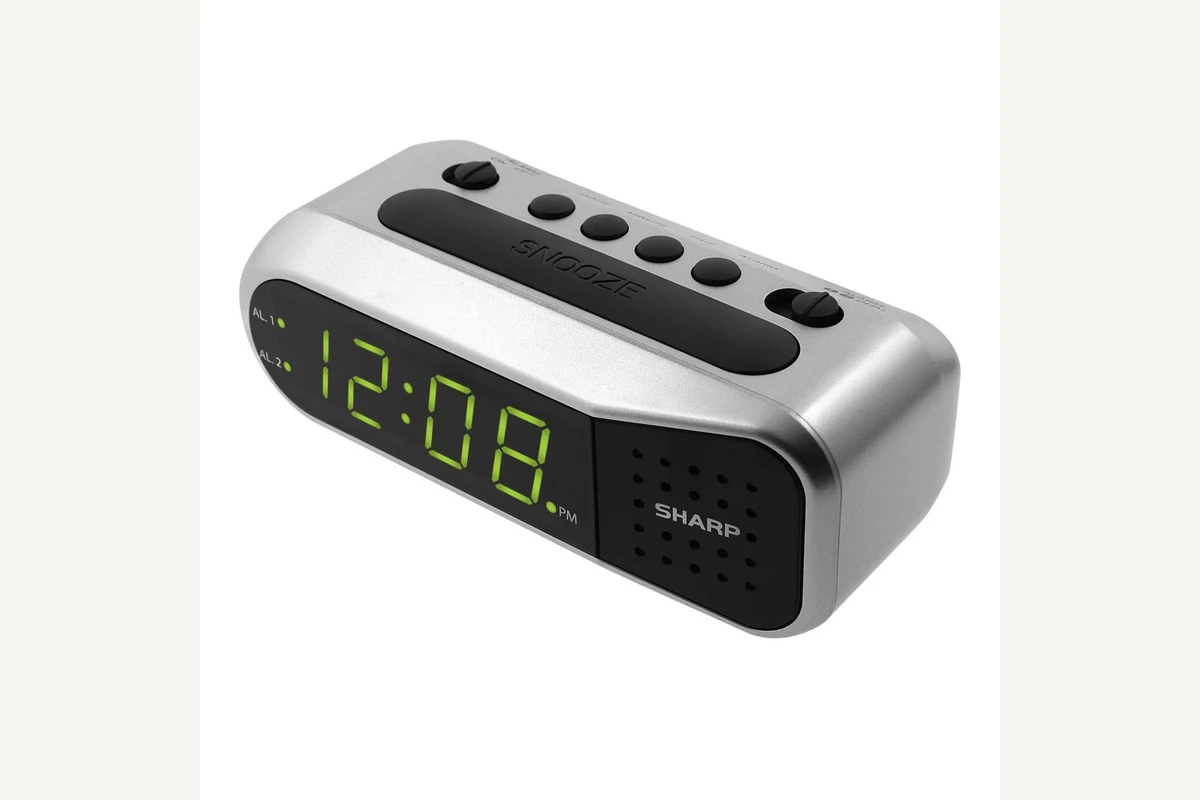
Compare for two plainly separated alarm times
Sharp SPC100D
SPC100D is the simplest two-time option when both sleepers need separate alarm times but can share one audible alarm style.
SPC100D is a straightforward dual-alarm clock with an ascending beep, a green 0.7-inch LED display, nine-minute snooze, and battery backup.
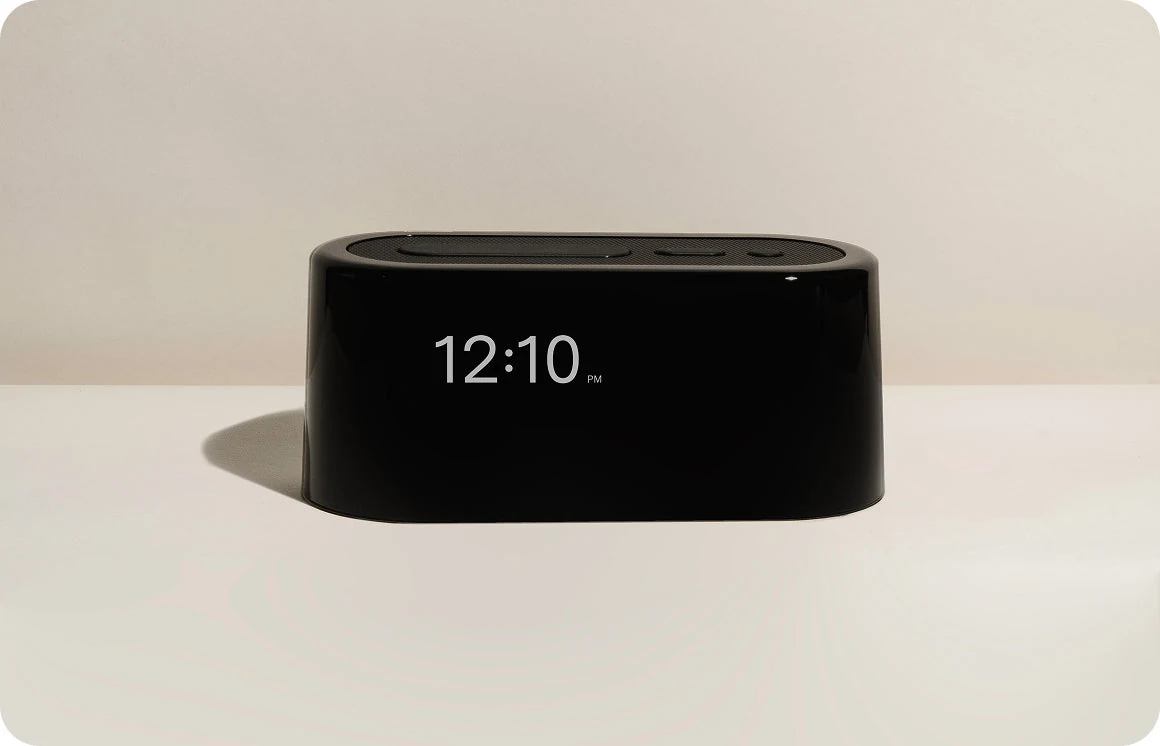
Compare for a two-phase audio alarm
Loftie Clock
Loftie uses a two-phase audio sequence and Blackout mode, useful when both sleepers accept a shared sound but want fewer glowing controls.
Loftie separates waking into a short opening signal and a second alarm several minutes later, while Blackout mode and red night light support a phone-outside-the-bedroom routine.
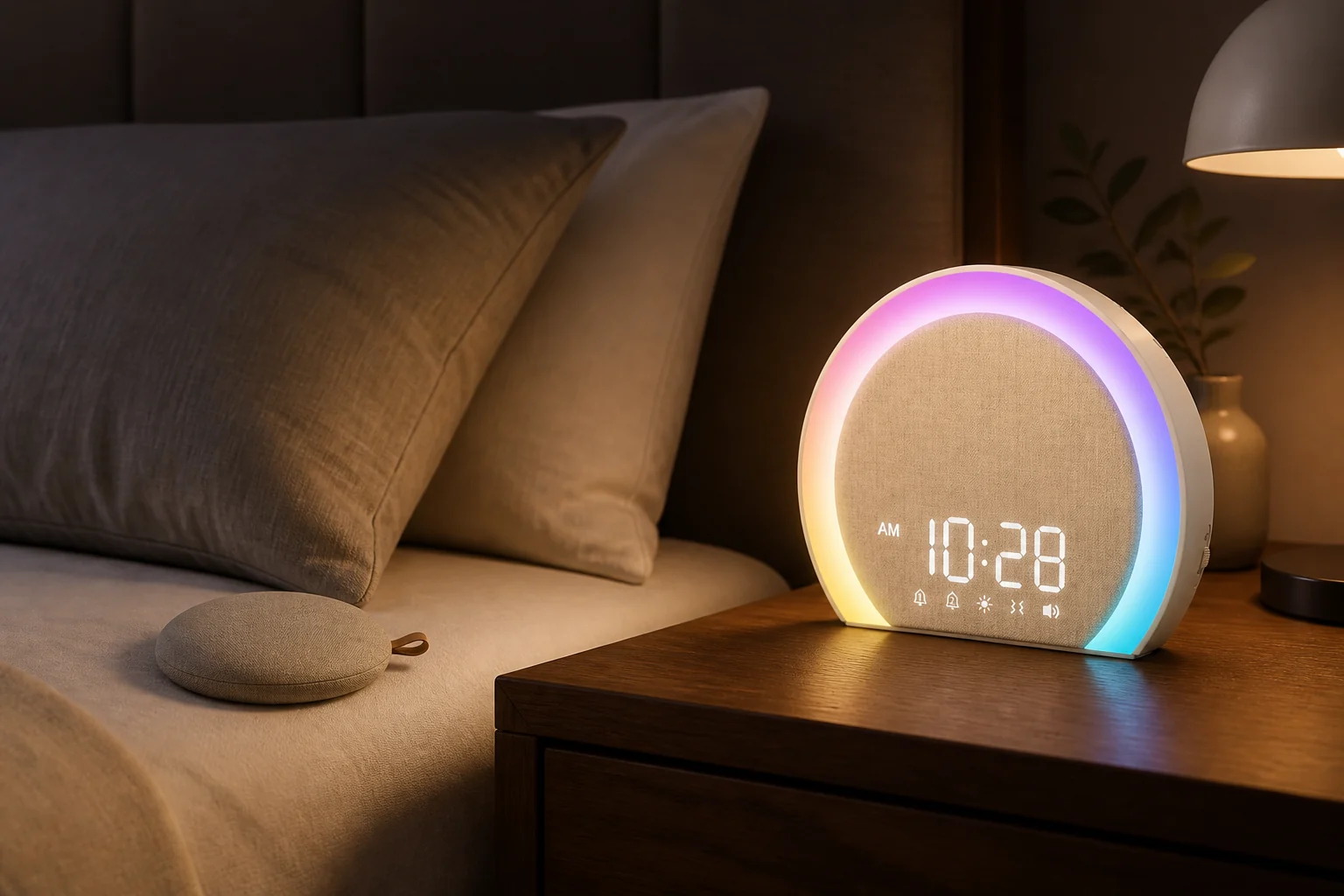
Compare for a rechargeable wireless shaker
ANJANK Wireless Bed Shaker Alarm Clock
ANJANK combines two alarm times with a movable wireless shaker, useful when one sleeper needs a more local signal and can maintain the puck charge.
ANJANK pairs a plug-in dual-alarm clock with a separate rechargeable wireless shaker. The puck has three vibration levels, while the clock provides eight sounds, adjustable volume, display-off, a night light, and a USB-C phone output.
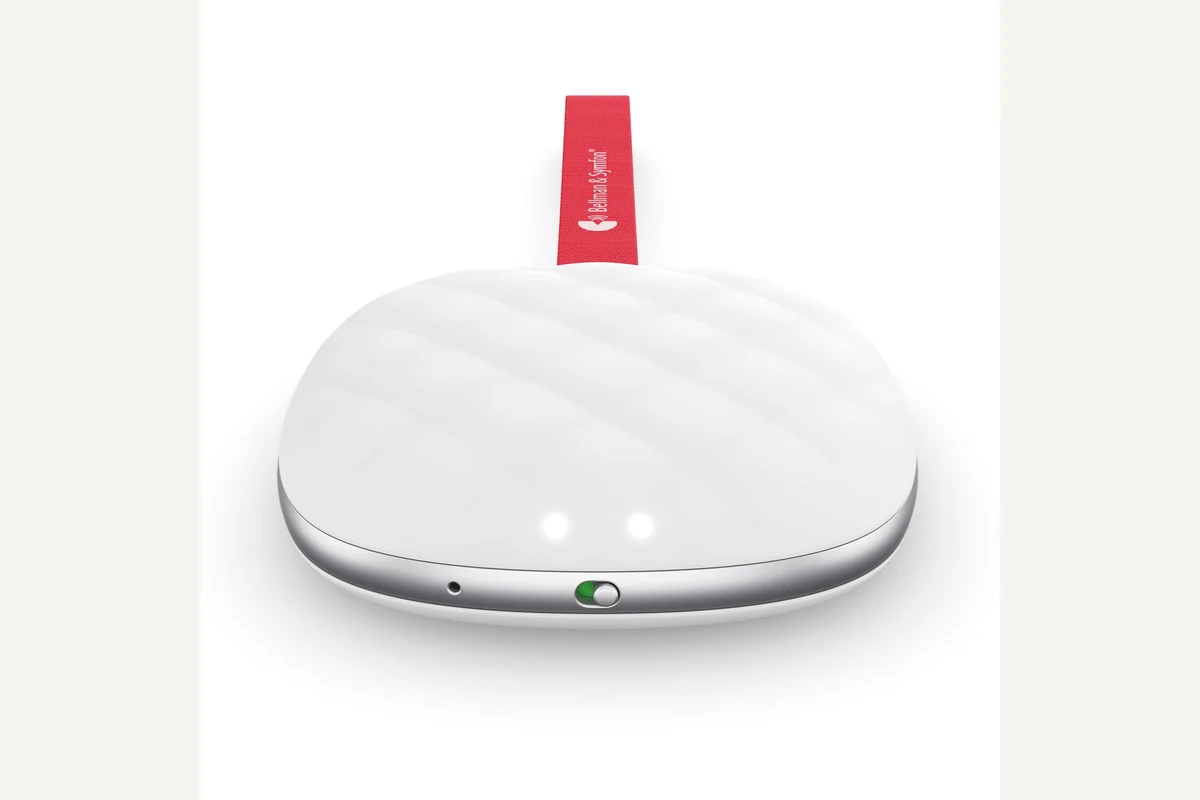
Compare for a portable silent alarm
Bellman Vibio BE1221
Vibio localizes the wake signal near one sleeper, reducing the need to raise room-wide alarm volume.
Vibio is a rechargeable Bluetooth bed shaker with adjustable vibration. Alarms are created in the app, then remembered by the device, so the phone does not have to remain connected at wake time.
Compare for a self-contained sunrise alarm
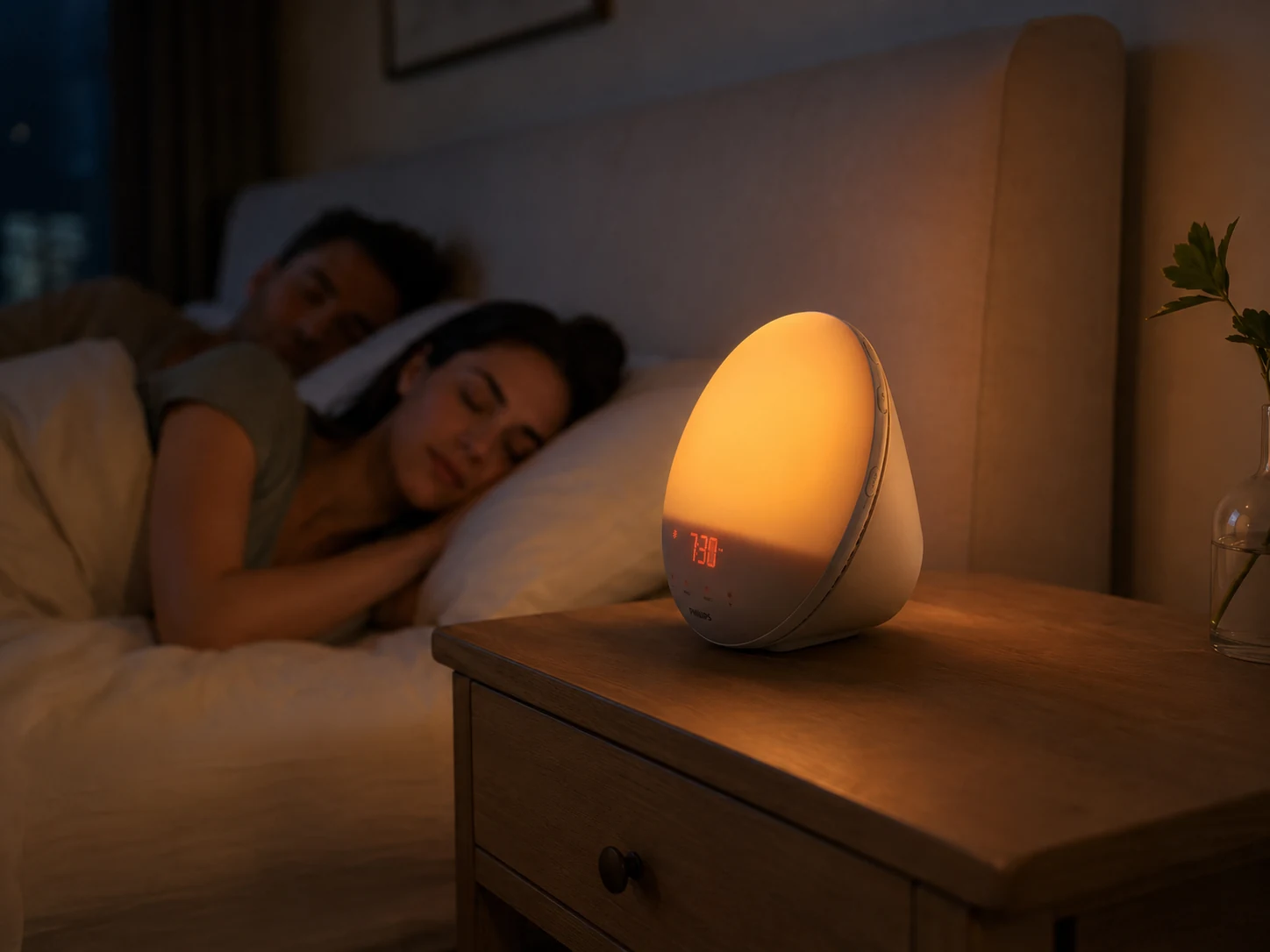
Philips SmartSleep HF3520/60
HF3520/60 supports two alarm profiles, but both light reach and final sound can still affect the other side of the bed.
HF3520/60 provides an adjustable 20-, 25-, 30-, 35-, or 40-minute sunrise simulation, two alarm profiles, natural wake sounds, FM radio, tap snooze, and bedside controls without requiring an app or subscription. The default sunrise duration is 30 minutes.
Compare for app-built light and sound routines
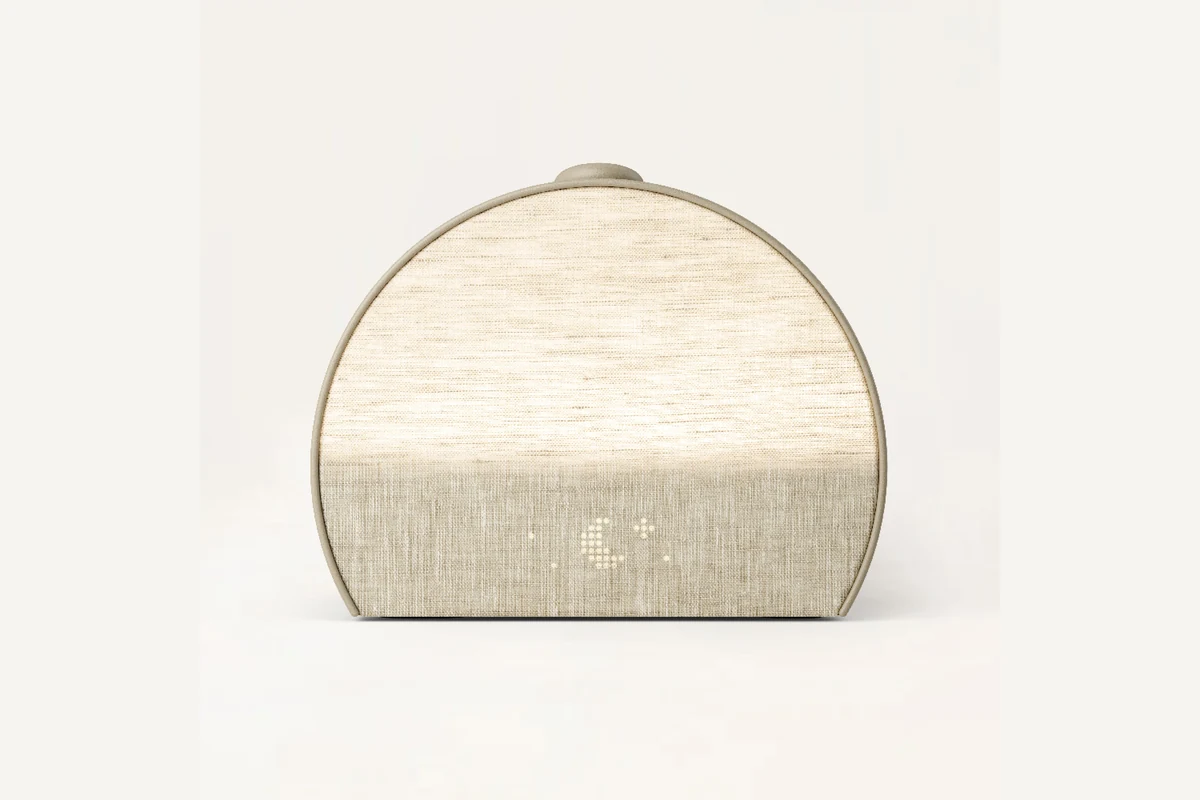
Hatch Restore 3
Restore 3 offers flexible routines, yet a shared sunrise glow remains a room-level signal rather than a private one.
Restore 3 combines sunrise light, sound routines, and more direct device controls than earlier Restore models. A phone is still required for setup and customization, while core routines can be used from the clock afterward.
Evidence trail