Commercial depth
Analog Alarm Clocks: Simple Controls, Real Night Trade-Offs
Analog clocks remove menus and app setup, but the alarm-time scale, movement sound, and hand visibility deserve a hands-on check.
The decision first
Is one physical alarm and one battery enough?
Direct controls and battery operation are the case for an analog alarm. Inspect how precisely the alarm hand can be set, whether the movement is truly quiet in the intended room, and how the hands are read at night. A backlight or luminous hand solves a different problem than the alarm itself.
If you are still weighing a dial against a digital display, compare analog and digital alarm clocks by alarm setting, night visibility and power behavior.
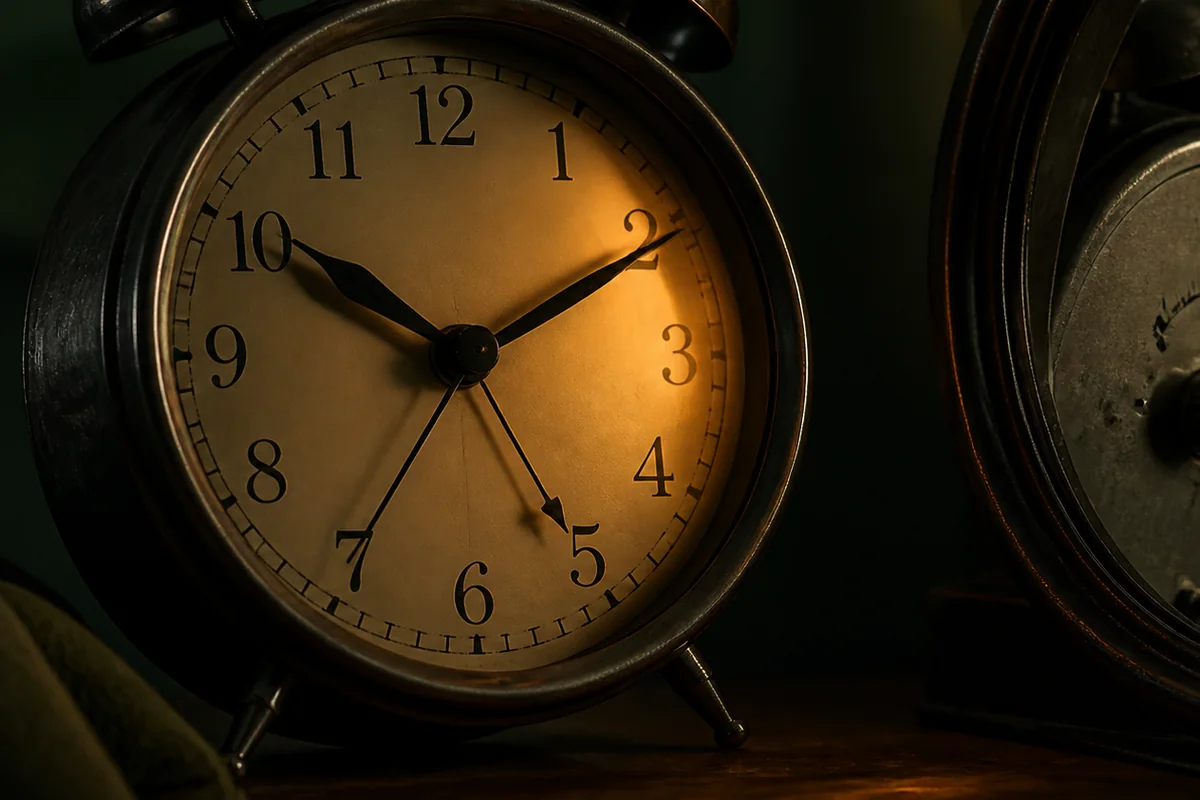
Nonnegotiable checks
The criteria that can change the answer
Alarm scale
A small dial may not support minute-level setting.
Movement sound
Sweep and tick behavior should be checked in a quiet room.
Night reading
Luminous hands, a button light, and constant glow have different effects.
Battery access
Check cell type, compartment closure, and low-power signs.
What changes in practice
Compare the trade-offs, not the feature count
| Route | Decision value |
|---|---|
| Mechanical simplicity | Fewer menus, with less schedule flexibility. |
| Battery operation | Works away from an outlet, with maintenance responsibility. |
| Compact dial | Small footprint, less precise alarm setting. |
| Larger case | Clearer controls, more nightstand space. |
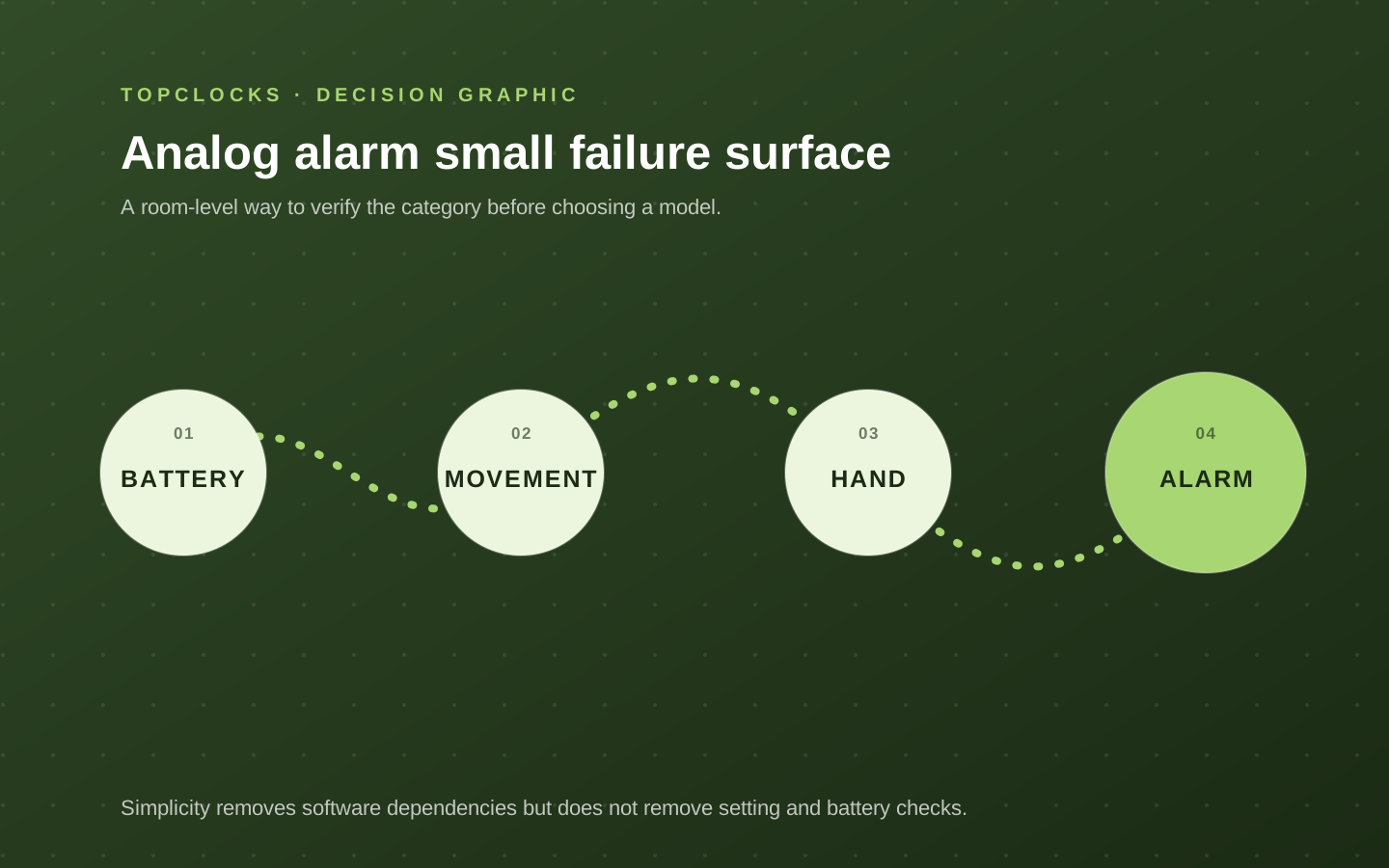
Reduce the failure surface
One battery and physical controls remove dependencies, not verification
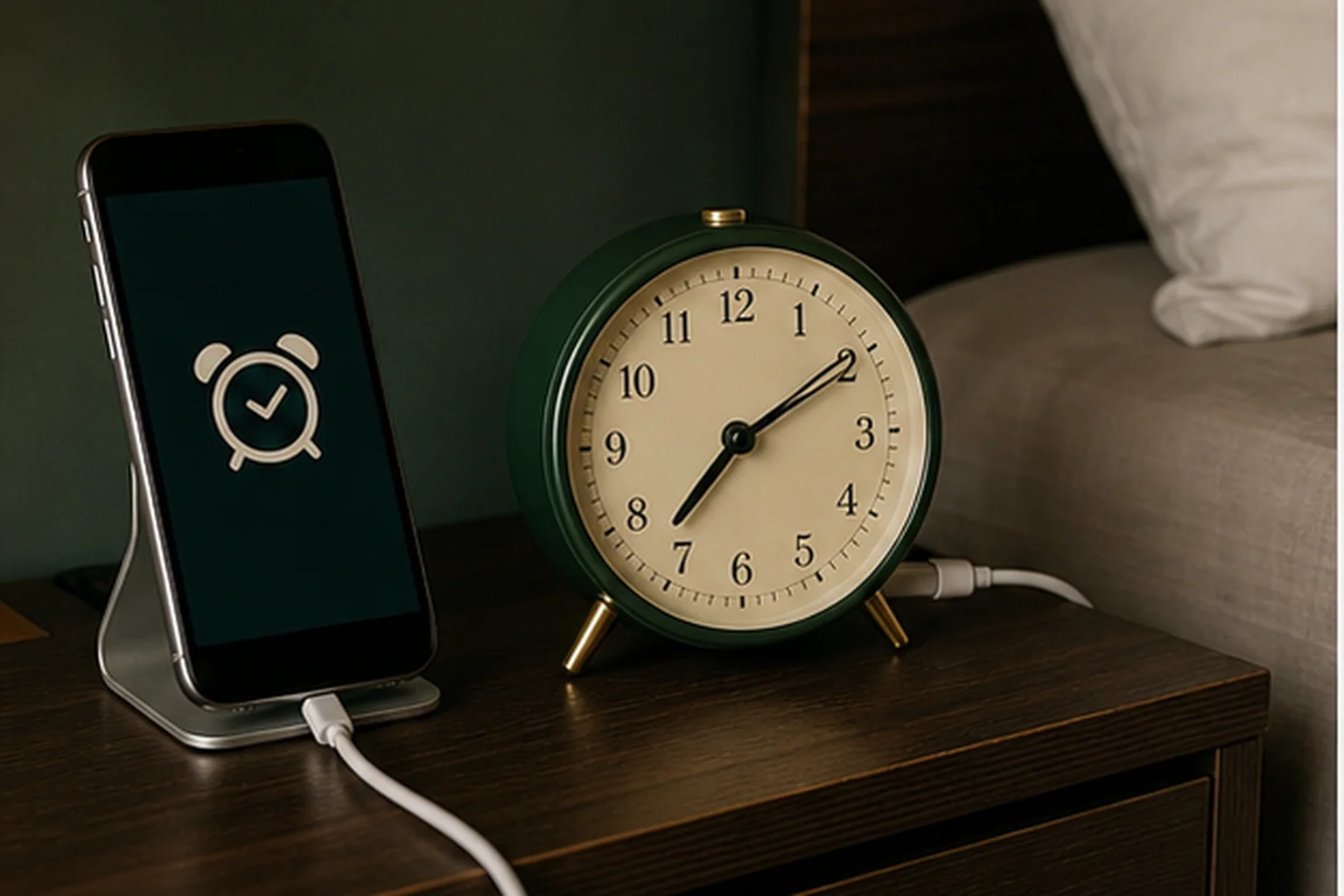
An analog alarm clock can operate without an outlet, app, account, Wi-Fi, software update, or illuminated display. That smaller dependency surface is the strongest reason to choose it. It does not make the clock infallible. The battery can weaken, the alarm switch can be left off, the alarm hand can be set imprecisely, and rear controls can be difficult to distinguish in darkness. Simplicity is useful because the remaining states are fewer and visible—not because they disappear.
Trace the mechanism as a short chain: battery powers the movement, hands show time, an alarm hand marks an approximate trigger, a switch arms the alarm, and a buzzer or bell sounds. Some clocks add a snooze/light button, crescendo beep, luminous tips, silent sweep movement, or radio-controlled time correction. Each addition solves a specific friction while preserving mostly on-device operation.
Choose analog when a single daily alarm, battery power, physical setup, and screen-free darkness fit the routine. It is less suitable when exact minute scheduling, multiple day patterns, two independent alarms, visible alarm confirmation, or rapidly changing schedules are nonnegotiable. The correct comparison is not old versus modern; it is a small state space versus richer control.
- Check battery type, compartment access, and a routine for replacement.
- Identify alarm on/off, time set, and alarm set by touch before using the clock in darkness.
- Confirm whether the movement is described as ticking, quiet tick, sweep, or silent.
- Test the alarm hand’s practical timing window rather than expecting digital precision.
Read without a display
Dial contrast, luminous details, and a light button solve different night jobs
An unlit analog dial supports a dark room but may not provide glanceable time. Luminous-tipped hands can help after exposure to light and may fade through the night. A press-to-light function makes the dial readable on demand and adds a button, light source, and battery load. High-contrast hands and markers help in daylight and do not guarantee legibility from the pillow. Choose the method based on whether constant time visibility or darkness is the priority.
Measure the dial at the actual distance. A compact travel clock may be easy to pack and difficult to read across a nightstand. A larger bedside model can improve visibility and use more space. Check reflections from a clear lens and the contrast among hour, minute, second, and alarm hands. The alarm hand should remain distinguishable during setup without making the dial visually crowded.
Movement sound deserves a room test. “Silent” and “quiet” are not consistent measurements across brands, and a sound noticed in a quiet bedroom may be absent in a store. A sweep movement can reduce the discrete tick while still producing motor noise. Users sensitive to repetitive sound should test the exact unit within the return window rather than relying on category language.
- Test the dial from the sleeping position in daylight, low light, and full darkness.
- Check how long luminous details remain useful and whether a button light is too bright.
- Listen at nightstand distance in the quietest normal room state.
- Confirm the alarm-active switch position is visible or tactile enough to verify.
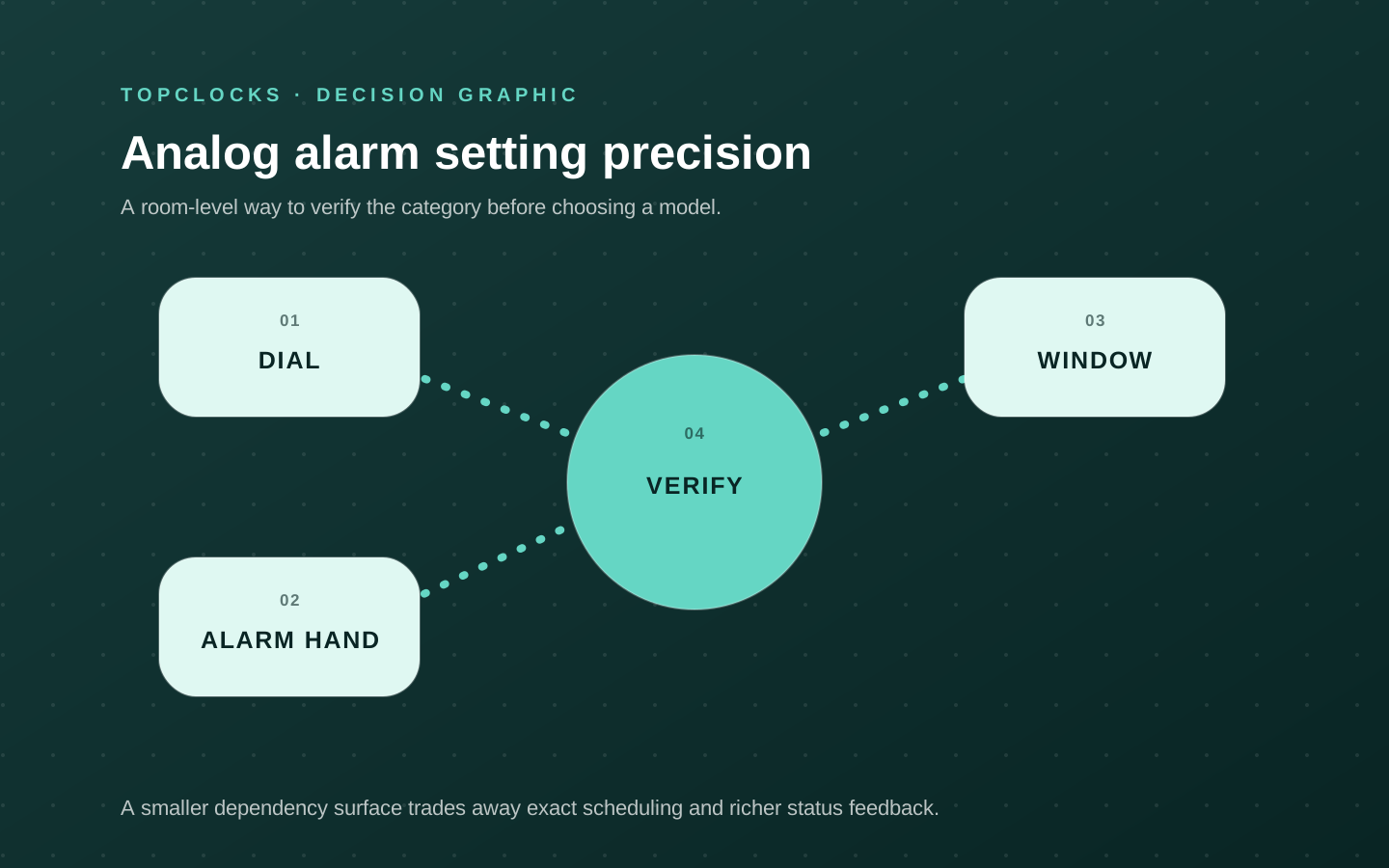
Accept the timing model
An alarm hand sets a window, not a minute-perfect digital event
Most basic analog alarms use a small hand placed around a twelve-hour dial. The visual scale and mechanism make the setting approximate compared with entering an exact digital minute. That can be entirely adequate for a stable morning routine and unsuitable for tight schedules, rotating shifts, or users who need multiple day patterns. Treat this as a design trade-off rather than a defect hidden by nostalgia.
Practice moving the alarm hand in the direction specified by the manual and confirm the relationship between the hand and the actual trigger. Avoid turning controls against instructions.
Set a short daytime alarm several times at different parts of the dial to learn the practical window. Check AM/PM by understanding the twelve-hour cycle; an analog face may not show whether the armed event is the next morning or twelve hours away.
Automatic time correction is possible on some analog clocks through a radio time signal. It reduces manual time maintenance in supported locations and adds reception and placement dependence. The alarm may remain entirely local while the displayed time correction depends on signal reception. Verify manual override and the behavior during travel outside the supported area.
- Use analog when an approximate single alarm fits the schedule.
- Use digital when exact minutes, multiple alarms, or day patterns are required.
- Test the trigger window before an important morning.
- For radio-controlled time, verify reception, location support, and manual setting.
Compare bedside and travel roles
Shortlist by size, snooze, movement, and time-setting needs
A larger analog bedside clock such as Braun BC03 fits a permanent nightstand where quiet sweep movement, luminous details, and a combined light/snooze control matter.
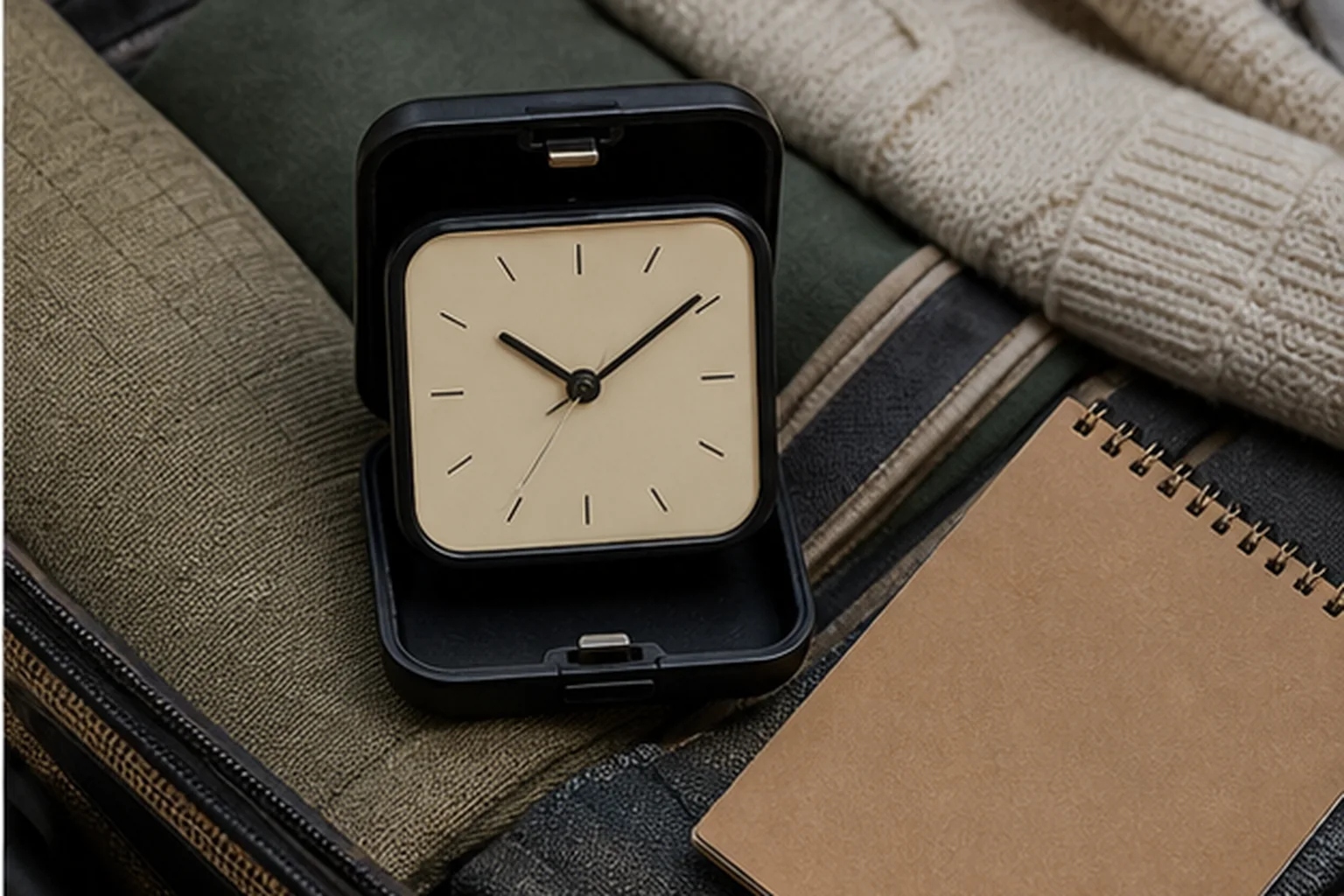
A smaller BC02 route favors travel and removes snooze, trading one convenience for compactness. A radio-controlled La Crosse analog route keeps the dial while adding automatic U.S. time correction, with reception as the new dependency. These roles should not be ranked as if they perform the same job.
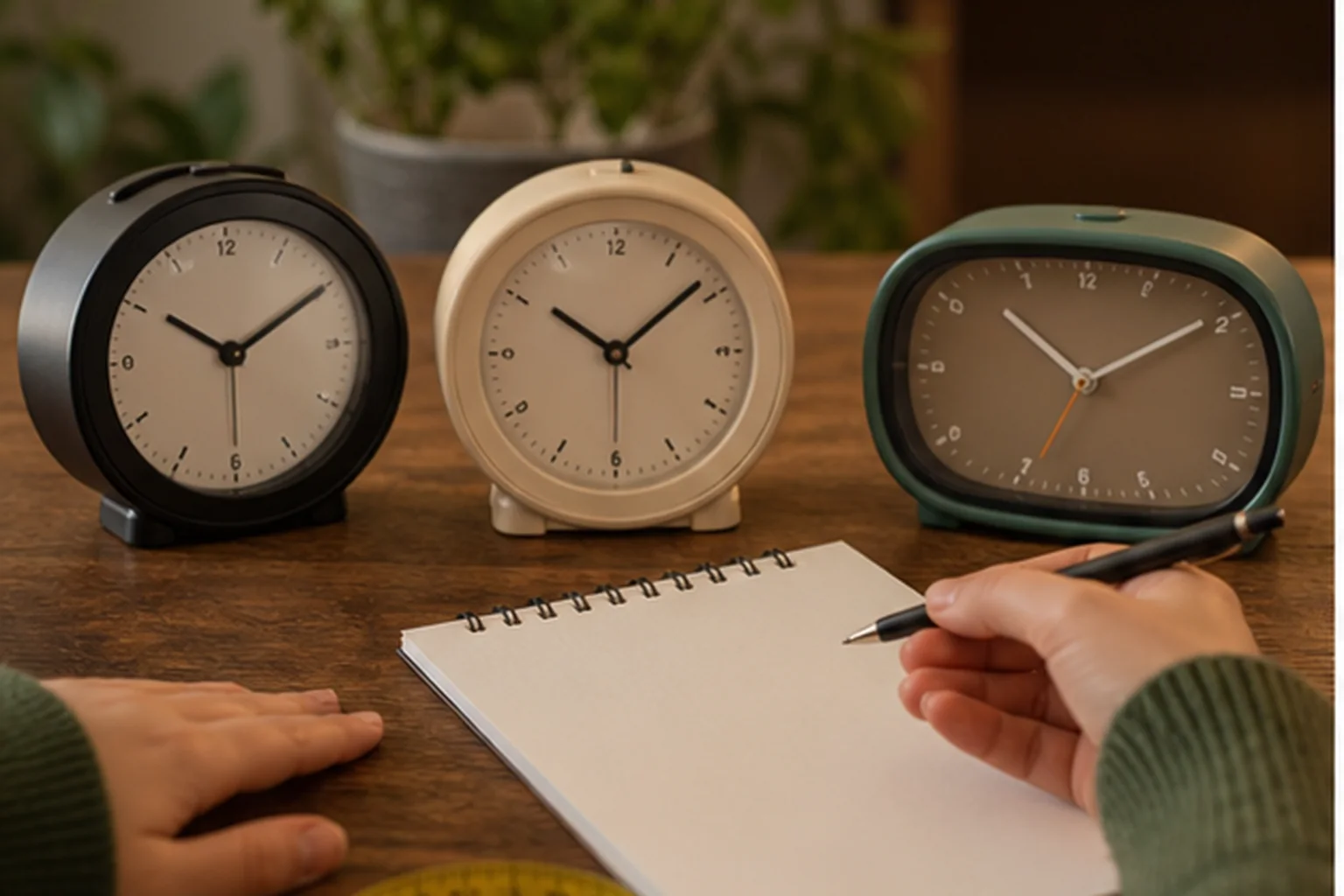
For each model, record dimensions, battery, movement description, alarm sound pattern, snooze, light, luminous details, alarm control, and any time-signal requirements from the official page or manual. Check whether the battery is included, without making availability claims permanent. Avoid assuming every color or regional model has identical movement and features.
Test the exact unit. Insert a known-good battery, set time and alarm, listen through a quiet period, use the light and snooze, and verify the next alarm state. Pack the travel candidate with ordinary pressure around it and confirm controls cannot be shifted accidentally. For a radio-controlled model, test reception in the intended room and confirm manual operation remains possible.
- Reject a clock whose alarm-hand precision does not fit the schedule.
- Reject a travel model whose controls are too easy to move or too hard to set after arrival.
- Reject a bedside model whose movement or light disturbs the room.
- Prefer the smallest set of controls that the user can verify reliably.
An analog alarm is strongest when its constraints are accepted deliberately: one visible mechanism, one maintained battery, one understandable alarm, and no unnecessary dependency.
Verify in the room
Set and verify the physical alarm without digital assumptions
An analog clock removes menus and app states, but its alarm hand, on-off switch, dial markings, light, tick, and battery condition become the entire interface. Simplicity still needs verification. Treat this as a selection experiment for analog alarm clocks, not a claim that one model will work for every sleeper. The objective is to expose a mismatch while the clock can still be returned, moved, or reconfigured.
Set the alarm under normal evening light, check it again in darkness, and view the hands from bed. Listen for ticking at the actual distance and make sure the clock remains stable when the top control is pressed. Keep the first run deliberately ordinary. Extreme settings can hide a placement problem, and a special one-night routine does not show whether the setup is maintainable on workdays, school days, weekends, and schedule changes.
Analog alarms fail through approximate setting, an unnoticed off switch, weak battery, confusing AM/PM expectations, unstable placement, or a dial that cannot be read without bright light. Write the likely failure before running the test. That note prevents a bright display, attractive sound library, charging pad, or app from receiving credit for a wake path it cannot protect.
Record setting accuracy, switch visibility, night readability, tick audibility, alarm duration, control force, and battery replacement date. A simple dated log is enough. Avoid converting one successful morning into a universal result; repeat the check after changing bedding, furniture, power, software, room, or schedule because the signal path may have changed.
- Alarm-hand precision: write the observed state, not a yes-or-no impression. Add the condition that produced it and the next check if the result was unclear.
- On-off switch: write the observed state, not a yes-or-no impression. Add the condition that produced it and the next check if the result was unclear.
- Night readability: write the observed state, not a yes-or-no impression. Add the condition that produced it and the next check if the result was unclear.
- Tick or silent sweep: write the observed state, not a yes-or-no impression. Add the condition that produced it and the next check if the result was unclear.
- Battery condition: write the observed state, not a yes-or-no impression. Add the condition that produced it and the next check if the result was unclear.
- Stable shutoff control: write the observed state, not a yes-or-no impression. Add the condition that produced it and the next check if the result was unclear.
An analog alarm passes when one physical schedule is sufficient and every active state can be checked directly on the clock. Reject the format when exact rotating schedules, multiple independent alarms, or minute-perfect confirmation are nonnegotiable. If the result is mixed, do not average it into a score. Preserve the unresolved condition and compare only models that give you a direct way to verify it.
When reading product pages for analog alarm clocks, translate each promising label back into an observable state. “Reliable” should identify the cue that survives the expected power and dependency conditions. “Easy to use” should identify who sets the alarm, in what light, and how the active state is confirmed. “Best” should disappear unless the scenario and disqualifiers are stated beside it.
Close the hidden gaps
Questions that settle a choice about analog alarm clocks
For analog alarm clocks, these questions close the gaps left by retailer filters and broad “best alarm” lists. Each answer is a boundary for the shortlist, not a promise about an untested model.
What should be tested before buying analog alarm clocks?
Set the alarm under normal evening light, check it again in darkness, and view the hands from bed. Listen for ticking at the actual distance and make sure the clock remains stable when the top control is pressed. Use the exact device revision and current manual when a control, accessory, app, or backup behavior affects the result.
Which failure should be ruled out first?
Analog alarms fail through approximate setting, an unnoticed off switch, weak battery, confusing AM/PM expectations, unstable placement, or a dial that cannot be read without bright light. Test that failure first, while the consequences are low, instead of increasing every setting at once.
How many checks make the result dependable?
Within this review of analog alarm clocks, one successful check confirms that the setup can work; it does not show that it is robust. Repeat it on ordinary mornings and after any change that affects the signal, power, placement, schedule, or stop action. High-consequence mornings deserve an independently tested backup.
Can specifications settle the choice?
Specifications and manuals can narrow the shortlist for analog alarm clocks by establishing intended controls, compatibility, power requirements, and operating states. They cannot establish what one sleeper will hear, see, or feel through a particular room and bed. Keep documented facts and room observations separate.
When should a candidate for analog alarm clocks leave the shortlist?
Reject the format when exact rotating schedules, multiple independent alarms, or minute-perfect confirmation are nonnegotiable. A disqualifier should remove the model before price, design, reviews, or optional content are compared.
What does a passing result look like?
An analog alarm passes when one physical schedule is sufficient and every active state can be checked directly on the clock. The result should be visible in the log and repeatable without a special workaround that the household is unlikely to maintain.
Finish the decision about analog alarm clocks by writing one sentence: “This setup should wake this person, in this room, through this signal, under these power conditions, and it will be checked this way.” If any blank remains, the page has identified the next research task rather than pretending the purchase is settled.
Before relying on it
Run the complete alarm path
A product page can confirm features. Only a real setup check confirms that the selected signal, placement, controls, and power path work together in the room.
- Set the alarm hand to a specific time.
- Listen in the intended room.
- Test the night-reading method.
- Record the battery type.
Role-based product shortlist
Models worth comparing for this decision
These are desk-researched candidates, not a claim that one clock wins for everyone. Each card explains the scenario it fits, the limitation to verify, and the primary source used for the factual details.
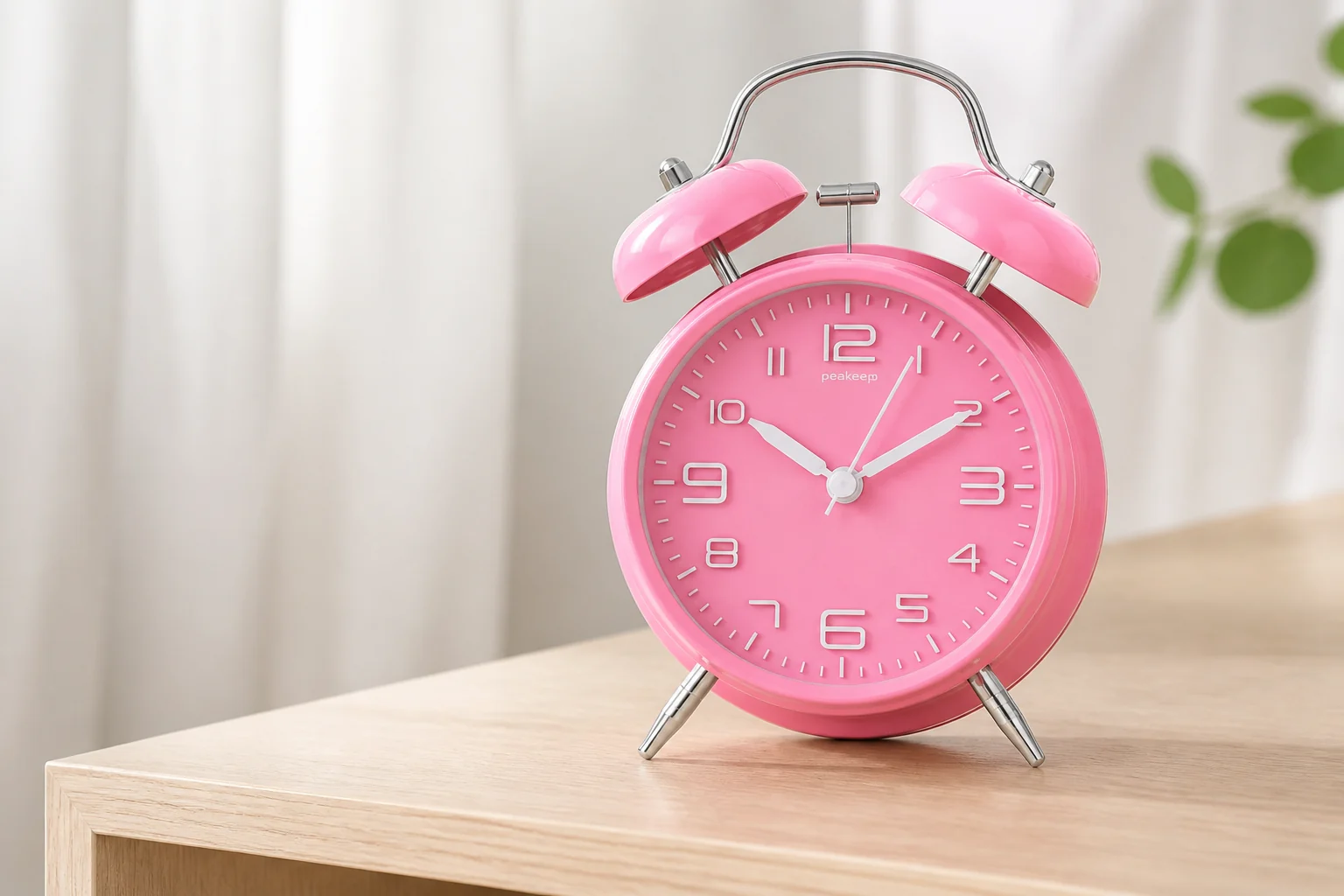
Compare for a battery twin-bell wake-up
Peakeep MHP3122 Twin Bell
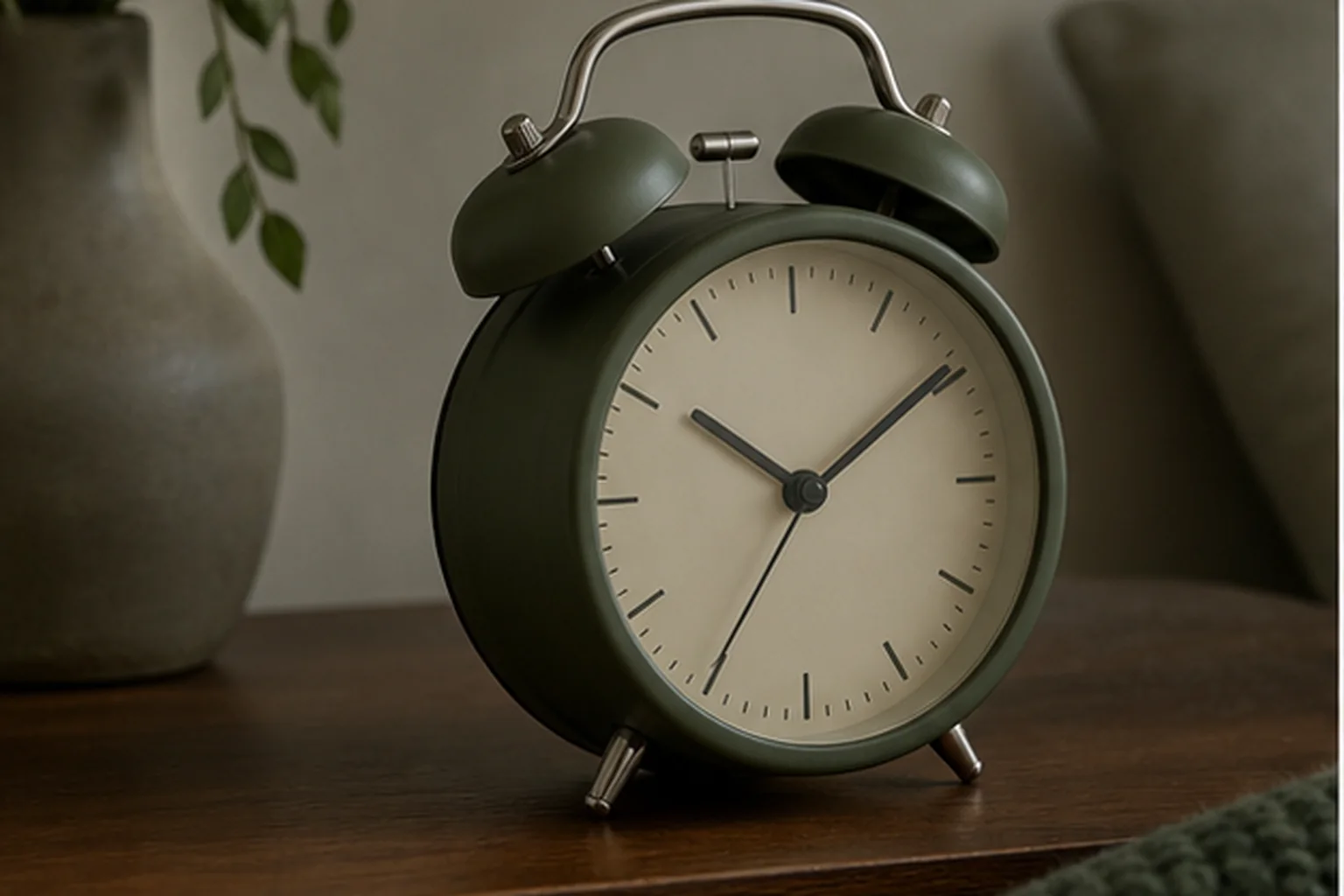
MHP3122 is the direct twin-bell route: one AA battery, silent sweep hands, no snooze, and an approximate analog alarm hand.
MHP3122 uses a real twin-bell hammer, a silent sweep movement, a temporary dial light, and one AA battery. It has no snooze, app, account, outlet, or charging dependency.
Compare for a quiet analog bedside clock
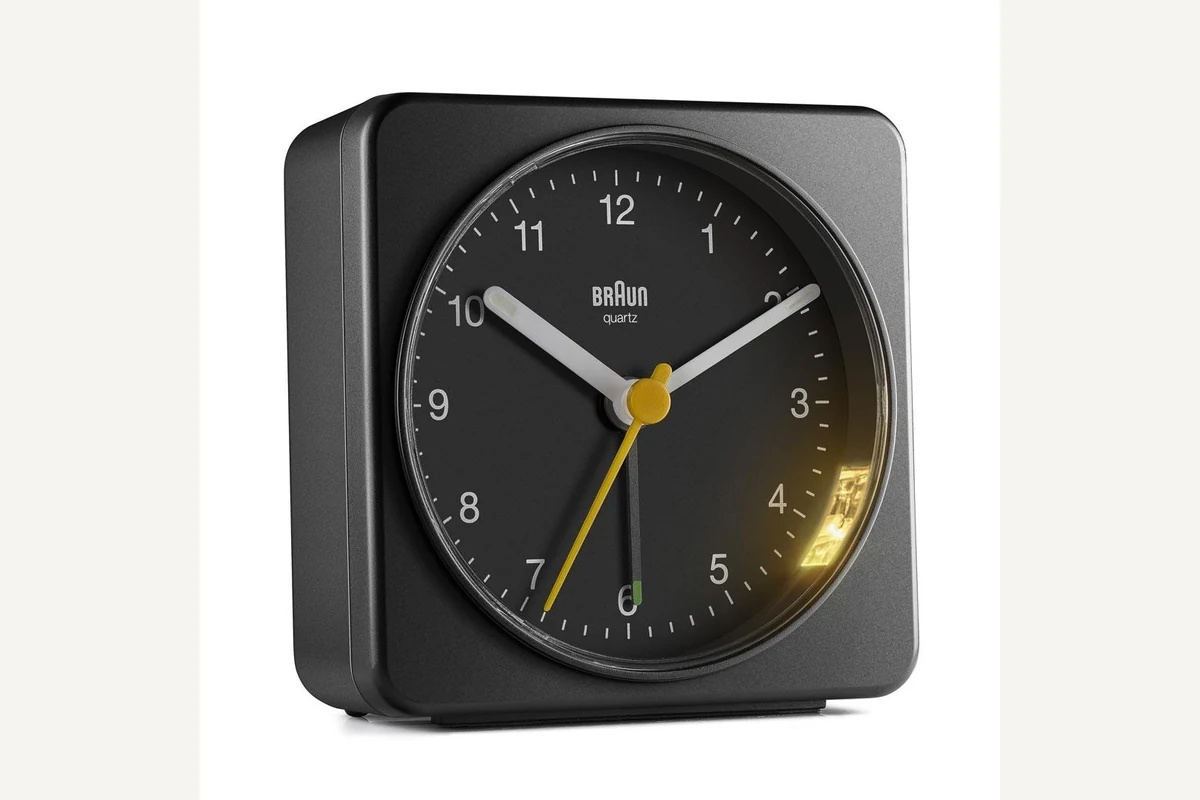
Braun BC03
BC03 fits a permanent nightstand where a quiet sweep movement and an easy-to-find snooze/light control matter.
The 78 mm BC03 uses a quiet sweeping quartz movement, luminous-tipped hands, a crescendo beep, and a combined snooze and light control. One AA battery provides the complete power path.
Compare for compact, app-free travel use
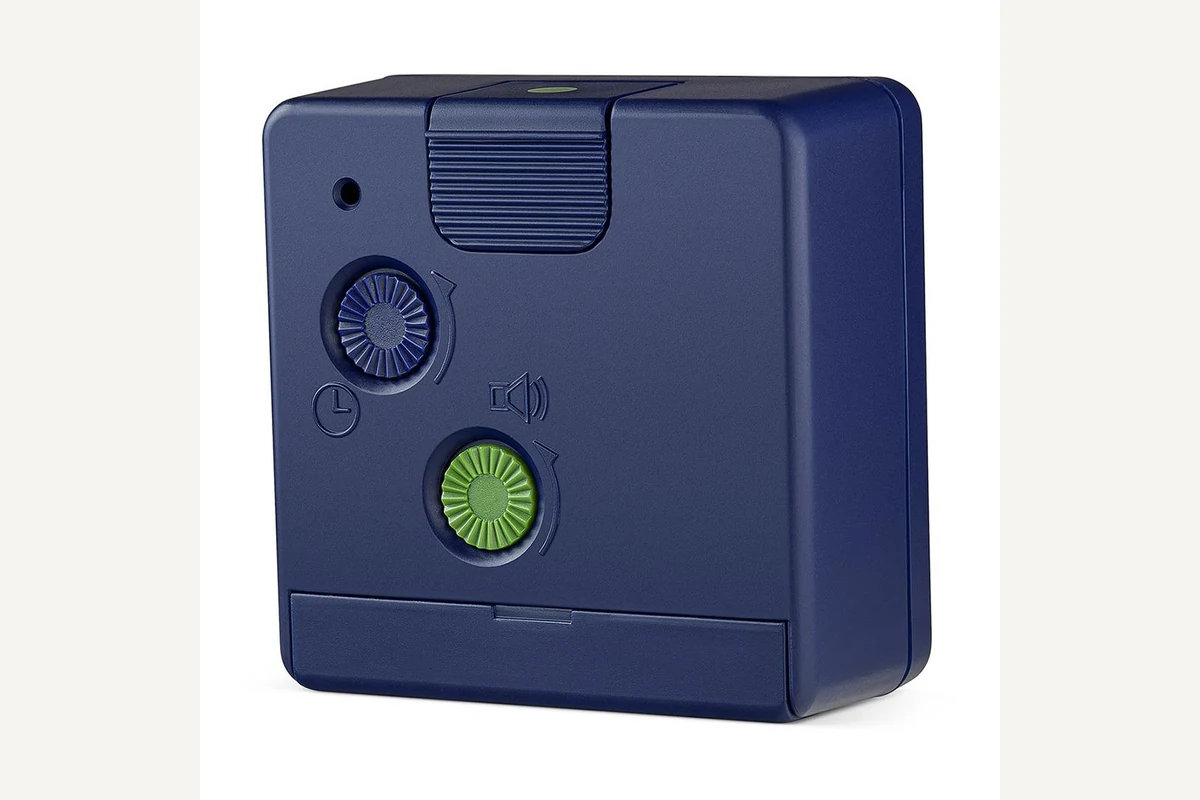
Braun BC02
The smaller BC02 removes snooze and shrinks the footprint, trading bedside convenience for travel simplicity.
BC02 is a 57 mm square analog clock powered by one AA battery. It uses a quiet quartz tick movement, luminous-tipped hands, and a crescendo beep without an app, account, or wall outlet.
Compare for automatically corrected analog time
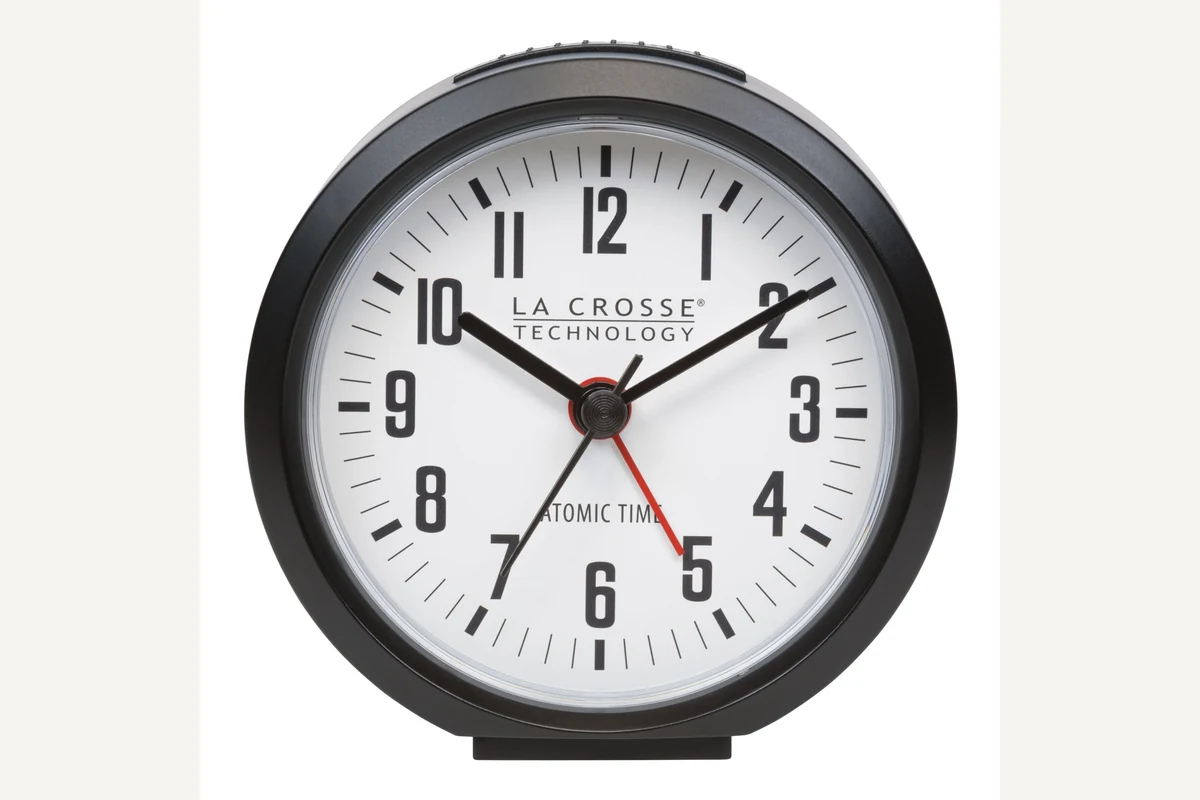
La Crosse Technology 617-710B
The 617-710B keeps an analog face but adds radio-controlled time correction for supported U.S. locations.
This battery-powered analog clock keeps a conventional dial while using the WWVB signal to set and update time in supported U.S. locations.
Evidence trail